M’Cheyne Bible Reading Plan, February 19

Today’s readings are from Exodus 1, Luke 4, Job 18, 1 Corinthians 5.

Image result for exodus book chart

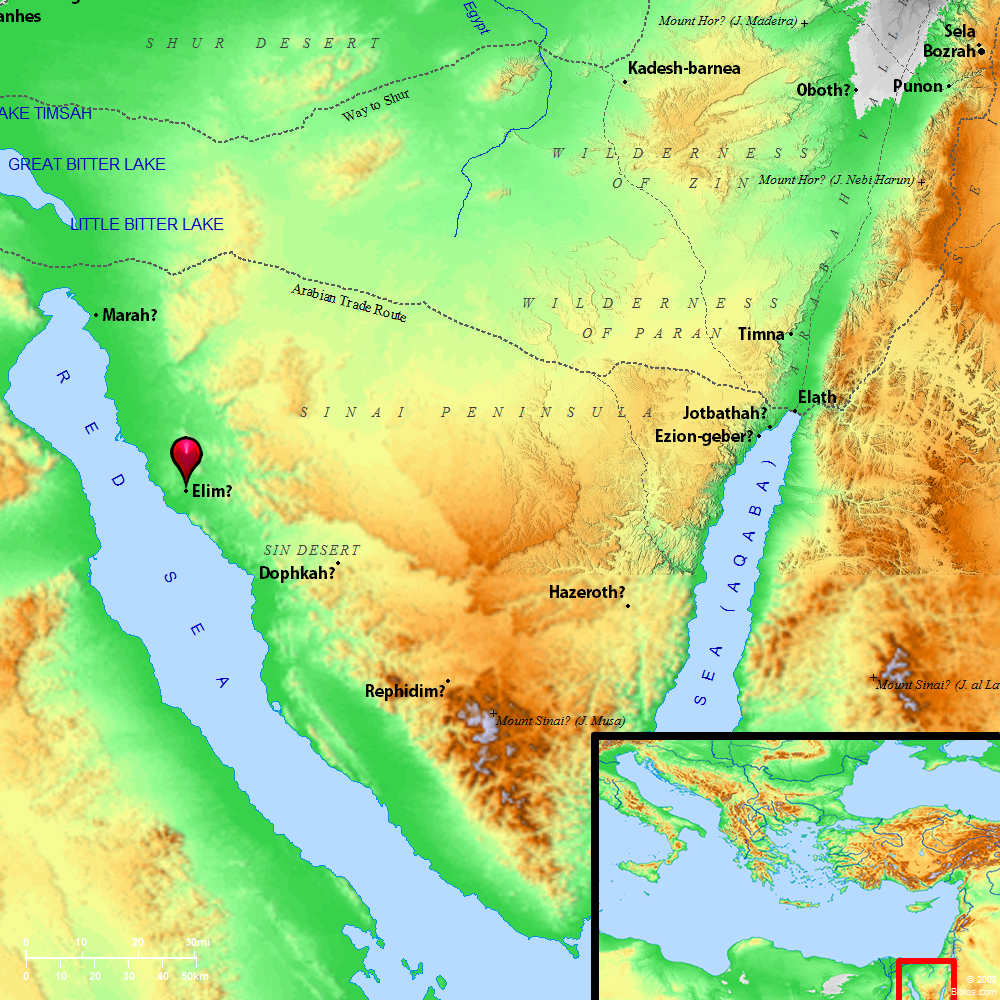
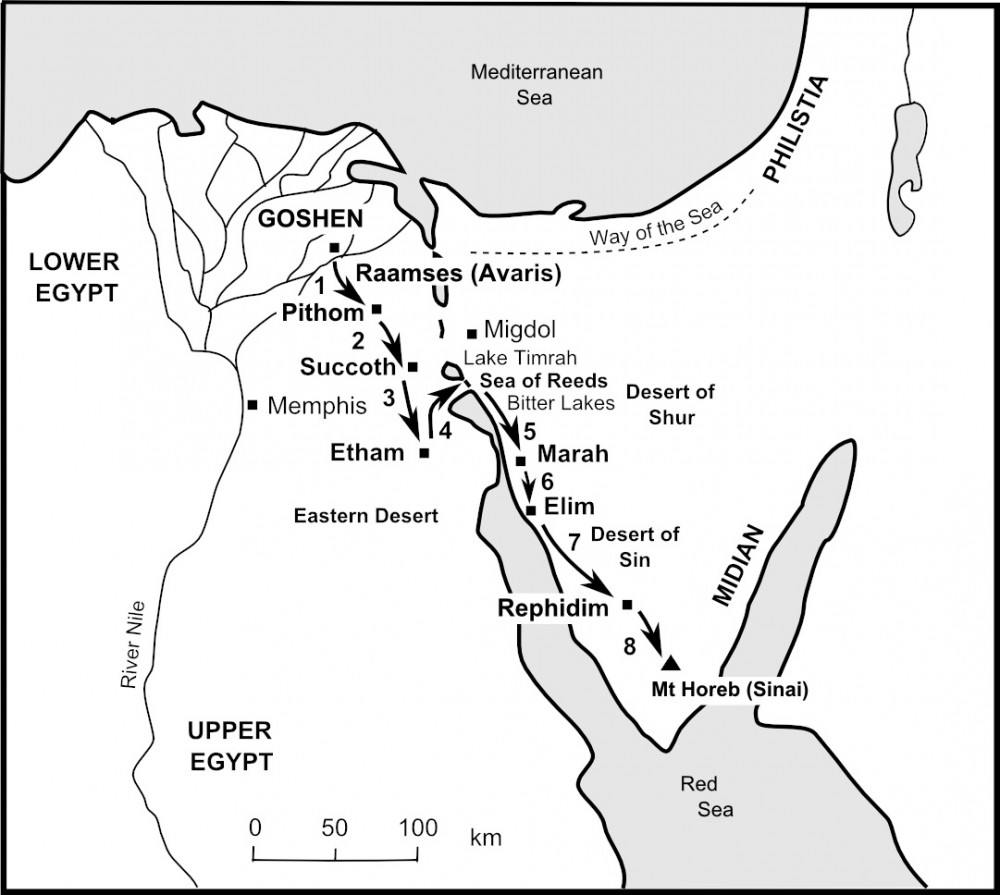
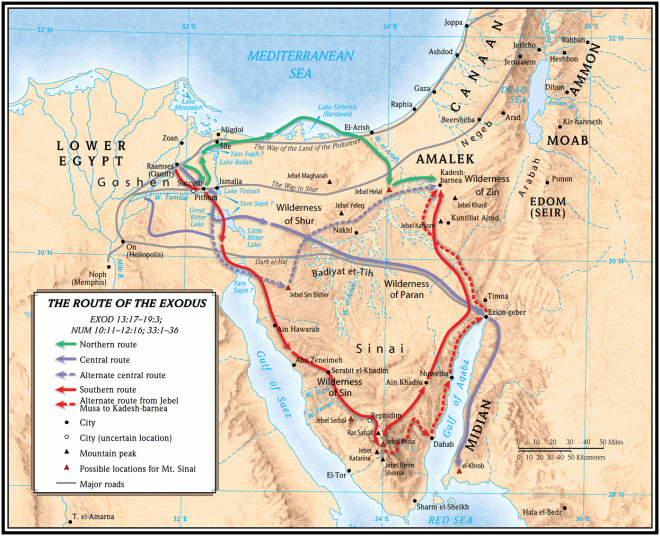
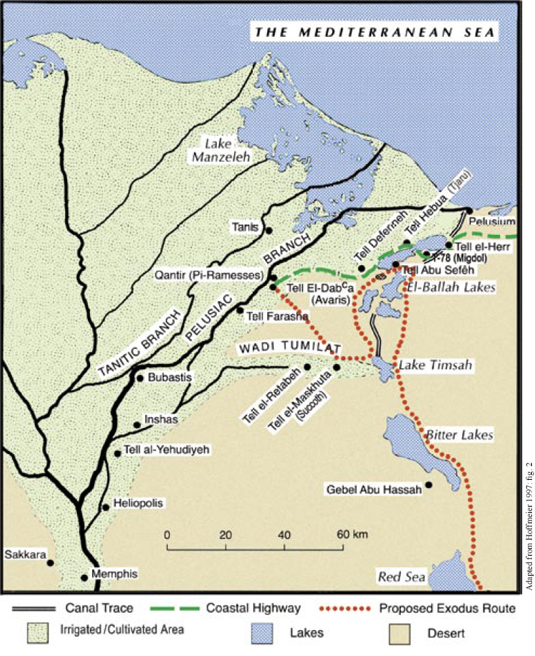
Israel has been in Egypt 430 years now.  A king “who did not know Joseph” (v. 8, likely Thutmose I) feared the Israelites and enslaved them, forcing them to build cities.  “They built for Pharaoh store cities, Pithom and Raamses” (v. 11b) and had cruel taskmasters.

Delta Region

12 But the more they were oppressed, the more they multiplied and the more they spread abroad. And the Egyptians were in dread of the people of Israel.

So they made their lives even more bitter.

The king of Egypt enlisted Shiprah and Puah, Hebrew midwives, to kill the males being born.

17 But the midwives feared God and did not do as the king of Egypt commanded them, but let the male children live.

When Pharaoh called them on it, they said that Hebrew women give birth too fast, before the midwives could arrive.

So what do we do with this?  It seems obvious that the midwives lied, because v. 17 says they specifically “did not do as the king of Egypt commanded them, but let the male children live.”  Yet, v. 20 tells us that “God dealt well with the midwives” and even “gave them families” because they “feared God” (v. 21) instead of fearing the king.

Some believe that they didn’t actually lie.  That the Hebrew women did in fact, not call the midwives.

Others believe that this was not a direct lie, but withholding part of the information.

Some answer this question by adopting “graded absolutism.”  Although there are absolutes (lying is always a sin), yet in cases of protecting a life the higher value of human life excuses the lower value of truth telling.  A similar situation happens with Rahab.

All in all, it is safe to say that God did not reward the midwives for lying, but for rescuing these children from death.

Thomas Constable notes:

Pharaoh launched three successive plans to reduce the threat of the sizable Hebrew population, that had then become larger and stronger than the Egyptian ruling class (v. 9).

The first plan (plan A) was to make the Hebrews toil hard in manual labor. Normally a population grows more slowly under oppression than in prosperous times.  However, the opposite took place in the case of the Israelites (“the more they afflicted them, the more they multiplied”; v. 12).  Physical oppression also tends to crush the spirit, and in this objective the Egyptians were somewhat successful (2:23-24).

Plan B consisted of ordering the Hebrew midwives to kill all the male Hebrew babies at birth.  This second plan “miscarried” too.

The intent of plan C was also to do away with the male Hebrew babies (v. 22). However, instead of relying on the Hebrew midwives, Pharaoh called on “all his subjects (people)” to throw “every” Hebrew boy (“son”) that was “born into the Nile” River.  Since the Egyptians regarded the Nile as a manifestation of deity, perhaps Pharaoh was making obedience to his edict an act of worship for the Egyptians.  This plan evidently failed too.

Nothing Pharaoh tried worked!  God was protecting Israel.

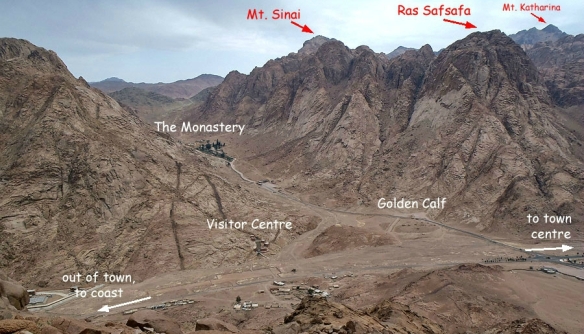
Immediately upon being baptized and having a “mountain top” experience, the Holy Spirit thrusts Jesus into the Judean wilderness.

1 And Jesus, full of the Holy Spirit, r eturned from the Jordan and was led by the Spirit in the wilderness 2 for forty days, being tempted by the devil. 

THE FIRST ADAM

THE SECOND ADAM

THE APPEAL

“The tree was good for food.” (Gen. 3:6) “Tell this stone to become bread.” (Luke 4:3) “The lust of the flesh” (1 John 2:16)
“It was a delight to the eyes.” (Gen. 3:6) “He (Satan) . . . showed Him (Jesus) all the kingdoms of the world.” (Luke 4:5) “The lust of the eyes” (1 John 2:16)
“The tree was desirable to make one wise.” (Gen. 3:6) “Cast yourself down from here.” (Luke 4:9) “The pride of life” (1 John 2:6)

Jesus succeeded where Adam failed.  When Hebrews says that Jesus was “in every respect has been tempted as we are” yet without sin it probably doesn’t mean that He has endured every single instance of temptation, but every kind of temptation (multiple times).

Alfred Eidersheim also noticed some comparisons with Moses and Elijah, the great lawgiver and prophet:

“Moses fasted in the middle, Elijah at the end, Jesus at the beginning of His ministry. Moses fasted in the Presence of God; Elijah alone; Jesus assaulted by the Devil. Moses had been called up by God; Elijah had gone forth in the bitterness of his own spirit; Jesus was driven by the Spirit. Moses failed after his forty day’s fast, when in indignation he cast the Tables of the Law from him; Elijah failed before his forty day’s fast; Jesus was assailed for forty days and endured the trial. Moses was angry against Israel; Elijah despaired of Israel; Jesus overcame for Israel.”

One thing that Luke adds to the temptation account is in v. 13: “he departed from him until an opportune time.”  Satan is always looking for the most opportune moment to tempt us.  Some use the acronym HALT to indicate those moments–hungry, angry, lonely, tired.

Note that Jesus was successful because His mind was saturated with the Word of God and He was able to quote it (use the sword) to battle Satan’s deceptions.

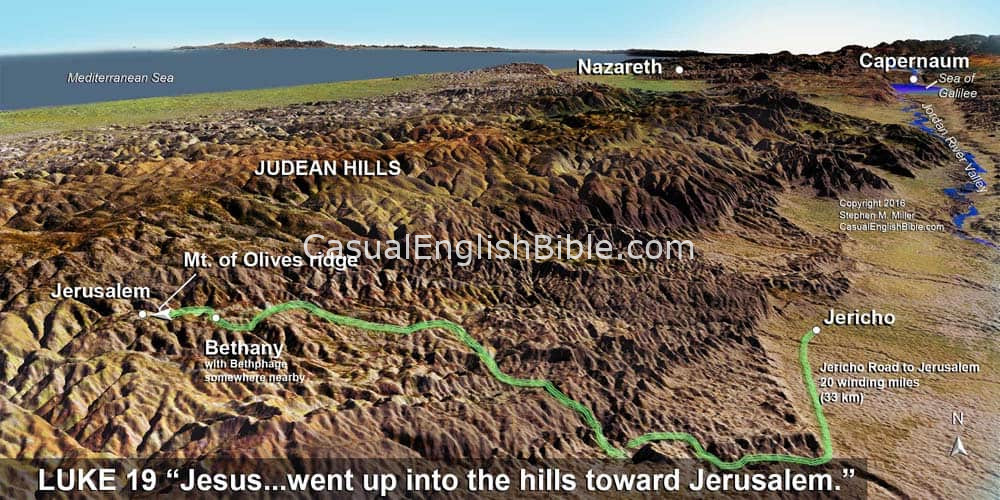
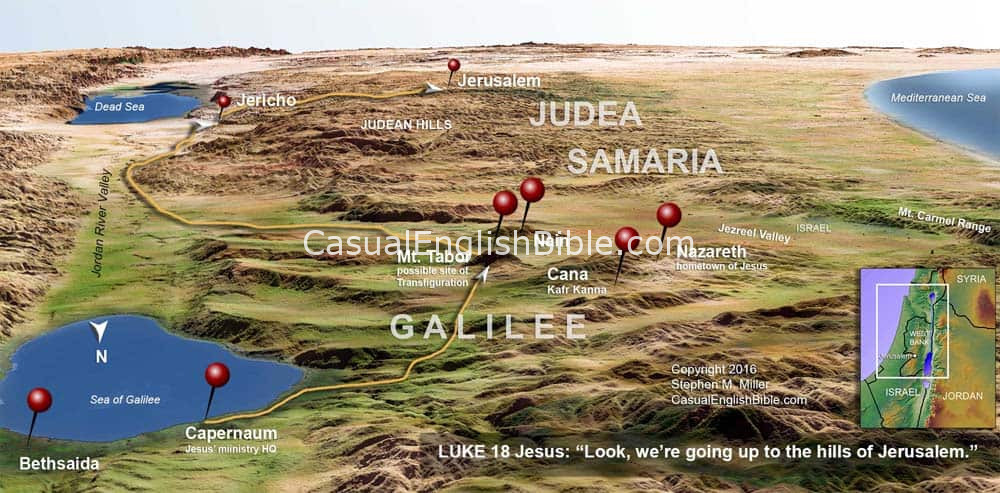
Jesus then began his ministry in and around Galilee, beginning in Nazareth, his hometown.  However, after reading Isaiah 61:1-2 and saying that He fulfilled it (was the Messiah), the people wanted to throw him off a cliff.

View from the Nazareth Ridge__Mt. Tabor and the Plain of Jezreel, Pete Albright

Thomas Constable notes:

Jesus allowed the crowd to drive Him out of town, and “to the brow of the hill” (cliff), near where Nazareth stood. Later, He allowed another crowd to drive Him out of Jerusalem, and nail Him to a cross. However, this was not the time for Him to die, and Nazareth was not the place.

Jesus then moves to Capernaum (home of Peter, Andrew, James and John) and made this His base of operations.  He began his ministry there doing several miracles: (1) exorcising a demoniac (4:31-37), (2) healing Peter’s mother-in-law (4:38-39), and (3) many others after sundown (4:40-41) and He preached (4:42-44).

Job 18 is Bildad’s second speech.  He scolds Job for making himself better than his friend (18:1-4) and then talks about the plight of the wicked (18:5-21)–their life now and their ultimate destiny are both desparable.

Bildad painted four vivid pictures of the death of the wicked in this passage: a light put out (vv. 5-6), a traveler trapped (vv. 7-10), a criminal pursued (vv. 11-15), and a tree rooted up (vv. 16-21).

Tom Constable says…

Often when we counsel suffering people it is more important to help them think about God and talk to Him than it is to get them to adopt all of our theology. Job’s companions seem to have given up on Job because he would not agree with their theological presupposition. They failed to give him credit for being sincere in his desire to come to terms with God.

In 1 Corinthians 5 Paul rebukes the church at Corinth because there was a man involved in incest (v. 1) and they had just let it go (v. 2-3).  So Paul commands them to exercise church discipline.  Assuming they had already taken the first two steps of discipline in Matthew 18:15-16 and he had not repented, they are now to “deliver this man to Satan for the destruction of the flesh” (v. 5).  Doing nothing would allow sin to spread, like leaven (vv. 6-8).

William Barclay says…

“An easy-going attitude to sin is always dangerous.  When we cease to take a serious view of sin we are in a perilous position.  It is not a question of being critical and condemnatory; it is a question of being wounded and hurt.  It was sin that crucified Jesus Christ; it was to free people from sin that Christ died.”

Paul had determined to “deliver” the man “to Satan for the destruction of his flesh.”  Probably Paul meant that he had delivered the man over to the world, which Satan controls, with God’s permission of course, for bodily chastisement that might even result in his premature death.

Though this man’s conduct was clearly sinful, and needed severe correction, Paul does not write him off as forever lost – the effective use of church discipline may yet see him to salvation.

How do we practice this today?  I don’t think it means we call down Satan’s judgment upon a person, but that when we must excommunicate someone from the support and authority of the local church, we are, in effect, turning them over to Satan.

Now, the purpose of this severe act was “so that his spirit may be saved in the day of the Lord.”  Apparently, some people need to be shocked by the seriousness with which the church takes sin by exercising church discipline even to the point of excommunication, so that a person may either see their need for true salvation, or repent of their sins to prove their salvation.

How are we to separate ourselves from sexual sin (and sinners)?  We cannot separate ourselves from the sexually immoral who live all around us, but we are to separate from a “so-called brother” who is involved in sexual immorality (and other things like greed, idolatry, reviling, drunkenness and stealing).  That’s a pretty long list and I’m not sure many churches have exercised any form of church discipline for most of these sins.


M’Cheyne Bible Reading Plan, February 18

Today’s readings are from Genesis 50, Luke 3, Job 16-17, 1 Corinthians 4.

Joseph had many reasons to be angry.  He had been sold into slavery, thrown in prison for doing what was right, forgotten, confronted with his past every time his brothers showed up.  He had many reasons  for tears as well, when he was down in the pit, when he saw Benjamin, and later his father.  And now Jacob has died.

But what might have made Joseph most sad was what his brothers say here in Genesis 50.  Afraid that Joseph will now take revenge on them for all they had done to him and the trouble they had caused him, and said…

15b “What if Joseph holds a grudge against us and pays us back for all the wrongs we did to him?” 16 So they sent word to Joseph, saying, “Your father left these instructions before he died: 17 ‘This is what you are to say to Joseph: I ask you to forgive your brothers the sins and the wrongs they committed in treating you so badly.’  Now please forgive the sins of the servants of the God of your father.” 

And Joseph wept, again.  I think it is because Joseph had forgiven them, years ago.  Maybe while in prison, maybe when they showed up in Egypt the first or second time, certainly by the time they all moved to Egypt.  Yet they couldn’t believe it.  There was still a wall built between them because they couldn’t believe they were forgiven.

18 His brothers then came and threw themselves down before him. “We are your slaves,” they said. 19 But Joseph said to them, “Don’t be afraid.  Am I in the place of God? 20 You intended to harm me, but God intended it for good to accomplish what is now being done, the saving of many lives. 21 So then, don’t be afraid.  I will provide for you and your children.”  And he reassured them and spoke kindly to them.

This is one of the more poignant passages in all of Scripture.  Joseph did not intend them to be his slaves.  He recognized what God had intended all along–that this was a good thing God had been doing.  He promised to do kindness and he spoke kindly to them.

Does God weep, like Joseph, when we hold on to guilt and shame and refuse to believe that we are forgiven?  Does he weep when we fear Him and His reprisal?  He paid the price so that we could be fully forgiven and come boldly to His throne of grace.

Picture Jesus pulling you up to your feet and pointing to His sacrifice for your sins.  He doesn’t judge you any longer and doesn’t want you to be afraid.  He will care for you.

Luke 3 records the ministry of the forerunner of the Messiah, John the Baptist (3:1-20) and the preparatory baptism of Jesus (3:21-22).  The chapter concludes citing the genealogy of Jesus back to Adam (3:23-38).

John came calling the people to repentance, to make an about face, turning from their sins.  John looked strange and had a provocative method.  Repentance was individualized, proven in that people share, that they be fair with each other, and that they not be mean and cruel; that they be happy with what they get.

John was bold, confronting Herod’s immorality, causing him to be put in prison and later loosing his head.  John didn’t let potential dangers prohibit him from preaching the truth.

In the baptism of Jesus we see the Trinity.  Father, Son and Holy Spirit are equally God but individually persons (3:21b-22).

Job 16-17 is Job’s response to Eliphaz.  He is showing increasing disinterest in what they are saying, moving quickly to distress in how God was treating him (16:6-17) and his desire to have a representative in heaven (16:18-17:2).  This is not a direct reference to, but a prefiguring of the reality that we under the new covenant do have an advocate with the Father, Jesus Christ the righteous one (1 John 2:3).

Job’s friends having not “been there” for Job in the sense he wanted (bond provider), again expresses his despair in the face of death (17:6-16).  Even though Job rues the day he was born (chap 3) and here believes the grace is the “only home I hope for” (v. 13), he never contemplates suicide.

1 Corinthians 4 first deals with the true nature of Paul’s apostleship (4:1-13).  He saw himself as a “servant of God (Christ)” even though he had God-given authority and would be judged by God, not man.

Unfortunately, the viewpoint of the Corinthians was more like natural, unsaved people.  They wanted to be honored, but the apostles were dishonored in the world.

Paul was not trying to humiliate them, but bring them along as their spiritual father (4:14-15).  He encouraged them to imitate him (4:16).  How many of us could encourage others to imitate us?


M’Cheyne Bible Reading Plan, February 17

Today’s readings are from Genesis 49, Luke 2, Job 15 and 1 Corinthians 3.

As Jacob blessed Joseph’s two sons in Genesis 48, he now blesses his own sons in Genesis 49.  Some of these are not so much “blessings” as they are prophecies regarding what God will do with these tribes in the future (David Guzik).

Reuben, though firstborn, he forfeited his rights due sleeping with his father’s concubine Bilhah (Genesis 35:22).

Simeon and Levi, due to their cruelty in dealing with the men of Shechem in retaliation for the rape of their sister Dinah (Genesis 34:25-29), receive a curse instead of a blessing (v. 7).

Judah, the fourth born, receives the major blessing, and will be the progenitor of the Messianic King.  Jesus comes from the tribe of Judah (cf. Rev. 5:4-5)

Zebulon would settle towards the sea.

Issachar would be a large tribe, but because of its position would often be raided by foreign armies and became slave labor.

Image result for division of twelve tribes in the land

Dan will be a judge.  Samson came from the tribe of Dan.  But Dan was a troublesome tribe. They introduced idolatry into Israel (Judges 18:30). Jeroboam set up one of his idolatrous golden calves in Dan (1 Kings 12:26-30) and later Dan became a center of idol worship in Israel (Amos 8:14).

Gad would be raided and be raiders.  Life would be turmoil for them.

Asher would provide royal delicacies of food.  Their allotment contained some of the most fertile land in Canaan.

Naphtali “is a doe let loose that bears beautiful fawns.”  Not sure what that means.

Joseph, and his two sons, obtained the double portion of the birthright.

Benjamin produced many warriors in Israel’s history and demonstrated the most warlike character among the tribes.

Verses 29-33 record instructions for the burial of Jacob.  Jacob again expressed his faith in God”s promises that Canaan would be the Israelites’ homeland by requesting burial in the Cave of Machpelah near Hebron (cf. Genesis 47:29-31; Genesis 48:21-22).

Luke 2 records the birth of Christ (2:1-19), his circumcision and presentation in the temple (vv. 21-24), Simeon’s pronouncement (vv. 25-35), Anna’s testimony (vv. 36-38), Jesus’ growth (vv. 39-40) and his being found asking questions and listening to the teachers at the temple as well as answering their questions (vv. 41-52).

10 And the angel said to them, “Fear not, for behold, I bring you good news of great joy that will be for all the people. 11 For unto you is born this day in the city of David a Savior, who is Christ the Lord.

The news of Jesus’ birth is “good news.”  It is the gospel.  It brings “great joy.”  Even here at the beginning of Luke’s gospel, he reveals that Jesus came not just for the Jews, but “for all the people.”  Yet, He is a Jewish Savior, born “in the city of David,” in the line of David.  Simeon will call Jesus “a light for revelation to the Gentiles, and for glory to your people Israel” (2:32).

The three titles given to him are Savior, Christ and Lord.

There were differing responses to the birth of Jesus: (1) the angels sang, (2) the shepherds told, (3) Mary treasured (and we know from Matthew that Herod trembled).

Mary “treasured up all these things in her heart” (vv. 19, 51).  And later she told Luke about these things.

In Job 15 Eliphaz speaks again.  Same song, fourth verse.  He again levels his criticisms against Job (15:1-13) and believes Job deserves judgment (15:14-35).

Eliphaz felt insulted that Job, a younger man, had rejected the wisdom of his older friends.  This was an act of disrespect on Job’s part, and Eliphaz interpreted it as a claim to superior wisdom.  Job had made no such claim, however; he only said he had equal intelligence (12:3; 13:2).  He did not claim to know why he was suffering as he was, only that his friends’ explanation was wrong.  Eliphaz interpreted Job’s prayers of frustration to God as rebellion against God (vv. 12-13), which they were not.  We need to be careful to avoid this error too.  Eliphaz was correct in judging all people to be corrupt sinners (v. 14), but he was wrong to conclude that Job was suffering because he was rebelling against God. (Tom Constable)

Adam Clarke writes:

“Poor Job!  What a fight of affliction had he to contend with!  His body wasted and tortured with sore disease, his mind harassed by Satan; and his heart wrung with the unkindness, and false accusations of his friends.  No wonder he was greatly agitated, often distracted, and sometimes even thrown off his guard.  However, all his enemies were chained; and beyond that chain they could not go.  God was his unseen Protector, and did not suffer his faithful servant to be greatly moved.”

In 1 Corinthians 3 Paul begins to address the root of the Corinthian’s problem–they were not living according to the Spirit, but according to the flesh.  There seem to be four types of people referred to in vv. 1-3: unbelievers (psychikos), believers (pneumatikos), immature believers (sarkinos), and carnal believers (sarkikos).

A saved person can behave like a Christian or like a non-Christian.  Paul called the Christian who behaves like a non-Christian “carnal.”  Galatians 5:16 proves that there is such a thing as the carnal Christian: “Walk by the Spirit and you will not carry out the desires of the flesh.”  To turn this verse around, it is possible for a Christian not to walk by the Spirit and so to carry out the desires of the flesh: to be a carnal believer.

Tom Constable has this chart:

In vv. 5-17 Paul indicates how his readers should view him and his fellow workers (unlike 1:12-13).  All men are on the same level, under God.  God is the one responsible for growth.

Christ is also the foundation.  There is no Christian life without Christ as the foundation.  Upon that foundation we can build–with gold, silver and precious stones, or wood, hay and stubble.  The fire will prove which it is.

This passage is talking about rewards we will receive in heaven.  We will stand before the judgment seat of Christ (NOT the Great White Throne in Rev. 20) and be evaluated for our service record (NOT our sins).

The fire will prove whether the things we’ve done for Christ will last.  I believe there are stay-at-home moms who will receive as great or even greater rewards for their service to Christ by loving their families, as pastors or missionaries who preach the gospel regularly.

Why?  What is the difference between gold, silver and precious stones, which last, and wood, hay and stubble, which are burned up?

I believe it depends upon two factors:  Why are we doing these acts of service?  What strength are we depending upon?

When we do anything for the glory of God and good of others and we do it in the strength which God supplies rather than our own, I believe we are building rewards that last.

By the way, Paul is not speaking of purgatory here.  It is the works that are burned by fire, not the person.

Note also that a person who is saved, may build very little upon the foundation of Christ.  Notice that Paul says he (or she) is still saved…

15 If anyone’s work is burned up, he will suffer loss, though he himself will be saved, but only as through fire.

We are saved by grace, not by works.  But we were saved for good works.  When we pursue good works for God’s glory and in God’s strength, we gain eternal reward.

Paul gives a very strong warning to church splitters in 1 Cor. 3:16-17.  Just as in the ancient world defacing or destroying a temple was a capital offense, so God will send serious discipline to those who tears down a church.

“There are three types of builders—the wise man (vv. 12, 14), the unwise (v. 15), and the foolish, who injures the building (v. 17).

The apostle now (vv. 18-23) combines the threads of his argument, which began at 1:18, and drew a preliminary conclusion.  If his readers insisted on taking the natural view of their teachers and continued to form coteries of followers, they would limit God’s blessing on themselves needlessly.  Rather than their belonging to Paul or Apollos, both Paul and Apollos, and much more, belonged to them because they were Christ’s and Christ is God’s.

M’Cheyne Bible Reading Plan, February 16

Today’s readings are from Genesis 48, Luke 1:39-80, Job 14 and 1 Corinthians 2.

When Jacob was close to dying, Joseph went to him with his two sons, Manasseh and Ephraim (Gen. 48:1).  Jacob recounted how God had made a covenant with him like the covenant with Abraham (vv. 3-4), then gave a blessing to Joseph’s sons, claiming them for his own (v. 5).  When it came time to give them his blessing, we find him choosing Ephraim (the youngest) over Manasseh…

13 And Joseph took them both, Ephraim in his right hand toward Israel’s left hand, and Manasseh in his left hand toward Israel’s right hand, and brought them near him. 14 And Israel stretched out his right hand and laid it on the head of Ephraim, who was the younger, and his left hand on the head of Manasseh, crossing his hands (for Manasseh was the firstborn).

This, of course, mirrored his own experience, being second-born, but receiving the birthright and blessing (through manipulation).

This completes a wonderful work regarding Jacob’s recognition of God’s presence his life.

  • I am with you (Genesis 28:15): God gives the young believer every possible assurance of His presence and grace
  • I will be with you (Genesis 31:3): God expects the growing believer to trust He will be with us, even when we only have the promise of His presence
  • God . . . has been with me (Genesis 31:5): God gives a glorious testimony to the mature believer, able to say how God has been with us, even when we haven’t felt His presence in the way we wished
  • God will be with you (Genesis 48:21): God gives the mature believer the opportunity to encourage others with the promise of God’s presence

–David Guzik

Matt Champlin’s article “A Biblical Theology of Blessing in Genesis” (Themelios 42.1)

In Luke 1:39-45 Mary goes to visit Elizabeth.  When Elizabeth heard Mary’s greeting, “the baby leaped in her womb,” when Elizabeth explains in v. 44 as the joy of John over meeting his Lord (v. 43).

Notice that Elizabeth did not call this response movement within her as her own body, or some inanimate tissue, but “the baby.”  It is the ordinary Greek word for baby (brephos) and is the same word used in Luke 2:16 to refer to Jesus outside the womb.  Here is a picture at week 6

Image result for baby at 7 1/2 weeks

You cannot possibly say that this is a piece of tissue.  It is a human being at a young stage of development, but still a human being.

Earlier, in Luke 1:14-15 the angel said, “And you will have joy and gladness, and many will rejoice at his birth, for he will be great before the Lord. And he must not drink wine or strong drink, and he will be filled with the Holy Spirit, even from his mother’s womb.”  So that leap is not only a leap of joy but a leap of Holy-Spirit-inspired joy.  Only persons can be filled with the Spirit.

After this meeting comes Mary’s Magnificat (Luke 1:46-56) in which she praises God for choosing an insignificant person like her, echoing the prayers of Hannah in 1 Samuel 2.  Then, John the Baptist is born (Luke 1:57-66) and Zechariah’s sings his song of praise (1:67-80).

The whole song naturally falls into two parts. The first (verses 68-75) is a song of thanksgiving for the realization of the Messianic  hopes of the Jewish nation; but to such realization is given a characteristically Christian tone.

The second part of the canticle is an address by Zechariah to his own son, who was to take so important a part in the scheme of the Redemption; for he was to be a prophet, and to preach the remission of sins before the coming or the Dawn from on high. The prophecy that he was to “go before the face of the Lord to prepare his ways” (v. 76) was of course an allusion to the well-known words of Isaiah 40:3, which John himself afterwards applied to his own mission (John 1:23), and which all three Synoptic Gospels adopt (Matt. 3:3; Mark 1:2; Luke 3:4).

In Job 14 Job ponders the grave and the afterlife.  Life is fleeting (v. 2).  The days of his life are in God’s hands (v. 5).  Job’s conception of the afterlife is nothingness (v. 10), spent in Sheol (v. 13).  Job wonders if there could be a resurrection (v. 14a), but waits for some kind of “renewal” or “change” (v. 14b).  There does seem to be hope expressed in v. 15.

But, when Job considers the power of God, he seems to despair (Job 14:16-22).  David, a millennia later, will have a more hopeful expectation of the afterlife, saying things like…

8 I have set the LORD always before me; because he is at my right hand, I shall not be shaken. 9 Therefore my heart is glad, and my whole being rejoices; my flesh also dwells secure. 10 For you will not abandon my soul to Sheol, or let your holy one see corruption. 11 You make known to me the path of life; in your presence there is fullness of joy; at your right hand are pleasures forevermore. (Psalm 16:8-11)

6 Surely goodness and mercy shall follow me all the days of my life, and I shall dwell in the house of the LORD forever. (Psalm 23:6)

15 But God will ransom my soul from the power of Sheol, for he will receive me. Selah (Psalm 49:15)

24 You guide me with your counsel, and afterward you will take me into glory.(Asaph, Psalm 73:24)

1 Corinthians 2 begins by exalting God’s wisdom above man’s (2:1-

2 For I resolved to know nothing while I was with you except Jesus Christ and him crucified.

H. B. Charles, at Together for the Gospel 2018, told a story of a church which had the motto “We preach Christ crucified,” but after a couple of years, the word “crucified” was covered up by ivy, then the word “Christ” until finally only “We preach” was showing.  Charles then said, “People can hear a lot of sermons and miss Christ crucified.”

Here is H. B. Charles’ message The Message of the Cross from T4G 2018.

Enough

If you know Christ and him crucified, you know enough to make you happy, supposing you know nothing else. And without this, all your other knowledge cannot keep you from being everlastingly miserable.

–George Whitefield, in a sermon on 1 Cor. 2:2 in 1739, in The Sermons of George Whitefield (ed. Lee Gatiss; Crossway, 2012), 2:238

I heard of a young pastor (obviously not St. Paul!) who was trying to impress the congregation with his clergy vestments and what he had accomplished in order to wear them.  So during the children’s sermon he asked the kids, “Why do I wear this white collar?”  One child answered loudly, “Because it kills fleas and ticks for up to five months.”

It is the Holy Spirit who reveals God’s wisdom (1 Cor. 2:6-16).  Without the help of the Holy Spirit, spiritual messages (the Word, the message of the cross) cannot be received.  It is like a radio that cannot tune in and receive what has been transmitted.  Until the Holy Spirit opens the spiritual ears (through regeneration) a person cannot hear the gospel.  Oh, they can hear it (sound waves hitting their ears) but cannot understand and believe it.

“Human ears cannot hear high-frequency radio waves; deaf men are unable to judge music contests; blind men cannot enjoy beautiful scenery, and the unsaved are incompetent to judge spiritual things, a most important practical truth.” [Note: S. Lewis Johnson, “1 Corinthians.” In The Wycliffe Bible Commentary, p. 1233.]


M’Cheyne Bible Reading Plan, February 15

Today’s readings are from Genesis 47, Luke 1:1-38, Job 13 and 1 Corinthians 1.

Genesis 47 starts with Pharoah assigning Joseph’s family the land of Goshen to raise their flocks, then asking his brothers to look after his livestock (vv. 1-6).  Then Jacob is presented to Pharoah and since Jacob was so old, he blessed Pharoah (vv. 7-10).  Joseph settled his family in Goshen, near Ramesses and made sure they had food (vv. 11-12).

Related image

Joseph buys all the money, land, and people under Pharaoh in exchange for food.  He makes them slaves of Pharaoh!  Yet the people of Egypt regard Joseph not as a tyrant, but as a savior.   He made a plan whereby they could still farm the land and live on it, but contribute 20% to Pharoah.

Meanwhile…

27 Thus Israel settled in the land of Egypt, in the land of Goshen. And they gained possessions in it, and were fruitful and multiplied greatly.

Jacob, before he died, asked to be buried “with my fathers” in Canaan (vv. 29-30), to which Joseph agreed (vv. 30b-31).  Jacob knew this was not the land God had promised to him and he wanted to participate in the promises made to him and his family.  Joseph’s bones would also be buried there (50:

Luke 1:1-38.  Luke is my favorite gospel, but I won’t just regurgitate my sermons here.  Luke wrote both this gospel and Acts.  Luke is written to Theophilus (“God lover”), a Gentile.

Luke wanted to give a third account with an emphasis on comprehensiveness and order. Therefore, Luke is the most comprehensive gospel. He documents the story of Jesus all the way from the annunciation of John the Baptist to Jesus’ ascension.

  • Luke is the most universal gospel. In Luke, Gentiles are often put in a favorable light.
  • Luke’s gospel is the one most interested in the roles of womenchildren, and social outcasts.
  • The gospel of Luke is the one most interested in prayer. He has seven different references to Jesus praying that are found in this gospel alone.
  • Luke’s gospel is the one with the most emphasis on the Holy Spirit and on joy.
  • Luke’s gospel is the one with the most emphasis on preaching the good news (the gospel). This term is used ten times in this Gospel (and only once in any other Gospel) as well as fifteen additional times in Acts.

–David Guzik

Verses 5-24 recount the foretelling of John the Baptist’s birth.

Only priests from a particular lineage could serve in the temple. Over the years the number of priests multiplied (there were said to be as many as 20,000 priests in the time of Jesus), so they used the lot to determine which priests would serve when. The lot to serve might fall to a priest only once in his life. To a godly man like Zacharias, this was probably the biggest event of his life, a tremendous privilege, a-once-in-a-lifetime opportunity.

–David Guzik

Zechariah and Elizabeth were old and had been unable to have children.  An angel told him “your prayer has been heard. Your wife Elizabeth will bear you a son, and you are to give him the name John” (1:13).  He was told that John would have a special mission in life, being a forerunner for “the Lord” (1:17).

Expressing unbelief, Zechariah was struck mute, which made people believe he had seen a vision.

24 After these days his wife Elizabeth conceived, and for five months she kept herself hidden, saying, 25 “Thus the Lord has done for me in the days when he looked on me, to take away my reproach among people.”

Luke 1:26-36 is the angelic announcement of the birth of Jesus to Mary.  He was born of a virgin (v. 27), the Son of the Most High who would sit on David’s throne (v. 32), in other words, Israel’s Messiah!

Mary says two things in this interchange with the angel:

34 And Mary said to the angel, “How will this be, since I am a virgin?”

and

38 “Behold, I am the servant of the Lord; let it be to me according to your word.”


Job 13 is another round from Job to his friends.  In vv. 1-12 he says that they didn’t know everything and they were worthless physicians who should not presume to speak for God.  The weakness of their wisdom is expressed in v. 12

12 Your maxims are proverbs of ashes; your defenses are defenses of clay.

Their counsel has no substance or use.

In vv. 13-19 Job expressed his confidence in God, but also in his own integrity before God.  He expresses these two (seemingly contradictory) thoughts in v. 15…

15 Though he slay me, I will hope in him; yet I will argue my ways to his face.

That first part is a great expression of trust; the second is an expression of desperation.  Slaying times are like the sifting times of Luke 22:31-32.  He continues that thought of arguing his case to God in v. 18…

18 Behold, I have prepared my case; I know that I shall be in the right.

Job appeals to God to let him know if his sin is really the cause of his troubles (13:20-28).  Apparently he had no inclination from God yet, that he was guilty of sin.

Of all the churches Paul dealt with, the Corinthians seemed to have the most problems.  They had factions favoring different “preachers,” unchecked immorality in the church, disunity over “gray area” issues, mockery of the Lord’s Supper in the way they treated one another, superiority through spiritual gifts, and denial of the resurrection.

Even so, he says of them…

2 To the church of God that is in Corinth, to those sanctified in Christ Jesus, called to be saints together with all those who in every place call upon the name of our Lord Jesus Christ, both their Lord and ours

Although not acting saintly, they are nevertheless “saints” because they have called on the name of Jesus.

Later, he shows the security of their salvation by saying by saying about Jesus, then about God…

8 who will sustain you to the end, guiltless in the day of our Lord Jesus Christ. 9 God is faithful, by whom you were called into the fellowship of his Son, Jesus Christ our Lord.

Corinth map, Bible Odyssey


1st Corinthians, Swindoll

Though they were quarreling (v. 11), advocating different favorite preachers, Paul tells them that Christ is not divided (v. 13) and that no one was baptized by any name other than that of Jesus (vv. 13-16).

Paul then talks about the gospel he preached, primarily “Christ crucified” (2:2).  H. B. Charles had a great message on this passage at the Together for the Gospel conference in 2018.  He asked the question: How does the message of the cross distinguish the church from the world?”  His answer was…

  1. The message of the cross determines our eternal destiny (1:18)
  2. The message of the cross declares true wisdom (1:19-21)
  3. The message of the cross defines Christian ministry (1:22-25)

A couple of quotes

“The Spirit of God uses the Word of God to make the children of God look like the Son of God” (H. B. Charles)

“Human wisdom cannot be conquered without unwavering confidence in the truthfulness and sufficiency of God’s Word.” (H. B. Charles)

“The foolishness of preaching is not the preaching of foolishness.” (A. T. Robertson)

M’Cheyne Bible Reading Plan, February 14

Today’s readings are from Genesis 46, Mark 16, Job 12 and Romans 16.

In Genesis 46 Jacob prepares to take his family to Egypt.  God re-affirms His covenant with Jacob in v. 3…

3 Then he said, “I am God, the God of your father. Do not be afraid to go down to Egypt, for there I will make you into a great nation. 4 I myself will go down with you to Egypt, and I will also bring you up again, and Joseph’s hand shall close your eyes.”

When you are worried about the future and what it holds, just remember the promises of God.

So Jacob left Beersheba for Egypt, taking everything and everyone with him.  Judah led the way to Goshen (v. 28) and Jacob and Joseph had a tearful reunion (vv. 29-30).

Shepherds have always gotten a bad rap (vv. 33-34).

Mark 16…He lives!  Vv. 1-8 recounts Jesus’ resurrection, the only one who rose from the dead never to die again, the One with the power of indestructible life.

Many early versions of Mark do not have vv. 9-20. See Daniel Wallace’s video if your interested in an explanation of why these verses are noted as not in the oldest manuscripts.

Whether original or not, we need to take the gospel to the nations.

Take with you the joy of Easter to the home, and make that home bright with more unselfish love, more hearty service; take it into your work, and do all in the name of the Lord Jesus; take it to your heart, and let that heart rise anew on Easter wings to a higher, a gladder, a fuller life; take it to the dear grave-side and say there the two words “Jesus lives!” and find in them the secret of calm expectation, the hope of eternal reunion.

–John Ellerton

Job 12 is Job’s answer to Zophar (and the others).  He is very sarcastic (vv. 1-3).  Can’t you just see the dripping sarcasm in v. 2?

“No doubt you are the people, and wisdom will die with you.”

Then he complains that they misunderstand him (vv. 4-6).  He then explains his own understanding of who God is and how powerful He is (vv. 7-25).

As much as Job thinks that God has mistreated him, he continues to see God as intimately involved (vv. 9-10).

Romans 16 starts with a long list of names.  As a leader Paul noticed people’s involvement and showed his appreciation.

The first responsibility of a leader is to define reality.  The last is to say thank you.  In between, the leader is a servant. -Max DePree (Leadership Jazz)

Paul then shares some final instructions with the Romans.  The focus is upon dissension within the church, a common problem.  Much of the time, dissenters are serving “their own appetites,” their own preferences (v. 18).

Verse 19 calls us to be experts is good and not even novices in evil.

Verse 20 picks up on the proto-evangelium in Genesis 3:16 and says…

20 The God of peace will soon crush Satan under your feet.

One day our Prince will come and defeat our great enemy once and for all!

Quotes to Ponder

In Dostoevsky’s The Brothers Karamazov, Ivan poses the question: “Imagine that you are creating a fabric of human destiny with the object of making men happy in the end, giving them peace and rest at last, but that it was essential and inevitable to torture to death only one tiny creature—that baby beating its breast with its fist, for instance—and to found that edifice on its unavenged tears, would you consent to be the architect on those conditions?” And softly, his brother Alyosha answers: No.

Today’s Democratic Party says: Yes.

The main trouble in this whole matter of spiritual depression in a sense is this, that we allow our self to talk to us instead of talking to our self.  Am I just trying to be deliberately paradoxical?  Far from it.  This is the very essence of wisdom in this matter.  Have you realized that most of your unhappiness in life is due to the fact that you are listening to yourself instead of talking to yourself?  Take those thoughts that come to you the moment you wake up in the morning.  You have not originated them, but they start talking to you, they bring back the problem of yesterday, etc.  Somebody is talking.  Who is talking to you?  Your self is talking to you.  Now this man’s treatment [in Psalm 42] was this; instead of allowing this self to talk to him, he starts talking to himself, ‘Why art thou cast down, O my soul?’ he asks.  His soul had been repressing him, crushing him.  So he stands up and says: ‘Self, listen for a moment, I will speak to you’.  Do you know what I mean?  If you do not, you have but little experience.

The main art in the matter of spiritual living is to know how to handle yourself.  You have to take yourself in hand, you have to address yourself, preach to yourself, question yourself.  You must say to your soul: ‘Why art thou cast down’–what business have you to be disquieted?  You must turn on yourself, upbraid yourself, condemn yourself, exhort yourself, and say to yourself: ‘Hope thou in God’–instead of muttering in this depressed, unhappy way.  And then you must go on to remind yourself of God, Who God is, and what God is and what God has done, and what God has pledged Himself to do.  Then having done that, end on this great note: defy yourself, and defy other people, and defy the devil and the whole world, and say with this man: ‘I shall yet praise Him for the help of His countenance, who is also the health of my countenance and my God’.

D. Martyn Lloyd-Jones, Spiritual Depression: Its Causes and Cures, pp. 20-21; emphasis added.

Aspire, for Rising Leaders (2.17.19)

These are notes and resources that I have used to train up young men for leadership at Grace Bible Church.  Feel free to use my materials.  Most of the other materials are available on the internet.  Read to your heart’s delight.  To listen to the audios, copy the http through mp3 into your internet browser.  Let me know if something does not work.

My Notes for this week (week 8)…

Session 8.1__Self-Control

Session 8.2__Pneumatology

Session 8.3__Love Dare, Memory Verse

Session 8.4__Motivation

Follow-Up Materials

Self-Control

6 Areas of Life Where Successful Leaders Practice Self-Discipine, Rick Warren

The Eternal Importance of Exercising Self-Control, Kristen Wetherell

THE MOST COMMON TRAIT IN GREAT MEN, David Murray

The Secret to Self-Discipline, Jon Bloom

Leadership Takes Self-Control. Here’s What We Know about It, Kai Chi Yam, Huiwen Lian, D. Lance Ferris, Douglas Brown

Relearning the Discipline of Self-Control in a Society of Instant Gratification (3 parts), Ace Davis

Self-Control, the Leaders Make-or-Break Virtue, Drew Dyck

THE SECRET TO SELF-CONTROL, David Murray, quoting James Clear

Pneumatology

Dispensationalists and Spirit Baptism (TMSJ), Larry PettegrewPneumatology__

The Holy Spirit, Greg Herrick

Spirit in Christianity, part 1—Early Church to Reformation, Ben Frostad

Spirit in Christianity, part 2—The Reformation to the Present, Ben Frostad

The Deity of The Holy Spirit, Daniel Henderson

The Doctrine of the Holy Spirit, John Frame

Spiritual Gifts Test

Love Dare

Love Fights Fair

The Love Dare, Day 13__Love Fights Fair

Love Takes Delight

Drink water from your own cistern, running water from your own well.  Should your springs overflow in the streets, your streams of water in the public squares?  Let them be yours alone, never to be shared with strangers.  May your fountain be blessed, and may you rejoice in the wife of your youth.  A loving doe, a graceful deer – may her breasts satisfy you always, may you ever be captivated by her love.  (Prov. 5:15-19)

Teaching My Daughter How to Handle Mean Girls, Susan Merrill

Motivation

8 Things the Smartest Leaders Do to Motivate Their Employees, Marcel Schwantes

Empowerment Checklist, Jim Cathcart

Igniter Phrases and Killer PhrasesMotivating Your Team (show notes),

Craig Groeschel

The Myth of Motivation, The John Maxwell Company


M’Cheyne Bible Reading Plan, February 13

Today’s readings are from Genesis 45, Mark 15, Job 11 and Romans 15.

In Genesis 45 Joseph finally reveals himself to his brothers.  At first the brothers were dismayed, probably from shock.  Joseph saw God’s purpose in all his trials.

7 And God sent me before you to preserve for you a remnant on earth, and to keep alive for you many survivors.

He will expand on this in 50:20.

All Joseph’s sorrows were for a purpose.  God used them to preserve his family and provide the conditions for it to become a nation.  Joseph was a victim of men, but God turned it around for His glory.   And remember, if this family does not go into Egypt, then they assimilate among the pagan tribes of the Promised Land and cease to become a distinctive people.  God had to put them in a place where they could grow in numbers, yet stay a distinctive nation.

–David Guzik

Joseph then gave instructions to bring the whole family to Egypt (vv. 16-27).  They would be given “the best of the land of Egypt” by Pharoah (v. 18), the land of Goshen.

Image result for land of goshen

Image result for land of goshen

Typical scene in the Land of Goshen, Ferrell Jenkins

Mark 15 starts with Jesus’ trial before Pilate, the Roman governor (vv. 1-15), then his mocking by the soldiers (vv. 16-20).

Why did the Jewish leaders take Jesus to Pilate at all?  First, they did not have the legal right to execute their own criminals because Rome revoked that right in A.D. 7.  At the time, the Jews regarded this loss as a national disaster because to them it was the final proof that they no longer had the basic right of self-government-–to punish their own criminals–-and it demonstrated that they were totally under the boot of Rome.  There were times when the Jews disregarded this prohibition of the Romans and executed those they considered criminals, such as at the stoning of Stephen (Acts 7:57-60).  Why didn’t they take things into their own hands regarding Jesus?  Because they knew multitudes had a favorable opinion of Jesus and if Pilate executed Him, they could distance themselves from the political fallout.

–David Guzik

Vv. 21-41 record the crucifixion and vv. 42-47 Jesus’ burial.

Job 11 is Zophar’s first speech, wherein he criticizes Job (vv. 1-6) for his complaining, that he actually deserves worse than he had received (really Zophar, how would you like to be in Job’s place?).  God can see his wickedness (vv. 7-12), therefore repent (vv. 13-19).  ( wonder how much of our counseling is like Zophar’s speech.

Romans 15:1-7 continues the discussion of disagreement among those with different perspective on “gray area” issues (issues where there is no clear biblical prohibition or command).

Paul then speaks of his mission towards the Gentiles (vv. 8-13) and his reason for writing them (vv. 14-21), including his desire to plant churches where others have not gone and preach the gospel among those who have not heard.

20 and thus I make it my ambition to preach the gospel, not where Christ has already been named, lest I build on someone else’s foundation, 21 but as it is written, “Those who have never been told of him will see, and those who have never heard will understand.”

His desire was to make it to Rome (vv. 22-32).  He was on his way currently to Jerusalem (vv. 26, 31), but asks for prayers that he would be “rescued from the unbelievers in Judea” (v. 31) so that he could come see them.


M’Cheyne Bible Reading Plan, February 12

Today’s readings are from Genesis 44, Mark 14, Job 10 and Romans 14.

Genesis 44 unfolds Joseph’s plan to reveal himself to his brothers.  It begins with his silver cup being placed in Benjamin’s sack, to trump up charges against him (44:1-17).  This section shows the change in the brothers’ hearts.  Before, they were willing to sell Joseph despite his cries.  Now they are willing to stand with Benjamin and become slaves or possibly die.

Judah pleads for Benjamin’s release in vv. 18-34, giving one of the most moving speeches in the Bible.  He was willing to be a substitute, laying down his life for his brother, just as One of his descendants would lay down His life for the whole world.  This, of course, moved the heart of Joseph, which was already disposed towards Benjamin without a word.

But this was the way to move towards complete reconciliation.  The brothers saw and admitted their sin against Joseph, so not only forgive them but be reconciled.

Mark 14 joins John 12 in revealing the anointing of Jesus (for burial) by Mary (vv. 1-9).

In the ancient Middle East, the majesty of a king was expressed not only by what he wore—his jewelry and robes—but by his royal “aroma.”  Even after a king was first anointed, he would perfume his robes with precious oils for special occasions.  Listen to a line from King David’s wedding song:

You love righteousness and hated wickedness;
therefore God, your God,
has set you above your companions

by anointing you with the oil of joy.
All your robes are fragrant with myrrh and aloes and cassia.
(Psalm 45:7-8)

Ann Spangler and Lois Tverberg, Sitting at the Feet of Rabbi Jesus (p. 17)

Then Judas, possibly motivated by the “waste” of money on Jesus, agrees to betray Jesus (vv. 10-26).  He attends the Passover with the other disciples, but is subtly pointed out by Jesus and leaves.  On the way to the garden, Jesus predicts Peter’s denial (vv. 27-31), then prays (vv. 32-41).  Jesus is betrayed by Judas and arrested (vv. 43-50).

Job 10 is Job’s “If I could just get an audience with God” speech.  He says he would first ask God “Why are you doing this to me?” (vv. 1-7), then ask God “Why are you afflicting me, since you created me?” (vv. 8-12), then just a plaintive “Why God?” (vv. 13-17) and ends by asking God just to leave him alone (vv. 18-22).  Jesus stands before the council (vv. 53-65) and Peter denies him, as Jesus had predicted (vv. 66-72).

Romans 14-15 talk about how to handle disagreements over “gray issues,” issues of conscience.

Philip Yancey once said…

“Christians get very angry toward other Christians who sin differently than they do.”

There is an excellent article by Andy Naselli and J. D. Crowley at 9 Marks on this issue at https://www.9marks.org/article/romans-14/.  I would encourage you to go there and read that article.  It is an edited excerpt from their book Conscience.

Those principles are…

  1.  Welcome those who disagree with you.  Don’t shun them.  Sit down with them and talk it out.
  2. Those who have freedom of conscience must not look down on those who don’t (“stick in the mud,” “ultra-conservative”, etc.) (vv. 3-4)
  3. Those whose conscience restricts them must not be judgmental toward those who have freedom (“liberals,” “worldly”) (vv. 3-4)
  4. Each believer must be fully convinced of their position in their own conscience (v. 5)
  5. Assume that others are partaking or refraining for the glory of God (vv. 6-9)
  6. Do not judge each other in these matters because we will all someday stand before the judgment seat of God (vv. 10-12).
  7. Your freedom to eat meat is correct, but don’t let your freedom destroy the faith of a weak brother or sister (vv. 13-15).
  8. Disagreements about eating and drinking are not important in the kingdom of God; building each other up in righteousness, peace, and joy is the important thing (vv. 16–21).
  9. If you have freedom, don’t flaunt it; if you are strict, don’t expect others to be strict like you (v. 22a)
  10. A person who lives according to their conscience is blessed (vv. 22b-23)
  11. We must follow the example of Christ, who put others first (15:1-6)
  12. We bring glory to God when we welcome one another as Christ has welcomed us (15:7