M’Cheyne Bible Reading Plan, January 21

Today’s readings are from Genesis 22, Matthew 21, Nehemiah 11, and Acts 21.

Here in Genesis 22 is where Abraham’s faith shines.

1 After these things God tested Abraham and said to him, “Abraham!” And he said, “Here am I.”

Two things about verse 1.  First, the words “after these things” signal to us not only did this come after the events of chapter 21, but likely after all the experiences that Abraham had with God.  With Isaac born, the long-awaited promise was fulfilled.  God was faithful to keep His promises.

Second, Abraham answers as any servant of God would, “Here am I.”  He doesn’t run and hide, intent upon his own interests, but responds immediately as a servant would.

2 He said, “Take your son, your only son Isaac, whom you love, and go to the land of Moriah, and offer him there as a burnt offering on one of the mountains of which I shall tell you.”

There was certainly no mistaking who God meant for Abraham to offer as a burnt offering.  Yahweh not only specifies that it is Isaac, “your only son” but goes for the jugular when saying, “whom you love.”  Was the issue that Isaac had become an idol in Abraham’s life??

Amazingly…

3 So Abraham rose early in the morning, saddled his donkey, and took two of his young men with him, and his son Isaac.  And he cut the wood for the burnt offering and arose and went to the place of which God had told him.

Abraham didn’t grip and complain.  He asked no questions.  He didn’t delay.  No matter how difficult a command this was to obey, Abraham “rose early in the morning” and got on the road.

The journey there must have been agonizing.  The silence was broken only once between Abraham and Isaac, when Isaac asked, “Behold, the fire and the wood, but where is the lamb for a burnt offering?” (22:7).

Abraham’s answer (God would provide a lamb) and his words earlier to his servants…

“I and the boy will go over there and worship and come again to you.” (22:5)

indicated that Abraham did believe that in some way God would rescue (or resurrect, Heb. 11:19) Isaac.

Abraham probably told his servants to “stay” behind (v. 5)—so they would not try to restrain him from killing Isaac. The three verbs that Abraham used (v. 5) are all intensive in Hebrew (cf. 12:2): “We are determined to go,” “We are determined to worship,” and “We are determined to return.” (Thomas Constable)

9 When they came to the place of which God had told him, Abraham built the altar there and laid the wood in order and bound Isaac his son and laid him on the altar, on top of the wood. 10 Then Abraham reached out his hand and took the knife to slaughter his son.

We see Abraham’s broken-hearted, but full obedience all the way up to verse 10, where he is about to plunge the knife into his sons’s breast.  Mercifully, God intervenes, satisfied that Abraham did put Him first.

11 But the angel of the LORD called to him from heaven and said, “Abraham, Abraham!” And he said, “Here am I.” 12 He said, “Do not lay your hand on the boy or do anything to him, for now I know that you fear God, seeing you have not withheld your son, your only son, from me.”

And, God did provide a substitute, a ram (v. 13), which was offered up “instead of his son.”  This passage prefigures the substitutionary sacrifice of Jesus Christ “instead of” us.

And it happened on Mount Moriah, which was in the northern part of Jerusalem.

city of david image labelled, galyn wiemers

That area is where the Temple Mount and Dome of the Rock are today, very near where Christ was crucified.

Image result for mount moriah generation word

These two images are from Galyn Wiemers, Generation Word

Thomas Constables notes that…

Every time Abraham made a sacrifice for God the Lord responded by giving Abraham more:

  1. Abraham left his homeland; God gave him a new one.
  2. Abraham left his extended family; God gave him a much larger family.
  3. Abraham offered the best of the land to Lot; God gave him more land.
  4. Abraham gave up the King of Sodom’s reward; God gave Abraham more wealth.
  5. Abraham gave up Ishmael; God made Ishmael the father of a multitude of Abraham’s posterity.
  6. Abraham was willing to give up Isaac; God allowed Isaac to live, and through him gave Abraham numerous seed.

In Matthew 21:1-17 Jesus presents Himself to Jerusalem as their king.  We call it the “triumphal entry” but it could just as well be called “the un-triumphal entry.”  Jesus came from Bethphage, to the Mount of Olives and in through the eastern gate of Jerusalem.map of triumphal entry

The people welcomed him as king (21:8-9) as he rode in on a donkey (fulfilling Zechariah 9:9) rather than the white horse of a conqueror.  He went to the temple and for the second time (cf. John 2), he upset the temple business (21:12-13), then he healed the sick and lame (21:14).  He left for the night to Bethany (21:17).  Returning through Bethphage the next morning, he saw a fig tree with “nothing on it but only leaves” (v. 19) when he expected figs.  He cursed the fig tree as a sign of what would happen to Jerusalem.

Coming back to the temple, the chief priests and elders questioned where Jesus got his authority, but He just turned them back with a question of His own. Telling the parable of the two sons (21:28-31a) Jesus compared the religious leaders to the disobedient son (14:31b-32).  He then told another parable (21:33-41), comparing them to the rebellious tenants who killed the son of the master.

The purpose of v. 42

42 Jesus said to them, “Have you never read in the Scriptures: “‘The stone that the builders rejected has become the cornerstone; this was the Lord’s doing, and it is marvelous in our eyes’?

was to use this Old Testament quote to show that though He would be rejected, he would become the cornerstone.

This quotation is from Psalm 118:22-23.  It probably originally described David, Jesus’ ancestor and type.  All of Israel’s leaders, including Samuel and Saul, had originally rejected David—but God chose him and made him the capstone (or “chief corner [stone]”) of the nation.

Verse 43 continues to explain the parable of the wicked tenant farmers. Because Israel’s leaders had failed in “producing the fruit” that God desired, and had slain His Son, He would remove responsibility and privilege from them, and give these to another “nation” or “people” (Gr. ethnei).  What God did was transfer the responsibility for preparing for the kingdom from unbelievers in Israel, and give it to a different group, namely, believers in the church (cf. Acts 13:46; 18:5-6; Rom. 10:19; 1 Pet. 2:9).

David Turner argued that those who received the responsibility were the faithful Jewish remnant represented by Jesus’ apostles.  This is a very similar view since Jesus’ apostles became the core of the church.

All this, of course, upset the religious leaders and they tried to seize Jesus right then, but could not because the people held Him in high esteem as a prophet.

Nehemiah also knew the bigger the population of Jerusalem, the greater the resources for defense and strength in battle.  He didn’t rebuild the walls just to see some conquering army come and break them down again!

Some leaders had already chosen to live in Jerusalem (v. 1).  Nehemiah initiated a plan to determine which one family in ten, of those not living in the city, would move into it (v. 1).  Additional immigrants volunteered to live there (v. 2).  There was a cross section of leaders, therefore, who lived in Jerusalem, while other leaders lived in the other towns of Judah (v. 3).

Most of the resident in town were from the tribe of Benjamin.   The towns south of Jerusalem, from the Hinnom Valley just south of the city as far as Beersheba, were those in the territory belonging to the tribe of Judah.  Those north of Jerusalem stretching to the neighboring province of Samaria were towns of Benjamin. These were the two sections of the Persian province of Yehud (Judah). Nehemiah mentioned 17 prominent towns in Judah here (vv. 25-30), and 15 in Benjamin (vv. 31-35).

The Levites lived among the general population, as when the Israelites first entered the Promised Land under Joshua, in order to be a good influence and to act as spiritual resource persons (v. 36).

Acts 21 recounts Paul’s journey to Jerusalem.

Thomas Constable summarizes this chapter by drawing the comparison with Jesus’ final journey to Jerusalem:

The third “we” section of Acts (21:1-18) is of theological importance because it focuses on Paul’s recapitulation of Jesus’ passion.  Note the similarities between Luke’s accounts of Jesus’ trip to Jerusalem and Paul’s.  Both stories involve a plot by the Jews and handing over to the Gentiles.  There were triple predictions along the way of suffering in Jerusalem in both cases.  Both Jesus and Paul steadfastly resolved to go there despite opposition, and both resigned themselves to God’s will.

The first leg of this journey is from Miletus to Tyrepaul's 3rd missionary journey, stephen miller, casual english bible
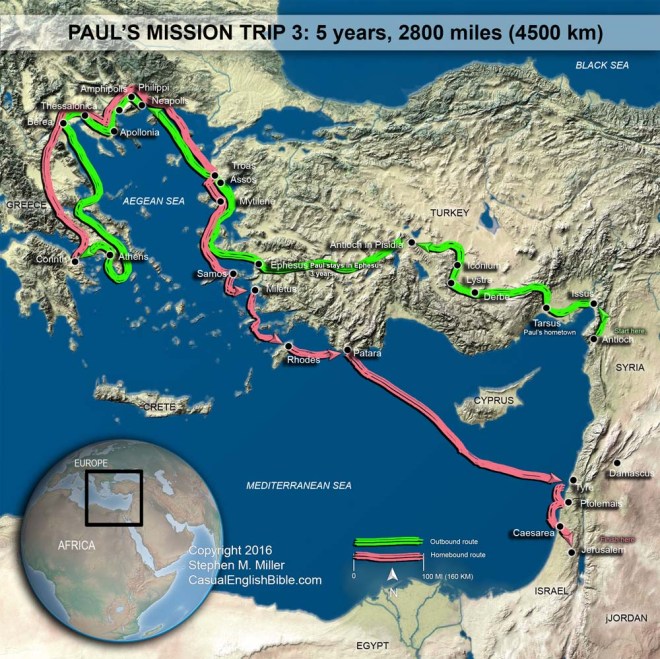
1 And when we had parted from them and set sail, we came by a straight course to Cos, and the next day to Rhodes, and from there to Patara. 2 And having found a ship crossing to Phoenicia, we went aboard and set sail. 3 When we had come in sight of Cyprus, leaving it on the left we sailed to Syria and landed at Tyre, for there the ship was to unload its cargo.

Refugees from the persecution that followed Stephen’s martyrdom had evangelized Phoenicia (11:19).  Paul and his companions “stayed” in Tyre for “seven days,” fellowshipping with the Christians.  Even though he was in a hurry to get to Jerusalem, he was held captive by the schedule of the shipping industry.

Paul’s next stop (v. 7) was “Ptolemais” (Acco of the Old Testament and modern Acre, located on the north side of the bay of Haifa) lay 25 miles south of Tyre.  It was the southernmost Phoenician port.  There also Paul met with the local Christians, while stevedores unloaded and loaded his ship.  He finally reached Caesarea Maritima (v. 8).

There, for a second time (vv. 10-12 and v. 4), Paul was urged not to go to Jerusalem.

Why did Paul avoid the possibility of death in Corinth (20:3), and other places, but not here?  Paul’s purpose to deliver the collection, and thus to strengthen the unity of the Gentile and Jewish believers, would have failed if he had died on board a ship between Corinth and Jerusalem.  However, arrest in Jerusalem would not frustrate that purpose. For Paul, and eventually for his friends (v. 14), the Lord’s will was more important than physical safety (cf. Luke 22:42).  He believed the Spirit wanted him to go to Jerusalem (19:21; 20:22) so he “set his face” to go there (cf. Luke 9:51). (Thomas Constable)  His ultimate purpose was to get to Rome.

Jerusalem was about 65 miles southeast of Caesarea, a long two-day trip. “Mnason” evidently became a Christian early in the history of the church, perhaps on the day of Pentecost. He was a Hellenistic Jewish Christian from Cyprus, like Barnabas was.  As such, he would have been more open to entertaining a mixed group of Jewish and Gentile Christians, than many Hebrew Jewish Christians in Palestine would have been. Apparently he lived about halfway between Caesarea and Jerusalem.

Paul finally achieved the first phase of his plan to visit Jerusalem and then Rome (19:21). In doing so, he brought one chapter of his ministry to a close and opened another.  His return to Jerusalem was an essential part of God’s plan to send Paul to Rome. This plan unfolds in the rest of chapter 21.  In all, Paul traveled about 2,700 miles on his third missionary journey (cf. 14:28; 18:22).

Paul first met with James and the elders, reporting on the tremendous success of their missions trip, spreading the gospel into Greece.  The problem was, however, that news had spread that Paul was against circumcision.  So they proposed that he take four men and “purify yourself along with them and pay their expenses, so that they may shave their heads. Thus all will know that there is nothing in what they have been told about you, but that you yourself also live in observance of the law” (Acts 21:24).

Paul could do what the elders suggested, and did so without compromising his convictions, since the Jews did not regard taking a vow as essential for acceptance by God.  It was strictly voluntary.  They regarded circumcision, on the other hand, as essential.  However, Paul did not even object to circumcision as a custom (earlier he had Timothy circumcised, 16:3), though he did object to it as a rite essential for God’s acceptance (Gal. 2). (Thomas Constable)

However, Jews from Asia stirred up the crowds and they seized Paul in order to kill him.  Fortunately, a Roman “tribune of the cohort” (21:31) rescued him and brought him back to their barracks.  The chapter ends with a cliffhanger, since Paul identifies himself as a free Jew and asks to speak to the angry mob, but that’s where the chapter ends.  Tune in tomorrow.

M’Cheyne Bible Reading Plan, January 20

Today’s readings are from Genesis 21, Matthew 20, Nehemiah 10 and Acts 20.

In the first four verses of Genesis 21 we see God doing what He had promised (vv. 1-2) and Abraham doing as he was commanded (vv. 3-4).  There is the laughter of Sarah’s delight (vv. 6-7) and the laughter of Ishmael’s derision (vv. 8-9).  Sarah told Abraham to cast out Ishmael (v. 10) and God comforted Abraham in doing so (vv. 11-13, so Abraham did so (vv. 14a).

Ishmael lived in the wilderness of Paran…

nahal paran, negev, vitali kaspler

Nahal Paran, Negev, Vitali Kaspler

The story of Hagar and Ishmael continues in vv. 14b-21.  God heard the cry of the boy and answered Hagar’s prayer for deliverance.  Vv. 22-34 recount a contention between Abraham and Abimelech.

Matthew 20 begins with the parable of the vineyard (vv. 1-16), a beautiful story about grace.  Keep in mind that this comes very soon after the incident with the rich young ruler, Jesus’ teaching about how hard it is for the wealthy to enter the kingdom, and the disciples giving it all up to follow Jesus (Matthew 19).

No matter when a servant began serving, they all received a denarius.  A denarius was a normal day’s wage at that time.

Image result for jewish day 3rd hour

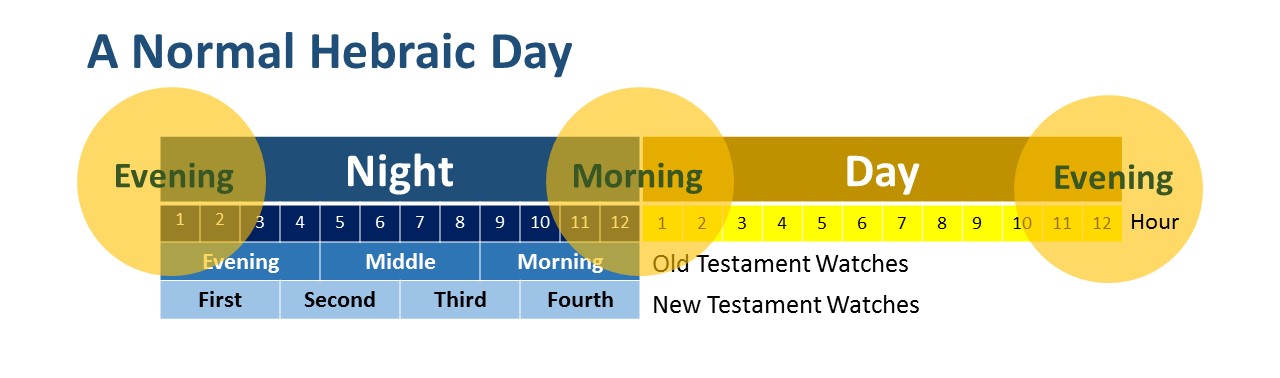
The first group began at 6 a.m. and worked until 6 p.m.  The second group began at 9:00 a.m. (3rd hour), the third group at noon (6th hour) and the last group started working at 5:00 p.m. (the 11th hour).

The order in which the landowner’s foreman paid the workers (“last to the first”) may imply that he took greater pleasure in rewarding those hired last.  In view of what he paid those hired late in the day, those who began working earlier expected to receive more than they had hoped for.  They grumbled against him because he had been “generous” (v. 15) to the latecomers and only just with them.

The early starters cited their hard working conditions as justification for their grievance.  Their error was that they had served for the pay they would receive, whereas those who served for only one hour did so simply trusting in the grace of their employer.

How do we feel when someone receives Christ after a lifetime of sin (or crime)?  Do we imagine them less worthy than we are?  Only if we don’t believe in salvation by grace.

Thomas Constable:

In view of the context, the 12 disciples correspond to the workers hired at the beginning of the day, the beginning of Jesus’ public ministry.  Those hired later correspond to other people who became Jesus’ disciples later in His ministry.  One of these people might have been the rich young man, if he had become a disciple (19:16-22).  Peter’s question about what the Twelve would receive (19:27) had implied that they should receive a greater reward, since their sacrifice had been, and later would be, greater.  This parable taught him that God would give him a just reward for his sacrificial labor for Jesus.  Nonetheless, God had the right to give just as great a reward [because of grace] to those whose service was not as long.

Jesus then pulls His disciples aside and tells them that He is going to Jerusalem to be crucified, then raised to life.  Instead of sympathizing with Jesus, the mother of James and John asked that her sons sit on Jesus’ right and left in the kingdom.

22 Jesus answered, “You do not know what you are asking. Are you able to drink the cup that I am to drink?”  They said to him, “We are able.”

The “cup” Jesus was referring to was the cup of His suffering.  Their answer shows that they did not immediately understand this.  Indeed, they would suffer (v. 23), but it was not Jesus’ privilege to grant a place of honor for these two.  Of course, the rest became indignant, because they believed that they were worthy of this honor, above the rest.

So Jesus reemphasized what He had been telling them all along–the values of the kingdom are upside down.  The last becomes first, the servant becomes the leader, and Jesus Himself would lay down his life for them.

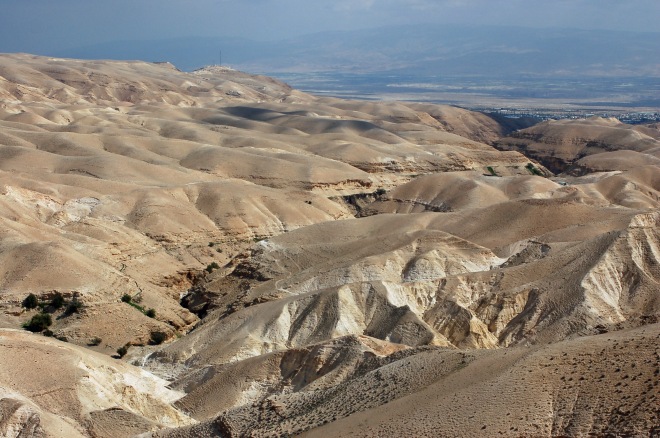
Jesus was on his way from Jericho to Jerusalem (v. 29)

Wadi el Qelt, Blick in Richtung des Jordangrabens (Jericho)

This is a photo of the Wadi Qelt, which would be the road from Jericho to Jerusalem.  Jericho is on the lower plain at the top of the picture.  Of course, this is the same road that the parable of the Good Samaritan occurs on.

On the road just up from Jericho were two blind men, asking to be healed (Matthew 20:29-34).

Nehemiah 10 indicates that the people covenanted with God.

Nehemiah explained the agreement he previously referred to in 9:38 in this chapter. Conviction of sin (ch. 8) led to confession of sin (ch. 9) and resulted in a renewed covenant with God (ch. 10).

Verses 1-27 identifies the signers of the covenant.  The names in verses 2-8 are those of the heads of 21 priestly families (cf. 12:12-21).  Verses 9-13 record the names of 17 Levites.  Then the writer gave the names of 44 heads of other leading families (vv. 14-27).

The rest of the restoration community joined those who signed their names pledging to obey the Mosaic Law (vv. 28-29).  The “curse” they took on themselves was submission to the curse that God promised would come on those who did not keep His Word (v. 29; Deut. 28:15-68).

These Jews promised, specifically, not to intermarry with pagans (v. 30) and to keep the Sabbath day and the sabbatical year (v. 31).  They further committed to support the temple service financially (vv. 32-34), to give their firstfruits to God (including their firstborn sons; vv. 35-37a), and to pay their basic tithe tax (vv. 37b-39).

The last sentence in verse 39 shows that the primary concern of the people was the worship that was the heart of their national life.

Unfortunately, Nehemiah will have to revisit all of these issues again in Nehemiah 13.

In Acts 20 Paul first checks in on some churches he planted (20:1-5) in Macedonia and Greece, before sailing back to Troas.

paul's 3rd missionary journey, stephen miller, casual english bible

Paul’s mega-long sermon put a boy to sleep (Eutyches) and he fell out the window.  Paul healed him.

For an article explaining while Paul went by land instead of sea, see Paul on the Road to Assos (Asia Minor/Turkey) by Carl Rasmussen.

You can see from the map above his other stops…

14 And when he met us at Assos, we took him on board and went to Mitylene. 15 And sailing from there we came the following day opposite Chios; the next day we touched at Samos; and the day after that we went to Miletus.

When he comes to Miletus he has a final, tearful but instructive, meeting with his elders from Ephesus (Acts 20:18-35).  These are good words about a pastor’s heart and ministry.

Three things that made Paul weep:

  • Christians who backslide (2 Cor. 2:4)
  • False teachers who lead the flock astray (Acts 20:29-31)
  • Unbelievers who would go to hell (Romans 9:2-3)

Links I Like

Principles for Pastoring Animals

I have never thought of this.  It was a quite interesting read and will help us pastors comfort those who have lost pets.

All We Did Was Survive

This is Scott Klusendorf’s status report on the abortion issue under Donald Trump.  He says, “Abortion is here to stay as long as millions of young Christians are uninformed, unequipped, and unconcerned.”

Gospel Doctrine; Gospel Culture

Ray Ortlund explains how doctrine informs our behavior.

Helping Your Teen Stay Emotionally Healthy on Social Media

Plenty of reports have noted a correlation between social media use and increased levels of depression and anxiety. So, how can parents help their teens stay emotionally healthy while using these platforms? Julie Masson suggests three things dads and moms can do.

Hanging in There – Or Hanging onto Christ?

This article by Sharon Sampson references a video of a hang gliding student who was not harnessed in and had to “hang on for dear life” until they could finally find a landing place.  I think the point of her article would could have added a third option to the title, “Or Held onto By Christ”?

But our security is not found in hanging on as tightly as we can, but in the hold that the Father and Son have on us.  From John 10…

27 “My sheep hear my voice, and I know them, and they follow me. 28 I give them eternal life, and they will never perish, and no one will snatch them out of my hand. 29 My Father, who has given them to me, is greater than all, and no one is able to snatch them out of the Father’s hand.30 I and the Father are one.”

Quotes to Ponder

The only thing necessary for the triumph of evil is for good men to do nothing. (Attributed to Edmund Burke)

For every look at yourself, take ten looks at Christ. (Robert Murray M’Cheyne)

My memory is nearly gone. But I remember two things: that I am a great sinner, and that Christ is a great Saviour. (John Newton)

He is no fool who gives up what he cannot keep to gain what he cannot lose. (Jim Eliot)

Image result for John flavel quotes


M’Cheyne Bible Reading Plan, January 19

Today’s readings are Genesis 20, Matthew 19, Nehemiah 9 and Acts 19.

Genesis 20 records Abraham’s time in Gerar, and lying about Sarah, again.

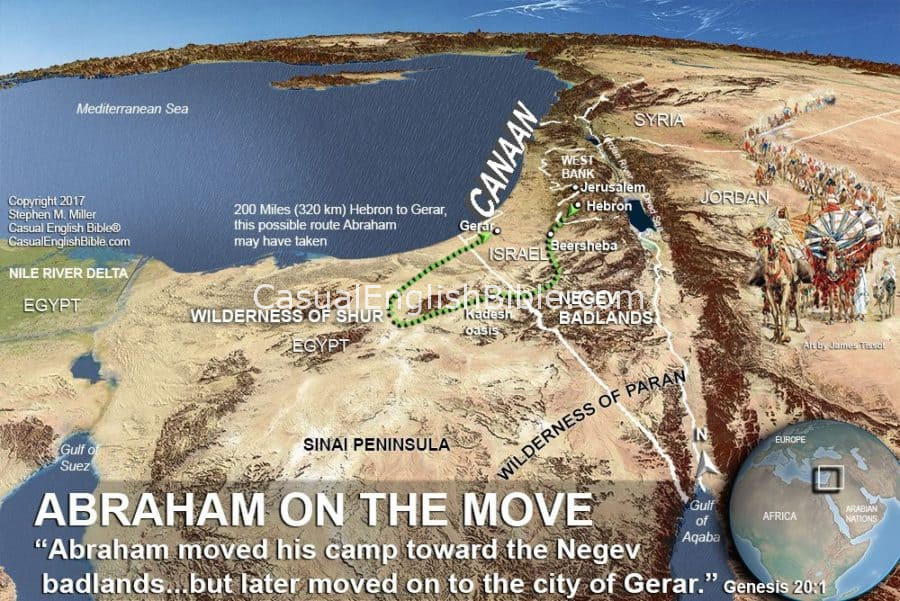
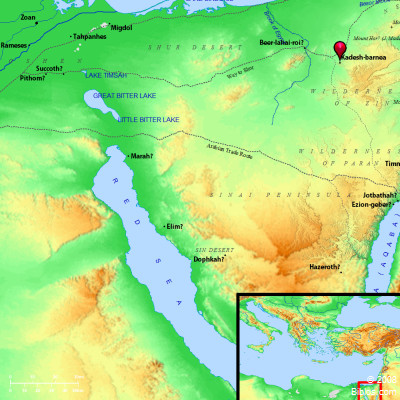
1 From there Abraham journeyed toward the territory of the Negeb and lived between Kadesh and Shur; and he sojourned in Gerar.

Image result for Genesis 20

Casual English Bible

Basically this chapter records Abraham’s lie (“Meet my sister”) and getting caught at lying.  Apparently it was a “half-truth” but it put Sarah and God’s promise of a son to Abraham at risk.  Helyer says…

“Apparently, shortly after the announcement of a birth one year hence, Sarah is again taken into another man’s harem.  The reader is to infer that if there is an heir, he is in danger of being reckoned as Abimelech’s not Abraham’s.  But Yahweh intervenes once again and preserves Sarah (20.6b) and restores her to Abraham.”

Our world is filled with fake news, misrepresentations and half-truths today.  How about you?

In verse 6 God says, “It was I who kept you from sinning against me.”  God directly intervenes, at times, to keep us from sinning, or give us a way of escape (1 Cor. 10:13).  Also, note, as David does in Psalm 51:4, that Abimelech was not sinning only against Sarah and Abraham, but against God as well.

It’s a sad day when pagans are telling believers “You have done to me things that ought not to be done” (v. 9).

This is always Abraham at his best, when he is interceding for others:

17 Then Abraham prayed to God, and God healed Abimelech, and also healed his wife and female slaves so that they bore children. 18 For the LORD had closed all the wombs of the house of Abimelech because of Sarah, Abraham’s wife.

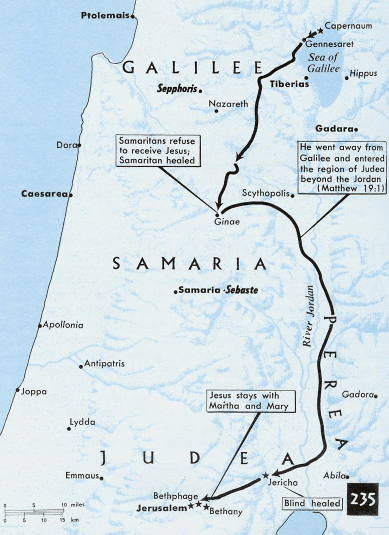
In Matthew 19 Jesus begins heading towards Jerusalem first entering “the region of Judea beyond the Jordan” (Matthew 19:1).

Image result for Matthew 19 map

Matthew 19:3-12 is Jesus’ teaching on the subject of divorce.  Divorce is not God’s design or desire (19:4-6), but God allows formal divorce (to protect the wife) due to hardness of heart (19:7-8), the exception being when adultery occurs (19:9).  The disciples then assumed it would be better not to marry (19:10), but Jesus said only those who could receive the saying (better not to marry) should do it.

To summarize, Jesus held a very high view of marriage.  When a man and a woman marry, God creates a union that is as strong as the union that bound Adam and Eve together before God created Eve from Adam’s side.  Man should not separate what God has united (cf. Rom. 7:1-3).  However, even though God hates divorce, He permits it in cases where gross sexual indecency (fornication) has entered the marriage. Similarly, God hates sin, but He permits it and gave instructions about how to manage it.

Paul urged His disciples not to divorce (cf. 1 Cor. 7:10), but if they divorced, he urged them not to remarry (cf. 1 Cor. 7:8, 11, 27).  However, he did not go so far as prohibiting remarriage (cf. 1 Cor. 7:9, 28). He encouraged them to realize that living unmarried after a divorce is a realistic possibility for many people, but he conceded it was not possible for all (cf. 1 Cor. 7:9).  A primary consideration should be how one could most effectively carry on his or her work of preparing for the kingdom (cf. 1 Cor. 7:32-34).

Jesus again commends childlikeness (19:13-15).  The difference between this lesson, and the one in chapter 18, is that there the focus was on the childlike quality of humility that is so important in a disciple.  Here Jesus broadened the lesson to include other childlike characteristics (dependent, needy, trusting, vulnerable), all of which are important.

Instruction about wealth begins with the incident with the rich young ruler (Matthew 19:16-22).  This man approached Jesus not on the basis of grace, but law, asking “Teacher, what good deed must I do to have eternal life?” (19:16)  So Jesus also dealt with him on the basis of law, facing him with the commandments, to which the young man says, “I’ve done all that.” (19:17-20).  So Jesus gets to the heart of the issue, the idol that still captured his heart, his wealth.

21 Jesus said to him, “If you would be perfect, go, sell what you possess and give to the poor, and you will have treasure in heaven; and come, follow me.”

I don’t think Jesus makes this requirement on everyone, but particularly those whose hearts are held captive by materialism.

22 When the young man heard this he went away sorrowful, for he had great possessions.

I’m sure the disciples, especially Judas, were cringing, wondering why Jesus was doing anti-evangelism, chasing promising candidates away.  He had a habit of doing so (John 6).  He was a rich, young man who was a ruler.  He had everything one would desire in a follower.  But Jesus made it harder on him, not easier.

Of course, ultimately, the law is preached so that all of us come face to face with our inability to keep it.  I imagine if this young man would have cried out, “Have mercy on me,” Jesus would have.

Verses 23-26 indicate the difficulty, but not impossibility of rich people entering the kingdom.

27 Then Peter said in reply, “See, we have left everything and followed you.  What then will we have?”

Still craving after earthly possessions Peter?  Jesus points him to something better!

29 And everyone who has left houses or brothers or sisters or father or mother or children or lands, for my name’s sake, will receive a hundredfold and will inherit eternal life30 But many who are first will be last, and the last first.

The revival continues in Nehemiah 9.  First, there is genuine sorrow over their sins (v. 1), then separation from sinful practices (v. 2).  They would read the Law for six hours each day and worship and confess sins another six hours (v. 3).  A prayer of confession comprises the rest of the chapter (9:5-38).

It begins, as the Bible does, by describing God’s greatness seen in His creation of the cosmos (v. 6), and then His grace and faithfulness in calling Abraham, promising him the land of Canaan, and fulfilling that promise (vv. 7-8).  The returned exiles could identify with God’s miraculous deliverance of their forefathers when they were slaves in Egypt (vv. 9-11).

The returnees could also appreciate God’s supernatural guidance of them and His faithful provision for them until He brought them to the Promised Land (vv. 12-15).  They also voiced thanks to God for choosing them and for giving them His Law (vv. 13-14).  While the second Exodus motif is strong in the biblical writers’ concept of the restoration, the idea of pilgrimage and procession to Zion is equally strong.

In spite of their forefathers’ rebellion (vv. 16-17a): God forgave them and graciously guided them (v. 19), provided for their physical needs (vv. 20-21), and gave them victory over their enemies (v. 22).  He also multiplied them (v. 23), brought them into the Promised Land (vv. 24-25a), and established them there (v. 25b).

During the period of the judges and during the monarchy, the Israelites disobeyed and rebelled many times.  Nevertheless, God delivered them when they repented (vv. 26-29) and sent the prophets to turn them back to Himself (v. 30).  This shows God’s further grace and compassion toward His people (v. 31).

The returned Jews then called on God to remember their sufferings in exile (v. 32).  They acknowledged that the exile was a consequence of their disobedience to God’s Word (vv. 33-34).  Even in exile, most of the Israelites had not returned to God (v. 35).  Consequently, much of the Jewish nation was still in bondage to its Persian rulers (vv. 36-37).

Paul Tripp’s New Morning Mercies spoke about Nehemiah 9 on January 16:

They really are two foundation stories of a God-honoring life.  They must be held together; neither side can be forsaken.  Every day you and I give empirical evidence to the existence of both.  Here are these foundation-stone realities: you still have sin living inside you and God is abundant in mercy.

[I like the way John Newton put it.  A new, young pastor William Jay came to Newton wanting advice about the ministry.  Newton was in his bed, health failing.  Late Jay came to realize the richness of a single line he had written down.  Newton’s final recorded words were: “My memory is nearly gone, but I remember two things: that I am a great sinner and Christ is a great Savior” (Tony Reinke, Newton on the Christian Life, p. 49).]

The words of Nehemiah 9 describe us all: “They…did not obey your commandments, but sinned against your rules” (v. 29).  Maybe it’s a thoughtless word, a selfish act, a prideful thought, a moment of envy, a flash of lust, a willing act of disobedience, an attitude of vengeance, or a minor moment of thievery; maybe it’s your wanting your glory more than God’s, failing to give grace where grace is needed, bending the truth, giving in to an addiction, or working to make these kinds of things in your life look not as bad as they actually are.  In some way, we all give daily proof of the truth that sin still lives inside us.  None of us is yet sin-free.  We all continue to fail in word, thought, desire, and action.  It is humbling but important to admit, because it’s only when you admit how deep and comprehensive your problem is that you get excited about the rescue that only God’s mercy can supply.

We aren’t just left in our sins.  Nehemiah 9 continues, “Nevertheless, in your great mercies you did not make an end of them or forsake them, for you are a gracious and merciful God” (v. 31).  You can be courageous in admitting your sin precisely because God is richly abundant in his mercy.  He comes to you in mercy not because you are unable to help yourself.  Since sin means that you are a bigger danger to you than anything else in your life and since it is impossible for you to run from you, there is only one hope for you.  It is that someone with power, wisdom, and mercy will invade your life, forgive your sins, and progressively deliver you from the hold that sin has had on you.  That mercy comes to you in a person, the Lord Jesus Christ, and his mercy is always fresh, uniquely fashioned for the sin struggles of this new day.

Acts 19 continues the third missionary journey of Paul.

Paul's Third Missionary Journey

Table - Paul’s Third Missionary Journey (A.D. 53 - 57)

Both the map and the chart are from Never Thirsty

In Acts 19:1-7 Paul encounters a group of John’s disciples.  Were they “Old Testament believers,” just following John’s message, or not believers at all?  Paul asked these men if they had received the Holy Spirit, probably because he saw some incongruity in their claim to be admirers of John and their evident lack of the Spirit.

Thomas Constable writes:

John had predicted the baptism of the Holy Spirit (Matt. 3:11; Mark 1:8; Luke 3:16; cf. John 1:32-33).  Their response to Paul’s question probably indicates that they did not know that the Lord had given the Holy Spirit as John had predicted.  It did not indicate that they knew nothing of the existence of the Holy Spirit, since John had predicted Holy Spirit baptism.  Their response enabled Paul to see that his first assumption about these disciples was incorrect; they were probably not Christians.

This discovery led Paul to raise another question to clarify his second assumption: “What” (which) baptism had they experienced, or with whom did they identify in baptism?  They replied that they had undergone “John’s” water “baptism.”  This response told Paul that they had not experienced Spirit baptism, and therefore were evidently unsaved.

As with the new converts in Samaria, these Ephesian disciples received “the Holy Spirit” when an apostle, this time Paul, “laid his hands upon them” (cf. 8:17).  They did not receive the Spirit by water baptism.  In Samaria, this identification of the coming of the Spirit with Peter and John first authenticated God’s giving of the Spirit in a non-Jewish context.  Here, similarly, the identification of the coming of the Spirit with Paul authenticated God’s giving of the Spirit in a town in which demonic religious activity flourished (cf. vv. 13-19).

Paul then reasoned in the synagogue with the Jews and later the Gentiles at the hall of Tyrannus.

The Celsus library.  Some believe the building to the left was the school of Tyrannus.  Leon Mauldin

For two years he taught there (Acts 19:8-12), until trouble was stirred up.  First, the seven sons of Sceva tried to exorcise demons in the name of Jesus, but got their tails whipped (Acts 19:13-16).  It showed that Jesus was a more powerful god than the forces of darkness worshipped there in Ephesus. It resulted in a deep work of repentance:

18 Also many of those who were now believers came, confessing and divulging their practices. 19 And a number of those who had practiced magic arts brought their books together and burned them in the sight of all.  And they counted the value of them and found it came to fifty thousand pieces of silver. [several million dollars!]

As a consequence of the repentance described in the preceding verses, the church became purer as well as larger (cf. 5:1-11).  Luke gave us this sixth progress report to mark the end of another section of his book.  The section we have just completed (16:6—19:20) records the church’s extension in the Roman provinces around the Aegean Sea.

Thomas Constable notes:

While in Ephesus, Paul had considerable contact with the church in Corinth.  He wrote that church a letter that he called his “former letter” in 1 Corinthians 5:9.  Then sometime later he wrote 1 Corinthians, probably near the spring of A.D. 56.  Timothy traveled from Corinth to Ephesus, then evidently went back to Corinth, and returned later to Ephesus (Acts. 18:5; 1 Cor. 4:17; 16:10-11; Acts 19:22).  Following Timothy’s visit to Corinth, Paul evidently made a so-called “painful visit” to Corinth (2 Cor. 2:1; 12:14; 13:1-2), and then returned to Ephesus.

After that painful visit, Paul wrote another “severe letter” to Corinth from Ephesus (2 Cor. 2:3-4; 7:8-12; 12:18).  These facts come to us through Paul’s two epistles to the Corinthians, the first of which he wrote during the years he used Ephesus as his base of operations.  He undoubtedly had other contacts with many other churches about which we know nothing. Luke’s purpose was not to give us a complete record of Paul’s ministry or the church’s growth as a whole.  It was to document the church’s advance to the heart of the Roman Empire (1:8), and to show, by repetition, how Jesus Christ was building His church (Matt. 16:18).

Then…

21 Now after these events Paul resolved in the Spirit to pass through Macedonia and Achaia and go to Jerusalem, saying, “After I have been there, I must also see Rome.”

Paul evidently sensed that, having laid a firm foundation in Asia Minor and the Aegean Sea region, he needed to press on to Gentile areas yet unreached (cf. Rom. 15:23).

Paul wanted to collect money for the poor Judean saints, from the more prosperous Christians in the Aegean region, and then deliver it to them in Jerusalem (cf. 24:17; 1 Cor. 16:1-4).  He realized that returning to Jerusalem would be dangerous for him (cf. Rom. 15:30-32), but he determined to go nonetheless.

A riot broke out in Ephesus because the gospel was bankrupting the idol industry (19:23-41).

Only one column remains of the famous Temple of Artemis.  Leon Mauldin

It was one of the seven wonders of the world and here is one artist rendition of the temple.

Image result for ephesus temple of artemis

DayDream Tourist


Hosea and His Children, part 2 (Hosea 1:7-2:1)

Last week we were in the midst of discussing the three children born to Gomer and the meaning of their names.

We talked about Jezreel, that God would first of all end the dynasty of Jehu in Jezreel, when Shallum assassinated king Zechariah.  But also Tiglath Pileser III would conquer Israel in the valley of Jezreel in 733 B.C. and the northern kingdom would soon come to an end in 722 B.C.   At that time, Israel would be “scattered” among the nations, forced to intermarry Gentiles.  That is one meaning of the name “Jezreel.”  The other is the idea that God “sows,” which actually speaks of God’s future restoration of Israel to the land.

tiglath-pileser's 734-732 b.c. e. campaigns

Then we started talking about the second born child, Lo-ruhamah, a name that means “not loved.”  This is one of the “most beautiful, and also the most elemental, of Yahweh’s attributes” (Anderson and Friedman, Hosea, p. 187).

We noticed how tragic it would be for a child to be so named, but that it would force Israel to acknowledge that they have forced Yahweh to send them off into exile because they had spurned his love time and time again.

“Since Yahweh is always, in his deepest being, rahum [love] the negation of his love cancels his most basic relationship with his people” (Anderson and Friedman, Hosea, p. 187).  It’s not simply that she is unpitied, but that she has been expelled from this love relationship.

And where there is neither rahum, nor salvation, the judgment against them is not so much the form of active destruction, but rather he deserts his people and leaves them weak and helpless to stand against their enemies.

Yahweh was turning his back on Israel, but not Judah.

In contrast, it says in verse 7 that the Lord would have compassion on the Southern Kingdom of Judah and deliver her from such a fate.  One wonders if this was meant to provoke Israel to jealousy.

He said deliverance would come by “Yahweh their God”, perhaps using His own name in this way to impress on the Israelites who their true God was.

He said He would not do this in battle, however.  The best equipped army is useless unless Yahweh gives the victory.  The Israelites relied on human arms and alliances, but the Judahites trusted in the Lord, generally speaking, so He delivered the Judahites supernaturally.

The Lord delivered them in 701 B.C., by killing 185,000 Assyrian soldiers in one night while they slept encamped around Jerusalem (2 Kings 19:32-36; Isa. 37).  Jerusalem was the only great city that did not fall to the Assyrians during this invasion of Syria-Palestine.  There would be no such reprieve for an impenitent Samaria.

And this would not be the only time when Judah would experience a supernatural deliverance, for this verse likewise points forward to the ultimate “in the last day” when God will fight for His people.

2 For I will gather all the nations against Jerusalem to battle [the battle of Armageddon], and the city shall be taken and the houses plundered and the women raped.  Half of the city shall go out into exile, but the rest of the people shall not be cut off from the city. 3 Then the LORD will go out and fight against those nations as when he fights on a day of battle. (Zechariah 14)

From this prediction by Hosea Israel should have realized that God will have compassion on those who trust in Him and do not seek security through their own devices (weapons, alliances).

Are the words of Hosea 14 speaking of present Israel, or future Israel?  If present Israel, then some people “got it” and turned back to God.

1 Return, O Israel, to the LORD your God, for you have stumbled because of your iniquity. 2 Take with you words and return to the LORD; say to him, “Take away all iniquity; accept what is good, and we will pay with bulls the vows of our lips. 3 Assyria shall not save us; we will not ride on horses; and we will say no more, ‘Our God,’ to the work of our hands.  In you the orphan finds mercy.”

Judah’s sins were not as great as Israel’s at this time.  Judah enjoyed a succession of four “good” kings (Joash, Amaziah, Uzziah, and Jotham), and Hosea may have received this prophecy when Uzziah or Jotham was reigning.

Now, Duane Garret argues that the end of verse 7 best reads from the Hebrew, “I will no longer show love to the house of Israel, I shall completely forgive them.”  That is a jolting statement, similar to what we see in the oracle of Lo-Ammi in verses 8-10.  It is also similar to the pathos of Hosea 11:8

8 How can I give you up, O Ephraim? How can I hand you over, O Israel? How can I make you like Admah? How can I treat you like Zeboiim? My heart recoils within me; my compassion grows warm and tender.

So Garrett says, “This inconsistency (first saying one thing, then the opposite) is the language of the vexation of a broken heart—and it also reflects the mystery of a God whose ways are above our ways.

The effect of this, of course, should have led Israel to repentance, just like Jonah’s oracles of Nineveh’s doom did.

“The severity of Yahweh’s rejection of Israel must be felt in order to comprehend and appreciate Hosea’s doctrine of salvation.  “Redemption is still possible, but not because Yahweh’s drive to pardon overcomes his will to punish and not because he spares a faithful portion of his people, in this instance, Judah.  Redemption does not begin until rejection is complete.  The nation is created again after it is totally destroyed” (Anderson and Friedman, Hosea, p. 197).

The name of the third child signals the final stage of judgment against Israel.  Lo-Ammi, “not my people,” “not mine” signified Yahweh’s divorce from Israel.  From defeat, to deportation, to divorce.  They are totally disowned.

“My people” was perhaps the most beloved title conferred on Israel by Yahweh.  It was their covenant relationship.

Again, this could possibly indicate that this third child, and possibly the second, were not Hosea’s.  That is debatable, but there is no doubt that the use of this name is the prophet’s means of saying that Israel has broken the covenant relationship and therefore God severs them from the covenant relationship.

The mention of weaning in verse 8 grounds this text in real history and since a child was weaned after two to three years, it may signify that Israel was being given a little more time to comprehend these prophecies and repent.

“Not my people,” however, signals a total change in their status.  Now, they are no longer God’s favored nation, but “just like everyone else,” alienated from God and His covenant promises.  The relationship and covenant between God and Israel is now null and void.

Ronald Vandermey notes:

God’s time clock for judgment had but one final alarm: Lo-AmmiJezreel had promised a scattering of the people; Lo-ruhamah, the withdrawal of God’s covenant mercy; and Lo-ammi, the severing of Israel’s peculiar position as God’s covenant nation. (Hosea, Moody Bible Institute, p. 23)

The phrase “you are not my people, and I am not your God” is a reversal of God’s pledge to Israel in Exodus 6:7

7 I will take you to be my people, and I will be your God, and you shall know that I am the LORD your God, who has brought you out from under the burdens of the Egyptians.

This name strikes at the very heart of the covenant that God had made with Israel at Sinai.

Because of his special relationship with them, he would deliver them; now that that relationship is over, judgment will come.

The reality is, that Israel had been acting like it had no relation with God for a long time.  They were not acting as children should, imitating their God, nor were they treating God as their God, instead going after Baals.

All the things that Israel treasured most–their homeland, the mercies of God, a special status with the one true God, were all about to be taken away.

But, that isn’t the end of the story.  Starting in verse 10, defeat, deportation, divorce and, at least metaphorically, death, will be replaced by resurrection, return and reunification.

Chapter 1, verse 10 is actually the first verse of chapter 2 in the Hebrew Bible, and it fits better there.  Only after the climactic naming of the third child is it possible to proceed to the total reversal supplied in verse 10 and following.

God’s judgments would not be staved off by the intervention of a prophet making effective intercession (as Moses had in Exodus 32), or by repentance (1 Kings 8) or out of sheer compassion.  Hosea makes no intercession for Israel, and certainly there is no change of heart.  So 1:10-2:1 express only what will take place after Yahweh has completed his judgment upon Israel.

These verses lie in Israel’s future, a remote future.  It is beyond possibility except for the direct intervention of God.

Listen to Hosea’s words of hope:

10 Yet the number of the children of Israel shall be like the sand of the sea, which cannot be measured or numbered. And in the place where it was said to them, “You are not my people,” it shall be said to them, “Children of the living God.” 11 And the children of Judah and the children of Israel shall be gathered together, and they shall appoint for themselves one head. And they shall go up from the land, for great shall be the day of Jezreel. 1 Say to your brothers, “You are my people,” and to your sisters, “You have received mercy.”

In these three verses we have the reversal of the judgments pronounced in 1:3-9 through the names of the three children.  First, a reversal of Jezreel.  Unlike the other two, it is not Jezreel’s name that is reversed, but another meaning that is possible in the name.

Remember that the name can mean “God scatters,” which is what would happen in judgment.  Assyria’s conquest of Samaria would mean that the Israelites were scattered throughout the Assyrian empire, thereby forcing them to intermarry with Gentiles.  They would lose their land, their religion, and in large part, their identity.

But Jezreel can also mean “God sows.”  This points to the return of the Israelites back to their homeland.

So Hosea’s oracles have three points of time in view: (a) the present situation, in which Israel was unfaithful to God, committing adultery with the Baals; (b) the impending situation of judgment, which would occur over the next 40 years; and then finally (c) a more remote and future state of affairs.

Despite the judgment they would experience, Yahweh revealed that the number of the Israelites would be as the “sand” grains of the sea, that is, innumerable.  This, of course, conveyed memories of the promise made to Abraham, the first and greatest ancestor of Isreal.  Their number can neither be measured or counted for its greatness.  One way or another God will fulfill His promise to Abraham.

He also said that in the same place where they heard His word of rejection (v. 9) they would hear His word of reinstatement, namely, in the land of Israel.  So they would return to the land, be numerous, and would unite under one head.

This promise was almost laughable in Hosea’s day.  In 738 B.C. according to 2 Kings 15:19-20, Israel had about 60,000 free landholders and that the nation was puny compared to the expanding Assyrian empire.

There was some return in the post-exilic years, even more since Israel became a nation in 1948, but the true fulfillment awaits a future day.

There, in the valley of Jezreel, God rejected them and declared “You are not my people.”  But these verses reflect the future hope of being reinstated.  We also need to realize that this promise is expanded in the New Testament to include Gentiles, in Romans 9:25 and 1 Peter 2:10.  That doesn’t mean that there will be no literal return of Israelites to the land, but that God’s promises include Gentiles as well under the new covenant.

They would again be “sons of the living God.”  This family terminology points to the restoration of intimate covenant relationship and privilege.  The “living God” title recalls Joshua 3:10, where Joshua told the Israelites that they would know that the living God was among them when they saw Him defeat their enemies in the Promised Land.

It also reminds one of the fact that God is the giver of life, both in creation and in resurrection.  Like the dry bones in Ezekiel’s vision, Israel will be raised “from the dead” in the future.

In this future day the Israelites would again see that Yahweh was the only living God (true God), when He will defeat their enemies and lead them in victory.

Verse 11 begins with notification of the two kingdoms—children of Judah and children of Israel.  That was the current situation.  But soon Israel would be no more.  But the two kingdoms are here distinguished in order to herald their future union under one head.

Verse 11 speaks of the reunification of the northern and southern kingdoms, and that they would have only one king instead of two (cf. 3:5; 2 Sam. 7:11-16; Isa. 9:6-7; Ezek. 37:22; Amos 9:11; Mic. 5:2).   This “one head” could be a second Moses, or, as 3:5 says, David.  More than likely, it is referring to the greater Moses and descendant of David, Jesus Christ.

That they “appoint” a leader rather than God giving them one doesn’t mean that democracy has replaced theocracy, but rather it stresses the unanimous spirit of the returned people.

“And they shall go up” is language resembling the initial Exodus.  The verb here is generally used for the movement from Egypt to the promised land (Hosea 2:17; cf. Exodus 1:10).  It is also the verb that descrbes the ascent from death (sheol) to new life (cf. 1 Sam. 2:6; Psalm 30:4).

The land from which they shall go up is not identified.  Is it Egypt or Assyria?  Is it the realm of the dead?  It could have both a historical meaning, referring back to the Exodus, an eschatological meaning, referring to return from future countries and a metaphorical meaning, returning to life.  As Moses led them out of Egypt, so this future leader will lead them out of death into life.

As Jezreel was a place of former victory for Israel (Judg. 7), so it would be again in the future (cf. Isa. 9:4-7; 41:8-16; Joel 3:9-17; Amos 9:11-12; Rev. 19:11-21).  This is a reference to the battle of Armageddon.


Then, in chapter 2:1, The Lord instructed future representatives of the restored nation to announce to their fellow Israelites—then—that they were again “My (God’s) people,” and that they were again Yahweh’s “loved one” (cf. Deut. 30:1-9; Rom. 11:25-32).

This glorious future finds its fulfillment in the end times—the tribulation, second coming and millennial kingdom.  In verses 1:10 through 2:1 the prophet promises five great blessings to Israel: (1) national increase (1:10a); (2) national conversion (1:10b); (3) national reunion (1:11a); (4) national (Messianic) leadership (1:11b); (5) victory over their foes in Jezreel (1:11c) and (6) a renewed covenant with Yahweh (2:1).

What is suggested by this dynamic reversal?  Perhaps it was said best by Abraham Heschel, who once said, “No word is God’s last word.”  In other words, there is always hope.  There is always a possibility to find grace through repentance.  That is why grace still amazes.


M’Cheyne Bible Reading Plan, January 18

Today’s readings are from Genesis 19, Matthew 18, Nehemiah 8 and Acts 18.

Genesis 19 records the destruction of Sodom and Gomorrah and the rescue of Lot’s family (almost).  Derek Kidner indicates, ” It is a superb study of the two aspects of judgment: the cataclysmic, as the cities disappear in brimstone and fire, and the gradual, as Lot and his family reach the last stages of disintegration, breaking up in the very hands of their rescuers” (Genesis, p. 134).

The two angels (see Genesis 18) who had left Abraham, came to Lot at Sodom.  Notice that Lot had a similar response as Abraham:

When Lot saw them, he rose to meet them and bowed himself with his face to the earth 2 and said, “My lords, please turn aside to your servant’s house and spend the night and wash your feet. Then you may rise up early and go on your way.”…And he made them a feast and baked unleavened bread, and they ate (v. 3b).

These seem to be normal aspects of Ancient Near Eastern hospitality.

Men of the city of Sodom came to Lot’s house and asked for these two newcomers “that we may know them” (sexually, not “get acquainted”).  Sadly, Lot offers his virgin daughters (v. 8).  Is this because Lot saw it as a “lesser offense” or because, according to the mores of hospitality, he was protecting his guests?  Either way, it was not a courageous response.  He was giving in to the pressure.

One can see from verse 9 that Lot had lost his ability to influence that culture.  Apparently, either through previous interaction or Lot’s response in this case, they knew he would not stand strong against peer pressure.  Even his own sons-in-law didn’t take him seriously (v. 14), so only Lot and his wife and two daughters (4, not 10) left Sodom with the angels.

Sailhamer notes:

“In order to show that the rescue of Lot was in response to the prayer of Abraham, the narrative reads so that the words of the messengers [“swept away,” vv. 15, 17] recall explicitly the words of Abraham’s prayer in behalf of the righteous in the previous chapter [“sweep away,” 18:23].”

Verse 16 “But he lingered.”  Even when Lot had heard the message of impending judgment on Sodom, he wavered.  He did not respond immediately, unlike Abraham will in Genesis 22.  “So the men seized him and his wife and his two daughters by the hand, the LORD being merciful to him, and they brought him out and set him outside the city.”  That is what God has to do at times.  When we are unwilling to make a move, in mercy he “seizes” us and “takes” us to the place we need to be.

The rescue of Lot and his family was due ultimately to the Lord’s mercy (“compassion”; v. 16).

When the angels tell Lot and his family not to look back, but to speed on their way to the hills, Lot begs that they be allowed to (compromise?) go the little town of Zoar.  The final word we have on this event is that Lot’s wife looked back, though told not to (compare v. 26 to v. 17) and turned into a pillar of salt.

Vv. 27-29 tell us that Abraham stood and watched to see what had happened.  Like a good intercessor, when he had finished praying, he watched to see what would happen.  He saw the smoke of God’s judgment and didn’t know what had happened, but God “remembered Abraham” and rescued Lot (v. 29).

Verses 30-38 then recount the sad story of how the Moabites and Ammonites came into existence–through incest.  Thus, there are all kinds of sexual sins in relation to Lot and Sodom and Gomorrah.


moab looking east across the dead sea

The land of Moab on the east side of the Dead Sea.

Some want to argue that God didn’t destroy Sodom and Gomorrah for the sin of homosexuality, but inhospitality.  That doesn’t seem to be the case.  Lot was definitely sticking to the customs of hospitality, and the people of Sodom wanted to “entertain” these men as well.  It was their intention to “know” these men sexually, as well as other immoralities within the culture, that caused their destruction.  The Mosaic Law later regarded all homosexual behavior as a capital offense (Lev. 18:22; 20:13; cf. Rom. 1:26-27).

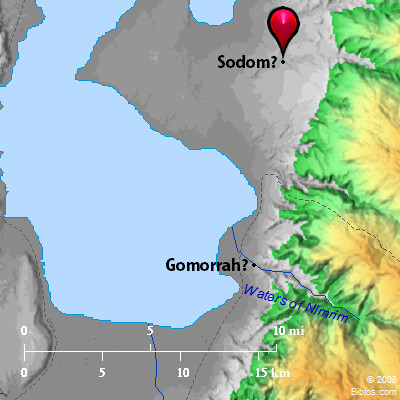
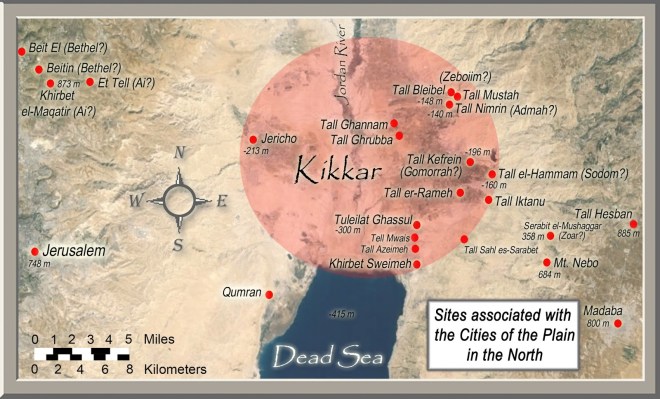
There is also disagreement on where Sodom and Gomorrah existed, north of the Dead Sea or south of the Dead Sea.  Abraham would have been able to see the smoke from either end of the Dead Sea.

Image result for location of sodom and gomorrah

Bible Atlas

biblicalarchaeologygraves.blogspot.com

Matthew 18 begins with the disciples asking, “Who is the greatest in the kingdom of heaven?” (18:1).  Jesus points to a child and says that one cannot even enter the kingdom unless they become “like children” (trusting? curious? dependent?).  He tells them that humility is the key, then warns about tempting a child.  According to Jesus there could not be a worse sin than causing a child to sin.  It would be better to amputate a strategic part of your body and cause a child to sin.

I wonder if Jesus had pedophilia in mind?  However, Jesus seems to be equating children with believing disciples (adults).

Matthew 18:10 is where we get the idea of the possibility of “guardian angels.”

“I tell you that in heaven their angels always see the face of my Father who is in heaven.

Thomas Constable writes:

Many interpreters believe that the last part of verse 10 teaches that God has guardian angels who take special care of small children.  However, the context of verse 10 is not talking about small children, but disciples who need to be as humble as small children.  Furthermore, the “angels” in this passage are “continually” beholding God’s “face in heaven,” not watching the movements of small children on earth.

Jesus then gives a parable about humility (vv. 12-13).  In Luke’s gospel the purpose of this parable is evangelistic.  Here it is more pastoral.

12 What do you think? If a man has a hundred sheep, and one of them has gone astray, does he not leave the ninety-nine on the mountains and go in search of the one that went astray? 13 And if he finds it, truly, I say to you, he rejoices over it more than over the ninety-nine that never went astray. 14 So it is not the will of my Father who is in heaven that one of these little ones should perish.

The shepherd in the story is God (v. 14).  The sheep are those who follow Him, namely, Jesus’ disciples (cf. 10:6; 15:24).  God has concern for every one of His sheep and seeks to restore those of them that wander away from Him.  He has such great concern for the wayward, that when they return to Him, “He rejoices more” than over those who did not wander away.  This does not mean that God loves His wayward sheep more than He loves His faithful sheep.  It simply means that when wayward sheep return to Him it gives Him special joy.

So, verses 1-11 warn us not to be a stumbling block to others, and then in vv. 15-17 Jesus tells us what to do when someone sins against us.  This is the “church discipline” passage, identifying the three steps to dealing with sin.

15 “If your brother sins against you, go and tell him his fault, between you and him alone.  If he listens to you, you have gained your brother. 16 But if he does not listen, take one or two others along with you, that every charge may be established by the evidence of two or three witnesses. 17 If he refuses to listen to them, tell it to the church.  And if he refuses to listen even to the church, let him be to you as a Gentile and a tax collector.

We have often understood the final step, excommunication, to mean that we cut off all contact with unrepentant sinners, but Jesus seemed to favor spending time with “Gentiles and tax collectors.”  He did have a different purpose in doing so, however–not fellowship, but evangelism.  I’m assuming that what Jesus means is that if we see a “believer” sinning and not repenting of sin, then we treat them like an unbeliever who needs the gospel preached to him or her.

I don’t believe a person can lose or forfeit their salvation, but their lives can eventually prove they never were saved, no matter how much they acted and dressed and talked and attended like Christians before.

All of these next three verses need to be taken together:

18 Truly, I say to you, whatever you bind on earth shall be bound in heaven, and whatever you loose on earth shall be loosed in heaven. 19 Again I say to you, if two of you agree on earth about anything they ask, it will be done for them by my Father in heaven. 20 For where two or three are gathered in my name, there am I among them.”

I think verse 18 helps us understand what Jesus had meant back in Matthew 16:19 (the exact words).  With the church announcement, they would give or withhold whatever the judgment might involve, but they would really be announcing what God, the divine authority, had already decided.  Their decision would be God’s will for the person being disciplined, assuming they had obtained the will of God before announcing it.

Believers have the ability, through either forgiveness or excommunication, to be in accord with how God is handling things in heaven.

Verses 19-20, so often taken as promises for (sparse) prayer meetings, is really about the issue of church discipline.  In the context, “anything” refers to any judicial decision involving an erring disciple that the other disciples may make corporately.  God has always stood behind His judicial representatives on earth when they carry out His will (cf. Ps. 82:1).  This is a wonderful promise.  God will back up with His power and authority any decision involving the corporate discipline of an erring brother or sister that His disciples may make after determining His will.

This means that what a church decides (with due process and much prayer) should be taken very seriously by all, for it has heaven’s backing.  What typically happens, however, is that a person excommunicated from one church, is gladly welcomed (and often sympathized with) at another church.

The chapter ends with Peter’s question about how often should I forgive someone who sins against me.  Peter thought himself magnanimous when he said “seven times” for the going rate among the Pharisees was just three times.

Jesus’ response alluded to Genesis 4:24, where the ungodly Lamech said: “If Cain is avenged sevenfold, then Lamech seventy-sevenfold.”  Lamech claimed to have taken even more revenge on the man who struck him than God had taken on Cain for killing his brother Abel.  Jesus turned Lamech’s bad example around, and urged His disciples to practice generous forgiveness when their brothers hurt them.

The NASB has Jesus saying “seventy times seven,” whereas the NIV translators wrote “seventy-seven times.”  Probably the NIV is correct since Jesus quoted the Septuagint of Genesis 4:24 exactly here, and it has “seventy-seven times.”  Even though the difference between these two translations is great numerically, it is not a very important difference.  Jesus was not specifying a literal maximum number of times His disciples should forgive their brothers.  Neither was He wiping out what He had just taught about confronting an erring brother (vv. 15-20).

Jesus’ point was that disciples who are humble should not limit the number of times they forgive one another, or limit the frequency with which they forgive each other.  The following parable of the unmerciful servant clarified this point.  This one of the skits we acted out in Godspell last Spring.  I was the fellow servant who owned 100 denarii who got choked and kicked.

How was it possible for him to pay his debt from prison?

34 And in anger his master delivered him to the jailers,until he should pay all his debt.

This man was turned over to the torturers, had an impossibly high debt to pay, and couldn’t possibly pay it from prison.  Jesus is obviously not talking about purgatory, where one can (reportedly) work their way, or be prayed and purchased, out of punishment.

Jesus drew the crucial comparisons in applying the parable to His disciples (v. 35).  He pictured God as forgiving graciously, yet punishing ruthlessly.  God cannot forgive those who are devoid of compassion and mercy because He is so full of these qualities Himself.  Jesus did not mean that people can earn God’s forgiveness by forgiving one another (cf. 6:12, 14-15).  Nor does he mean that believers can lose their salvation if they fail to forgive.

I believe it does point out our true identity.  Someone who refuses to forgive, shows that they never were forgiven.  Someone who tries to forgive, but has difficulty forgiving, needs to remind themselves how much they have been forgiven by God.

Was this just hyperbole to drive home a point?  No, there are many negative consequences to being unforgiving, both in this life and in the life to come (loss of reward among them).

Thomas Constable concludes:

Jesus concluded this discourse on humility, as He had begun it, with a reference to entering the kingdom (v. 3).  Humility is necessary to enter the kingdom because it involves humbly receiving a gift of pardon from God (v. 27).  However, humility must continue to characterize the disciple.  Not only must a disciple live before God as a humble child (v. 4); he or she must also be careful to avoid putting a stumbling block in the path of another disciple (vv. 5-14).  Furthermore, he or she must humbly seek to restore a wayward fellow disciple (vv. 15-20).  Forgiving fellow disciples—wholeheartedly and completely—is likewise important for humble disciples (vv. 21-35).

Nehemiah 8 describes an amazing transformation in the returned exiles, which was due to the Word being preached.  The people were gathered…

3 And he read from it facing the square before the Water Gate from early morning until midday, in the presence of the men and the women and those who could understand.  And the ears of all the people were attentive to the Book of the Law.

The people had told Ezra to bring the “book of the Law” (Nehemiah 8:1) and they listened for a good six hours (standing, v. 5) AND THEY WERE ATTENTIVE.  Now, remember, this is “the Book of the Law” being read, not all of which is all that riveting.  Yet, through all the case laws of Exodus and offerings of Leviticus and census counts of Numbers, they paid attention.

Not only did Ezra read, but men went throughout the crowd helping them understand what was being read (Nehemiah 8:7).  Apparently, those who had grown up in Babylon and Persia spoke Aramaic and had forgotten some of their Hebrew.  The languages are similar (ben is “son” in Hebrew and “bar” is son in Aramaic, but that’s about all I remember).

8 They read from the book, from the Law of God, clearly, and they gave the sense, so that the people understood the reading.

This is essentially what expository preaching is–giving the sense of Scripture–so that people can understand what it says and means.

Their natural response was weeping, mourning over their sins, but Nehemiah and Ezra told them rejoice and hold a feast, for “the joy of the Lord is your strength” (Nehemiah 8:10).  I believe they are saying that delighting in the Lord is our strength.  Delighting in the Lord gives us strength against temptation and for obedience.  But it might mean “God’s delighting in you” is your strength.  That is certainly true as well, but given the fact that they are to engage in joyful celebration leads me to adopt the first meaning.

That wasn’t the end of it.

13 On the second day the heads of fathers’ houses of all the people, with the priests and the Levites, came together to Ezra the scribe in order to study the words of the Law.

A men’s Bible study started.  They discovered that God’s Word commanded the Feast of Tabernacles–living in makeshift huts for a week to remind them of the wilderness wanderings.  It recalled the protection, preservation, and shelter that God had provided for His people.  It had special significance for these Jews because it had originally been celebrated in preparation for entering the land and now they were celebrating it as they had returned to the land!

18 And day by day, from the first day to the last day, he read from the Book of the Law of God.  They kept the feast seven days, and on the eighth day there was a solemn assembly, according to the rule.

What a Bible conference!  Constant study of God’s Word, repentance, joy and obedience.

Nehemiah did not record whether the people also observed the Day of Atonement that fell on the tenth of the same month.  Probably they did, since they were restoring the other Israelite institutions.  Perhaps he passed over mentioning it because the Day of Atonement was a sad day in the Jewish year.  It was the only fast among Israel’s festivals wherein the people afflicted themselves in repentance for their sins.  Nehemiah seems to have wanted in this chapter, and in the whole book, to emphasize the positive aspects of the restoration, namely, God’s faithfulness and the people’s joy.

“Perhaps more than in anything else, Ezra’s importance lies in the fact that he put the Bible of his day into the hands of the laity; it was no longer the exclusive preserve of the ‘professionals.’  Much of the shape of Judaism thereafter was determined by this fundamental achievement.” (Williamson, Ezra-Nehemiah, p. 298).

Acts 18 records Paul’s ministry in Corinth (18:1-17) and Asia (18:18-22) on his second missionary journey

corinth full page map, bible atlas

Bible Atlas

IDL TIFF file
IDL TIFF file

Wikemedia

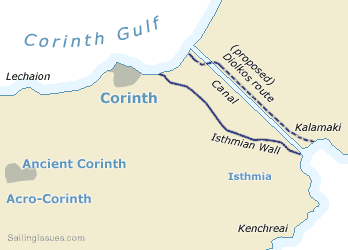
There was an important canal/road across the isthmus which connected east to west.

corinth canal and diolkos

This made Corinth a very important, influential, and thus worldly city.  In the ancient world to “corinthianize” was to commit immorality.

Paul’s ministry in Corinth began with the Jews (v. 4), then transitioned to Gentiles (v. 6).

And many of the Corinthians hearing Paul believed and were baptized. 9 And the Lord said to Paul one night in a vision, “Do not be afraid, but go on speaking and do not be silent, 10 for I am with you, and no one will attack you to harm you, for I have many in this city who are my people.” 11 And he stayed a year and six months, teaching the word of God among them.

But, that eventually ended as well.  The Jews attacked Paul, bringing him before a tribunal, but the proconsul Gallo would have nothing to do with it.

Paul had attempted to reach the province of Asia earlier (16:6).  Now the Lord permitted him to go there, but from the west rather than from the east. Luke recorded Paul’s initial contact with Ephesus, in this section, which set the scene for his ministry there when he later returned from Syrian Antioch (ch. 19).

Paul had apparently made a vow at Cenchrae (see map above).  While vows are not encouraged, they are acceptable.  The Jews used them to either gain something from God, or thank God for giving them something.  Paul may have vowed to give God thanks for the protection he had received while in Corinth (cf. Acts 18:9-10).

Paul then sailed for Ephesus and had a short ministry there (Acts 18:19-21), promising them that he would return to them.  Eventually he landed back in Caesarea Maritima and then went back to Antioch.  Likely, he gave them a report of his second missionary journey (just as he did after his first journey, Acts 14:27).

In Acts 18:31 Paul begins his third missionary journey.

paul's third missionary journey, baker publishing group

Paul spent some time going through Asia Minor, strengthening the disciples.  He eventually would arrive at Ephesus to begin a three-year ministry there, but first Luke tells us about Apollos (Acts 18:24-28).  Apollos faithfully proclaimed what he knew, but didn’t know about Christian baptism.  Prisca and Aquila took him aside privately and helped him understand more about the Messiah, and grace, and baptism.

Homer Kent says…

“Before the encounter with Aquila and Priscilla, it is best to regard Apollos in the same class as OT saints.  They too hoped for salvation in Messiah and had not rejected him.  The entire Book of Acts depicts the transition from Judaism to Christianity.  It is not surprising, therefore, to find imperfect forms of faith during those epochal days.” (Jerusalem to Rome: Studies in Acts, p. 149).

We will run into another example in the early part of Acts 19.

I love what A.T. Robertson says as well…

“It is a needed and delicate task, this thing of teaching gifted young ministers.  They do not learn it all in schools.  More of it comes from contact with men and women rich in grace and in the knowledge of God’s ways.” (Word Pictures in the New Testament, Volume 3:308).


M’Cheyne Bible Reading Plan, January 17

Today’s readings are Genesis 18, Matthew 17, Nehemiah 7 and Acts 17.

Genesis 18 is Abraham’s prayer for the inhabitants of Sodom and Gomorrah, or more particularly (as God understood his heart) for Lot and his family.  It begins with a visit from three “men,” the LORD (a Christophany, or appearance of Christ before His incarnation) and two other angels (Genesis 19:1).

Notice how Abraham greets and treats his guests.  First, he noticed them coming.  He wasn’t preoccupied with himself.  Second, he ran to meet them.  He didn’t wait for them to come inside.  Third, he bowed down, showing respect.  Then he served them, washing their feet and offering rest and refreshment.  He prepared the best and served it quickly (18:6-7), then watched them eat (18:8).  I think these are some great guidelines for those involved in greeting ministries in churches.

The LORD took the opportunity to tell Abraham that he would have a son “this time next year.”  Sarah laughed at the thought that she, old and worn out as she was, could have a child.  God scolded her, saying that His promise was good.  The issue was not Sarah’s ability to have a child, but God’s ability to give one.

Because of God’s covenant with Abraham (Genesis 18:17-19), the LORD revealed to Abraham his intended judgment upon Sodom and Gomorrah.  Their “sin was very grave” (Genesis 18:20).  Abraham’s intercession begins in verse 23, gradually “bargaining” with God to save the city if even ten righteous persons were found there.  I imagine that Abraham felt pretty safe stopping at ten, thinking that Lot and his family and even a couple more people could be found righteous.  But that was not the case.  God knew Abraham’s heart, however, and Genesis 19 will show God answering Abraham’s prayer even though he didn’t pray it that way–Lot and his daughters will be saved.

In the midst of his prayers Abraham said this about God’s justice:

25 Far be it from you to do such a thing, to put the righteous to death with the wicked, so that the righteous fare as the wicked!  Far be that from you! Shall not the Judge of all the earth do what is just?”

In Abraham’s mind, punishing the righteous with the wicked was unthinkable, and he imagined it was something a just God couldn’t do.  In fact, the Judge of all the earth always does what it just, by nature, by definition of who He is.

God does not conform to a law outside of Himself.  He makes the laws because He is just.  Does that mean that God is arbitrary, making laws that suit him?  No, they arise out of His character, which is always just and right.

Matthew 17 begins with the transfiguration of Jesus.  It happened on a high mountain.  Some believe it was Mount Tabor, others Mount Hermon.  I’m going with Mount Hermon since Jesus was at the foot of it in Caesarea Philippi in Matthew 16.

mount hermon, looklex

Jesus appeared before them in (still veiled) glory, Moses and Elijah were there (talking about Jesus’ departure (Luke 9:31).  Peter wanted to build tents for them all but God spoke from heaven, again affirming Jesus and his ministry, “This is my beloved Son, with whom I am well pleased; listen to him.”  In other words, as great as Moses and Elijah were (and still highly revered by Jews at that time), my Son is greater.

I love verse 8

8 And when they lifted up their eyes, they saw no one but Jesus only.

Oh, that that was our only vision–to see Jesus Christ above the crowds, above the distractions, above the noise, above the praise and achievements, above the world!  Above the law and prophets!

When Jesus and his inner circle descended to the valley, they were faced with a man with an epileptic son who had a demon that could not be case out by Jesus’ disciples.  Jesus confronts the disciples with their lack of faith.  It really only takes a little faith in an Almighty God.

“Moving a mountain” may have come from Herod’s attempt to build himself a palace at Herodium.  It was a man-made “mountain” just north of Jerusalem.Herodium

Herodium from the north.  Photo by Ferrell Jenkins.

With the wall finished, Nehemiah established guards (Nehemiah 7:1-3) and priests and singers, then enrolled the people by genealogy to try to repopulate Jerusalem (7:5-73).

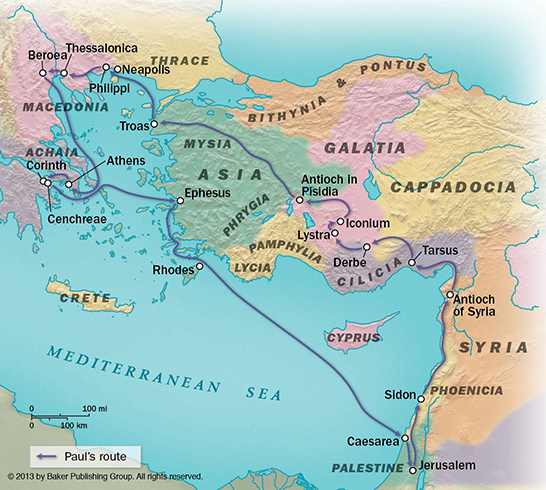
Acts 17 continues Paul’s second missionary journey to Thessalonica (17:1-9, 3-4 weeks, according to v. 2), Berea (17:10-14), then Athens (17:15-34).

paul's second missionary journey, baker publishing group

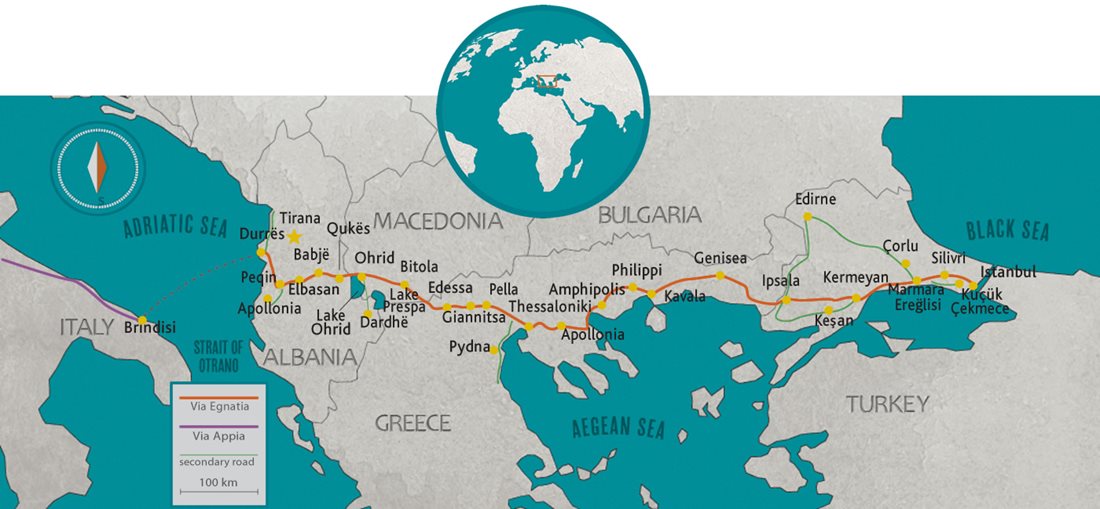
Paul’s normal practice is to first go to the synagogues and “reason” (debate) with the Jews from the Scriptures (17:2).  He does this until Jews reject him, then he turns to the Gentiles.  Success with the Gentiles leads to trouble and Paul will have to move on.  Paul spends little time in Amphipolis and Apollonia likely because there were no synagogues in these towns.  A day’s journey of 35 miles on the Via Egnatia would take them to Thessalonica.

Image result for via egnatia

Here is a picture looking out from the modern city of Thessaloniki to the Aegean Sea.

thessaloniki sunset from eptapyrgio castle, sumfinity

Photo: Nico Trinkhaus – https://sumfinity.com/hdr-photos/greece/thessaloniki/sunset-sea-eptapyrgio-castle/

You can access his photos by going to his website www.sumfinity.com.

As a pastor, I’ve always loved v. 11

11 Now these Jews were more noble than those in Thessalonica; they received the word with all eagerness, examining the Scriptures daily to see if these things were so.

I eagerly desire my congregation not only to receive my preaching “with all eagerness” but then to “test it” by examining the Scriptures to see if what I say lines up with Scripture.  If Paul delighted in it, then so do I.

In Athens, Paul reasoned with Gentile “philosophers” of the day.  Paul didn’t use the Scriptures so much, like he did with the Jews, but first made a point of contact, your altar “to the unknown God” (17:23).  He identifies this “unknown” God as the creator and giver of life (17:24), who needs nothing or no one but gives life to all (17:25).

Verses 26-27, for me, help me understand how we can answer the question, “Well, what about those who have never heard the gospel?”

26 And he made from one man every nation of mankind to live on all the face of the earth, having determined allotted periods and the boundaries of their dwelling place, 27 that they should seek God, in the hope that they might feel their way toward him and find him. Yet he is actually not far from each one of us,

God has determined to place those who would seek and find God in the eras and countries where a gospel presence would be found.  By the way, this same Paul said, “No one seeks God” (Romans 3:10).  So which is it?  I would answer that no one seeks God purely on their own, without any outside influences.  But that once the Spirit begins to woo and convict us of our sins, we begin to seek, maybe first we seek truth, or peace, or forgiveness, but then God will bring a gospel preacher to help us find those things in Jesus Christ.

Another part of that issue is that no innocent person is ever sent to hell, because there are no innocent people.  We are all guilty of “cosmic treason” (R. C. Sproul) and “love the darkness” naturally.  All have sinned and fall (far) short of the glory of God.

Continuing on in Acts 17, Paul next quotes some of their very own poets, using them to show that God brings life and therefore holds us accountable.

30 The times of ignorance God overlooked, but now he commands all people everywhere to repent, 31 because he has fixed a day on which he will judge the world in righteousness by a man whom he has appointed; and of this he has given assurance to all by raising him from the dead.”

Here is another passage of the judge of the world doing “right.”  Now is the time for repentance because there will come a day of judgment.  It is “fixed” and certain.  And we know it will happen because that judge has been raised from the dead.

The resurrection of Jesus tripped up some, but others believed.

M’Cheyne Bible Reading Plan, January 16

Today’s readings are Genesis 17, Matthew 16, Nehemiah 6 and Acts 16.

Well, finally I get to call him Abraham.  It was difficult remembering to write Abram.  Here in Genesis 17 he gets a name change.  God renews the covenant at age 99.  Abram has been waiting 24 years for God to fulfill His promises.

After God told Abraham everything “I will do” (Genesis 17:4-8), he tells Abraham that the sign of that covenant was to be circumcised and to circumcise every male.  As someone once said, “Couldn’t it have been a secret decoder ring???”

Sarai (whom, I confess), I’ve been calling Sarah, got her name change too.

Amazingly, in light of Romans 4:, Abraham again asks if Ishmael can fulfill God’s promise for a son (17:17-18).  God says “NO!” and names a son soon to come, Isaac, who would be born “at this time next year” (17:21).  Abraham obeyed God and every male was circumcised, even Ishmael.

complete genealogy of abraham, conformingtojesus

perpetual hatred (arabs and jews)

This family tree is from an article called Perpetual Hatred, by Keith Robichaud

In Matthew 16 the Pharisees try to force Jesus to show them a sign, to which Jesus gives them the “sign of Jonah.  Jesus then spent time explaining to the disciples not to take part in the “leaven of the Pharisees,” their teachings and interpretations of the law.

Jesus is now at Caesarea Philippi…

map

One can see the very northern end of the Sea of Galilee at the bottom.  Caesarea Philippi was near the foot of Mount Hermon, the tallest elevation in Israel.  At this place, as far from Jerusalem and Jesus’ opponents as possible, Jesus proceeded to give them important revelation concerning what lay ahead for Him and them.  Here, Peter would make the great confession of the true identity of Jesus, whereas in Jerusalem to the south, the Jews would deny His identity.  In this safe haven, Jesus revealed to the Twelve more about His person, His program, and His principles as Israel’s rejected King.

gates of hell aerial

This is an aerial photo of the cave on the that many at that time believed was the gate to hades.

artist rendition of what caesaria phillipi might have looked like in jesus' day

Here is an artist’s rendering of the structures that would have been in place at the time of Jesus.  There was a temple to Pan in front of the grotto.

Then Jesus pops the question, “Who do people say that the Son of Man is?”  After getting several popular responses, he asks, “Who do you say that I am?”  Peter’s answer, revealed to him by the Father (Matthew 16:17) is “You are the Christ, the Son of the Living God” (Matthew 16:16).

Simon is blessed and a prophesy is given that “you are Peter, and on this rock I will build my church, and the gates of hell shall not prevail against it. 19 I will give you the keys of the kingdom of heaven, and whatever you bind on earth shall be bound in heaven, and whatever you loose on earth shall be loosed in heaven.”

The “rock” that the church would be built upon is likely Jesus Christ and, more specifically, the fact that He is “the Christ, the Son of the Living God.”

The fact that the “gates of Hades,” supposed to be right in front of them, “shall not prevail against it” shows that Christ’s church goes on the offensive, making disciples of all nations, sharing the gospel in the marketplace.

What are the “keys of the kingdom” and in what way were the apostles able to bind and loose?

When Jesus predicted his crucifixion and resurrection, Peter would have none of it.  Jesus rebuked him and then taught them about discipleship, that they, too, would have to “take up [your] cross.”  Yet, whatever is lost for the sake of following Christ will be forever gained.

“He is no fool who gives up what he cannot keep to gain what he cannot lose” said Jim Eliot.

Nehemiah 6 records the finishing of the wall around Jerusalem.

Nehemiah recorded three separate plots the Jews’ enemies instigated to frustrate his effective leadership.  First, they tried to distract Nehemiah (Nehemiah 6:1-4), then to discredit him (Nehemiah 6:5-9) and finally to deceive him (Nehemiah 6:10-14).  Yet with all that opposition the builders finished the walls only 52 days after construction had begun (v. 15).  Israel’s enemies viewed their rapid progress as evidence that God had helped the workers (v. 16).

Thomas Constable has this chart:

HOW NEHEMIAH HANDLED OPPOSITION

Opposition Defense
Ridicule (4:1-3) Prayer and perseverance (4:4-6)
Threats (4:7-8) Prayer and watchfulness (4:9)
Discouragement (4:10-12) Remembering God’s power and organizing for work and defense (4:13-15)
Internal strife (5:1-5) Repentance by the offenders (5:6-12)
Trickery (6:1-2, 4) Maintaining priorities (6:3, 4)
Rumor (6:5-7) Denial of the charge and prayer (6:8-9)
Terrorism (6:10) Trust in God and continued working (6:11-14)
Intimidation (6:19) Continued vigilance (7:1-3)

Acts 16 continues Paul’s second missionary journey

paul's second missionary journey, baker publishing group

Paul and Silas went from Derbe to Lystra and there he picked up Timothy.  They delivered the council’s letter (16:4) and strengthened the disciples in the churches (16:5).

6 And they went through the region of Phrygia and Galatia, having been forbidden by the Holy Spirit to speak the word in Asia. 7 And when they had come up to Mysia, they attempted to go into Bithynia, but the Spirit of Jesus did not allow them. 8 So, passing by Mysia, they went down to Troas.

After the vision of the man from Macedonia saying, “Come over to Macedonia and help us” Paul from Troas, to Samothrace, to Neopolis and finally to Philippi.

Krenides River, photo by Carl Rasmussen

There, by a riverside, they found a woman’s prayer meeting.  Lydia’s salvation is presented in these words…

The Lord opened her heart to pay attention to what was said by Paul. (Acts 16:14)

Then trouble broke out and Paul and Silas were thrown into prison, after being beaten.

While Paul and Silas were praying and singing, an earthquake sprang them from prison.  The jailer woke up and was about to kill himself, but Paul stopped him.  The jailer asked, “Sirs, what must I do to be saved?”  One wonders whether he meant spiritually or physically, since he had just believed his life was in danger.  Regardless, Paul tells him, “Believe on the Lord Jesus, and you will be saved, you and your household” (Acts 16:31).

The town magistrates just wanted Paul and Silas to leave town quietly after such an incident, but Paul said feistily:

“They have beaten us publicly, uncondemned, men who are Roman citizens, and have thrown us into prison; and do they now throw us out secretly?  No!  Let them come themselves and take us out.”

This got them nervous so they apologized and again asked them to leave.  Before leaving Paul and Silas visited with Lydia and other believers and encouraged them.


M’Cheyne Bible Reading Plan, January 15

Today’s readings are Genesis 16, Matthew 15, Nehemiah 5, and Acts 15.

Genesis 16 is Abram and Sarah’s attempt to take a short cut and help God out in keeping His promise for a son.  Sarah suggests that Abram sleep with Hagar and have an heir by her.  Abram listened to his wife, she “gave” her maidservant to Abram “as a wife” (16:3).  It was “successful,” a son was born, but Sarah wasn’t happy (and neither was God).

When Sarah complained, Abram said, “Deal with it” and Sarah made life so bitter for Hagar that she fled into the wilderness.  God, however, saw her and made her a promise regarding Ishmael.  God had seen (v. 13) and heard (v. 11) her cries.

Paul refers to this event and says that Hagar represents the Mosaic Covenant, and Ishmael is its fruit (slaves).  Sarai is the Abrahamic Covenant, and Isaac is its fruit (free sons).  Children of the flesh persecute children of the promise (Gal. 4:29).

Matthew 15

The Pharisees and scribes had evaded the spirit of the command, namely, that children should take responsibility for their needy parents.  The “you” is emphatic in the Greek text. Halakic(rabbinic) tradition said that if someone vowed to give something to God, he should not break his vow.  Jesus said the law taught a more fundamental duty.  To withhold from one’s parents what one could give to “help” them, because of what the rabbis taught, was greedy hypocrisy.  The error was not so much using the money for oneself or donating it for a good cause, but failing to give it to the needy parent.

To honor God with the lips, while the heart is very distant, does not really honor God.

Jesus says the Pharisees don’t belong to God (v. 13) and are blind guides (v. 14).

Jesus rejected the Pharisees and scribes as Israel’s authentic interpreters of the Old Testament.  This is a role He claimed for Himself!   This was a theological issue that ultimately led to Jesus’ arrest and crucifixion.

In 15:21-28 Jesus cast a demon on of the Syro-Phoenician woman’s daughter because she expressed a faith not found in Israel.

Thomas Constable has this chart comparing the two miraculous feedings:

Feeding the 5,000 Feeding the 4,000
Primarily Jews Primarily Gentiles
In Galilee near Bethsaida In the Decapolis
Five loaves and two fish Seven loaves and a few fish
12 baskets of scraps 7 baskets of scraps
People with Jesus one day People with Jesus three days
Spring season Summer season
Jews tried to make Jesus king No popular response

In Nehemiah 5 the text introduces three groups of complainers, each with the clause: “there were those who said” (vv. 2, 3, 4-5).  The first group did not have enough food to feed their families.  The second group did not have enough money to buy food.  The third group was deeply in debt and was enslaved to their creditors.  The people were grumbling about each other, as well as about their poverty and high taxes.

The Jews were guilty of two sins against their brethren: (1) usury (charging them excessive interest on their loans; cf. Exod. 22:25), and (2) slavery (enslaving their brethren; cf. Lev. 25:35-38).  The Mosaic Law forbade Israelites from charging interest when they made loans to fellow Jews.

Evidently Nehemiah and some of his fellow Jews had paid money to certain Gentiles in Babylonia who owned Jewish slaves in order to liberate those Israelites so they could return to Judah (v. 8).  How inconsistent (and infuriating) it was, then, for the Jews in Jerusalem to enslave them again.

Swindoll notes these leadership principles:

“First, determine to stop the wrong . . . (v. 10).  Second, make specific plans to correct the wrong immediately, regardless of the sacrifice involved . . . (v. 11).  Third, declare your plans for correction in a promise before God . . . (v. 12b).  Fourth, realize the seriousness of the vertical promise . . . (v. 13a).”

Rick Warren has these leadership lessons:

In Nehemiah 5, the Israelites faced conflict for one of the same reasons we do today: selfishness.  So, what can we learn from Nehemiah about handling conflict?

1. Take the problem seriously. (v. 6)

Nehemiah didn’t ignore the problem; he took it seriously.  When the unity of your church gets challenged, it’s your job to protect that unity. It’s serious business.

In times like this, a certain level of anger is completely appropriate and right.  Leadership means knowing the difference between the right kind of anger and the wrong kind of anger.

2. Think before you speak. (v. 7)

If you only do step one and ignore step two, you’ll get in lots of trouble.  Nehemiah 5:7 says, “I pondered them in my mind” (NIV).  Nehemiah stopped, got alone with God, and thought about what he was going to do.  He asked God, “What do you want me to do?”

You should get angry when disunity threatens your church, but you have to think before you act. Y ou can’t just act on that anger. J ames 1:19-20 says, “Everyone should be quick to listen, slow to speak and slow to become angry, because human anger does not produce the righteousness that God desires” (NIV).

I’ve seen a lot of leaders who were highly effective for the Lord blow their ministry in an impulsive moment.  Don’t let that happen to you.  Get angry, but then take some time to think and pray about what to do next.

3. Rebuke the person individually. (v. 7)

Go directly to the source.  You don’t deal with somebody else about it. You don’t talk with five or six different people to get everybody on your side.  You don’t say, “I’ve got a prayer request . . .” and then spout it out.

Instead, you go directly to the person causing the disunity.  Nehemiah did that: “I pondered them in my mind and then accused the nobles and officials. I told them ‘You are exacting usury from your own countrymen!’” (Nehemiah 5:7 NIV).

Nehemiah wasn’t making a polite social visit.  He was angry, and he didn’t gloss over the fact that these guys were ripping off other people.  He wasn’t watering it down.  He was confronting the troublemakers.  You and I are called to do that, too, when disunity threatens our churches.

Titus 3:10-11 says, “Warn a divisive person once, and then warn him a second time. After that, have nothing to do with him. You may be sure that such a man is warped and sinful; he is self‑condemned” (NIV).

Warning troublemakers is an important task of ministry.

4. Publicly deal with public divisions. (v. 7)

In Nehemiah’s situation, everyone knew that the rich people were ripping off the poor.  He had to deal with it publicly. Nehemiah 5:7 says when going privately to the rich officials didn’t work, he called together a large meeting to deal with them.  It must have been a tough conversation because it was probably the rich officials paying most of the expenses to rebuild the wall.  It took guts to confront them publicly.

You, too, have to deal with problems to the degree that they are known.  If the problem has spread to the whole church, then you have to deal with the problem publicly.

5. Set an example of unselfishness. (v. 10)

Nehemiah led the way in unselfishness.  It was the foundation of his leadership.  When he asked them to rebuild the wall, he was out on the wall rebuilding it.  When he asked them to pray, he had already been praying.  When he asked them to work night and day to get it built, he did the same.  When he asked them to help the poor, we find out in verse 10 he’d already been doing it.

Nehemiah never asked anyone to do what he wasn’t already doing or wasn’t willing to do.  Leaders only ask others to do what they are already doing or are willing to do.  If you cannot challenge someone to follow your example, whatever you say to them is going to lose its impact.  Churches have fewer conflicts when their leaders live unselfishly and model that to the congregation.

You’re going to have disagreements in your church.  There’s no perfect church.  But God wants us to minimize disunity in our churches for his glory.  The testimony of a church should not be the beautiful buildings, great sermons, or lovely music, but how the people love one another.

Acts 15 is the Council of Jerusalem, convened because of Judaizers who demanded that Gentiles be circumcised.  To them it was a salvation issue (15:1).  Peter recounts his experience with Cornelius, how God had given Cornelius the Holy Spirit “just as he did to us” (15:8) “and he made no distinction between us and them, having cleansed their hearts by faith” (15:9).

Peter plainly declared

“But we believe that we will be saved through the grace of the Lord Jesus, just as they will.” (Acts 15:11)

That is why Paul had to rebuke Peter when, although he was eating with Gentiles prior to the visit of a delegation from Jerusalem, he separated from them as if they were unclean.  Thus Paul rebuked him to his face, that his conduct was “not in step with the truth of the gospel” (Galatians 2:14).  Then Paul very plainly and forcefully says…

15 We ourselves are Jews by birth and not Gentile sinners; 16 yet we know that a person is not justified by works of the law but through faith in Jesus Christ, so we also have believed in Christ Jesus, in order to be justified by faith in Christ and not by works of the law, because by works of the law no one will be justified.

Christ did everything needed.  He lived a perfect life and died in our place.  On the cross He said, “Paid in full” and every sin was forgiven so that there is “no condemnation for those who are in Christ Jesus” (Romans 8:1).

Fortunately Peter, Paul and Barnabas, and James carried the day and Gentiles were not required to be circumcised.

Whether Paul and Barnabas’ disagreement caused deep divisions between them (which I doubt), the end results was two mission teams instead of one.

This time the missionaries traveled first by land, north through Syria, then through Cilicia where Paul had been born and had previously labored.  They strengthened the young churches in those Roman provinces.

paul's second missionary journey, baker publishing group