M’Cheyne Bible Reading Plan, March 20

Today’s readings are from Exodus 31, John 10, Proverbs 7 and Galatians 6.

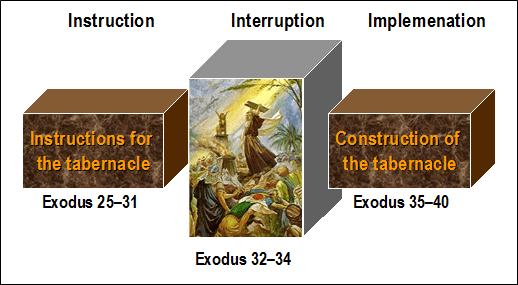
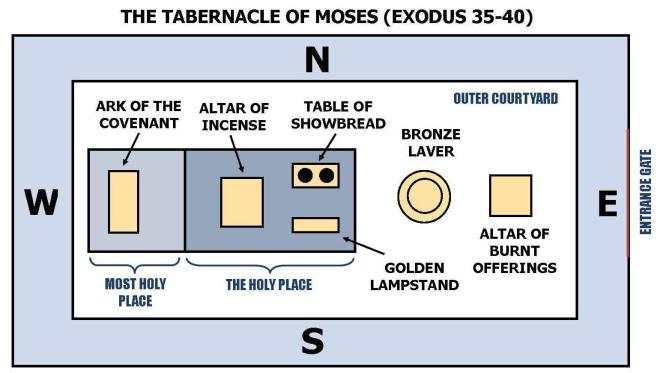
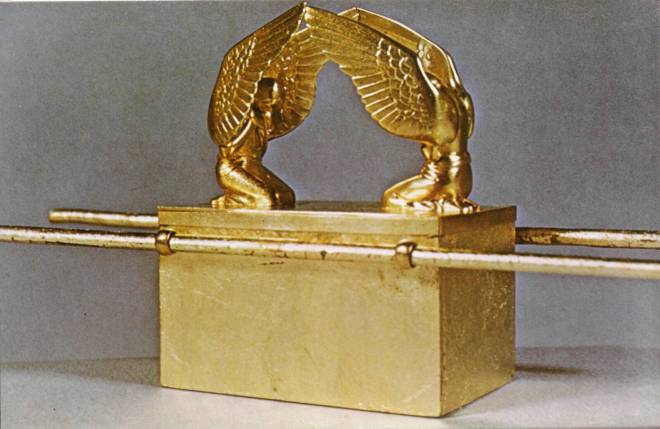
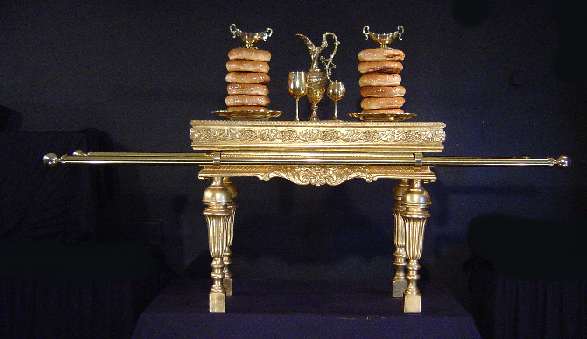
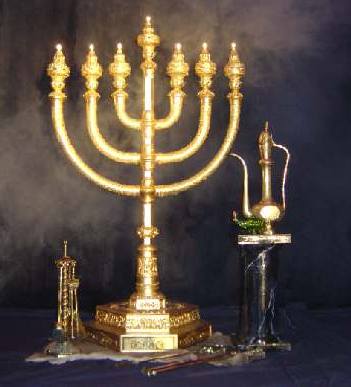
Exodus 31 (31:1-11) begins by summarizing what God required for His people to approach Him: the tabernacle altars, furniture, regulations, and worship procedures; functions of the priests and their strict following of sacrifices and worship, including their holy garments, holy anointing with holy oil, and continual burning of holy incense; and the strict observance of the Sabbath by all Israelites.  God appointed two specific and specially-gifted men who would be responsible over “all [the] skillful men,” for interpreting Moses’ instructions about the tabernacle, as well as constructing it.  He also “filled” them with His “Spirit,” so that they would make choices consistent with His will (v. 3). (T. Constable)

Like Oholiab and Bezalel, we need to offer our talents to God.  Their work was artistic craftsmanship, not particularly “sacred,” yet they did it for God’s glory.

Yahweh also reinforces the Sabbath (31:12-18), reminding them that they had entered into a measure of rest.  Observance of the Sabbath was unique to Israel. It distinguished Israel from all other nations. So important was its observance that any Israelite, who failed to observe it (“whoever does any work on it”) died (v. 15). This “sign” was to continue “throughout all (your) generations” (v. 13), as long as God continued to work through Israel as His primary instrument (cf. Rom. 10:4; Heb. 9:10).

This chapter concludes with…

18 And he gave to Moses, when he had finished speaking with him on Mount Sinai, the two tablets of the testimony, tablets of stone, written with the finger of God.

Were the two tablets the two tables of the law, or two copies of the 10 words?  Being a treaty between Yahweh and Israel, two copies (of the 10) fits the normal procedures for suzerainty treaties–one record for each party.

John 10 is where Jesus teaches about the sheep and shepherd.  We are the sheep, Jesus is the true shepherd.  There are false shepherds who are really thieves.  But the sheep know the voice of their master.
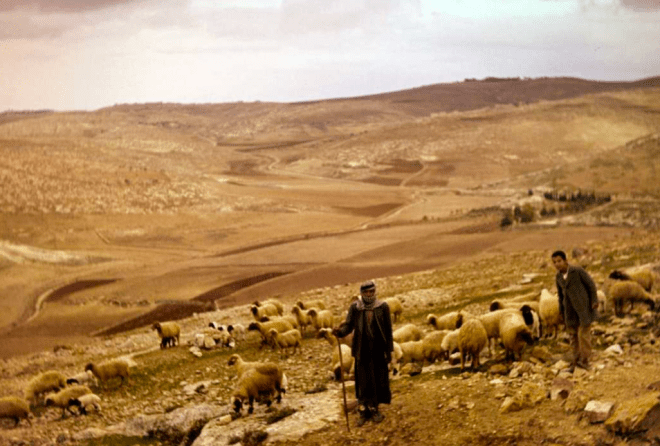
10 12, Shepherds

David Guzik writes:

In the common sheepfolds of ancient times, the shepherd merely gave his distinctive call and his sheep came out from the others, following him out of the sheepfold.  Sheep are experts at discerning their shepherd’s voice.

During World War I, the story goes, some Turkish soldiers tried to steal a flock of sheep from a hillside near Jerusalem.  The shepherd, who had been sleeping, awoke to find his flock being driven off.  He couldn’t recapture them by force, so he called out to his flock with his distinctive call.  The sheep listened, and returned to their rightful owner.  The soldiers couldn’t stop the sheep from returning to their shepherd’s voice.

Adam Clarke described six marks of the true and legitimate minister of God in these first six verses of John 10:

· He has a proper entrance into the ministry.

· He sees the Holy Spirit open his way as a doorkeeper to God’s sheep.

· He sees that the sheep respond to his voice in teaching and leadership.

· He is well acquainted with his flock.

· He leads the flock and does not drive them or lord it over them.

· He goes before the sheep as an example.

Jesus is not only the shepherd, but the gate (vv. 7-10).

Sheepfold in Jordan Valley, Ferrell Jenkins

Jesus is encouraging them to listen to His voice rather than the voice of false teachers.  They are like Satan, come to “kill, steal and destroy” but Jesus comes to give “life to the full” (John 10:10).

Jesus identifies Himself as the “good shepherd.”  He, unlike a hireling, laid down His life for His sheep.  Jesus knows those who are His (v. 14) and seeks to bring others in (v. 16).  It is important to remember that Jesus laid down His life of His own initiative and had the power to raise it again (v. 17).

It doesn’t surprise us that Jehovah’s Witnesses deny that Jesus could take His own life up again.  Yet many others (such as Kenneth Copeland, Kenneth Hagin, Fred Price and others) teach that Jesus was a helpless victim in hell, saved only by the intervention of God the Father (David Guzik).

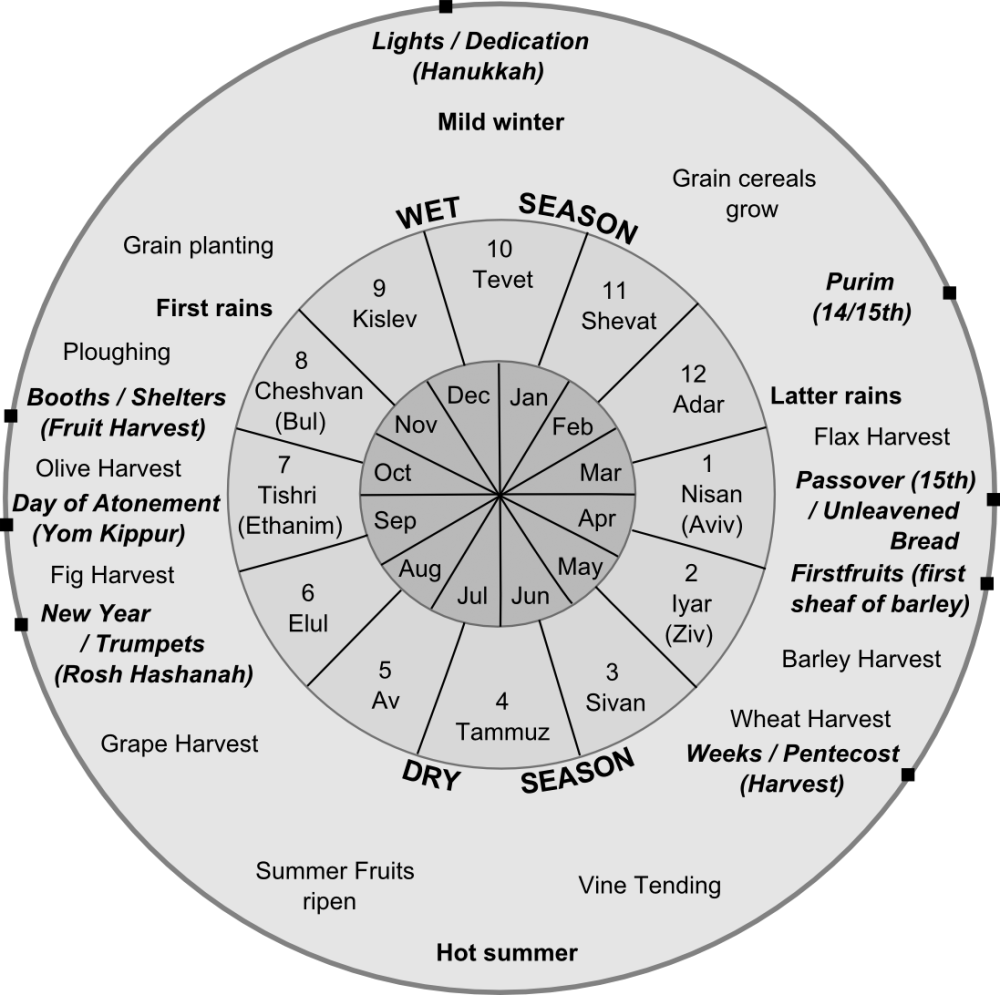
John 10:22-42 presents Jesus at the Feast of Dedication (also called Hanukkah, the Feast of Lights)

The present section of the fourth Gospel is strongly Christological and focuses on Jesus’ identity.  In this subdivision of the text, Jesus presented Himself as the Messiah (vv. 22-30) and as the Son of God (vv. 31-39). This resulted in the climax of hostility against Him.

Jerusalem at winter

Solomon’s Colonnade was a place used for public gatherings.  It is on the east side of the Temple grounds.

They accused Jesus of being demon possessed.  It began with a request for Jesus to clarify His Messianic identity.  But they had Jesus’ teachings and miracles (v. 25).  Failing to believe that proved they were not Jesus’ sheep.

True sheep are doubly secured in the strong hands of Jesus (v. 28) and the Father (v. 29).

Image result for John 10:28-29

Of course, this led to the charge of blasphemy (v. 33).

Thomas Constable explains…

Jesus’ statement affirms the unity, authority, and inerrancy of Scripture.  Jesus held a very high view of Scripture.  His point was that it was inconsistent for the Jews to claim the Old Testament as their authority (v. 34), and then to disregard something that it said because they did not agree with it.  It was inconsistent for them, specifically, to stone Jesus for claiming to be God and the “Son of God,” when the Old Testament spoke of humans as “gods” and as “God’s sons.”

Jesus had told them over and over again who He was.  The problem wasn’t that Jesus was unclear about who He was and where He came from.  The problem was that the religious leaders had hearts of unbelief that they wanted to blame on Jesus.

Jesus finally withdraws from Jerusalem because of the official rejection from the religious elite.

The event had symbolic significance that the evangelist probably intended. Jesus withdrew the opportunity for salvation from the people there because they refused to accept His gracious offer of salvation.  Evidently Jesus went from Jerusalem back to Bethany in Perea, on the east side of “the Jordan” River, where the Jewish rulers had no authority to pursue Him (cf. 1:28).

Jesus knows his time is drawing close.  So he returns to the place where it all started, the place where he was baptized and the Holy Spirit dove descended upon him.  And there he prepares himself for what is to come.

Proverbs 7 focuses again on the adulterous woman are her seductive traps.  Listen to instruction; that is vital.  Sometimes we learn best through stories, so Solomon paints a picture of a foolish young man falling headlong for an adulterous woman.  He neither looks for, nor takes, an escape path.  He is walking too close to the fire.

The adulterous woman is smooth and seductive (not always quiet) in her invitation.  She made him feel desired (v. 15), describes her love nest (vv. 16-17) and practically guarantees they will not get caught (vv. 18-20).  As we almost suspected, she succeeds (v. 21), but the promised pleasure is simply an illusion and he has painful consequences to show for it (vv. 22-27)

Although free from the law, we have responsibilities towards one another (Gal. 6:1).  We are to restore sinning brothers.  The Greek word for “restore” here is katartizo.  Elsewhere the Greek word, katartizo, refers to mending nets (Matt. 4:21; Mark 1:19) and setting a fractured or dislocated bone.  This may involve confrontation (cf. Matt. 18:15-17). However, the “spiritual” Christian is the one that should do this, namely, one whose life bears the fruit of the Spirit because he or she habitually walks by the Spirit (5:16, 25). The more spiritually mature he or she is, having walked by the Spirit for some time, the better (cf. 1 Cor. 2:15; Heb. 5:13-14).  This allows us to do this gently and circumspectly–watching out for similar sins in our own lives.

Regarding this care we give others, David Guzik explains…

There is no contradiction between bear one another’s burdens (in verse 2) and each one shall bear his own load (verse 5).  In the latter, Paul speaks of our final accountability before God.  In the former, he speaks of our need to care for others in the body of Christ.

There is also a difference in the wording Paul uses.   The word for load in verse 5 is a common term for a man’s backpack.   The word for burdens in verse 2 is a different word meaning “heavy burdens” — those that are more than a man should carry.   In the end, we will are all responsible for our own work, but we can help bear the burdens of others.

An important life principle is given in Galatians 6:7-9…

7 Do not be deceived: God is not mocked, for whatever one sows, that will he also reap. 8 For the one who sows to his own flesh will from the flesh reap corruption, but the one who sows to the Spirit will from the Spirit reap eternal life. 9 And let us not grow weary of doing good, for in due season we will reap, if we do not give up.

When you sow to the Spirit, don’t despair that you don’t see immediate results.  Keep going.  And when you sow to the flesh, don’t become arrogant and complacent when you don’t get punished immediately, your day will come.

We must sow to the Spirit day after day.  What is sown, is sown in secret, but it will be revealed.

I’m not sure who came up with them (possibly John Lawrence), but I’ve seen the 7 laws of the harvest in several places:

  • We Reap Only What Has Been Sown
  • We Reap the Same In Kind As We Sow
  • We Reap in a Different Season than We Sow
  • We Reap More Than We Sow
  • We Reap In Proportion to What We Sow
  • We Reap the Full Harvest Of the Good Only if We Persevere
  • We Can’t do Anything About Last Year’s Harvest, But We Can About This Year’s

Verse 14 is Paul’s desire, and should be ours, to boast in nothing but the cross.  In John Piper’s sermon, Boasting Only in the Cross, he reminds us not to waste our lives, recounting this story he told at Passion OneDay 2000.  Here is a shortened account:

Three weeks ago we got word at our church that Ruby Eliason and Laura Edwards had both been killed in Cameroon. Ruby was over eighty. Single all her life, she poured it out for one great thing: to make Jesus Christ known among the unreached, the poor, and the sick. Laura was a widow, a medical doctor, pushing eighty years old, and serving at Ruby’s side in Cameroon.

The brakes failed, the car went over the cliff, and they were both killed instantly.  And I asked my people:  Was that a tragedy?  Two lives, driven by one great vision, spent in unheralded service to the perishing poor for the glory of Jesus Christ — two decades after almost all their American counterparts have retired to throw their lives away on trifles in Florida or New Mexico.  No.  That is not a tragedy.  That is a glory.

I tell you what a tragedy is. I’ll read to you from Reader’s Digest (Feb. 2000, 98) what a tragedy is: “Bob and Penny . . . took early retirement from their jobs in the Northeast five years ago when he was 59 and she was 51.  Now they live in Punta Gorda, Florida, where they cruise on their 30-foot trawler, play softball and collect shells.”

The American Dream: come to the end of your life — your one and only life — and let the last great work before you give an account to your Creator be, “I collected shells.  See my shells.”  That is a tragedy.  And people today are spending billions of dollars to persuade you to embrace that tragic dream.  And I get forty minutes to plead with you: don’t buy it.

Don’t waste your life. It is so short and so precious.

While the tone if Paul throughout Galatians is somewhat stern, he ends by wishing them peace.

“After the storm and stress and intensity of the letter comes the peace of the benediction. Paul has argued and rebuked and cajoled but his last word is GRACE, for him the only word that really mattered.” (William Barclay)

Thomas Constable ends the book of Galatians with this chart distinguishing grace and law in the book of Galatians:

DIFFERENCES BETWEEN GRACE AND LAW

“Grace . . .

Law . . .

•         is based on faith (2:16). •         is based on works (2:16).
•         justifies sinful men (2:16, 17). •         is incapable of resulting in justification 2:16; 3:11).
•         begins and ends with Christ (2:20). •         makes Christ nothing (5:2-4).
•         is the way of the Spirit (3:2, 3, 14). •         is the way of the flesh (3:3).
•         is a ‘blessing’ (3:14). •         is a ‘curse’ (3:13).
•         is God’s desired end for His people (3:23-25). •         was intended to be only a means to an end (3:23-25).
•         results in intimacy with Christ (3:27). •         results in estrangement from Christ (5:4).
•         makes one a son of God and an heir of Christ (4:6, 7). •         keeps one a slave (4:7).
•         brings liberty (5:1). •         results in bondage (5:1).
•         depends on the power of the Holy Spirit (5:16-18, 22, 23). •         depends on human effort (5:19-21).
•         is motivated by love (5:13, 14). •         is motivated by pride (6:3, 13, 14).
•         centers on the cross of Christ (6:12-14). •         centered on circumcision (5:11; 6:12-15).”

M’Cheyne Bible Reading Plan, March 19

Today’s readings are from Exodus 30, John 9, Proverbs 6 and Galatians 5.

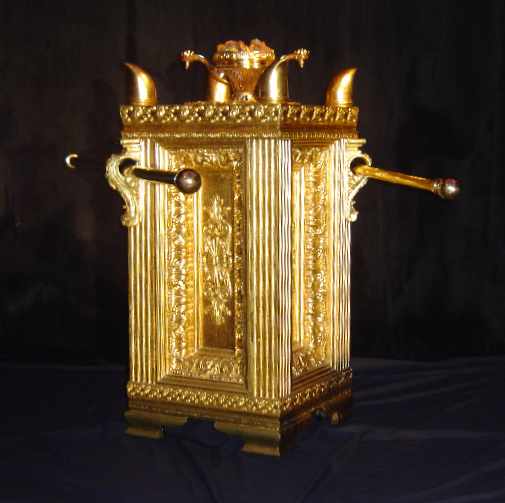
Exodus 30 gives specifications for the altar of incense and the laver.  The construction of the altar of incense occurs in vv. 1-10.  Jesus ever intercedes for us (Hebrews 7:24-25).  The atonement money is described in vv. 11-16.

Altar of Incense

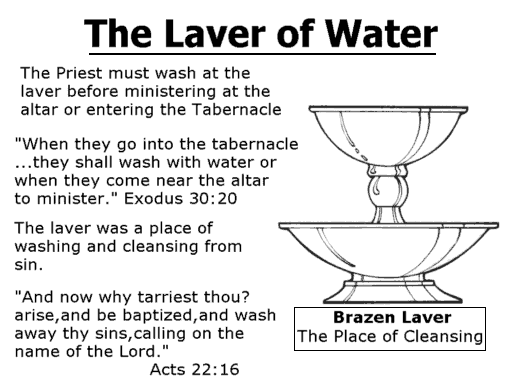
The specifications for the laver is given in vv. 17-21.  Christ washes us through his blood (1 John 1:7, 9) and his word (Ephesians 5:26).

Brazen Laver

The Laver of Water

Moses also describes the anointing oil (30:22-33) and the incense (30:34-38).

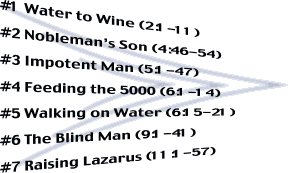
John 9 is Jesus’ encounter with a man born blind.  The exact time of this miracle and Jesus’ resultant discourse is unclear.  Evidently these events transpired sometime between the Feast of Tabernacles (7:2, 10; September 10-17, A.D. 32.) and the Feast of Dedication (10:22-39; December 18, A.D. 32.).  It is the sixth of seven signs.

His disciples wanted to know whom to blame his blindness upon–himself or his parents.  That is one possible answer to tragedy in this world–that we do it to ourselves or someone else is responsible.  But Jesus answered…

3 Jesus answered, “It was not that this man sinned, or his parents, but that the works of God might be displayed in him.

Sometimes our tragedies are simply opportunities for God to display His glory, in this case by healing the man.  Jesus anointed the man’s eyes with saliva and told him to wash in the pool of Siloam.

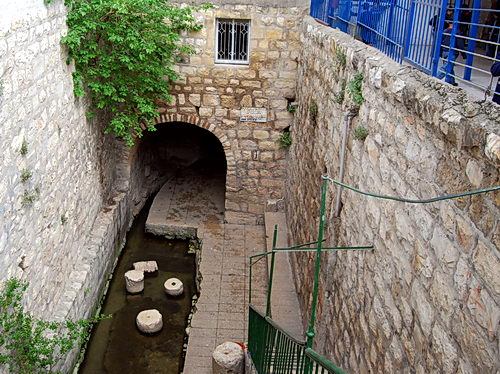
The water for the pool of Siloam came through Hezekiah’s tunnel, a remarkable engineering feat built in Old Testament times.  “It was called Siloam, which, it was said, meant sent, because the water in it had been sent through the conduit into the city.” (Barclay)

“It was from the Siloam stream that was drawn the water which was poured over the great altar at the Feast of Tabernacles just past, which pouring out was regarded by the Rabbis (and is still) as typical of the pouring out of The Spirit in the ‘latter days’.” (Trench)

Pool of Siloam, Ferrell Jenkins

Pool of Siloam In Jerusalem - public domain map

Image result for pool of siloam

Not many people would appreciate having mud made with spit rubbed in their eyes!  Some would look at how Jesus did this miracle and object, saying that it was offensive, inadequate, or even harmful to rub mud made with spit in a man’s eyes.

In the same way, some feel that the gospel is offensive. It is true that it offends man’s pride and human wisdom, but it pleased God through the foolishness of the message preached to save those who believe. (1 Corinthians 1:21)

In the same way, some feel that the gospel is inadequate. But have all the psychiatric and political and social programs in the world done more good than the life-changing gospel of Jesus Christ?

In the same way, some feel that the gospel is harmful, that the free offer of grace in Jesus will cause people to sin that grace may abound. But the gospel changes our life for the good and the pure, not unto wickedness.

–David Guzik

Of course, the Pharisees object to this because–guess what–Jesus did it on the Sabbath.  Some of them struggled with the deeper issue–that Jesus could heal this man born blind, but others shrugged it off because he had violated the Sabbath.  The begin to investigate.  This man kept testifying that Jesus had completely healed him.  But ultimately, they would not “see” (believe the truth).

Opening the eyes of the blind was prophesied to be a work of the Messiah: The eyes of the blind shall be opened.  (Isaiah 35:5)

Jesus revealed Himself to the former blind man and he believed.  He concluded…

39 Jesus said, “For judgment I came into this world, that those who do not see may see, and those who see may become blind.” 40 Some of the Pharisees near him heard these things, and said to him, “Are we also blind?” 41 Jesus said to them, “If you were blind, you would have no guilt; but now that you say, ‘We see,’ your guilt remains.

Paul tells us in 2 Corinthians 4

3 And even if our gospel is veiled, it is veiled only to those who are perishing. 4 In their case the god of this world has blinded the minds of the unbelievers, to keep them from seeing the light of the gospel of the glory of Christ, who is the image of God.

This chapter advances the revelation of Jesus’ true identity, which was one of John’s primary objectives in this Gospel.  It also shows that as the light of this revelation became clearer, so did the darkness—because some people prefer the darkness to the light (3:19).

One may say that this entire chapter paints a picture of how Jesus heals blind souls.

· We are all spiritually blind from birth.

· Jesus takes the initiative in healing us from blindness.

· Jesus does a work of creation in us, not reformation.

· In this work, we must be obedient to what Jesus commands.

· Jesus commands us to be washed in the water of baptism.

· We become a mystery to our former associates, not even seeming to be the same person.

· We display loyalty to Jesus when we are persecuted, boldly and plainly testifying of His work in our lives and confounding others.

· We pass from little knowledge to greater knowledge, and this brings us to greater worship and adoration.

David Guzik

Proverbs 6 starts by warning against signing surety for someone else’s loan.  Just don’t do it (6:1-5).  Then Solomon warns against laziness, observing the ant (6:6-11).  There are six things, no seven, that God hates (6:12-19).  Once again, there is a call to listen to instruction, in order to gain wisdom (6:20-23), especially protecting you from the charms of the adulterous woman (6:24-35).

In verses 27-29 we have a series of physical analogies designed to illustrate spiritual cause and effect. Adultery brings inescapable punishment. One may contain the fire (v. 27) at first, but others will discover it if it continues to burn. “His clothes” (v. 27) may imply outward reputation, namely, what others see, as often in Scripture.

Men and women who decide to flirt with adultery just once can become enmeshed in misery and unhappiness for themselves and their precious families. (Joseph B. Wirthlin)

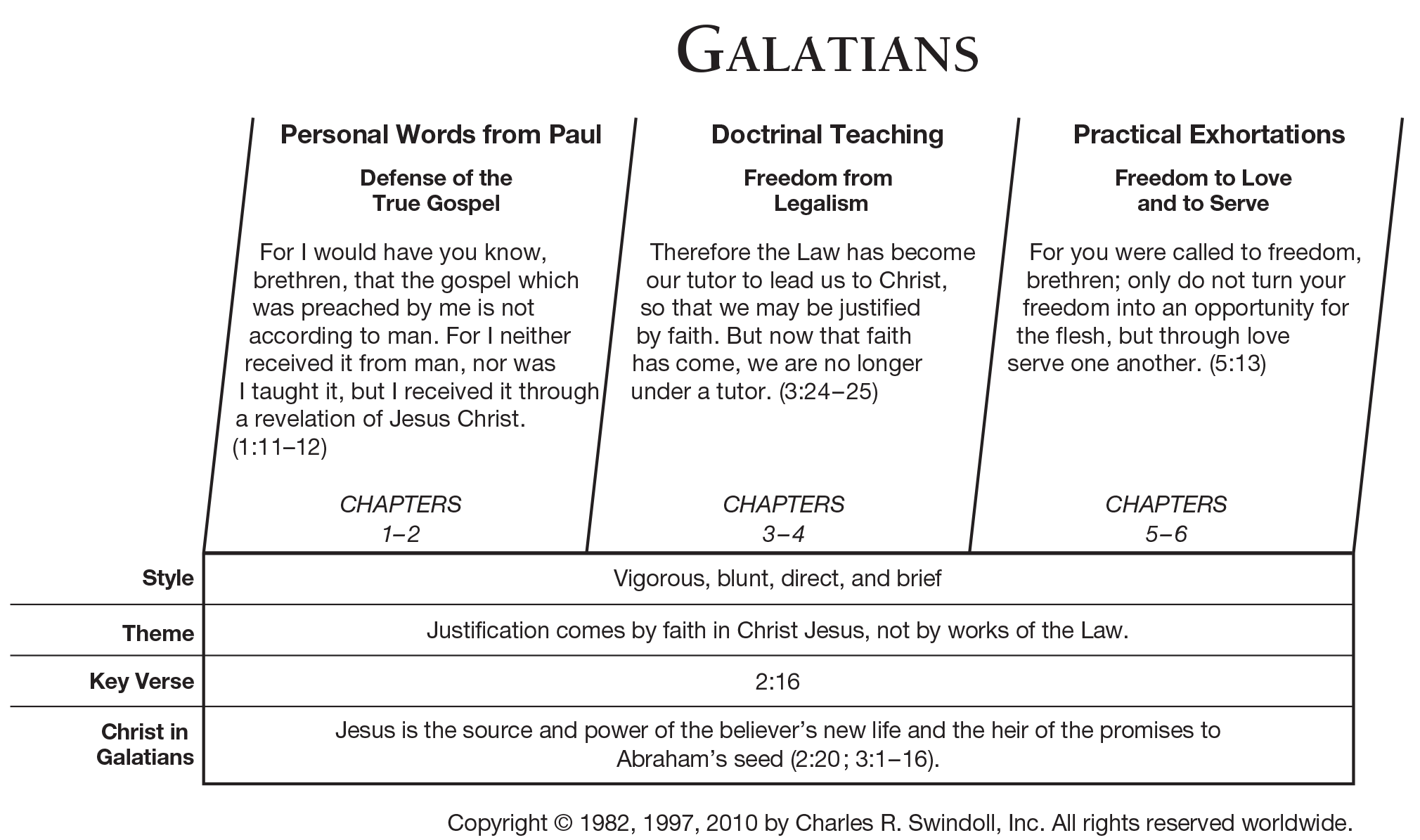
In Galatians 5  Paul moves from doctrinal teaching to practical application.  Having ruled out the Mosaic Law as a regulatory standard for Christian behavior, Paul proceeded to explain how God does lead us.  He did this by first discussing two opposite extremes (legalism and license), and then the proper middle (or higher) road. The indwelling Holy Spirit now leads us, but we must be careful to follow His leading.

1 For freedom Christ has set us free; stand firm therefore, and do not submit again to a yoke of slavery.

James Montgomery Boice has said:

“Before plunging into this third section of his letter, Paul interjects a verse that is at once a summary of all that has gone before and a transition to what follows.  It is, in fact, the key verse of the entire Epistle.  Because of the nature of the true gospel and of the work of Christ on his behalf, the believer is now to turn away from anything that smacks of legalism and instead rest in Christ’s triumphant work for him and live in the power of Christ’s Spirit. . . . The appeal is for an obstinate perseverance in freedom as the only proper response to an attempt to bring Christians once more under legalism.”

Likewise, John Piper has written:

This is the will of God for you: your freedom.  Uncompromising, unrelenting, indomitable freedom.  For this Christ died.  For this he rose.  For this he sent his Spirit.  There is nothing he wills with more intensity under the glory of his own name than this: your freedom.

David Guzik shares this clarifying story:

The great evangelist D. L. Moody illustrated this point by quoting an old former slave woman in the South following the Civil War.  Being a former slave, she was confused about her status and asked: Now is I free, or been I not?  When I go to my old master he says I ain’t free, and when I go to my own people they say I is, and I don’t know whether I’m free or not.  Some people told me that Abraham Lincoln signed a proclamation, but master says he didn’t; he didn’t have any right to.

Many Christians are confused on the same point.  Jesus Christ has given them an “Emancipation Proclamation,” but their “old master” tells them they are still slaves to a legal relationship with God.  They live in bondage because their “old master” has deceived them.

God did away with the Mosaic Law completely: the civil, the ceremonial, and the moral parts.  He terminated it as a code and has replaced it with a new code: “the Law of Christ” (Gal. 6:2).  Some commandments in the Law of Christ are the same as those in the Law of Moses (e.g., nine of the Ten Commandments, excluding the command to observe the Sabbath day).

Paul then began to attack the Judaizer’s promotion of circumcision (v. 2) and tells the Galatians that if they submitted to circumcision, then they would be obligated to keep the whole law.

When Paul says, in v. 4…

you who would be justified by the law; you have fallen away from grace.

He is not saying that a believer in Jesus Christ has lost their salvation, but rather, if you depend upon the law  to save you (in even the least bit) then you are not saved at all and you have removed yourself from the working of grace.

This is the exact opposite of what Paul says in Romans 5:1-2…

1 Therefore, since we have been justified by faith, we have peace with God through our Lord Jesus Christ. 2 Through him we have also obtained access by faith into this grace in which we stand, 

When justified by faith (not “by the law,” Gal. 5:4), we have (1) peace with God and (2) access into grace “in which we stand.”  When we try to be justified by the law, we remove ourselves from grace, by definition.

As Tom Constable says…

The Galatians’ confidence in circumcision would reveal a confidence in their own ability to earn salvation by obeying the Law.  This legal approach to salvation would separate them from Christ, since what He did was provide salvation as a gift.  They would fall away from the grace method of salvation if they chose the law method.

What really matters is not circumcision, but “faith working through love” (5:6).  Real faith will result in love.

Bornkamm warns:

“We must guard against the misunderstanding current especially in Catholic theology (though Protestantism is far from exempt) that only faith made perfect in love leads to justification.  This represents a serious distortion of the relationship between faith, love, and justification.  In speaking of justification Paul never talks of faith and love, but only of faith as receiving.  Love is not therefore an additional prerequisite for receiving salvation, nor is it properly an essential trait of faith; on the contrary, faith animates the love in which it works.”

False teachers were hindering the Galatian believers in their “race.”

Zola Budd and Mary Decker ran close together in the pack of 1,000-meter runners in the 1984 Los Angeles, California, Olympic Games.  Unexpectedly, Zola Budd bumped into Mary Decker, and Mary went sprawling into the infield.  She was out of the race.  Just so, the false teachers in Galatia had interrupted the Galatian believers’ good progress toward their goal.

Some implied (v. 11) that Paul supported circumcision.  Paul’s point here was that if he was teaching that circumcision was necessary for salvation, the Judaizers would not have “persecuted” him.  If people need circumcision, they do not need the cross of Christ.  The legalists opposed Paul’s preaching of the Cross, because it pointed out that people are unable to please God themselves.

John Stott comments:

“‘Circumcision’ stands for a religion of human achievement, of what man can do by his own good works; ‘Christ’ stands for a religion of divine achievement, of what God has done through the finished work of Christ.  ‘Circumcision” means law, works, and bondage; ‘Christ’ means grace, faith and freedom.  Every person must choose.”

David Guzik notes:

Legalism can’t handle the offense of the cross.   The whole point of Jesus dying on the cross was to say, “You can’t save yourself.  I must die in your place or you have absolutely no hope at all.”  When we trust in legalism, we believe that we can, at least in part, save ourselves.  This takes away the offense of the cross, which should always offend the nature of fallen man.  In this sense, the offense of the cross is really the glory of the cross, and legalism takes this glory away.

Paul then argues against license in vv. 13-25.  Instead of using our liberty to fulfill our own selfish desires, we should use it to love others (vv. 13-15), which fulfills the law–it grows out of the command to love God with all that we are, and expresses what the law means in the second table.

We should walk in the Spirit and not fulfill the desires of our flesh (vv. 16-18).  Realize that the flesh, whether doing good or doing bad, is opposed to the Spirit.  Even righteousness done in the flesh is not what God desires.  There is a constant battle between flesh and spirit.  We can win only by being filled with God’s Holy Spirit.

Paul gives examples of what it means to walk in the flesh (doing bad) in vv. 19-21 and then examples of what it looks like to walk in the Spirit (vv. 22-23).  Thus, the way to live between the poles of legalism and license is to walk by the Spirit (vv. 24-26).

Redeeming Love (Hosea 3)

Note:  this is the transcript (with additions) for my radio broadcasts on the weekend of March 30-31.  You can listen on KENA and KAWX.

Throughout chapter 2, Yahweh has been trying to get Israel to repent and return to Him.  Because of her stubborn pursuit of other lovers—both false gods and national allies—Yahweh would bring judgment upon Israel—exiling them from their land and turning it into a wilderness.

We noticed how many times Yahweh says “I will” in chapter 2.  Ultimately, there is nothing in Israel, just as there is nothing in us, which moves us to God, but it is His own initiative and love which makes it possible for us to turn to Him.

At the end of chapter 2 we see Yahweh wooing, then betrothing, then entering into the marriage covenant with Israel again.  This will occur “in that day,” Yahweh says, a future time when Israel will again be God’s bride.

But for now, in Hosea 3, we return to the present reality.  Israel was still an adulterous nation; Gomer was still an adulterous wife.  To illustrate God’s intention to love Israel back into a marriage relationship with Him, He calls Hosea to “go again” to love and redeem his wife.  Let me read Hosea 3.  It’s just five verses long.

1 And the LORD said to me, “Go again, love a woman who is loved by another man and is an adulteress, even as the LORD loves the children of Israel, though they turn to other gods and love cakes of raisins.” 2 So I bought her for fifteen shekels of silver and a homer and a lethech of barley. 3 And I said to her, “You must dwell as mine for many days.  You shall not play the whore, or belong to another man; so will I also be to you.” 4 For the children of Israel shall dwell many days without king or prince, without sacrifice or pillar, without ephod or household gods. 5 Afterward the children of Israel shall return and seek the LORD their God, and David their king, and they shall come in fear to the LORD and to his goodness in the latter days.

This chapter is a fitting conclusion to the pains Yahweh takes in chapter 2 to restore Israel and is a fitting prelude to the impassioned chapters which follow, where Yahweh is still reaching out to Israel.

Here Yahweh makes known His plan to redeem wayward Israel through the reunited marriage of Hosea and Gomer.  Although this chapter is short, its prophecies survey Israel’s past (in v. 1), her present (vv. 2-4) and her future (in v. 5).

Hosea could have legitimately divorced his wife and forgotten all about her.  Deuteronomy 24:1 and Matthew 19:7-8 permit divorce when adultery breaks the marriage union, but it by no means commands it.

Just as the prophet Hosea had been commissioned to share, with God, the pain of betrayal by a faithless bride, so he is now commissioned to participate with God in the experience of bringing redemption to that faithless bride.

Derek Kidner points out…

“It would have been impressive enough had Hosea found that in spite of everything he still loved his truant wife, and had then perceived that God’s love must be like that too.  But in fact it was the other way around.  It was God’s love that rekindled Hosea’s when the Lord said, ‘Go again, love her,’ and gave him the pattern to reproduce” (Hosea, p. 40).

An appropriate emphasis on the phrase, “even as the Lord loves the people of Israel” (v. 1) suggests that Hosea’s redemptive action originates from God’s exemplary love.  Not only do we love Him because He first loved us; we also love others as we do because he first loved us.  God’s love begets love in us.

The love of God is not “natural,”; nor is human love.  It is unreasonable.

It is obvious that, although unnamed, this is Gomer, the woman Hosea had been called to marry back in chapter 1.  The fact that she is unnamed leads to this conclusion, as does the word “again” and the fact that she is called “an adulteress.”  The only reason Hosea would be called to “show love” to an adulteress would be is she had been his wife.

So why does she go unnamed?  Perhaps to suggest that, like Hosea, she had lost her identity.  Just as Israel was no longer “my people,” so Gomer had lost her identity.  By analogy, adultery never enhances a person’s identity, but destroys it.

While there is discussion over whether the adverb “again” should go with “said” or “love” or possibly both, it is clear that love had been there in the beginning and it was being rekindled here.  As Fleming James says, “There is always an ‘again’ with love.”

There is no glossing over the unpleasant truth.  The “again” in God’s command faced the fact that old wounds would have to be reopened and that what had happened in the past might happen yet again.  Her adultery was still in progress, just as God demonstrated His love for us in that “while we were still sinners, Christ died for us.”  While we are in the very act of sinning, God acts in love.

The love asked of Hosea would be heroic, but still only a small glimpse of the magnitude of God’s love.

Gomer and Israel had both forfeited love because of their adulteries, but Hosea is called to love Gomer again, just as Yahweh intended to love Israel again.

Few passages tell us more about the love of God than this.  It is constant in all circumstances, present even while people (probably both Israel and Judah are intended; cf. 1:6-7, 11) are enmeshed in their idolatries (4:12, 19; 5:3-4 for the expressions of the degree to which Israel’s perversion held her captive); (2) it contrasts utterly with the triviality of human affections, especially when these affections are diverted to unworthy objects—while Yahweh is loving the Israelites, what are they loving?  Raisin cakes! (3) it can be illustrated through human love when that human love has grasped something of the power and pathos of the divine—the command to Hosea assumes a corresponded between the divine and the human; what Hosea has learned about the forgiving, restoring love of Yahweh…he is to teach others by his love for an adulteress; (4) it is a commitment and action (v. 2), commanded with a divine imperative; and (5) it is strong as well as tender and has the courage and integrity to exercise discipline when that is necessary (vv. 3-4).

Four times in verse 1 the word “love” is used.  Here we see the range of meaning that it occupies in our English language¨(1) it can mean “to gain pleasure from”—as did Gomer’s paramour from her company (3:1) and Israel from her “raisin cakes” (3:1); (2) it can describe a misguided relationship like Israel’s with the Baals (2:7, 12, 15; 9:10) or with Assyria to whom she paid tribute as a lover’s hire (8:9); (3) it can connote loyal and costly love like that of Hosea’s which God commanded for Gomer, despite her infidelity (3:1) and (4) it can illuminate the many facets of Yahweh’s commitment to Israel from the exodus call to his people (11:1), through guidance, training and care he offered in their youth (11:4), and the forbearance he showed in the midst of her infidelity (3:1) to the forgiveness that turns aside divine anger and heals their inconstancy (14:4).  The divine imperative that commands true love is a lesson never lost on those who truly know their God (1 John 4:8).

So we can see in this chapter a love that controls (v. 1), a love that redeems (v. 2), a love that disciplines (v. 3) and a love that triumphs (vv. 4-5).

David Garland points out that it is noteworthy that Hosea is commanded to “love.”  It goes against the modern notion that love is a feeling which cannot be commanded at will.  However, the Scriptures speak of a kind of love that is an act of the will, a decision that is made to act a certain way towards another.  Yahweh didn’t tell Hosea to “fall in love” with Gomer, but to “love” her, to do what is best for her, no matter how unworthy, even at great personal cost.

It would have been very difficult for Hosea to “fall in love” with Gomer again.  But he could decide to love her and follow through with loving kindness.

This, by the way, is why “I’m not in love anymore” is no excuse for getting a divorce.  The fact is, we can choose to love and choose to commit ourselves to loving actions.  We can act our way into feeling.

It is clear that Gomer (and Israel) was an adulteress, one who had broken the marriage covenant by engaging sexually with another man.

That there was no change in her behavior, and nothing in her to love, is brought out in the fact that she still “turn[s] to other gods and love[s] cakes of raisins” (3:1c).  What are these raisin cakes?  It seems almost comical to mention them.  Indeed, they seem such trivial things to love.  But then, don’t we love things that are really quite trivial, so unimportant in the grand scheme of things?

It likely has nothing to do with their choice in desserts, but in their choice of gods.  They were likely used in the pagan worship rituals of Hosea’s day (Jer. 7:18; 44:19).

Screwtape, as we may suppose, would have hailed this as an unusually satisfying victory, even if he had had to throw in the whole world as bait (cf. Mark 8:36).  He told Wormwood, “an ever increasing craving for an ever diminishing pleasure is the formula.  It is more certain; and it’s better style.  To get the man’s soul and give him nothing in return—that is what really gladdens our Father’s heart.” (C. S. Lewis, The Screwtape Letters, IX)

What trivialities pull us back from full on commitment to God?

Hosea’s response in v. 2 illustrates both how costly love can be and how degraded Gomer’s condition had become.

Genuine love leads to action, and so Hosea “bought” Gomer.  Apparently she had been sold into slavery or sold herself into slavery, or possibly just into prostitution.  That was quite a fall from being a wife with family.

Genuine love is also a costly action.

Hosea bought her for 15 shekels of silver, which was about half the price for a dead slave (Exodus 21:32)!  Selling the barley probably made up the other half.  Poor Gomer, she was now not worth as much as a dead slave!

The fact that he had to sell his barley, estimated at around 300 liters, suggests that 15 shekels was not enough.  We don’t know for sure, but if Hosea had come into town to buy and sell, it is possible that he gave everything away to purchase Gomer back.

Vernon McGee reminds us, “Gomer wasn’t worth it, and we are not worth the redemption price which was paid for us. . . . (1 Pet. 1:18-19)

18 knowing that you were ransomed from the futile ways inherited from your forefathers, not with perishable things such as silver or gold,19 but with the precious blood of Christ, like that of a lamb without blemish or spot.

In paying the redemption price for Gomer, Hosea demonstrated the redeeming, reconciling nature of godly love.

Hosea was ready and willing to do whatever was necessary—to pay any price, to overcome any obstacle—to reestablish the former relationship.

The ultimate reestablishment of the former relationship, however, was not to be immediate, as may first appear to be the case.  The hurt had been too deep, the offense too serious.  Though in love with Gomer—perhaps all the while—he probably wanted sufficient time to elapse to encourage the true return of her affection and loyalty to him.

Therefore, he shut her away from all who might tempt her (3:3), while he himself refused to rush the resumption of their relationship.  Time would be allowed for the dissipation of old infatuations and the rekindling of dissipated or dormant love.  In due time normal relations would be resumed, but with caution and after assurance.

With Gomer isolated from all temptations to revert to a life of harlotry, Hosea was permitted to devote all his efforts to wooing back his bride (2:14).  The results of his efforts are not stated, but one can confidently speculate that at the end of that period of isolation Gomer responded to her husband’s love.

Israel can also be assured that during this time Yahweh will enter into no covenantal relationship with any other nation other than Israel.

I don’t think it is pressing the situation too far to identify this time period prophetically as the church age, when God is wooing Israel by making her jealous of Gentiles enjoying a relationship with God, as we read in Romans 11.

The final two verses of Hosea 3 point to the future restoration of Israel, to Yahweh and to one another.

4 For the children of Israel shall dwell many days without king or prince, without sacrifice or pillar, without ephod or household gods. 5 Afterward the children of Israel shall return and seek the LORD their God, and David their king, and they shall come in fear to the LORD and to his goodness in the latter days.

Those “many days” would be throughout the present church age and the tribulation period, to the time when Christ returns and establishes His kingdom, sitting upon the throne of David in Jersualem.

Kidner says…

“What is striking about this prophecy is first that it threatens the very pillars of life as Israel knew it, and then that it interprets the withdrawal of these cherished things–good, bad and indifferent alike–as ultimate gain.”

Let that sink in for a moment.  God can take things away from us.  He gives and takes away.  But how often do we interpret Him taking something away as “ultimate gain.”

Listen to the words of Martha Snell Nickerson’s poem Treasures:

One by one He took them from me,
All the things I valued most,
Until I was empty-handed;
Every glittering toy was lost.

And I walked earth’s highways, grieving.
In my rags and poverty.
Till I heard His voice inviting,
“Lift your empty hands to Me!”

So I held my hands toward heaven,
And He filled them with a store
Of His own transcendent riches,
Till they could contain no more.

And at last I comprehended
With my stupid mind and dull,
That God COULD not pour His riches
Into hands already full!

Until the glory days here predicted, Israel would be without king or prince.  This effectively shows that they will not be a nation, since they have no political or military leaders.

Israel will also be without sacrifice or pillar.  The destruction of the temple, in both 586 B.C. and 70 A.D. caused Israel’s religious infrastructure to fall apart.

And Israel will be without ephod or household gods (lit. teraphim).  In other words, there would be no guidance from God.

Image result for teraphim

Teraphim

Any of the above “gifts” can be either good or bad., but more especially the “pillar” and “household gods” (lit. teraphim) are almost always bad, leading Israel astray.

Again, it shows that Israel, like Gomer, will be shut off from those things which aided them in the worship of false gods.  When her probation ends, idolatry will never return, but a purified monarchy and true worship will return (Ezekiel 37:24; Malachi 3:3).

But at the end of that time, Israel “shall return and seek the LORD their God.”  Like the prodigal, she will return in fear, but be received in love.  Yahweh’s purpose in redeeming Israel was not to exact revenge, but to restore to a place of love and honor.

How will this return occur?  Is it found in the hearts of the people, or does it come because God gives them new hearts (Ezekiel 36:24-31)?  More likely the latter.

The prophecy that they would seek “David their king” is clearly Messianic.  The phrase does not mean that current Israel would again submit to the Davidic monarchy and so undo Jeroboam’s rebellion.  Had that been the point, one would expect the text to say that they would return “to the house of David.”

Instead, we see “David the King” set alongside Yahweh as the one to whom Israel will return in godly fear.  It is not literally David, but the Messianic king, Jesus Christ, who will establish His kingdom in Jerusalem for the good of Israel.

So Robert Chisholm explains:

“The reference to ‘David their king’ should not be understood in an overly literalistic manner.  The prophets view the ideal Davidic ruler of the future as the second coming of David (see Isa. 11:1-10; Mic. 5:2) and even call him ‘David’ on occasion (see Jer. 30:9; Ezek. 34:23-24; 37:24-25).  This ‘David’ carries out royal functions that cannot be distinguished from those assigned to the messianic king.

Other texts make it clear that this ‘David’ is actually a descendant of David (see Jer. 23:5-6; 33:15-16) who comes in his ancestor’s spirit and power, much like John the Baptist came in the spirit and power of Elijah and thus fulfilled the prophecy of Malachi 4:5 (see Matt. 11:10-14; 17:11-12; Mark 1:2-4; Luke 1:17, 76; 7:27).”

The mention of David their king conveys a number of thoughts in the context of Hosea: (1) the reunion of the two kingdoms under one head (cf. 1:11); (2) the reversal of Israel’s pattern of dynastic instability (7:3-7; 8:4; 10:3); (3) the rejection of foreign alliances which served as a buffer against their own political weakness (7:8-9, 11, 16); and (4) the covenantal continuity promised to David by Yahweh and violated by Jeroboam I and all his successors (cf. on 8:4).  Like Amos (9:11) and the great prophets who followed him (Micah 5:2; Isaiah 11:1-5; Jeremiah 23:5-6; Ezekiel 37:24-28; Zechariah 12:7), Hosea connected Yahweh’s future victory to the renascence of Davidic rule.  For Hosea, the return to Yahweh carried with it the reveal of all that Jeroboam’s splitting of the kingdom had wrought.  The spiritual return and the national reunion were of a piece–a reminder that the Old Testament sees Israel as a flesh and blood entity whose loaylty to Yahweh is lived not in an otherworldly realm but in the real economics, politics and geography of history. (David Hubbard, Hosea, p. 103).

The many centuries of suffering experienced by the people of Israel throughout the world will be culminated in the Great Tribulation, the event that will bring the Lord out of heaven to save His people Israel (see Zechariah 14; Revelation 6-19).  Israel’s return to God in the last days will truly be a return to His goodness, that special place of blessing, where they will join in all the privileges of Christ’s millennial reign (see Isaiah 52:7; Jeremiah 33:9; Zechariah 9:17).

Warren Wiersbe summarizes chapters 1-3

“God is gracious, and no matter what ‘name’ our birth has given to us, He can change it and give us a new beginning.  Even the ‘valley of trouble’ can become a ‘door of hope.’

“God is holy and He must deal with sin.  The essence of idolatry is enjoying the gifts but not honoring the Giver.  To live for the world is to break God’s heart and commit ‘spiritual adultery.’

“God is love and promises to forgive and restore all who repent and return to Him.  He promises to bless all who trust him [sic Him].”

This remains the continuing hope of man and the abiding message of the Hosea-Gomer experience: love, conceived in the heart of God and expressed through redemption, triumphs over judgment.

If you want to read a moving story related to Hosea and Gomer, this is a book Becky and I read about 20 years ago.

M’Cheyne Bible Reading Plan, March 18

Today’s readings are from Exodus 29, John 8, Proverbs 5 and Galatians 4.

Exodus 29 is about the ordination and consecration service for the installation of the Aaronic priesthood.  The Israelites carried out the instructions given here at a later time.  The full record of this seven-day ritual appears in Leviticus 8, in greater detail.

The priests had sacrificial blood applied to their right earlobes, right thumbs, and right big toes (v. 20).  This symbolized their complete consecration: to hear the word of God, to serve as mediators, and to walk as an example to others.

They also experienced sprinkling with blood, signifying their complete sanctification.  Their “anointing” with “oil” (v. 21), that was also sprinkled on them, represented their endowment with power by God’s Spirit for divine service. (Thomas Constable)

Like these ancient priests, every Christian is washed by the work of God’s word (Eph. 5:26), by the regenerating work of the Holy Spirit (Titus 3:5). This cleansing work was accomplished by the death of Jesus for us (Revelation 1:5) and appropriated by faith.

“The best part of all Christian work is that part which only God sees.” (Andrew Bonar)

John 8 is Jesus’ presentation as the light of the world.

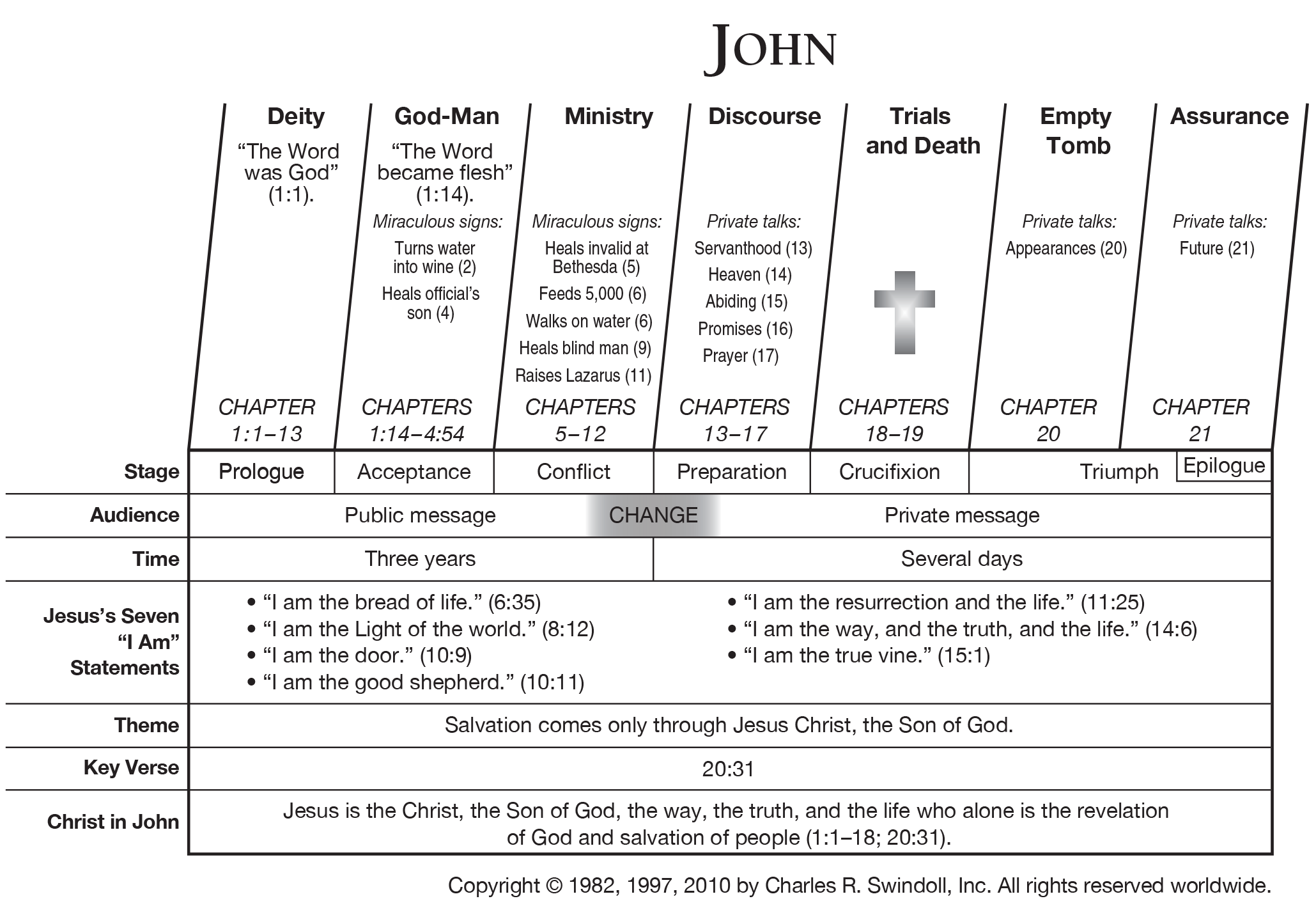
JESUS’ “I AM” CLAIMS

Title Meaning Reference
The Bread of Life Satisfier and sustainer of life 6:35, 48
The Light of the World Dispeller of sin’s darkness 8:12
The Gate Entrance into security and fellowship 10:7, 9
The Good Shepherd Protector and guide in life 10:11, 14
The Resurrection and the Life Hope in death 11:25
The Way, the Truth, and the Life Certainty in perplexity 14:6
The True Vine Source of vitality and productivity 15:1, 5

It begins with the woman caught in adultery.  She was likely guilty, but so were (at least some) of her accusers.  Jesus showed both grace and firmness to her by saying, “Neither do I condemn you, go and sin no more.”  J. Vernon McGee says…

“It was not, ‘Go and sin no more, and I will not condemn thee,’ for that would have been a death-knell rather than good news in her ears.  Instead, the Saviour said, ‘Neither do I condemn thee.’  And to every one who takes the place this woman was brought into, the word is, ‘There is therefore now no condemnation’ (Rom. 8:1).  ‘And sin no more’ placed her, as we are placed, under the constraint of His love.”

This incident is further proof that Jesus was far more righteous, and much wiser, than the Jewish religious leaders who sought to kill Him.  It is also another demonstration of His patience and grace with sinners.

The light of the world discourse follows (8:12-59).  This is a continuation of the teaching that began in 7:14.  Jesus claims to be the “light of the world” (8:12), which had definite Messianic connotations (Isa. 49:6).  God Himself would illuminate His people in the messianic age (Isa. 60:19-22; Zech. 14:5b-7; cf. Rev. 21:23-24).  However, in Jesus’ day the “light of righteousness” was in mortal conflict with the “darkness of sin” (1:4, 9; 3:19-21).

Verse 20 locates this teaching in the “women’s courtyard,” also known as the “treasury” because it contained 13 shophar (ram’s horn) shaped receptacles for the Jews’ monetary offerings (cf. Mark 12:41-42).

Image result for women's court temple

Jesus began to contrast Himself with His critics by talking about His divine origin (8:21-30).

Jesus can testify about Himself because He, not they, has view of eternity: I know where I came from and where I am going.

Jesus can testify about Himself because He, not they, judges righteously: You judge according to the flesh; I judge no one.

Jesus can testify about Himself because His testimony is fully supported by God the Father: My judgment is true; for I am not alone.

–David Guzik

In verse 25 they ask, “Who are you?”

This question of the Pharisees comes from a combination of willful confusion and contempt.  Though Jesus has told them over and over who He is, they will continue to ask until they get an answer they can use to condemn Him.

When Jesus says he will be “lifted up,” he means “lifted up” off the ground on a cross. When Jesus is crucified, they will see the perfect obedience of the Son to the Father.

Jesus challenges them that true disciples will be grounded in His teachings.  Disciples who continue to abide (Gr. meno) in Jesus’ word (v. 31) come to “know the truth.”  Religious listeners were still slaves and could only find freedom in the Son and His teachings.

Recognizing that Jesus is making himself out to be equal with God, they seek to kill Him 8:48-59), but it is not His time.

Verse 58, “before Abraham was, I am” is the third time in this chapter Jesus uses the phrase I Am (John 8:24, 8:28), and here in John 8:58.

I Am: The ancient Greek phrase is ego emi, which is the same term used in the Greek translation of the Old Testament in Jesus’ day to describe the Voice from the burning bush.

In using the phrase I Am (John 8:24, 8:58, 13:19) Jesus used a clear divine title belonging to Yahweh alone (Exodus 3:13-14, Deuteronomy 32:39, Isaiah 43:10) and was interpreted as such by Jesus’ listeners (John 8:58-59).

–David Guzik

Proverbs 5 is a warning against adultery, with an emphasis on finding sexual satisfaction in one’s wife (vv. 15-19).  Adultery makes the news regularly.  Fidelity to one’s spouse seems a relic of the past.  Just recently I helped a couple celebrated 67 years together.  God bless those who stay faithful throughout their marriage.

“I am so grateful to the Lord that He gave me Ruth, and especially for these last few years we’ve had in the mountains together. We’ve rekindled the romance of our youth, and my love for her continued to grow deeper every day. I will miss her terribly, and look forward even more to the day I can join her in Heaven.”

– Billy Graham, June 14, 2007, the day Ruth died

Adultery destroys lives, marriages, families, ministries, legacies.  Solomon paints pictures to help his son “experience” the tragedy of adultery before it ever becomes a reality.

Solomon points out that illicit relationships often begin with talk (v. 3).  Her talk is sweet but the consequences are always bitter (vv. 3-7).

Every father should recommend to their sons…

8 Keep your way far from her, and do not go near the door of her house,

Stay as far away from sexual temptation as possible.  Unfortunately, with the internet, it has crept  right into our homes.

Ruin comes upon those who taste the illusory sweetness of adultery (vv. 9-14).

One remedy for sexual temptation is sexual delight in your spouse (5:15-20).  Ray and Jani Ortlund have letters to would-be adulterers.  If you find yourself flirting with this temptation, please read them.  I would also encourage you to read Sex and the Supremacy of Christ.

God wants us to enjoy our sexuality in marriage.  He has written an entire book, The Song of Solomon, to exult in the sexual love enjoyed in marriage.  He instructs us in that book – as well as in this passage – that it is a good thing to enjoy sexual union and lovemaking with our wife.

God also wants to save us from the disaster of adultery.  One of the ways we do that is by being “intoxicated” with our spouse.

Galatians 4 continues the theme from the end of Galatians 3 that we are “sons” of God, and heirs (4:1-7).  The significant event was the incarnation of Jesus Christ.  He was born “in the fullness” of time, at just the right time in history.  James Montgomery Boice explains:

“It was a time when the pax Romana extended over most of the civilized earth and when travel and commerce were therefore possible in a way that had formerly been impossible.  Great roads linked the empire of the Caesars, and its diverse regions were linked far more significantly by the all-pervasive language of the Greeks.  Add the fact that the world was sunk in a moral abyss so low that even the pagan cried out against it and that spiritual hunger was everywhere evident, and one has a perfect time for the coming of Christ and for the early expansion of the Christian gospel.”

As sons, we cry out “Abba, Father” through the Holy Spirit.  This prompted Luther to write:

“Let the Law, sin, and the devil cry out against us until their outcry fills heaven and earth.  The Spirit of God outcries them all.  Our feeble groans, ‘Abba, Father,’ will be heard of God sooner than the combined racket of hell, sin, and the Law.”

Paul then argues that if you are a son, why go back under slavery to the law?  If you have gone from being a slave to a son, from being an enemy of the kingdom to being the heir of the kingdom, from being an ignorant idol-worshiper to knowing God and being known by God, then why would you possibly want to go back?

What You Were

What You Are

A Slave (4:7) A Son and an Heir (4:7)
You did not know God; you were slaves to those which by nature are no gods (4:8) You have come to know God, or rather to be known by God (4:9)

Paul contrasts himself with the false teachers in 4:12-20.  Paul bemoans the fact that they had received him so well in the past but now they perceive him as an enemy (vv. 12-16).

In vv. 17-18 Paul comes to the contrast between Himself versus the legalistic Judaizers. There is both a contrast as well as a comparison.

The Judaizers

Paul

They eagerly seek the Galatians He has eagerly sought the Galatians
They eager seeking of the Galatians was to shut them out from God’s blessings His eager seeking of the Galatians is to bring them into God’s kingdom
Their seeking is not commendable His seeking is in a commendable manner
Their goal is that they might be glorified His goal is that God might be glorified

We are not told the specifics of who were these Judaizers.  We can draw several conclusions from what Paul has said up to now.

    • They had come on the scene preaching a different gospel (Galatians 1:6-9).
    • Their message was that circumcision was a necessary part of salvation (Galatians 6:12).
    • It seems that they claimed to have inside information from Jerusalem as to the truth of the gospel.
    • Their message was couched in terms that were designed to be pleasing to the ear (Galatians 1:10).
    • Although circumcision was the main issue at hand, it was not the only issue. The same problem arose when Judaizers tried to get the Galatians to observe days and months and seasons and years (Galatians 4:10). The point is that there are many possible applications of this as legalism bears many faces.

This image that Paul presents is of a mother who has given birth to children, but now for some strange reason is having to go back and again suffer the labor pains.  In essence, he is saying, “We’ve already been through the pain of childbirth and there was a successful delivery.  Now that you have been born again, you ought to be growing and developing rather than bringing on more labor pains.”

In vv. 21-31 Paul uses an allegory involving two women and their sons, with two mountains.  Hagar represents the Mosaic covenant, enacted on Mt. Sinai, which merely exhibited how they were enslaved to sin.  This corresponds to the present Jerusalem.

On the other hand, Sarah represents the New Covenant, enacted at Calvary, freeing us to be sons.  This corresponds to the new Jerusalem.

This would have been a shocking statement to the Judaizers.  They knew that Ishmael had given birth to the Arab nations.  They were quick to look down upon the Arabs as being the people who were descended from a slave of Abraham and therefore of less position than themselves.  But Paul points out that all who were under the Mosaic Covenant were in this same position of slavery

M’Cheyne Bible Reading Plan, March 17

Today’s readings are from Exodus 28, John 7, Proverbs 4 and Galatians 3.

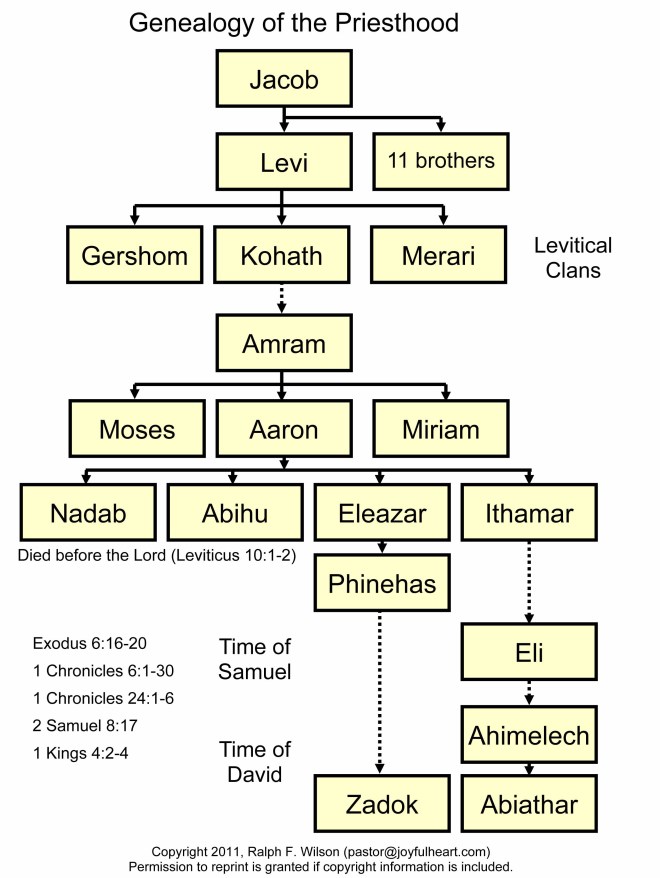
Exodus 28 deals with those who would serve in the tabernacle–the Aaronic priesthood.

First, is the appointment of Aaron and his sons to minister as priests before Yahweh (28:1-5).

genealogy-of-priests.pub

Then, the instructions for making the priestly garments (28:6-43).

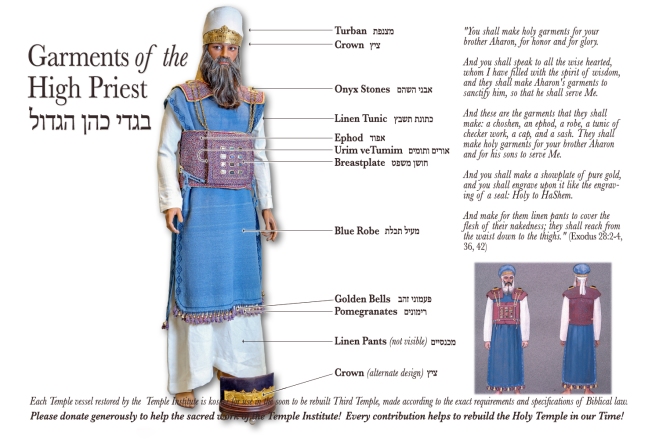
Garments of the High Priest

The “ephod” (a transliteration of the Hebrew word) was the most important and outermost garment of the high priest (28:6-14).  It was an apron-like piece of clothing, made of “gold, of blue and purple and scarlet material,” that fit over his robe (vv. 31-35).

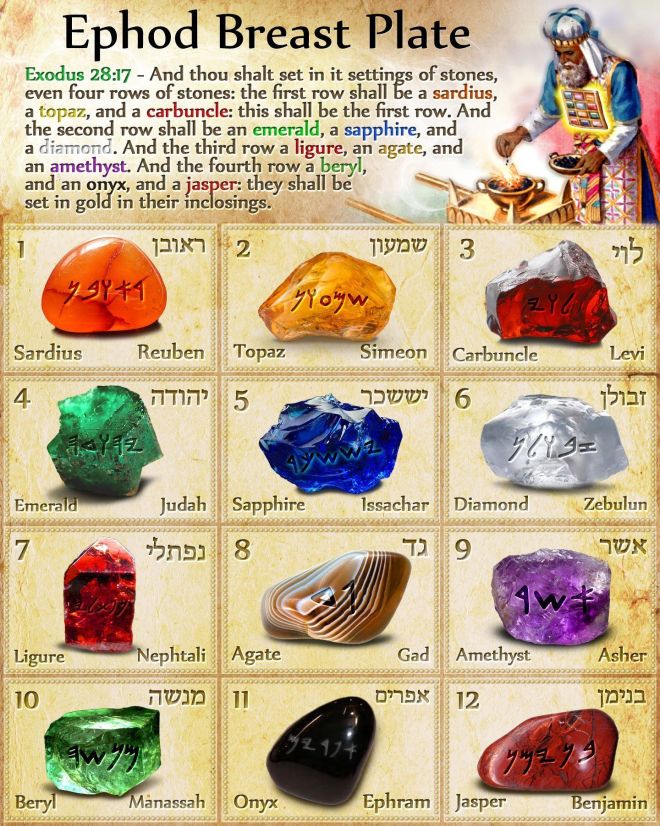
The breastplate (28:15-30) had 12 jewels which represented the 12 tribes.

Ephod Breastplate, Pinterest

Ronald Youngblood explains the function of these jewels…

“The purpose of the breastpiece was ‘for making decisions’ (v. 15).  The Urim and Thummim, deposited in the pouch, were sacred lots used as the ‘means of making decisions’ (v. 30).  The word ‘Urim’ begins with the first letter of the Hebrew alphabet and ‘Thummim’ begins with the last letter, so the lots were probably restricted to giving either positive or negative responses to questions asked of them.

Strengthening that likelihood is the fact that the phrase ‘Urim and Thummim’ is best translated into English as ‘curses and perfections,’ meaning that if ‘Urim’ dominated when the lots were cast the answer would be no but if ‘Thummim’ dominated the answer would be yes.

Next described was the robe (28:31-35).  The high priest also wore this garment, on which the ephod vest and attached breastplate were both fixed in place.  It was his basic outer garment, made “all of blue,” over which he put the ephod.  It covered him completely, so that his natural nakedness was not exposed (cf. Gen. 3:21).

A plaque (“plate”) “of pure gold” was attached to the front of the high priest’s turban. It bore the engraved words: “Holy to the LORD” (28:36-38).

The tunic, turban and sash (28:39)  completed the high priest’s wardrobe.  The “tunic” was an undergarment, the “turban” covered his head, and the “sash” served as a belt.

All of the coverings of the priests reminds us that God wanted no display of the flesh in His presence, in service to the Lord.

John 7 begins with a description of the unbelief of Jesus’ own brothers with regard to His Messianic identity (7:1-9), then slipping secretly into Jerusalem for the feast of booths (tabernacles) and dedication (7:10-10:42).  Controversy was stirring around Jesus (7:10-13) so Jesus taught about His authority (7:14-24), His origin and destiny (7:25-36) and then promised the Holy Spirit (7:37-44).  This chapter concludes with the unbelief of the religious leaders (7:45-52).

Proverbs 4 is another encouragement to value and pursue wisdom as the ultimate treasure.  It is THE MOST IMPORTANT THING!

Proverbs 4 again presents the youth with two paths—the way of foolishness and wickedness over against the way of wisdom and righteousness.  Every part of us is to be given to wisdom (heart, tongue, eyes and feet).

Picture a mountain with a road on top, this road is primarily straight.  But frequently there appear to be exits off of this straight and narrow way, down to paths that lead to promised pleasure and riches and popularity.  These are traps.  Because the paths are crooked, we cannot see the dangers that lie behind the promises.

This is what the father is trying to teach his son.  Don’t just take things at face value.  Don’t believe every promise you hear from this world.

Proverbs 4:23 says…

Keep your heart with all vigilance, for from it flow the springs of life.

The heart is the reservoir, and change must begin there. If the reservoir is polluted, it does no good to fix the pipes and the valves.

“The Bible warns us to avoid a double heart (Psalm 12:2), a hard heart (Proverbs 28:14), a proud heart (Proverbs 21:4), an unbelieving heart (Hebrews 3:12), a cold heart (Matthew 24:12), and an unclean heart (Psalm 51:10).” (Wiersbe)

Watch your heart for changes and trends.  A. W. Pink said,

For the Christian to keep his heart… means for him to pay close attention to the direction in which his affections are moving, to discover whether the things of the world are gaining a firmer and fuller hold over him, or whether they are increasingly losing their charm for him.

Watch the direction in which things are moving in your heart.  Keep your heart with all vigilance.

Mark Altrogge suggestions 8 questions to help us determine the direction of our heart.  Ask yourself…

  1.  What am I believing about God right now?
  2.  Am I constantly giving thanks?
  3.  Am I giving in to condemnation?
  4.  Am I casting my cares on God?
  5.  How am I interpreting my life?
  6.  Am I being attracted to any sin or the world?
  7.  Do I fear God?
  8.  Am I humble?

Some other suggestions:

  1.  Guard what goes into your heart.
  2.  Preach the gospel to yourself every day.  I am a great sinner, but I have a great Savior.

Galatians 3 expressed Paul exasperation over the Galatians’ return to the law.

1 O foolish Galatians!  Who has bewitched you? It was before your eyes that Jesus Christ was publicly portrayed as crucified. 2 Let me ask you only this: Did you receive the Spirit by works of the law or by hearing with faith? 3 Are you so foolish?  Having begun by the Spirit, are you now being perfected by the flesh?

Image result for charles blondin carrying manager

In 1859, the famous tight rope walker Charles Blondin carried his manager, Harry Colford, across the Niagara River on his back.  Imagine if Harry had decided halfway across:  “I think I’ve got this.  Put me down and let me try it.”  How foolish it would be to trust in his own (best) efforts.  The only safe recourse was to trust in a superior power.

Whether it is salvation or sanctification, we do not depend upon ourselves, even our best performances, but on the Holy Spirit.

Both verse 2 and verse 3 speak of the Spirit.  But there is a difference in the question that is asked.

Verse 2

Verse 3

Asks about the initial entrance of the Spirit into the believer Asks about the continuing sanctifying work in the life of the believer.

Paul then (3:6-9) directs their attention to Abraham, the father of faith.  For him, righteousness came through faith, not works.

Now  (3:10-12) Paul moves from the example of Abraham to look at the failure of the Law to provide salvation.

Galatians 3:6-9

Galatians 3:10-12

Lesson of Abraham: He was justified by faith and apart from circumcision. Lesson from the Law: No one is justified by the Law before God.
Abraham and those who follow him are blessed and are a blessing to the world. Those who attempt to be justified by keeping the law are under a curse.
Positive proof of Justification Negative proof of Justification

Chart from John Stephenson

But there is freedom in Christ (3:13-14).

The relationship between trusting God and standing righteous before him is that God looks at our faith and counts us righteous.  The reason God can do that for us sinners is that Christ took the punishment for our iniquities on himself. Already in Isaiah 53:11 this is plain:  “By his knowledge shall the righteous one, my servant, make many to be accounted righteous; and he shall bear their iniquities.”  When God reckons a person righteous because Christ died for him and because he puts his trust in Christ, that is what we call justification by faith and that is the heart of the gospel.

–John Piper

“At last meditating day and night, by the mercy of God, I began to understand that the righteousness of God is that through which the righteous live by a gift of God, namely by faith.  Here I felt as if I were entirely born again and had entered paradise itself through the gates that had been flung open.”

–Martin Luther

Dear friends, are you living by faith upon the Son of God?  Are you trusting in God?  Are you believing His promises?  Some think that this is a very little thing, but God does not think so. Faith is a better index of character than anything else.  The man who trusts his God and believes His promises is honoring God far more than is the man who supposes that by any of his own doings he can merit divine approval and favor….I never had a better idea of believing in Jesus than I once had from a poor countryman.  Speaking about faith, he said, “The old enemy has been troubling me very much lately, but I told him that he must not say anything to me about my sins.  He must go to my Master, for I had transferred the whole concern to Him, bad debts and all.”  That is believing in Jesus.  Believing is giving up all we have to Christ and taking all that Christ has to ourselves.

–Charles Haddon Spurgeon

Our faith is based upon covenant promises, not upon law performance (3:15-18).

In 3:19-29 Paul presents a “before and after” picture of what happened to those Galatians who are saved.

Galatians 3:19-24

Galatians 3:25-29

Then Now
Life under the Law Life now that Faith has come
The Law was given…

  • Because of transgressions (3:19-20).
  • To shut all under sin (2:21-22).
  • To bring us to Christ (3:23-24).
In our present liberty in Christ, we have…

  • A position as an adult son (3:25-26).
  • A baptism in Christ (3:27).
  • A bond of unity (1:28).
  • An inheritance (3:29).

Chart by John Stephenson

The law shows us a need that only grace can fill.

Theodore Roosevelt, Jr. grew up under the shadow of a large man.  His father was the hero of San Juan Hill and the President of the United States.  The pressure to excel often caused him problems, but Teddy, Jr. went on to be a highly decorated Brigadier General during World War II, receiving the Medal of Honor for heroism.  He was also the Governor General of the Philippines, Governor of Puerto Rico, and Assistant Secretary of the Navy.

During World War II, while waiting for a flight at an airport, Teddy, Jr. saw a sailor step to a ticket window and ask for a ticket.  “I want to see my mother,” the sailor explained.  “I don’t have much time.”

The indifferent woman at the ticket window was not impressed by the sailor’s sense of urgency, “There’s a war on, you know,” she rudely replied.

At this point, Roosevelt, who had overheard the conversation, stepped to the ticket window and told her to give the sailor his seat.  A friend of the general spoke in surprise, “Teddy, aren’t you in a hurry too?”

“It’s a matter of rank,” he replied.  “I’m only a general; he’s a son!”

Sons of God.  What a marvelous name!  This is what the Bible calls everyone who trusts in Christ.  Do you sometimes forget you have the rank of a son?  Today give thanks that you have been bestowed with this highest rank.

And William Barclay reminds us, regarding v. 28

At that time, the Rabbis quoted a morning prayer that was popular among many Jews of that day.  In that prayer, a Jewish man would thank God that he was not born a Gentile, a slave, or a woman.  Paul takes each of these categories and shows them to be equal in Jesus.


M’Cheyne Bible Reading Plan, March 16

Today’s readings are from Exodus 27, John 6, Proverbs 3 and Galatians 2.

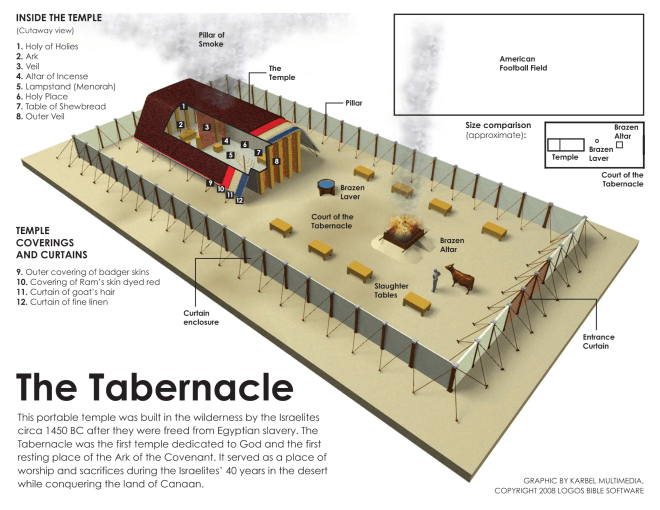
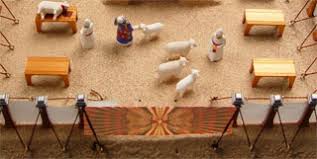
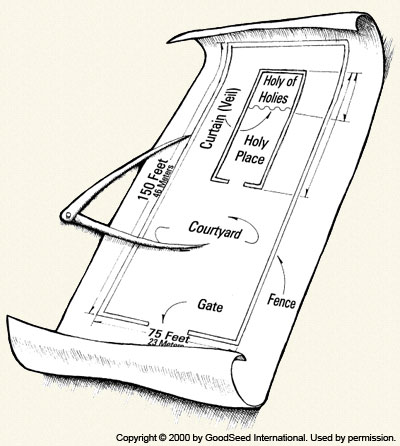
The Tabernacle

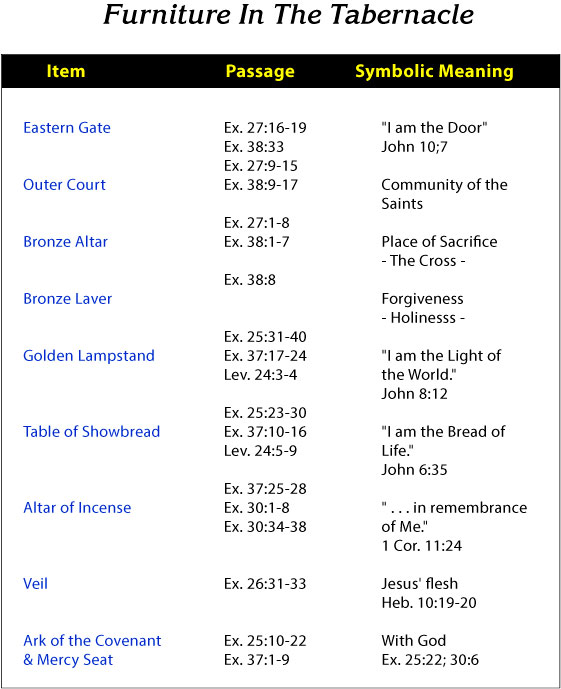
Exodus 27 gives the specifications for the bronze altar, court of the Tabernacle, and the oil for the lamps (27:1-21).  The bronze altar (27:1-8) points to Jesus Christ as the willing substitute sacrifice.

Brazen Altar

Symbolic meaning of the furniture in the tabernacle

The layout of the court is given in 27:9-19.  Notice that there was only one way in (John 14:6; Acts 4:12; John 10:9—Jesus the gate).

Entrance into tabernacle

Tabernacle model from outside courtyard, bibleplaces

Finally, the type of oil is specified (27:20-21) that the priests were to prepare and use in the tabernacle.  The priests had to trim the wicks and refill the oil in the lamps on the lampstand, in the holy place, every evening—to make them “burn continually.” Thus there was “light” in the holy place all night long (cf. Lev. 24:3; 1 Sam. 3:3).

John 6 begins with the feeding of the 5,000, one of the only miracles recorded in all four gospels.  Jesus is at the high point of His public ministry.  Excitement continues to build, but so does opposition.

This picture, from Ferrell Jenkins, shows the Plain of Bethsaida in the depressed green area in the middle left.

This sign demonstrated Jesus’ identity as the Son of God, and it prepared for Jesus’ revelation of Himself as the Bread of Life (vv. 22-59).


Thomas Constable notes:

Notice that this sign illustrates three solutions to problems that people typically try. First, Philip suggested that money was the solution to the problem (v. 7).  Second, Andrew looked to people for the solution (v. 9).  Third, Jesus proved to be the true solution (v. 11).  A fourth solution appears in the other Gospel accounts of the miracle (Matt. 14:15; Mark 6:36; Luke 9:12): get rid of the problem.  The disciples told Jesus to send the people away, to let them fend for themselves (cf. Matt. 15:23).

William Barclay says, “Jesus needs what we can bring him.  It may not be much but he [asks for] it.  It may well be that the world is denied miracle after miracle and triumph after triumph because we will not bring to Jesus what we have and what we are.   If we would lay ourselves on the altar of his service, there is no saying what he could do with us and through us.  We may be sorry and embarrassed that we have not more to bring—and rightly so; but that is no reason for failing to bring what we have.  Little is always much in the hands of Christ.”

Jesus then sends His disciples across the Sea of Galilee.  He is not initially with them, but walks out to them in the midst of a storm.

Craig Groeschel said, “Never let the presence of a storm ca use you to doubt the presence of God.”

Proverbs 3

Proverbs 3 and 4 are the theological center of the book, encouraging the pursuit and reliance upon God’s wisdom.  Children are encouraged to trust in the Lord (3:1-12), pursue wisdom (3:13-26) and experience its blessings, and treat their neighbor in love (3:27-30).

The trust of the wise son (vv. 5-6) comes from heeding sound teaching (vv. 1-4), and it leads to confident obedience (vv. 7-9).  Even though the price one has to pay for wisdom (i.e., life within the will of God) includes submitting to God’s discipline (vv. 11-12), it is worth it (vv. 13-20).  In verses 21-35 we can see the quality of love in the wise son.

It is important, but sometimes difficult, for us to remember that the Lord loves us (not in spite of, but) through discipline (vv. 11-12).

C. S. Lewis illustrates the truth by noting that an artist may not take much trouble over a picture drawn to amuse a child, but he takes endless effort over his great work of art that he loves.  Leonardo da Vinci labored for many years over the Mona Lisa, in effect never really finishing it.

Galatians 2 begins with Paul stresses his independence from the other apostles in general (2:1-10) and Peter in particular (2:11-21).  Paul speaks of his meeting with the Jerusalem church leaders.  He did so to establish for his readers that, although he was not dependent on anyone but God for his message and ministry, he preached the same gospel the other apostles did.

Paul next (vv. 11-21) mentioned the incident in which he reproved Peter, the Judaizers’ favorite apostle, to further establish his own apostolic authority, and to emphasize the truth of his gospel.  He rebukes Peter because his “conduct was not in step with the truth of the gospel.”  The gospel calls us to live and interact with others in a certain way–through grace.

Peter had been freely eating with Gentiles UNTIL some important Jews from Jerusalem arrived.  Then he avoided them, wanting to please “the circumcision party.”  By his actions Peter was denying the truth of the gospel, which is ” person is not justified by works of the law but through faith in Jesus Christ” (v. 16).

Verse 16 contains three statements.  Each statement deals with this same truth of justification.  The first statement is general.  The second. statement is personal.  The third statement is universal.

General

Personal

Universal

A man is not justified by the works of the law but through faith in Christ Jesus We have believed in Christ Jesus, that we may be justified by faith in Christ, and not by the works of the Law By the works of the Law shall no flesh be justified

John Stephenson

“To give a short definition of a Christian:  A Christian is not somebody who has no sin, but somebody against whom God no longer chalks sin, because of his faith in Christ.  This doctrine brings comfort to consciences in serious trouble.”

–Martin Luther

Regarding vv. 17-18 David Guzik says…

How is it a sin to build again a way to God through the Law of Moses?  In many ways, but perhaps the greatest is that it looks at Jesus, hanging on the cross, taking the punishment we deserved, bearing the wrath of God for us, and says to Him, “That’s all very nice, but it isn’t enough.  Your work on the cross won’t be good enough before God until I’m circumcised and eat kosher.”  What an insult to the Son of God!

Of course, this is the great tragedy of legalism.  In trying to be more right with God, they end up being less right with God.  This was exactly the situation of the Pharisees that opposed Jesus so much during His years of earthly ministry.  Paul knew this thinking well, having been a Pharisee himself (Acts 23:6).

Galatians 2:20 is a favorite verse of mine:

20 I have been crucified with Christ.  It is no longer I who live, but Christ who lives in me.  And the life I now live in the flesh I live by faith in the Son of God, who loved me and gave himself for me.

What happened to me in the past, when I believed in Christ?  I was crucified.  The old me died and I no longer live (as that person).  Now Christ lives in me.  When I believe that (trust that truth moment by moment), He can live through me and His life produces practical righteousness in my life.


M’Cheyne Bible Reading Plan, March 15

Today’s readings are from Exodus 26, John 5, Proverbs 2 and Galatians 1.

Exodus 26 continues with the instructions for the furnishings of the tabernacle., dealing with the coverings and curtains for the tabernacle (26:1-14), the framing systems (26:15-30) and the two barriers–the veil between the holy place and holy of holies and the screen for the doorway (26:31-37).

This veil separates the Holy place from the Holy of Holies. Knowing the use of these colors, you recognize that they represent the entrance into a heavenly (blue), royal (purple) and redemptive (scarlet) area, for beyond this veil is the very presence of the King!  It was four inches thick!  This is what makes Matthew 27:50-51 so fantastic!

Image result for torn veil

We move through the veil by Jesus, the new and living way (Hebrews 9:11-12; 22-24).

In John 5 Jesus heals a man at the pool of Bethesda (Jerusalem) on the Sabbath.

Image result for pool of bethesda

Land of the Bible

Jesus was there for a feast, likely Passover.  There were three Jewish feasts which every Jewish male within fifteen miles of Jerusalem was obligated to attend.  Those feasts were Passover (remembering God leading them out of slavery in Egypt), Pentecost (remembering God giving them the law at Mt. Sinai), and Tabernacles (remembering God sustaining them in the wilderness).

At the pool of Bethesda Jesus asks a 38-year invalid what seems a strange question, “Do you want to be healed?” (v. 6).  That seems like a “duh” question, but it really gets to the heart of all our struggles.  Do we really want to get well?

The man immediately explained all the efforts he had taken, to no avail.

Calvin writes: “The sick man does what we nearly all do. He limits God’s help to his own ideas and does not dare promise himself more that he conceives in his mind.”

Jesus asked him to obey a simple command (the impossible) and the man did obey and was healed.

Problem–it was the sabbath and the Jews objected to the timing of the healing.  Verse 16 explains…

And this was why the Jews were persecuting Jesus, because he was doing these things on the Sabbath.

The following chart is from Tom Constable, showing the controversies between Jesus and the Jewish leaders in chronological order.

SABBATH CONTROVERSIES

Event

Matthew Mark Luke

John

The disciples plucked ears of grain in Galilee.

12:1-8

2:23-28

6:1-5

Jesus healed a paralytic at the Pool of Bethesda in Jerusalem.

5:1-18

Jesus healed a man with a withered hand in Capernaum.

12:9-14

3:1-6

6:6-11

Jesus referred to the Jews circumcising on the Sabbath.

7:22-23

Jesus healed a man born blind in Jerusalem.

9:1-34

Jesus healed a woman bent over in Judea.

13:10-17

Jesus healed a man with dropsy in Perea.

14:1-6

What Jesus said next blew their minds–Jesus was calling God his own Father, “making himself equal to God.”  In the remainder of the chapter Jesus explains why this is, in fact, reality.

  • Jesus does exactly what He sees His Father doing (vv. 19-20).
  • Jesus and the Father do the same (divine) works (vv. 21-23)
  • Most importantly, the Son gives resurrection life (vv. 24-27)
  • Therefore, He will judge you (vv. 28-30)
  • There is more than one, even more than two witnesses (vv. 31-39): the testimony of Jesus (vv. 31-32), John the Baptist (vv. 33-35), the miracles (v. 36); the Father (v. 37-38) and the Scriptures (v. 39).

Their unbelief is due to their need for man’s approval (vv. 40-44) and even their beloved Moses testified against them (vv. 45-47).

I am trying here to prevent anyone saying the really foolish thing that people often say about Him: I’m ready to accept Jesus as a great moral teacher, but I don’t accept his claim to be God.  That is the one thing we must not say.  A man who was merely a man and said the sort of things Jesus said would not be a great moral teacher.  He would either be a lunatic—on the level with the man who says he is a poached egg—or else he would be the Devil of Hell.  You must make your choice.  Either this man was, and is, the Son of God, or else a madman or something worse.  You can shut him up for a fool, you can spit at him and kill him as a demon or you can fall at his feet and call him Lord and God, but let us not come with any patronising nonsense about his being a great human teacher. He has not left that open to us. He did not intend to. . . . Now it seems to me obvious that He was neither a lunatic nor a fiend: and consequently, however strange or terrifying or unlikely it may seem, I have to accept the view that He was and is God.

–C. S. Lewis in Mere Christianity

John omitted many events in the life of Jesus—between John 5:47 and 6:1—that the Synoptic evangelists recorded as happening. These include the resumption of Jesus’ Galilean ministry (Matt. 5—7; 8:5-13, 18, 23-34; 9:18-35; 10:1—13:53; 14:1-12; Mark 2:23—6:30; Luke 6:1—9:10a).

Proverbs 2 extends the urgency of gaining wisdom.  It first contrasts the typical disregard for wisdom and truth at the end of chapter 1 by urging…

1 My son, if you receive my words and treasure up my commandments with you, 2 making your ear attentive to wisdom and inclining your heart to understanding; 3 yes, if you call out for insight and raise your voice for understanding, 4 if you seek it like silver and search for it as for hidden treasures, 5 then you will understand the fear of the LORD and find the knowledge of God.

It almost seems a circular activity–the fear of the Lord is the beginning of wisdom (1:7) and by seeking wisdom “you will understand the fear of the Lord” (2:5).

There are two dangers every young man faces–sexual temptations and temptations to do evil.  This is why wisdom is so important, because it can guard you and deliver you.

Proverbs 2:16-19, Proverbs 5; Proverbs 6:23-35 and Proverbs 7 as well as a variety of one-liners, explain the ways of sexual seduction as well as the consequences.  I would encourage you to read these passages and write down a list of consequences you would face by getting sexually involved with someone you are not married to.

See John Piper’s article ANTHEM: Strategies for Fighting Lust for practical help in overcoming this very common temptation (for both men and women).

Galatians is the defense of the good news.  Christians at Galatia, many of whom were Jews, steeped in Judaism all their lives, were in danger of moving back into depending upon the law.  Galatians is written to show that we do not depend upon the law for either salvation or sanctification.

John W. Lawrence calls it the “Magna Carta of Christian liberty.”

Martin Luther: The Epistle to the Galatians is my Epistle. I have betrothed myself to it. It is my Katie – it is my wife.

Speaking of Luther’s use of the book of Galatians, Godet says: This was the pebble from the brook which, like another David, he went forth to meet the papal giant and smite him in the forehead. In this epistle Luther found the secret of his own deliverance. Taking this as his weapon, he plunged into the fearful conflict with the Papistry and religious materialism of his time.

John Stephenson shows the comparison between Paul’s two great defenses of the gospel:

Galatians


Romans

Passionate and emotional Calm reflection
Christianity on the battlefield Christianity in the study
One of the earlier epistles One of the later epistles
Justification through faith defended from attacks Justification through faith set forth systematically
Our Declaration of Independence Our Constitution

False teachers have convinced the Galatians that they are required to be circumcised. The result is division within their church (5:15).  Paul gives numerous reasons why they should return to the simple truth of the gospel.

ESV Study Bible

Paul’s letter to the Galatians was likely written to the churches he had established during his first missionary journey (Acts 13:1-14:28).  He probably wrote the letter from his home church in Antioch in Syria, sometime before the Jerusalem council (Acts 15:1–31) around 48 A.D.


As we see frequently in Paul’s epistles, Paul identifies himself as an apostle and then defends his calling, which was “not from men nor through man, but through Jesus Christ and God the Father, who raised him from the dead” (v. 1).

Unlike most of Paul’s epistles, however, Paul neither calls them “saints” nor thanks God for them.  Why is this?  It is because he has received news that they are in the process of turning from the faith. They are denying that the death of Christ was sufficient in and of itself to save them.

Paul’s gospel in Galatians is basically stated in vv. 3-4 as…

who gave himself for our sins to deliver us from the present evil age, according to the will of our God and Father, 5 to whom be the glory forever and ever. 

John Stephenson points out that the gift of the gospel was that Jesus “gave himself for our sins.”

The error of the Galatians was over this very point.  They felt that the work of Christ on the cross was not enough to take away their sins.  They thought that they had to add something to the work of Christ.  But Christ’s sacrifice was able to accomplish what it was designed to do.

Who gave… Himself… for our sins
So that He might rescue… Us… from this present evil age

The goal of the gospel is “to deliver us from the present evil age” (sanctification).

The plan of the gospel came from “the will of our God and Father,” not from our intellect or desires.

The result of the gospel is the “glory” of God “forever and ever.”

The gospel is good news, not good advice.  It tells us what God has done for us, not what we need to do for God.  However, some were teaching that what God had done was not enough.  What they were preaching was not the gospel, but an anti-gospel.

It didn’t matter who was preaching it…Jesus + anything = damnation.

Paul gives his conversion testimony and how he came to be called to preach the gospel in vv. 11-21.

Paul concludes this section of his argument.  He is an apostle.  His authority is independent of anyone in Jerusalem.  His authority is from God and his message is from God.  He has demonstrated that his gospel could not have come…

(a) BEFORE his conversion because he was against that message.

(b) AFTER his conversion because he met with none of the other apostles.

And, as we shall see in chapter 2, when he finally did have some significant interaction with Peter, it was not a case of Peter giving revelation to Paul, but Paul giving revelation to Peter.

M’Cheyne Bible Reading Plan, March 14

Today’s readings are from Exodus 25, John 4, Proverbs 1 and 2 Corinthians 13.

Exodus 25 begins God’s instructions to Israel on building and furnishing the tabernacle.

Outline chart for Exodus 25-40, Charles Savelle

Thomas Constable points out:

Moses usually employed one of four different terms to describe the “tabernacle,” each of which emphasizes one of its purposes, though other names also appear:

  1. “Sanctuary” (25:8) means “place of holiness,” and stresses the transcendence of Israel’s God as an Exalted Being who is different from His people.  However, this verse also states that such a God would “dwell among” His people.
  2. “Tabernacle” (25:9) means “dwelling place,” and emphasizes God’s purpose of abiding near His people. T he tabernacle looked like the other nomads’ tents that the Israelites lived in.  They would have thought of it as “God’s tent” among their tents. It had furniture, just as their tents did.

“Just as they lived in tents, so God would condescend to ‘dwell’ in a tent.”

  1. “Tent of Meeting” (26:36; 29:42-43; 35:21) also stresses the immanence of God. God “met” with Moses and the Israelites in this tent.  The verb translated “meeting” means a deliberate prearranged rendezvous, rather than a casual accidental meeting.  Some scholars believe that the “tent of meeting” was a different structure different than the “tabernacle,” and that it was always outside the camp of Israel.
  2. “Tabernacle (or Tent) of Testimony” (38:21; Num. 9:15; 17:7, 8) indicates that the structure was the repository of the Law.  Moses sometimes referred to the ark of the covenant as the “ark of the testimony” (25:22), because it contained the “two tablets of the testimony” (31:18), on which were inscribed the Ten Commandments.  The Ten Commandments are the “testimony.”  They were the essential stipulations of the Mosaic Covenant, the “heart” of the relationship between God and His people.

God gives a specific plan for building the tabernacle.  Its layout, construction and furnishings are all very significant.

Tabernacle plan

It begins with collecting materials needed to build the tabernacle (25:1-9).

Item Symbolic Meaning References
Gold Deity 1 Cor 3:12, Rev 21:18-21
Silver Redemption Ex 36:2430:15
Brass/Bronze Judgement Ex 27:2Num 21:9Rev 1:15
Blue Heavens/Heavenly nature Ex 25:426:3128:31
Purple Kingly/Royalty John 19:2Rev 17:4
Scarlet Blood Sacrifice Lev 14:4Josh 2:18Isa 1:18
Fine Linen Righteousness Lev 6:10Rev 19:8
Goats/Rams Hair Atonement Gen 15:9Ex 12:5
Acacia Wood Jesus’ Humanity Ex 26:15Isa 53:2
Oil Holy Spirit Lev 14:16, Psa 47:7

The construction and furnishing of the tabernacle begins with the central piece, the ark of the covenant (25:10-22).

Tabernacle floor plan

Constable notes:

Note that the order in which Moses described the things associated with the tabernacle in the text, is not what one would normally expect.  For example, we would expect that after the description of the altar of burnt offerings, we would have a description of the laver.  The altar of burnt offerings was the major piece of furniture in the courtyard, and the first one the Israelite would meet as he entered the courtyard.  Then the laver was the second most prominent item, because it would catch the Israelite’s eye next.  It was also the object between the altar and the tabernacle.  However, instead, we read about the altar of burnt offerings, then the priestly vestments, then the consecration of Aaron, and then finally the laver.

This order is due to the two emphases in the revelation: First, Moses was describing things that primarily manifest God, and second, things dealing with His people’s fellowship with God.  So the author was first describing things in the “holy of holies (Most Holy Place)” where God dwelt, then things in the “Holy Place,” then finally things in the courtyard.  This order, therefore, focuses attention on the presence of Yahweh among His people, which was the most important feature of Israel’s life.  The tabernacle itself also reflects the importance of Yahweh’s presence at the center of His people.

Ark of the Covenant

The first item God told Moses to build was the ark, later called the Ark of the Covenant.  This was the most important single item associated with the tabernacle, modeled after the throne of God in heaven.   Acacia wood is harder and darker than oak. It is also very durable because wood-eating insects avoid it.   Imagine the ark to be about 3 3/4 feet long and 2 1/4 feet wide and high.

Inside were a pot of manna (reminding them of God’s provision), Aaron’s rod which budded (reminding them of Moses as their God-appointed leader) and the tables of the covenant.

God would meet them at the “mercy seat,” the place of atonement, atop the ark.  In Romans 3:25, the Greek word for propitiation (hilasterion) is also used in the Septuagint (an early translation of the Old Testament from Hebrew into Greek, read in the days of the New Testament) for the “mercy seat,” it might be said “Jesus is our mercy seat” – He is the place and the means of our redemption.

In vv. 23-30 Moses is shown the instructions for building the table of showbread.

Table of Shewbread

The priests placed twelve loaves (large pieces) of unleavened bread, called “the bread of the Presence,” in two rows or piles on this table, where they remained for seven days.  Evidently the bread was stacked in two piles, like pancakes.  The priests substituted twelve fresh loaves for the old bread each Sabbath (Lev. 24:5-8).  The term “bread of the Presence” (v. 30) means that these loaves lay before God’s presence in the tabernacle.  The Israelites did not offer this food for Yahweh to eat, as the pagans offered food to their gods. (Constable)

Next was the golden lampstand (25:31-40). This piece of furniture was probably similar in size to the table of showbread (v. 39).  It stood “opposite [that] table” (26:35) in the holy place, against the south (left) wall.  It weighed about 75 pounds (“a talent of pure gold”).  The tabernacle craftsmen fashioned it in the form of a stylized plant or tree, probably an almond tree.  It connoted life and fertility.

Menorah

Like the showbread, the burning “lamps” may have symbolized both the character of God and the calling of Israel.

John 4 is Jesus’ interaction with the woman at the well at Sychar.  Unlike others who skirted around Samaria, Jesus went right through it.  He had a mission.

Jesus broke through several social-cultural barriers here–talking to a hated Samaritan and a woman no less, who was of ill repute.  A good Jewish man did not speak in public to women he did not know.  A rabbi did not speak to any woman in public–not his mother, nor his wife.

Yet, she there was an emptiness in her life, signaled by multiple sexual partners.  Jesus peered deeper and touched a spiritual nerve.  She was looking for love but not in the right places.

Jesus offers spiritual water, something that would eternally satisfy, the presence of the Holy Spirit (4:13-14).

Even though she dodges and feints with personal disclosures and religious arguments, Jesus calls to her heart and reveals Himself as Messiah.  This is the only occasion before his trial that Jesus explicitly acknowledges that he is the Messiah — and he tells it to a woman, a Samaritan woman, an immoral Samaritan woman.

Nicodemus contrasts with the Samaritan woman in many ways. As John portrayed them in his narrative, they seem to typify Jews and non-Jews as well as the normal reactions of those groups to Jesus.

CONTRASTS BETWEEN NICODEMUS AND THE SAMARITAN WOMAN
  Nicodemus The Samaritan Woman
Sex Male Female
Race Pure Jewish Mixed Gentile
Social status Highly respected, ruler, teacher Not respected, servant, learner
Place Jewish territory Samaritan territory
Time At night About noon
Condition Darkness Light
Setting Indoors Outdoors
Occasion Pre-planned Spontaneous
Subject New birth Living water
Initiator Nicodemus Jesus
Conversation Faded out Continued strong
Result Unbelief Belief
Consequence No witness to others Witness to others

When the disciples return with food, Jesus says “I have food to eat that you do not know about” (v. 32), then explains, “My food is to do the will of him who sent me and to accomplish his work” (v. 34).  In other words, this is what brings deepest satisfaction, to work alongside my Father.

Then Jesus points out to His disciples the potential of the harvest (likely because a large number of Samaritans were coming towards them).  The harvest is plentiful.  In Matthew’s gospel Jesus will later tell them to pray for laborers in the harvest.

So at the woman’s simple statement in v. 29, “Come, see a man who told me all that I ever did.  Can this be the Christ?” many Samaritans believed, due to her testimony (v. 39) and Christ’s teaching (v. 41).  They gave a clearer understanding of who Jesus was that many religious Jews, “we know that this is indeed the Savior of the world” (v. 42).

Jesus then went on to Galilee, to Capernaum.

The healing of the official’s son (4:46-54) completes a cycle in John’s Gospel. Jesus performed His first sign in Cana (2:1), and now He returned and did another miracle there (v. 46).  There is even a second reference to Capernaum (2:12; 4:46).

John’s account of Jesus’ first miracle in Cana (2:11) ended with a reference to the weak faith of the Jews that rested only on miracles (2:23-25). His account of Jesus’ second miracle in Cana (4:54) opens with a similar reference (4:45, 48).

The shaded portions show where the Gospel of John fits in the timeline of Jesus’ life.

Proverbs is a book of wisdom sayings, written mainly by Solomon.  The kingdom of Israel was at its highest pinnacle of glory.  The glory of the world was Israel and the glory of Israel was Jerusalem and the glory of Jerusalem was the Temple that Solomon had built.  It was one of the wonders of the ancient world.

The absolute quiet and prosperity of the reign of Solomon (the man of peace), as described in 1 Kings 4:20, would naturally be conducive to the growth of a sententious philosophy; whereas the constant wars and dangerous life of David had called forth the impassioned eloquence of the Psalms.

–Charles J. Ellicott (1819-1905)

What is a proverb?  A proverb is a concise, memorable staying about life.

Proverbs are statements that paint a small word picture of what life is like or should be like.  A proverb is a snapshot of life.  However, as with every snapshot, a proverb does not always represent what life always looks like.  One picture does not capture everything.  A good proverb, like a good snapshot, captures what is typical.

Richard Trench, commenting on proverbs in general, believed that a proverb always has four characteristics: shortness, sense, salt, and popularity.

For the most part, the Proverbs are given in the form of couplets. The clauses of these couplets are related in terms of parallelism. Most poetry in the Hebrew language was not made up of rhyming words, but of rhyming thoughts and ideas. There are three major types of parallelism used in the Proverbs.

Type

Scriptural Example

Description

Repetitious Parallelism (Synonymous) To know wisdom and instruction,

To discern the sayings of understanding. (Proverbs 1:2).

The first line makes a statement of truth; then the second line restates and reinforces the principle given in the first clause.
Contrastive Parallelism (Antithetic) The fear of the Lord is the beginning of knowledge;

Fools despise wisdom and instruction. (Proverbs 1:7).

The first line makes a statement of truth; then the second line gives a corollary – the same truth stated in opposite terms.
Completive Parallelism (Synthetic) The Lord has made everything for its own purpose,

Even the wicked for the day of evil. (Proverbs 16:4).

The first line makes a statement of truth. The second line then adds to the original thought, expanding it so that it brings out a new truth.

One thing to remember is that proverbs are not promises.  They are not guarantees, but express how things generally work in God’s moral universe.

The purpose of the book of Proverbs is to encourage a young man (“son”) to gain wisdom (1:2-5).  Wisdom is skillful living–gaining and putting God’s understanding into practice in our responsibilities, relationships and opportunities.  We gain wisdom first by “fearing God” (1:7) which I believe means that we take God seriously, deadly seriously.  We acknowledge that He exists, that He has the right to tell us how to live, that He watches how we live and will hold us accountable.

The first nine chapters of Proverbs are “wisdom poems” that urge the reader to pursue wisdom.  The main section of Proverbs—the concise, memorable statements of two or three lines—begins in 10:1.  Proverbs often seem to be mere observations about life, but their deeper meanings will reveal themselves if the following questions are kept in mind: (1) What virtue does this proverb commend? (2) What vice does it disapprove of? (3) What value does it affirm?

After the introduction Solomon begins to instruct his “son.”

Consider what God reveals here (1:8-8:32) in the three spheres of life dealt with in the book: the home, friendship, and the world.  In the home, the child must learn wisdom.  In friendship, the youth must apply wisdom.  In the world, the adult must demonstrate wisdom.

The first sphere is that of the home (cf. 1:8-9).  God did not teach the responsibility of the father and mother here, but took for granted that they would instruct their children.  The child needs to hear parental instruction to live in the fear of the Lord.

Young children cannot grasp abstract concepts.  For them God is incarnate in father and mother.  Fathers and mothers reflect the image of God to their children.  Both parents are necessary to reveal God to the child fully.  Children see some of God’s characteristics in the mother’s attitudes and actions (cf. Matt. 23:37).  They see other aspects of God’s character in the father.

Parents do not have to try to teach their young child systematic theology.  They just need to live in the fear of God themselves, and their child will learn what he or she needs to learn about God for that stage of their life—just by observing mom and dad.

For example, when small children see their parents loving one another, it prepares them to understand God’s love. This by no means is meant to exclude verbal instruction.  My point is that young children learn wisdom by observing their parents as well as by listening to them.  We all exert influence in two ways: with our words and with our works (actions).

The second sphere of life is friendship (cf. 1:10-19).  The day must come when the child, in the natural process of development, moves out into a wider circle of experience.

The Bible presents two duties that children have to their parents.  When the child’s sphere of life is his home, he is to obey his parents.  However, that duty does not continue forever.  When he moves into the larger sphere of life outside the home, his duty is to honor his parents.  This duty does continue forever.

When a child enters this second stage of life, guided at first by parental council, but then finally on its own, wisdom gives important instruction (cf. 1:10).  He should avoid certain friendships.  He should beware of people who seek to make friends with him because they have selfish interests and unscrupulous motives.  There are many warnings in Proverbs against people who are not true friends.  There is no more important stage in a young person’s development than when he or she begins to choose companions.

Then, and from then on, he or she must follow the wisdom that comes from the fear of the Lord.  The youth must submit to the Lord’s wisdom, having learned that in the home, to succeed in the larger arenas of life.  The choice of a mate is one of these companion decisions.  Parents should help their children with these values, and qualities to look for in a mate.

The third stage of life is the world, symbolized in Proverbs by the street, the gates, and the city (cf. 1:20-33; chs. 2—9).

In 1:8-19 a parent warns his son about false friendships.  Children need help in pursuing the right friendships.  Some friendships are dangerous and destructive.  These bad friendships attempt to encourage young people to leave behind their parents’ values.

The warning itself appears twice (vv. 10, 15).  A description of how the dangerous appeal will come (vv. 11-12) follows the first admonition to not heed it (v. 10).  Three reasons for ignoring it (vv. 16-18) follow the repetition of the warning (v. 15).  The final verse is a conclusion (v. 19; cf. Job 8:13).

1:20-33 gives wisdom’s first appeal.  Here we have wisdom personified (later we will encounter Dame Folly).  Wisdom calls out to the simple ones, the scorners (scoffers, mockers, NIV), and the fools (v. 22).  This section introduces the progression of foolishness.

Everyone begins as a simple child, naïve and open to every influence and suggestion.  Unless one listens to instruction, learns to fear God and gains prudence, he or she will become a fool, someone who cannot discern danger and continually gets in trouble.  If one doesn’t respond to discipline, then they become a scorner, someone who thinks they know everything and will no longer listen to instruction or respond positively to discipline.

The Choice

John Kitchen’s helpful chart shows the progression, either towards knowing God or rebelling against God.  This chart shows that we don’t get to either end in a single choice or short time.

But notice how the simple person and fool respond to God’s instruction:

24 Because I have called and you refused to listen, have stretched out my hand and no one has heeded, 25 because you have ignored all my counsel and would have none of my reproof…

These verses point out four reasons that we typically reject reproof:

  1. stubborn willfulness (v. 24) “you refused to listen”
  2. insensitivity (v. 24) “no one paid attention”
  3. indifference (v. 25) “neglected” with an “I don’t care” attitude
  4. defensiveness (v. 25) “not want”

If they wouldn’t listen to God’s instructions, he would not hear their prayers when they fell into trouble.  They would “eat the fruit of their way.”

In 2 Corinthians 13 Paul tells the Corinthians to examine themselves before he comes to them.  He was preparing to come to them for the third time.  His apostolic authority was settled; was their faith secured?

“Examine yourselves, to see whether you are in the faith.  Test yourselves.  Or do you not realize this about yourselves, that Jesus Christ is in you?–unless indeed you fail to meet the test!” (2 Corinthians 13:5)

Perry Brown notes:

“The logic of Paul’s argument is compelling: If the Corinthians wanted proof of whether Paul’s ministry was from Christ, they must look at themselves, not him, because Paul had ministered the gospel to them (Acts 18:1-11; 1 Cor. 2:1-5).”

D. A. Carson has articulated what we know all too well, that “there are millions of professing believers in North America today (to say nothing of elsewhere) who at some point entered into a shallow commitment to Christianity, but who, if pushed, would be forced to admit they do not love holiness, do not pray, do not hate sin, do not walk humbly with God.  They stand in the same danger as the Corinthians; and Paul’s warning applies to them no less than to the Corinthian readers of this epistle” (178).

How do we examine ourselves?  I believe our primary assurances comes from God’s promises about our salvation (John 5:24; 10:28-30; Romans 8:1, 30, 38-39; 1 Peter 1:5), secondly through the testimony of the Holy Spirit (Romans 8:17) and thirdly through our obedience (1 John).

M’Cheyne Bible Reading Plan, March 13

Today’s readings are from Exodus 24, John 3, Job 42 and 2 Corinthians 12.

In Exodus 24 the covenant between God and Israel is ratified (24:1-11).  Moses told the people all God had commanded, they agreed to it (v. 3) and he wrote them down.  They ratified the covenant with sacrifices (vv. 4-7) and the people again pledged their obedience (v. 7).

In vv. 9-11 Moses, Aaaron and his sons and 70 elders were ate and drank with God, enabled to see Him without dying.  While it is possible that they only saw his feet, or a part of Him, God was definitely merciful to them.

24:12-31:18 give directions for God’s continued dwelling with the Israelites.

Now that Israel had entered into a blood covenant with God, God purposed to dwell among His people (cf. John 1:14).  Correspondingly, God now dwells among Christians by His Holy Spirit, since Jesus Christ has ratified the New Covenant by shedding His blood.

The spectacular vision of “the glory of the LORD” on the mountain, “like a consuming fire” (v. 17), should have caused the Israelites to have greater respect for God’s revelation than they demonstrated later (cf. 32:1-8).

John 3 records Jesus’ interaction with Nicodemus (3:1-21), followed by John the Baptist’s reaction to Jesus (3:22-30) and an explanation of Jesus’ preeminence (3:31-36).

The soteriological concept of “new birth” or regeneration, is introduced to Nicodemus (a religious Jew) as the way in which a person takes part in the kingdom of God (3:3) and as something Nicodemus should have known about (3:10).

In His description of new birth, Jesus recalled a familiar theme from Old Testament promises of the New Covenant (Deut. 30:1-6; Jeremiah 23:1-8; 31:31-34; 32:37-41; Ezekiel 36:16-28; 37:11-14; 37:21-28).

“All over the New Testament this idea of rebirthre-creation occurs.” (Barclay)

  • 1 Peter speaks of being born anew by God’s great mercy (1 Peter 1:3).
  • 1 Peter speaks of being born anew from an imperishable seed (1 Peter 1:22-23).
  • James speaks of God bringing us forth by the word of truth (James 1:18).
  • Titus speaks to us of the washing of regeneration (Titus 3:5).
  • Romans speaks of dying with Jesus and rising anew (Romans 6:1-11).
  • 1 Corinthians speaks of new believers as new-born babes (1 Cor. 3:1-2).
  • 2 Corinthians speaks of us being a new creation in Jesus (2 Cor. 5:17).
  • Galatians says that in Jesus we are a new creation (Galatians 6:15).
  • Ephesians says the new man is created after God in righteousness (Eph. 4:22-24).
  • Hebrews says that at the beginning of our Christian life we are like children (Heb. 5:12-14).

There is fleshly birth and spiritual birth, Jesus is saying.  We all experience physical birth through no effort of our own, but experiencing spiritual birth is dependent upon the movement of the Holy Spirit.

“A man may cast away many vices, forsake many lusts in which he indulged, and conquer evil habits, but no man in the world can make himself to be born of God; though he should struggle never so much, he could never accomplish what is beyond his power.  And, mark you, if he could make himself to be born again, still he would not enter heaven, because there is another point in the condition which he would have violated — ‘unless a man be born of the Spirit, he cannot see the kingdom of God.’” (Spurgeon)

A picture of Jesus’ crucifixion was Moses’ lifting up of the serpent in the wilderness.  The serpent in Numbers 21 was made of bronze, indicating judged sin.  Jesus, who knew no personal sin, was condemned as a sinner because He bore our sins.

People were saved not by doing something, but simply in looking.  Likewise, salvation comes to us not by doing, but simply looking.  Isaiah 45:22 says, “Look to Me, and be saved, all you ends of the earth!”

Alexander Maclaren said:

“He must die because He would save, and He would save because He did love.”

We are condemned, ultimately, not because we sin, but because we don’t believe in the provision God has made for our salvation (3:18).  The reason we are not saved, is because we love darkness and hate the light.

There are four prominent “musts” in John 3.

  • The Sinner’s must: you must be born again (John 3:7).
  • The Savior’s must: so must the Son of Man be lifted up(John 3:14).
  • The Sovereign’s must: He must increase (John 3:30).
  • The Servant’s must: I must decrease (John 3:30).

–David Guzik

Like John 3:16 earlier, John 3:36 makes it clear…

36 Whoever believes in the Son has eternal life; whoever does not obey the Son shall not see life, but the wrath of God remains on him.

Job’s response to God in 42:1-6 shows that he has learned more about God and His ways.

He was aware as never before that God had all power and all wisdom. This resulted in an attitude of awe and submission (v. 2). He saw that it was foolish for him to question God’s actions. God knew what He was doing even though Job did not.

By quoting God’s first question back to Him (v. 3a; 38:2), Job meant: “You were exactly right in asking, ‘Who is this that hides counsel without knowledge?’  That is just what I have been doing.”  He admitted having spoken presumptuously (v. 3b-c).

Job also repeated what God had said when He began each of His speeches (v. 4; 38:3; 40:7).  God had asked for Job’s reply.  Now Job gave it. However, it was not the courtroom accusation he had said he wanted to deliver to God. It was instead a confession of his own folly.

Job had had limited, secondhand knowledge of God (“my ears had heard of you”), but now he has “seen” and has more spiritual insight.  This greater understanding of God helped him to understand himself better.  He saw both God and himself more realistically.

Job evidently not only withdrew his charges against God but also despised and rejected his attitude of pride.  Job had previously expressed remorse over his losses, but now he grieved over his sins.  Job’s repentance seems to have been more than turning from his sorrowful condition.  He changed his mind and abandoned his rebellious pride and arrogance toward God.

Our best answer to suffering is to know God as He is.

The book closes as it opened, with a prose explanation by the inspired human writer. He gave us important information about Job’s friends (vv. 7-9) and then Job’s fortunes (vv. 10-17).

See the three main features of the epilogue—transformation [of Job as regards his character], vindication [of Job before his friends], restoration [to Job of his former prosperity, and far more].

In the epilogue God first addresses Job’s friends.  He evidently excludes Elihu because he had more faithfully represented God than the others had.

The error of Eliphaz, Bildad, and Zophar was limiting God’s sovereignty.  By asserting that God always punishes the wicked and rewards the righteous in this life, they were limiting God and committing a sin that required a sacrifice for atonement (covering).  Modern prosperity theology advocates should take note!

God is sovereign in his exercise of grace.

Job evidently forgave his friends as God had forgiven him (cf. Matt. 6:12), and prayed for them as a priest (cf. 1:5; Matt. 5:44).  Job stood as a mediator between his friends and God.  He had previously felt the need of a mediator himself.

Rather than judging Job, God accepted him because he was indeed His “servant,” not the rebel that his friends accused him of being. The writer used the word “servant” four times in these verses. Job had served God, among other ways, by being the vehicle through whom God brought the revelation of this book to its readers. Job not only obtained God’s favor himself, but he became the instrument of God’s grace to sinners.

Then, in vv. 10-17, God restores Job’s fortunes.

Item Before After Total
Sheep 7,000 7,000 14,000
Camels 3,000 3,000 6,000
Yoke of Oxen 500 500 1,000
Female Donkeys 500 500 1,000
Sons 7 7 14
Daughters 3 3 6
Age in Years 70 140 210

Notice that God began to prosper Job again after he interceded for his friends (v. 10), not just after he repented. His willingness to pray for his enemies showed the genuineness of the transformation that had taken place in his heart. He no longer felt antagonistic toward God but accepting of his enemies (cf. Matt. 6:15).

The Lord increased all that Job possessed twofold (v. 10).

Does the fact that God eventually blessed Job materially in life for his godliness prove Job’s three friends were right after all?  Is the basis of man’s relationship with God really retribution?

No, God did not reward Job in life primarily because he was good but because God is gracious. The basis of people’s relationship with God is grace.

The Book of Job does not deny the fact that God blesses the righteous.  However, it shows that this principle has exceptions if we look at life only this side of the grave.  Because God is sovereign He can deal with anyone as He chooses for reasons only He knows.  Nevertheless He always deals justly (cf. Rom. 9:14).

Warren Wiersbe concludes…

“This chapter assures us that, no matter what happens to us, God always writes the last chapter. Therefore, we don’t have to be afraid. We can trust God to do what is right, no matter how painful our situation might be. . . .

“His [Job’s] greatest blessing was knowing God better and understanding His working in a deeper way.”

2 Corinthians 12 begins with Paul’s “boast” of going up to the third heaven.  David Platt pointed out a few years ago, when one of the books about out-of-body trips to heaven was popular, that Paul “heard things that cannot be told, which man may not utter” (12:3).

What Paul really boasted in was his own weakness, because it was through his weakness that God’s strength could be manifest, so that He would receive the glory.

Some things to note about Paul’s experience:

  • We do not know what the “thorn…in the flesh” was.
  • That thorn was “given” to Paul to keep him from conceit.  God will ruthlessly deal with our pride.
  • Even Paul did not get all his prayers answered.  At least not in the way he initially wanted.
  • Paul adjusted his praying, desiring grace in weakness rather than strength.

The true heart of a pastor is found in verse 15:

15 I will most gladly spend and be spent for your souls.

Paul was having to prove to them that, unlike the other “super apostles,” he was not taking advantage of them.

M’Cheyne Bible Reading Plan, March 12

Today’s readings are from Exodus 23, John 2, Job 41 and 2 Corinthians 11.

Exodus 23 begins case laws with laws about justice (23:1-9), then describes the religious life of this new theocratic nation, Israel.  First, the Sabbath (23:10-13), then the three national feasts: Passover/Unleavened Bread, Firstfruits, and Ingathering (Pentecost) (23:14-17).

Image result for jewish calendar

Image result for calendar of Jewish feasts

This is followed by laws about sacrifices and offerings to God (23:18-19).  Finally, God promises His presence and blessing as long as they are obedient (23:20-23).

John 2 includes two main events–the wedding at Cana (2:1-12) and Jewish cleansing the temple in Jerusalem (2:13-22).

Kirbeth Cana would be on the first “hill” beyond the olive trees.  The “hill” is actually a “tel,” a layering of city remains from different ages.

The wedding at Cana of Galilee provided the opportunity for Jesus to do His first miracle.  John specifically calls them “signs” because the objective was not merely to show off, or even to meet people’s needs, but to reveal the true identity of Jesus.

It was a major social faux pas. “To fail in providing adequately for the guests would involve social disgrace. In the closely knit communities of Jesus’ day such an error would never be forgotten, and would haunt the newly married couple all their lives.”

–Merrill Tenney

Jesus gently rebuked His mother’s request to help, because his “hour has not yet come” (v. 4), yet He went ahead and gave instructions that resulted in an abundance of really good wine.  So this was Jesus’ “first” of seven signs.

Image result for seven signs in the book of john

13 The Passover of the Jews was at hand, and Jesus went up to Jerusalem.

John alone recorded that “Jesus went up to Jerusalem,” topographically again, for three separate “Passover” celebrations.  He referred to a second Passover in 6:4, and to a third one in 11:55; 12:1; 13:1; 18:28, 39; and 19:14.  Some interpreters believe that he mentioned a fourth Passover in 5:1, but this seems unlikely.  This first one was evidently the Passover of April 7, A.D. 30, the first one after Jesus began His public ministry.

While there Jesus saw the buying and selling, and the extravagant prices.  Though Jesus’ action was violent, it evidently did not constitute a threat to the peace in the temple area. Roman soldiers from the adjoining Antonia Fortress would have intervened quickly if it had (cf. Acts 21:31-32).  Jesus was forceful but not cruel.  There is no indication that He injured anyone with His fairly harmless scourge of cords (Gr. phragellion ek schoinion).

Tom Constable explains…

The Old Testament predicted that Messiah would come and purify the Levites (Mal. 3:1-3; cf. Zech. 14:21).  Jesus’ action perhaps recalled these prophecies to the godly in Israel who may have wondered if Jesus was the Messiah.  His actions here did not fulfill these prophecies, however, which appear in millennial contexts.  Jesus will yet return to the temple that will be standing in Jerusalem, when He returns at His Second Coming, and purify the Levites serving there then.  This will be preparation for His messianic reign that will follow.

The disciples saw Jesus’ zeal, perhaps recalling Psalm 69:9.  But the Jews wanted Jesus to produce some sign to prove His authority.  Jesus gave them a sign, but not the kind they wanted.  They wanted some immediate demonstration of prophetic authority.  Instead, Jesus announced a miracle that would vindicate His authority after He died.  He would rise again.

John 2 ends with a somewhat cryptic statement.

23 Now when he was in Jerusalem at the Passover Feast, many believed in his name when they saw the signs that he was doing. 24 But Jesus on his part did not entrust himself to them, because he knew all people 25 and needed no one to bear witness about man, for he himself knew what was in man.

Many believed in Jesus, but Jesus did not believe in them.  Why?  Because He knew all people and whether they were genuine.  This seems to set us up for John 3 and 4 as Jesus encounters a religious Jew and an immoral Samaritan.  What was in their hearts?

Ralph Wilson notes:

Seeing the miracles prompted initial faith in many people (the verb is pisteuō, “to believe”) — and that was good, so far as it went.  But faith that rests on miracles alone, and doesn’t mature to embrace Jesus and follow him, is shallow and fickle.

Job 41

Yahweh’s purpose in directing Job’s attention to such inexplicable animals on land (Behemoth) and in the water (Leviathan) seems to have been almost the same as His purpose in His first speech.  He intended to humble Job by reminding him of his very limited power and wisdom, compared with God’s, so Job would submit to His Lordship.

One might conclude after reading these speeches of Yahweh that God is not very compassionate. He may seem more concerned about establishing His own glory than about Job’s suffering.  However, we need to remember that God could have said nothing.

Furthermore, by directing Job’s thinking as He did, God did what was best for Job, the truly loving thing.  He did not just give him answers to specific questions but a larger vision of Himself that would transform Job’s life forever after.

2 Corinthians 11 continues Paul’s defense of his apostolic authority.  Paul defends his credentials, though it appears as foolishness.  It is important that the Corinthian Christians understand and trust Paul’s apostolic credentials because Paul is jealous with a godly jealousy for their hearts.  It is important that the Corinthian Christians understand and trust Paul’s apostolic credentials because Paul knows they are attracted to the false apostles who preach another Jesus.

Paul feels like he has to defend himself against the super-apostles.  Even Satan can appear as an angel of light (v. 14).  Ultimately, Paul reveals that his apostolic credentials are the scars he has borne (vv. 22-33).

Alan Redpath reminds us:

“Such is the price that Paul paid.  How does that react upon you?  Do you congratulate yourself that you have escaped it?  One week of such living and we would be done, but Paul went through it for a lifetime and gloried in his infirmities.”