The End of the Line for Balshazzar (Daniel 5:26-27)

The message of judgment has been written and now read by Daniel.  Belshazzar and the Babylonian kingdom had been weighed and come up short, so they would be overthrown by the Medo-Persian empire.

Only two things remain: Belshazzar rewarding Daniel and Belshazzar taking his last breath.

Belshazzar fulfilled his promise to the handwriting analyst, but it was the last thing he did!

Then Belshazzar gave the command, and Daniel was clothed with purple, a chain of gold was put around his neck, and a proclamation was made about him, that he should be the third ruler in the kingdom. (Dan. 5:29)

Daniel, however was unimpressed with the king’s promises.  They were worthless.  The God of Israel had already written the word bankrupt over Belshazzar and all that he had.  Daniel had everything he needed, for he had God (Psalm 73:25-26).

30 That very night Belshazzar the Chaldean king was killed. 31  And Darius the Mede received the kingdom, being about sixty-two years old.

“The most famous military tactic in history may be the Greeks’ use of a giant wooden horse to sneak soldiers into the city of Troy.  But ranking right up there with the Trojan horse is the story of how the Medo-Persian armies captured Babylon.  Scholars debate whether the Trojan horse is fact or legend, but Cyrus’s conquest of Babylon is a certified fact” (David Jeremiah, Agents of Babylon, p. 162).

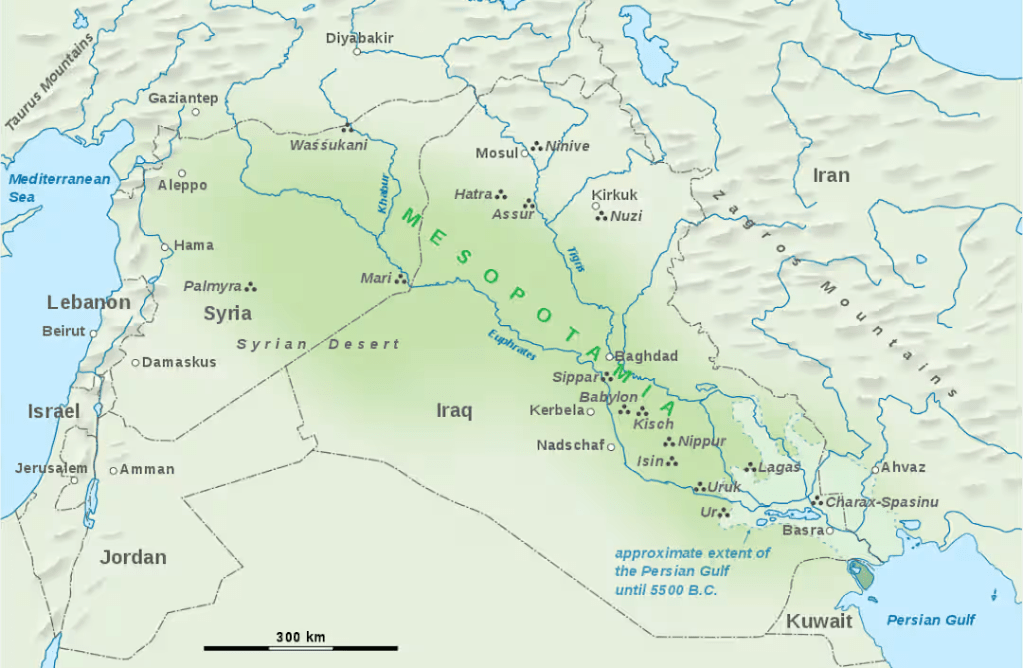
After conquering numerous other enemies, Cyrus faced his greatest challenge— the huge walled city, 24 square kilometres of Babylon. Xenophon records the following surmising of Cyrus, “But I am sure I cannot see how any one could take by storm, walls so massive and so high.”

Both Herodotus and Xenophon record that Cyrus resolved to lay siege on Babylon and wait until the people within the walls ran out of food.  He was informed (perhaps by Gadatas and Gobryas—two defectors from Babylon) that the great city had more than 20 years of food supplies.  Cyrus became frustrated, but then a plan came to him, perhaps from one of his advisers or perhaps from his own design.  The walls were too thick to break.  The gates were too strong.  There was only one fathomable way to get in—the Euphrates River, which went through the middle of the city.

The highly regarded Greek historian Herodotus wrote a full account of the event:

“Cyrus, having thus stationed the bulk of his army near the passage of the river where it enters Babylon, and again having stationed another division beyond the city, where the river makes its exit,…gave orders to his forces to enter the city as soon as they should see the stream fordable.  Having thus stationed his forces and given these directions, he himself marched away with the ineffective part of his army, and having come to the lake, Cyrus…diverted the river, by means of a canal, into a lake, which was before the swamp, he made the ancient channel fordable by the sinking of the river.

When this took place, the Persians who were appointed to that purpose close to the stream of the vier, which had now subsided to about the middle of a man’s thigh, entered Babylon by this passage….It is related to the people who inhabited this city, that…the Babylonians who inhabited the centre knew nothing of the capture (for it happened to be a festival)l but they were dancing at the time, and enjoying themselves….And thus Babylon was taken for the first time. (Herodotus, vol. 1, trans. Henry Carey, pp. 190-191).

So on the night of October 11, 539 B.C., the Medo-Persian army slipped beneath the wall of Babylon and put Belshazzar to death.  “Daniel 4 marks the end of Nebuchadnezzar, the builder of Babylon.  Chapter 5 marks the end of Belshazzar and Babylon.  The head of gold on the colossus was now defeated by the chest and arms of silver.  Babylon was absorbed into the inferior empire of the Medes and Persians” (David Jeremiah, Agents of Babylon, p. 163).

Grant Jeffrey comments: “Despite Cyrus’ brilliant strategy of diverting the Euphrates River to allow his army to breach the city gates, his plan of attack would not have succeeded without the misplaced confidence of the Babylonian army.  Babylonian soldiers were so confident in their city’s defenses that they minimized the threat of the Persian army while it remained outside the city.  In addition, many of the Babylonian troops were drunk from joining in the spirit of the king’s wine-fueled banquet.  Once the Persian armies joined forces in the center of Babylon, they [easily] overran the city’s key defenses” (Countdown to the Apocalypse, p. 88).

As we close this chapter, we need to heed the words of John F. Walvoord:

The downfall of Babylon is in type the downfall of the unbelieving world. In many respects, modern civilization is much like ancient Babylon, resplendent with its monuments of architectural triumph, as secure as human hands and ingenuity could make it, and yet defenseless against the judgment of God at the proper hour.  Contemporary civilization is similar to ancient Babylon in that it has much to foster human pride but little to provide human security.  Much as Babylon fell on that sixteenth day of Tishri (Oc. 11 or 12) 539 B.C., as indicated in the Nabonidus Chronicle, so the world will be overtaken by disaster when the day of the Lord comes (1 Th 5:1-3).  The disaster of the world, however, does not overtake the child of God; Daniel survives the purge and emerges triumphant as one of the presidents of the new kingdom in chapter 6.

And in the words of Isaiah:

23 who brings princes to nothing,
    and makes the rulers of the earth as emptiness.

24 Scarcely are they planted, scarcely sown,
    scarcely has their stem taken root in the earth,
when he blows on them, and they wither,
    and the tempest carries them off like stubble.

The doom of Babylon here foreshadows the doom of Babylon the Great, the most of harlots (Rev. 17:5).  People today may laugh when we tell them that our modern civilization is doomed, but I’m certain that Belshazzar never conceived in his mind that his mighty empire would be overthrown as well.

A hymn by Knowles Shaw entitled “The Handwriting on the Wall,” has this for the first and fourth verses:

At the feast of Belshazzar, and a thousand of his lords,
While they drank from golden vessels, as the Book of Truth records;
In the night as they revel in the royal palace hall,
They were seized with consternation,– ’twas the hand upon the wall.

So our deeds are recorded, there’s a Hand that’s writing now;
Sinner, give your heart to Jesus, to His royal mandate bow;
For the day is approaching, it must come to one and all,
When the sinner’s condemnation will be written on the wall.

The chorus goes:

‘Tis the hand of God on the wall, (on the wall,)
‘Tis the hand of God on the wall; (on the wall;)
Shall the record be, “Found wanting,” or shall it be, “Found trusting!”
While that hand is writing on the wall? (writing on the wall.)

This is not fiction.  It is not a fairy tale.  It is the consistent truth of God throughout the ages.  We will be held accountable for how we’ve lived our lives, and most particularly what we have done with Jesus Christ.  “[He who] has the Son has life” (1 John 5:12)

John Phillips finishes with this insight into prophecy:

“Immediately after the flood, Noah made a remarkable prophecy regarding his sons (Gen. 9:18-27).  He passed over his second son, Ham, in silence because of his misbehavior.  He prophetically cursed Ham’s son, Cannan, because he would be the father of the foul and wicked Canaanite nations who so filled and defiled the Promised Land.  He blesses his youngest son, Shem—from him would come the Semitic people, particularly Abraham and, above all, the Lord Jesus Himself.  Finally, he blessed his oldest son, Japheth.  To him he promised enlargement, political domination, and a prominent place in ‘the tents of Shem.’

Satan immediately set about the task of proving Noah to be a false prophet.  The first great empires were Hamitic and Semitic—the Egyptian Empire was Hamitic, and the Assyrian and Babylonian empires were both Semitic.  But, with the death of Belshazzar, world empires passed into the hands of Japheth—where it has been ever since, and where it will remain until the Antichrist comes to revive the Old Roman Empire, rule the world, and be swept away by the returning Christ” (John Phillips, Exploring the Book of Daniel, pp. 95-96)

History is “his story,” the story of God and His determination to be glorified among the nations.  He glorifies himself in salvation through judgment.  Over and over again throughout history God rescues his people by judging other nations.  Everything is set up now for the fulfillment of God’s promise through Jeremiah and Isaiah that Cyrus would allow the exiled Jews to return to their homeland (Ezra 1:1-5).

Babylon was being judged.  Babylon was the instrument that God used to discipline His own people, but like many others, they have overplayed their stewardship with cruelty and harshness and blasphemy.  Now it was time for Babylon to fall.

Our salvation also comes through judgment.  Although we deserve to die for our sins, God sent His one and only Son, His dearly loved Son, to die on the cross, to receive our judgment in his body on the tree.

This is the only way that salvation comes, through judgment.  Now, you can stand there in your sins, proud of yourself for being your own person, and you will die in your sins and face eternal judgment, or you can accept the judgment of God’s Son on the cross as payment for your sins.

When some people approached Jesus, assuming that some recent tragedies meant that God was judging them, we read

1 There were some present at that very time who told him about the Galileans whose blood Pilate had mingled with their sacrifices. And he answered them, “Do you think that these Galileans were worse sinners than all the other Galileans, because they suffered in this way? No, I tell you; but unless you repent, you will all likewise perish. Or those eighteen on whom the tower in Siloam fell and killed them: do you think that they were worse offenders than all the others who lived in Jerusalem? No, I tell you; but unless you repent, you will all likewise perish.” (Luke 13:1-5)

Jesus’s message:  Any time we hear of a tragedy, or someone experiencing terrible things, it is a message to us that we need to repent.

One of the most amazing things I found about the history of World War II is that as Berlin was about to fall and Hitler and all his leaders were down in a concrete bunker and the whole city was surrounded by the Red Army and the forces were crumbling at that moment, even after Hitler had committed suicide, the Nazi officials had a party, a big celebration.

We all have a tendency to try to dull the pain, to soften the blow and it is easy to try to party our way into ignoring the realities around us.

And so from the Scripture comes this slogan, “Let us eat and drink and be merry for tomorrow we die.”  And nothing could have ever been said more truthfully about Babylon.  Actually, it wasn’t tomorrow, it was tonight.

What should they have been doing?  They should have been taking the time repenting.  They should have been on their faces before God, seeking His forgiveness, not drinking from His vessels and praising idols of gold and wood and stone, getting drunk.  But you know, it’s not very different in God’s own people either.

In Isaiah 22, writing about the fall of Jerusalem they did the same thing. This is what Isaiah says about the fall of Jerusalem,

12 In that day the Lord God of hosts
    called for weeping and mourning,
    for baldness and wearing sackcloth;
13 and behold, joy and gladness,
    killing oxen and slaughtering sheep,
    eating flesh and drinking wine.
“Let us eat and drink,
    for tomorrow we die.”
14 The Lord of hosts has revealed himself in my ears:
“Surely this iniquity will not be atoned for you until you die,”
    says the Lord God of hosts.

Sure, there are biblical reasons to celebrate and the appropriate times to celebrate.  But beware of using anything—parties, drugs, alcohol, sex—whatever, to avoid the necessity of dealing with our inner evils and repenting of them.

Scripture identifies a distinction between true repentance and a worldly sorrow.  For godly grief produces a repentance that leads to salvation without regret, whereas worldly grief produces death” (2 Cor. 7:10).  Paul goes on to describe the characteristics of true repentance. “For see what earnestness this godly grief has produced in you, but also what eagerness to clear yourselves, what indignation, what fear, what longing, what zeal, what punishment!  At every point you have proved yourselves innocent in the matter” (2 Cor. 7:11).  Scripture gives examples of some, like David, who repented from the heart (Ps. 51) and others, like Cain and Saul, who hated the consequences of their sin, but not the sin itself (Gen. 4; 1 Sam. 15).

Repentance should become a regular spiritual discipline in our lives, a practice that we engage in daily, or every time we need it.  Any time we are conscious of having sinned, we should practice biblical repentance and confession (1 John 1:9).

Don’t end up like Belshazzar.  Listen to God’s reproof and repent of your sins.
The Handwriting on the Wall, part 5 (Daniel 5:23-25)

In this chapter highlighting God’s message of judgment against Belshazzar, Daniel has been presenting to Belshazzar God’s reasons for this final judgment.  Daniel 5:23

23 but you have lifted up yourself against the Lord of heaven. And the vessels of his house have been brought in before you, and you and your lords, your wives, and your concubines have drunk wine from them. 

Daniel has shown that Belshazzar exhibited overweening pride, had blasphemed God by using the vessels of the temple for pagan rituals and had worshipped idols.

Fourth, not only was Belshazzar prideful and unrepentant, history records his cruel and impulsive character:

Even the heathen historian Xenophon pronounces him an “impious” man, and instances his passionate cruelty in slaying one of his nobles for anticipating him in striking down the game in a hunt, and in mutilating a courtier at a banquet because one of the women said he was handsome (Joseph Seiss, Records from Babylon; or, The Records of Daniel the Prophet, p. 141).

Like the overzealous farmer-land owner in Luke 12, Belshazzar was a “fool” whose soul would be required of him that night.  As Job rightly says, “In his hand is the life of every living thing and the breath of all mankind” (Job 12:10).  We breathe so naturally and never have to think about it, but the day God decides He doesn’t want us to breathe any longer, it’s all over.  How tragic that Belshazzar had used the breath God gave him to curse His name!

Belshazzar’s familiarity with Nebuchadnezzar’s madness should have engendered a measure of humility leading to a circumspect use of authority motivated by respect for the God of Israel.  Instead, he brazenly mocked God through his flagrant desecration of the temple vessels at the riotous party.

Bruce Wilkinson, the one-time director of Walk thru the Bible ministries, had a sermon entitled “The Three Chairs.”  He bases it off of Judges 24:15-16; Judges 2:7, 10.  In the first chair, the chair of commitment, is Joshua, who “knew the works of God.”  The second chair are the elders, the next generation, who know “about God and His works.”  The third chair is the next generation who “did not know the Lord nor the work which He had done for Israel.”  The point is, every generation needs to recapture really knowing God and experiencing His works.  Don’t settle for a second-hand faith.

Like many of the wicked, Belshazzar wouldn’t submit to God or retain him in his thoughts (Job 15:20-25; Psa. 10:4; Prov. 18:12).

Woe to those who rise early in the morning, [That] they may follow intoxicating drink; Who continue until night, [till] wine inflames them! The harp and the strings, The tambourine and flute, And wine are in their feasts; But they do not regard the work of the LORD, Nor consider the operation of His hands. (Isa. 5:11-12)

Here is a frequent pattern of history: the excellence and character of a predecessor degenerates in the descendant.  In the same way that great nations, having experienced God’s blessings, tend to abandon His ways and degenerate with time, so too many family lines.  It is a rare and precious result when the character and godliness of a father or mother is successfully passed on to a son or grandson.

When men refuse to repent and do not respond to the promptings of God to turn to him, then eventually because of His holiness and justice, He will act in judgment.  Nebuchadnezzar had sinned in many ways but had eventually turned to the Lord and experienced His mercy and grace. But that would not be the case with king Belshazzar.

Daniel then read and interpreted the oracle.  Could Daniel read it?  Of course he could.  He had been reading God’s words for eighty years.  Sure, it was a coded message, but to Daniel this was very much like a message from home.

24 “Then from his presence the hand was sent, and this writing was inscribed. 25 And this is the writing that was inscribed: Mene, Mene, Tekel, and Parsin.

Scholars have wearied themselves trying to figure out how Daniel got his interpretation from these three apparently Aramaic words.  Their explanations have been as diverse as those of Belshazzar’s wise men probably were.  It seems best to simply take Daniel’s interpretation at face value. 

It has been said that Daniel could interpret these words because he recognized his Father’s handwriting (G. Campbell Morgan, p. 64).

Three words in Aramaic, the first word repeated for emphasis.  These are words used for measuring quantities and weighting good on a scale for purchase or trade, and apportioning items.

The meaning of that phrase seals the fate of Babylon.

Generally, here is what they mean:

  • Mene (“numbered” or “counted”):  Belshazzar had been measured, counted and scrutinized.  This word is repeated twice to emphasize the care with which he had been measured.

Empires rise and empires fall.  The bounds of their existence is not determined by man, no matter how extraordinary his brilliance, wealth, or power.  Nor are they set by the “watchers” who rule in high.  They are set by God.  The sandglass for the Babylonian empire had run out.

“There is a kind of double meaning in the verb ‘to number.’  It means not only, ‘to count’ but ‘to fix the limit of’ as is also the case in our common expression that a man’s days are ‘numbered’” (H. C. Leupold, Exposition of Daniel, p. 234).  “A Divine sentence of destruction upon the king and his people, that was called forth by the insolent presumption of the present ruler . . .” (Zöckler, The Book of the Prophet Daniel, p. 127  “One wonders how long it might be before the Lord God places our own country on His scales” (Paul Benware, Daniel’s Prophecy of Things to Come, p. 108).

Stephen R. Miller (b. 1949) comments, “‘Mene’ was written twice to stress that the divine decision was certain of fulfillment.  So the message literally reads ‘Numbered, numbered, weighted, and divided (Miller, Daniel (The New American Commentary), 165).”

  • Tekel (“weighed”): Belshazzar had been weighed according to God’s standards of righteousness and had fallen short (Rom. 3:23).

There was no point in giving Belshazzar time to repent.  He had sinned willingly and wantonly (see above) against great light (the example of Nebuchadnezzar).  Daniel had clearly confronted Belshazzar with the reality that he had not done this ignorantly.  He said “though you knew all this.”  “You knew it, Belshazzar, and still did not humble yourself.”  It proves the principle, to whom much is given, much is required.

As the old poem puts it,

There is a line by us unseen

That crosses every path—

The hidden boundary between

God’s patience and His wrath.

Indeed, the doomed one’s path below

May bloom as Eden bloomed;

He did not, does not, will not know,

Or feel that he is doomed.

The Scriptures everywhere assure us that “the Lord is a God of knowledge, and by Him actions are weighed” (1 Sam. 2:3).  Solomon writes : “All the ways of a man are pure in his own eyes; but the Lord weighs the spirit” (Prov. 16:2).  “He puts every Belshazzar and every other person in His balances, weighs every soul, marks every folly, and records every good and every deficiency.  Every opportunity misimproved, every admonition disregarded, every ungrateful feeling indulged, every impulse of pride entertained, every instance of power abused or talents squandered, every word and act of profanity, every neglect and slight of Jehovah’s messengers, every effort to get away from duty, every attempt to drown serious thoughts by sensual excesses, every sending away of God’s servants to wait for a more convenient season, every contempt for the Bible and for those who believe and follow it, every thought and passion, or idle word that men speak,—all of them, singly and together, are surveyed and weighed, and written down in heaven against the day of final account” (Joseph Seiss, Voices from Babylon; or, The Records of Daniel the Prophet, pp. 158-159).

John speaks of the Great White Throne judgment in Revelation 20:11-12, 15.  There is not a single person on earth whose works would be worthy enough for them to gain a “not guilty” verdict before that throne!  All manmade efforts will be found wanting.  All our righteousnesses are like filthy rags (Isa. 64:6).  We fall woefully short of His glory (Rom. 3:23).  Psalm 130 says…

If you, O Lord, should mark iniquities,
    O Lord, who could stand?
But with you there is forgiveness,
    that you may be feared.

But we don’t have to depend upon our own efforts.  Peter, the disciple, wrote, “For Christ also suffered once for sins, the righteous for the unrighteous, that he might bring us to God,” (1 Pet. 3:18).  Our works, “the unrighteous,” will never measure up.  But Christ’s work, “the righteous One,” was perfectly obedient and went to the cross not to pay for his own sins, but for ours, enabling us to be brought to God.

  • Upharsin (“and divided,” or “halved”): This is a reference to Babylon being divided between the Medes and Persians.

“Little had this drunken king known that, even as his revelry was at its height, the engineers of the Persian army were diverting the Euphrates and that the enemy was marching into the city on the riverbed” (John Phillips, Exploring the Book of Daniel, p. 94).

Mene Mene Tekel Upharsin
ConsonantsPointed (Vowels Added)
Coin
Interpretation
מנא [mnʾ]מְנֵא [menēʾ]
mina
מְנָה [me]
“numbered” (Dan. 5:26)
תקל [ṯql]תִּקַּל [tiqqal]
shekel376
תְּקִילְתָּה [teqîlettâ]
“weighed” (Dan. 5:27)
פרס [p̄rs]פְּרֵס [perēs]
half-mina
פְּרִיסַת [perîsaṯ]
“divided” [in two: Medes and Persians] (Dan. 5:28)

This is the shortest prophecy in the Bible, just four words, shorter even than Jonah’s message to Nineveh, just 8 words in English, “Yet forty days, and Nineveh shall be overthrown!”

No wonder the kingdom psychics had been unable to decipher it.  It was a cryptic code, impossible to make sense of unless one already knew its meaning.  Daniel could read it because God had revealed its meaning to him.

Leon Wood wraps up the meaning of this scene for us: “In summary, Daniel’s interpretation set forth that Belshazzar’s kingdom would be destroyed, for the reason that he had been found lacking in moral and spiritual value, and that the encroaching enemy, the Medes and Persians, would absorb the kingdom into their larger domain” (Leon Wood, A Commentary on Daniel, p. 150).

At this very moment, the armies of the Medo-Persians were already creeping in under the city walls through the gates, ready for the kill.

The Bible tells us that God weighs us in the scales.  In Job 31:6 Job cries out, “(Let me be weighed in a just balance, and let God know my integrity!)  In 1 Samuel 2:3 we read, “Talk no more so very proudly, let not arrogance come from your mouth; for the Lord is a God of knowledge and by him actions are weighed.”

The New Testament idea of “walking worthy” of God has this same idea of being weighed or measured out so that the “weight” of our actions matches the “weight” of God’s glory, lest we “fall short of the glory of God” (Rom. 3:23).

Adlai Stevenson (1900-1965), supported by Harry S. Truman to succeed him (although he lost to Dwight David Eisenhower), once said, “Man is a strange animal.  He generally cannot read the handwriting on the wall until his back is up against it.”  Belshazzar now knew what God had written.

“As God had judged Nebuchadnezzar’s pride by removing him from the throne, so He would judge Belshazzar’s pride by taking the kingdom from him and giving it to another people” (Pentecost, “Daniel,” p. 1346).

Like Belshazzar, the key question is, knowing that reality of God’s judgment against sin, will we heed it, or will we go on our merry ways ignoring God’s warnings?

Jesus and the apostles warn us as believers that we will one day give an account for our lives—for our words, our actions and even our thoughts and motives.

Jesus said, in Matthew 12:36-37

I tell you, on the day of judgment people will give account for every careless word they speak, for by your words you will be justified, and by your words you will be condemned. 

Paul tells believers

we make it our aim to please him. 10 For we must all appear before the judgment seat of Christ, so that each one may receive what is due for what he has done in the body, whether good or evil. (2 Corinthians 5:9b-10)

Yes, we will face a judgment.  However, our judgment is not related to our sinfulness, because Paul clearly states “there is therefore now no condemnation for those who are in Christ Jesus” (Rom. 8:1).  Rather, this is an examination of our record of service, whether we will be rewarded for things we have done.

1 Corinthians 3:11-15 is speaking of that same judgment, the judgment of believers for the sake of rewards…

For no one can lay a foundation other than that which is laid, which is Jesus Christ. Now if anyone builds on the foundation with gold, silver, precious stones, wood, hay, straw—each one’s work will become manifest, for the Day will disclose it, because it will be revealed by fire, and the fire will test what sort of work each one has done. If the work that anyone has built on the foundation survives, he will receive a reward. If anyone’s work is burned up, he will suffer loss, though he himself will be saved, but only as through fire.

More dreadful is the judgment of unbelievers at the Great White Throne judgment in Revelation 20.

And I saw the dead, great and small, standing before the throne, and books were opened. Then another book was opened, which is the book of life. And the dead were judged by what was written in the books, according to what they had done. And the sea gave up the dead who were in it, Death and Hades gave up the dead who were in them, and they were judged, each one of them, according to what they had done. Then Death and Hades were thrown into the lake of fire. This is the second death, the lake of fire. And if anyone’s name was not found written in the book of life, he was thrown into the lake of fire. 

If you are not a Christian, if your name is not found in the book of life because you have not put your trust in Jesus Christ, oh unbeliever, do that today.  Do not wait, for judgment is certain and final.

You may be a religious person.  You might be a devout Baptist or Methodist or Lutheran or Presbyterian.  You might be Muslim or Buddhist.  Standing before that Great White Throne will be many who have believed in many gods and many who have believed in no god.

What will happen to these religious people?  Jesus told us: “22 On that day many will say to me, ‘Lord, Lord, did we not prophesy in your name, and cast out demons in your name, and do many mighty works in your name?’ 23 And then will I declare to them, ‘I never knew you; depart from me, you workers of lawlessness.’

It doesn’t matter what religious works, even what spectacular ministries they have conducted, the key factor is whether Jesus knows them, whether their names are in the book of life.

The Handwriting on the Wall, part 4 (Daniel 5:17-23)

Daniel has been asked to interpret the handwriting on the wall and offered great rewards.  His response to the king is found in verse Daniel 5:17.

17 Then Daniel answered and said before the king, “Let your gifts be for yourself, and give your rewards to another. Nevertheless, I will read the writing to the king and make known to him the interpretation. 

After reproving the king and plainly stating that no rewards the king could give would determine the message he would bring, he agreed to interpret the handwriting on the wall.  Daniel was not a profit for sale, someone who would hedge his message to please his audience.

Daniel consented to interpret the message because he understood it was a message of judgment from God intended for Belshazzar.  Depending on Belshazzar’s spiritual condition, the message would either lead to his bona fide repentance and salvation, or serve to confirm his hardened heart in judgment. It was not Daniel’s job to know the result, but only to faithfully deliver the message.

That is true for every preacher of the Word of God.  Our responsibility is to faithfully deliver the message, no matter how encouraging or how damning, and leave the results to God’s Spirit.

In the 1988 U. S. Presidential election, a vice-presidential candidate debate took place between Republican Senator Dan Quayle and Democrat Senator Lloyd Bentsen.  Quayle, 41, who was constantly on the defensive because of his youth, at one point compared his experience to that of John F. Kennedy when that man ran for president.  The much older Bentsen retorted, “Senator, I served with Jack Kennedy.  I knew Jack Kennedy.  Jack Kennedy was a friend of mine.  Senator, you’re no Jack Kennedy.”

In vv. 18-23, old Daniel essentially gave this young, upstart, interim king the same treatment.  “Belshazzar, I served Nebuchadnezzar.  I knew Nebuchadnezzar.  Nebuchadnezzar was a friend of mine.  Belshazzar, you’re no Nebuchadnezzar.”

Daniel then rehearses the story of Nebuchadnezzar’s humbling (Daniel 4).  His purpose in doing so was to impress upon Belshazzar the need for him to humble himself and repent now, before it is too late.  Nebuchadnezzar had, eventually, humbled himself.  The question is, “Will you, Belshazzar?”

18 O king, the Most High God gave Nebuchadnezzar your father kingship and greatness and glory and majesty. 19 And because of the greatness that he gave him, all peoples, nations, and languages trembled and feared before him. Whom he would, he killed, and whom he would, he kept alive; whom he would, he raised up, and whom he would, he humbled. 20 But when his heart was lifted up and his spirit was hardened so that he dealt proudly, he was brought down from his kingly throne, and his glory was taken from him. 21 He was driven from among the children of mankind, and his mind was made like that of a beast, and his dwelling was with the wild donkeys. He was fed grass like an ox, and his body was wet with the dew of heaven, until he knew that the Most High God rules the kingdom of mankind and sets over it whom he will.

God’s humbling of Nebuchadnezzar was not only a lesson for him, but also for his kingdom, and for his progeny — and not just his contemporaries but even his grandsons.  But this grandson didn’t take notice, and it was too late. “That very night Belshazzar the Chaldean king was killed” (Dan. 5:30).

David Mathis says, “Learning from God’s humbling of others is vital for each of us, and not just in our own day but in the generations before us.  God not only means to humble us all individually — and he has his countless ways of doing so in the tough mercies of his providence — but he also means for us to humble ourselves in response to seeing others humbled, both around us and before us.  Wisdom not only humbles herself when prompted by her own humbling, but also in response to the humbling of others” https://www.desiringgod.org/articles/humbled-by-the-hand-of-god)

The contrast between Nebuchadnezzar and Belshazzar is highlighted from the opening sentence.  Daniel, began, “O king, the Most High God gave your father Nebuchadnezzar sovereignty and greatness and glory and splendor” (5:18).  By implication, Daniel was suggesting that the Most High had given no similar sovereignty or glory to Belshazzar (possibly because he, his father and others had usurped the throne?).  Yet even Nebuchadnezzar had received from the Lord true greatness and majesty, along with almost godlike powers to raise up and humble, to kill and keep alive; and when he became arrogant, the Lord had humbled him and brought him down from his lofty perch.

19 And because of the greatness that he gave him, all peoples, nations, and languages trembled and feared before him. Whom he would, he killed, and whom he would, he kept alive; whom he would, he raised up, and whom he would, he humbled. 20 But when his heart was lifted up and his spirit was hardened so that he dealt proudly, he was brought down from his kingly throne, and his glory was taken from him. 21 He was driven from among the children of mankind, and his mind was made like that of a beast, and his dwelling was with the wild donkeys. He was fed grass like an ox, and his body was wet with the dew of heaven, until he knew that the Most High God rules the kingdom of mankind and sets over it whom he will.

Daniel hammered home the name “Most High God” (v. 18, 21) to whom actually belongs all the power and sovereignty.  Nebuchadnezzar had to learn this the hard way.

So the point of Daniel’s message to Belshazzar is clear and pointed:  Nebuchadnezzar did have something to be proud about, and yet the Lord had humbled him.  Belshazzar, who had accomplished nothing and fell far short of Nebuchadnezzar’s achievements, should have learned from this experience and humbled himself as well.  Instead, although Belshazzar knew what had happened to Nebuchadnezzar, he had still exalted himself against the Most High, sacrilegiously profaning the temple vessels from Jerusalem by using them in an idolatrous act of worship.

So Daniel brought this warning against him, explaining why God was warning him in this way:

22 And you his son, Belshazzar, have not humbled your heart, though you knew all this, 23 but you have lifted up yourself against the Lord of heaven. And the vessels of his house have been brought in before you, and you and your lords, your wives, and your concubines have drunk wine from them.  And you have praised the gods of silver and gold, of bronze, iron, wood, and stone, which do not see or hear or know, but the God in whose hand is your breath, and whose are all your ways, you have not honored.

Daniel, Ezra, and Nehemiah used the title “the Lord (or God) of heaven” to describe Yahweh because this was the title of the chief Syrian god and a title that other people in the Persian Empire gave to their chief god (c. Ezra 1:2; 5:11-12; 6:9-10; 7:12, 23; Neh. 1:4-5; 2:4, 20; Dan. 2:18-19, 34, 44; 5:23). This title implies God’s transcendence over all.

Daniel detailed four sins God was holding Belshazzar accountable for.

22 And you his son, Belshazzar, have not humbled your heart, though you knew all this,

“Daniel, God’s faithful prophet, did not tremble before the king. He had no fear; he had but one duty and responsibility: To be faithful to the Word of God written on the wall, and to tell the king exactly what God had spoken. That is the responsibility of every minister, evangelist, and Bible teacher. We are responsible only to God. A minister called and ordained of God to preach the Gospel, owes his first allegiance to God, regardless of the age or dispensation. He must fear no one save God—and that includes kings, governors, and rulers. He must reprove, rebut, and exhort. A minister need never apologize for preaching ‘Thus saith the Lord’” (Oliver B. Greene, Daniel, p. 196).

“One of the most amazing spectacles in this world is how little men really profit from the judgments of God” (Charles Feinberg, Daniel: The Kingdom of the Lord, p. 69). 

First, he rebuked Belshazzar’s sin: “you have not humbled your heart.”  Humility is often lacking in those of high position and influence. “The perpetual incense of flattery, coupled with the daily experience of being dependent on no one, and of having every one dependent upon himself, tempts an absolute monarch to feel himself almost a god.—Cowles.”

Instead of trusting in God for his protection, he trusted in the walls of his city.  Instead of humbling himself and looking up to God Most High, he worshiped idols who could do nothing for him.

“History is a superb teacher, but Belshazzar failed as a student.  He knew the history of Nebuchadnezzar’s pride and God’s subsequent judgment, but he failed to learn from it” (David Jeremiah, Agents of Babylon, p. 159).  He refused to humble himself.  “This was not a case of ignorance; it was arrogant defiance.  It matters what we know, and it matters how we respond” (Ibid, p. 159).

It reminds us of Paul’s diagnosis of all of us in our fallenness and depravity before God “makes us alive” (Eph. 2:5), “They are darkened in their understanding, alienated from the life of God because of the ignorance that is in them, due to their hardness of heart” (Eph. 4:18).  Did you notice that last statement.  Yes, ignorance is there, but it is present because of our “hardness of heart.”  It is not a mental deficiency in us, but a moral deficiency.  That is why we need a new heart (Ezek. 36:25-27).

Let us take warning from this.

How much worse punishment, do you think, will be deserved by the one who has trampled underfoot the Son of God, and has profaned the blood of the covenant by which he was sanctified, and has outraged the Spirit of grace? (Heb. 10:29)

Paul tells us that it is not ignorance, but hardness of heart that condemns us (Eph. 4:18).

23 but you have lifted up yourself against the Lord of heaven. And the vessels of his house have been brought in before you, and you and your lords, your wives, and your concubines have drunk wine from them. 

Second, and more serious, Belshazzar had dishonored and demeaned the Most High, the God of heaven, “by taking precious implements created for His worship and desecrating them with the worst kinds of sinful indulgence.  It was a brazen display of impiety and contempt” (David Jeremiah, Agents of Babylon, p. 160).  This was blasphemy against God.

Sennacherib, king of Assyria, had made a similar mistake—exhibiting extreme pride and mocking God.  “‘Whom have you mocked and reviled?  Against whom have you raised your voice and lifted up your eyes to the heights?  Against the Holy One of Israel!” (Isaiah 20:37).

Jeremiah had predicted Babylon’s eventual fall from pride exhibited against the Holy One of Israel.  ““Summon archers against Babylon, all those who bend the bow. Encamp around her; let no one escape. Repay her according to her deeds; do to her according to all that she has done. For she has proudly defied the Lord, the Holy One of Israel” (Jere. 50:29).

The judgment of Belshazzar’s Babylon prefigures God’s judgment of the prideful works of man on a global scale in the ultimate day of the Lord.  “The haughty looks of man shall be brought low, and the lofty pride of men shall be humbled, and the Lord alone will be exalted in that day.  For the Lord of hosts has a day against all that is proud and lofty, against all that is lifted up—and it shall be brought low… And the haughtiness of man shall be humbled, and the lofty pride of men shall be brought low, and the Lord alone will be exalted in that day” (Isaiah 2:11-12, 17)

Third, and worst of all, Belshazzar dishonored the living God because he worshiped lifeless idols, using the instruments made for the worship of the one true God.

And you have praised the gods of silver and gold, of bronze, iron, wood, and stone, which do not see or hear or know, but the God in whose hand is your breath, and whose are all your ways, you have not honored.

Everything Belshazzar owned came from God (1 Chronicles 29:14).  But instead of worshipping the living God out of gratitude for His gifts, Belshazzar worshiped inanimate idols made of silver, gold, bronze, iron, wood and stone, which do not hear or see or know (Deuteronomy 4:28; Psalm 115:5-7; 135:16-17).

Belshazzar chose to worship dead images instead of the true living God of heaven, “in whose hand is the life of every living thing, and the breath of all mankind” (Job 12:10).  Thus, like these lifeless idols, he would die.

The problem with idols is, as we worship them we become like them.

“What we revere is what we resemble, either for ruin or for restoration!” says Gregory Beale in his monumental book We Become What We Worship.  His contention, based upon numerous Old Testament passages, is that we become like what we worship.

The Scriptures paint a realistic but unfavorable picture of the viability of idols. Unseeing eyes, unhearing ears, ignorant hearts. This is the idol in Isaiah 42:17-20 and also of the one who succumbs to idolatry in Isaiah 6:9-10. The equating of the two is obvious in Isaiah 43:8-10 and 44:8-20, esp. v. 18,

“They know not, nor do they discern, for he has shut their eyes, so that they cannot see, and their hearts, so that they cannot understand.”

Throughout the Bible there are literally hundreds of cases that illustrate this: Lot’s wife becoming salt (Gen 19:17, 26, Deut. 29:23), Solomon’s many wives leading to the division of his kingdom (1 Kings 11), the “belly-gods” of the Judaizers (Phil. 3:18-19), the creature worshippers in Romans 1:18-32. Psalm 115 gives us the locus classicus of this doctrine.

Their idols are silver and gold,
    the work of human hands.
They have mouths, but do not speak;
    eyes, but do not see.
They have ears, but do not hear;
    noses, but do not smell.
They have hands, but do not feel;
    feet, but do not walk;
    and they do not make a sound in their throat.
Those who make them become like them;
    so do all who trust in them.

Unlike the true, “living God,” Belshazzar’s gods “do not see or hear or know.”  The true, “living God,” whose hand wrote upon the wall, held Belshazzar’s life in His very hands (Job 12:10; Isa. 42:5; Acts 17:25-28).  If he were to withdraw His Spirit and breath, all flesh would perish (Job 34:14-15; Ps. 104:29).  None of the idols could do that.  And Belshazzar, “you have not honored” the true God.

This was Belshazzar’s grave mistake.  I hope that it is not yours.  Let me ask you, have you honored the true and living God, or do you unwittingly worship idols.

What are the idols of our day?  They are not made out of metal, but are mental idols, things like success, riches, fame, power, pleasure, sex, ambition, even our families and our ministries can become idols.

An idol is anything that we love and sacrifice for, anything we trust to give us the joy and satisfaction that truly only God can give us.

Let’s follow the Apostle John’s concluding advice in his first epistle:  “Little children, keep yourselves from idols.”

The Handwriting on the Wall, part 3 (Daniel 7:11-17)

We are in Daniel chapter 5 this morning.  While Belshazzar’s face had turned pale and his insides were in turmoil at the sight of a hand writing on the wall, he had received no help from his royal advisors on how to interpret the strange writing.

Fortunately, the queen mother (either Belshazzar’s mother or grandmother) knew of a man who could interpret the writing.

10 The queen, because of the words of the king and his lords, came into the banqueting hall, and the queen declared, “O king, live forever!  Let not your thoughts alarm you or your color change.  11 There is a man in your kingdom in whom is the spirit of the holy gods. In the days of your father, light and understanding and wisdom like the wisdom of the gods were found in him, and King Nebuchadnezzar, your father–your father the king–made him chief of the magicians, enchanters, Chaldeans, and astrologers, 12 because an excellent spirit, knowledge, and understanding to interpret dreams, explain riddles, and solve problems were found in this Daniel, whom the king named Belteshazzar. Now let Daniel be called, and he will show the interpretation.”

She saw Daniel as a man with “understanding and wisdom” to interpret divine things, such that Nebuchadnezzar, his grandfather, had promoted him to “chief” among all the royal advisors.  She goes on in verse 12 to describe more about him.

This Daniel was different.  He had an “excellent spirit” (cf. Dan. 6:3).  The “spirit of excellence” is a heart attitude.  It is kin to the attitude Caleb possessed. “But because my servant Caleb has a different spirit and follows me wholeheartedly, I will bring him into the land he went to, and his descendants will inherit it” (Numbers 14:24).

Excellence is something that excels, goes beyond, predominates, and the word lying beyond this word excellent carries exactly that meaning.  An excellent spirit will always be noticed.  His excellent spirit was built off his own sense of power over himself (self-control), his prayerfulness and his perceptiveness.

What allowed Daniel to possess an excellent spirit is that he lived his life out of total respect and adoration of the true God.  Thus he reflected God’s excellence.

She says that Daniel also has “knowledge and understanding,” which allowed him to interpret Nebuchadnezzar’s dreams.  And he is able “to interpret dreams, explain riddles, and solve problems.”  Therefore, he can handle your difficulty.

Philip Long notes: “There is a subtle word-play in the queen-mother’s speech.  Daniel, she recalls, was able to “loosen knots” (verse 12, “solve problems”), which is ironic since the king had his “knots loosened” (verse 6, perhaps that he has soiled himself!).”

Finally, the queen mother names him “Daniel, whom the king named Belteshazzar…”  Surprisingly, the queen referred to Daniel by his Jewish name, thus showing respect for his faith and background.  But Belshazzar, if he knew Daniel at all, would know him by the name given to him by Nebuchadnezzar, Belteshazzar.

She was convinced that Daniel would “show [you] the interpretation.”

“To this point in the book, the reader knows Daniel can interpret dreams. But the writing on the wall was not a dream.  When the hand appeared in 5:5, the scene is not attributed to a vision in Belshazzar’s mind.  And others were able to see the writing on the wall, though unable to interpret it (5:8).  Unlike the visions which were unclear in Nebuchadnezzar’s mind, here on the wall was an objective display.  This was more like a riddle, a puzzle.  But the queen believed Daniel could “explain riddles” and “solve problems,” so the writing on the wall would pose no difficulty for him (5:12)” (Mitch Chase, Daniel, https://www.thegospelcoalition.org/commentary/daniel/ )

So Belshazzar calls for Daniel.

13 Then Daniel was brought in before the king.  The king answered and said to Daniel, “You are that Daniel, one of the exiles of Judah, whom the king my father brought from Judah. 14 I have heard of you that the spirit of the gods is in you, and that light and understanding and excellent wisdom are found in you. 15 Now the wise men, the enchanters, have been brought in before me to read this writing and make known to me its interpretation, but they could not show the interpretation of the matter. 16 But I have heard that you can give interpretations and solve problems. Now if you can read the writing and make known to me its interpretation, you shall be clothed with purple and have a chain of gold around your neck and shall be the third ruler in the kingdom.”

“Approximately 80-years-old now [and likely was asleep at this time of night], Daniel entered the banquet hall.  He did not have the same administrative relationship with Belshazzar that he had had with Nebuchadnezzar.  The reader does not know what changes had occurred, other than Daniel’s age and the fact that the Babylonian king was a different man who may have inclined toward different advisers.  Since the queen offered so much information about Daniel to her son (5:11–12), it seems that Belshazzar had little direct interaction with the man in his administration” (Mitch Chase, Daniel, https://www.thegospelcoalition.org/commentary/daniel/)

David Jeremiah makes the points that although Daniel was now an octogenarian (80 years old) and no longer seemed to be actively serving in an official capacity, that God still used him.  He concludes, “Whatever your stage in life, stay spiritually healthy and ready to serve at a moment’s notice” (David Jeremiah, Agents of Babylon, p. 164).

He then quotes Joseph Parker, an English preacher:

“Preachers of the Word, you will be wanted someday by Belshazzar.  You were not at the beginning of the feast.  You will be there before the banquet hour is closed.  The king will not ask you to drink wine, but he will ask you to tell the secret of his pain, and heal the malady of his heart.  Just wait your time, preachers.  You are nobody now.  Who cares for preachers and teachers and seers, men of insight, while the wine goes around and the feast is unfolding its tempting luxuries.  But the preacher will have his opportunity.  They will send for him when all other friends have failed.  May he then come fearlessly, independently, asking only to be a channel through which divine communication can be addressed.  Then may he speak to the listening trouble of the world” (Preaching through the Bible)

“I find it interesting that Daniel, now in his eighties, wasn’t invited to Belshazzar’s banquet, but when a crisis hit, he was the one summoned to save the day” (David Jeremiah, Agents of Babylon, p. 157).  What Daniel saw must have broken his heart.

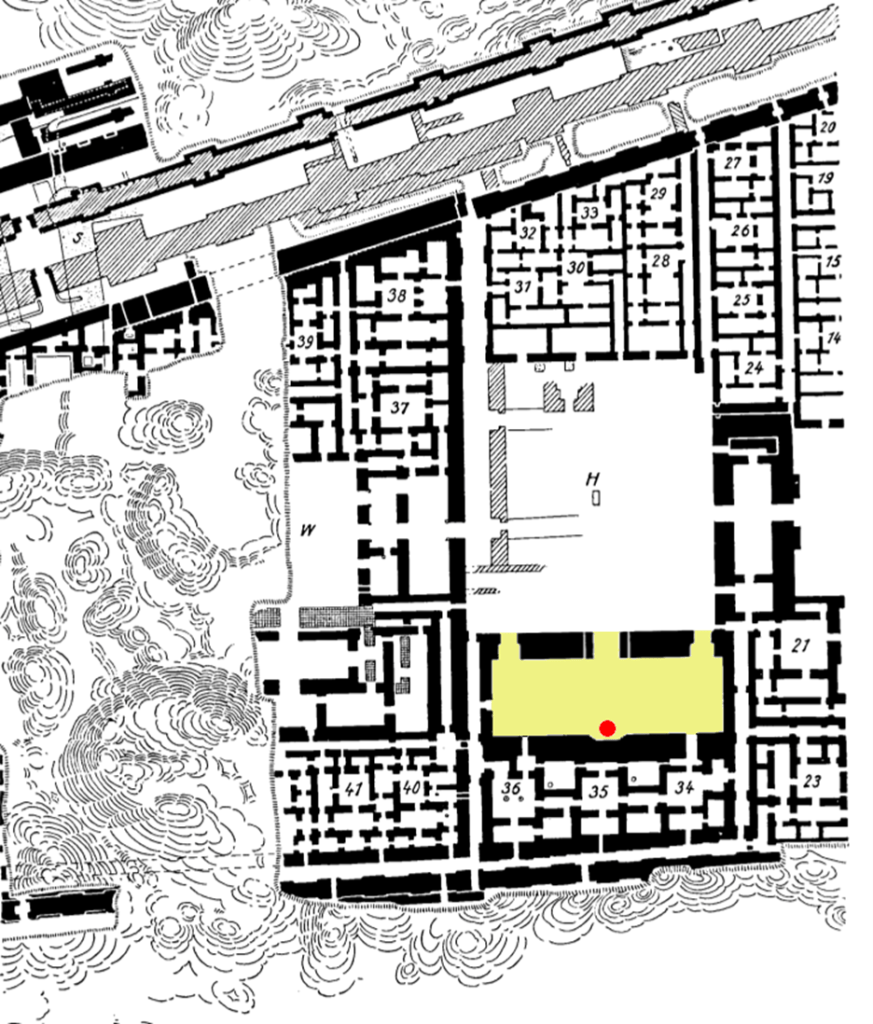
“Then Daniel was brought in…”  “We can be sure that Daniel cast a piercing look around the banquet hall as he came in with his escort.  The tables had food scattered all about, and wine was spilled everywhere.  The women were somewhat worse for the dissolute behavior of some of the men, and men and women alike were much the worse for drink.  The gods of Babylon were against the wall, too, dead to it all.  And—what was this in the hand of a harlot, lying on the floor among the debris of the feast:  Was that a sacred vessel that belonged to the temple of the living God in Jerusalem?  Were those priceless vessels now being used to slop wine in a drunkard’s shaking hands?  The king, as was all too evident, was regaling his shattered nerves with wine from vessels consecrated to the worship and service of the Holy One of Israel, God most High” (John Phillips, Exploring the Book of Daniel, pp. 89-90).

“You are the Daniel” might be better rendered, “Are you that Daniel…?”  Though Daniel was one of the chief ministers of state, who did “the king’s business” in the palace (Dan. 8:27) yet Belshazzar seems to have known nothing of him.  One would think the king would have some familiarity with Daniel who had served in the court just over a decade earlier.  But profligate rulers can be woefully out-of-touch with those who run their administration.

If the king was asking a question rather than making a statement (see above), then his interest in whether Daniel was a Jew may reflect his concern for having desecrated the temple vessels of the God of the Jews.

Notice that Belshazzar addresses him not as the one who had interpreted Nebuchadnezzar’s dreams and could possibly help him, but rather as “one of the exiles of Judah, whom the king my father brought from Judah.”  He wanted to put Daniel firmly in his place from the outset.

14 I have heard [from the queen mother] of you that the spirit of the gods is in you, and that light and understanding and excellent wisdom are found in you. 

There seems to be somewhat of an edge to Belshazzar’s statement, perhaps still feeling the sting of the queen mother’s rebuke.  It’s almost as if he is putting on record his skepticism in Daniel’s ability to do what the queen mother had claimed.  “I’ve heard it, but I don’t believe it.”

Daniel was the king’s last resort.  His brain trust had failed him.  The queen mother believed in him, but what could he really do?

In reality, true revelation, understanding and wisdom come from God.  No natural gifts can produce these abilities.

The secular world believes deep wisdom and insight can be attained independently of God.  Though academic attainments and understanding can be pursued apart from acknowledging God, it is God’s purpose to conceal certain things from those who reject Him while revealing them to those who appear to be more simplistic, but acknowledge Him (“babes,” Matt. 11:25; 16:17).  Those who reject God have no means of understanding spiritual things because they remain disconnected from God’s Spirit (John 3:12; Eph. 2:1; 5:14; Col. 2:13).  It is God’s Spirit that reveals deep spiritual matters (John 14:26; 1Cor. 2:10-13).

Those who don’t know God cannot benefit from His special revelation. Even worse, sometimes God actively frustrates those who attempt to attain wisdom apart from Him (Job 12:17-25; Isa. 19:12-13; 44:25; Rom. 1:21-22, 28; 1 Cor. 1:20).

“As in the previous instances in Daniel 2 and 4, the wisdom of the world is demonstrated to be totally unable to solve its major problems and to understand either the present or the future.  Daniel as the prophet of God is the channel through which divine revelation would come, and Belshazzar in his extremity was willing [now] to listen” (John Walvoord, p. 124).

15 Now the wise men, the enchanters, have been brought in before me to read this writing and make known to me its interpretation, but they could not show the interpretation of the matter. 16 But I have heard that you can give interpretations and solve problems.

All the positive aspects of a relationship with God helped Daniel whereas the negative aspects hampered the wise men of Belshazzar’s court.  Daniel’s education and wisdom had grown during his schooling in Babylon, but it was his relationship with God that refined and amplified his natural ability and insight, enabling him to interpret dreams and the handwriting on the wall.

“Now if you can read the writing and make known to me its interpretation, you shall be clothed with purple and have a chain of gold around your neck and shall be the third ruler in the kingdom.” (Dan. 5:16b)

“Too often the world, like Belshazzar, is not willing to seek the wisdom of God until its own bankruptcy becomes evident. Then help is sought too late, as in the case of Belshazzar, and the cumulative sin and unbelief which precipitated the crisis in the first place becomes the occasion of downfall” (John Walvood, Daniel: The Key to Revelation).

“The king promised many gifts if Daniel could interpret the handwriting.  He even promised him the third position in the kingdom (after himself and his father Nabonidas).  Daniel wisely declined the king’s gifts, since he probably realized that the kingdom could last only for a few [more] hours.  How true it is of this world in which we live.  Satan promises us wealth and fame, but alas, it can only last for an hour and then it is gone forever” (Jim Gerrish, A Short Study in the Book of Daniel, https://www.wordofgodtoday.com/short-study-of-daniel/)

How does Daniel respond?  How does this mature, wise leader respond to the king’s offer?

17 Then Daniel answered and said before the king, “Let your gifts be for yourself, and give your rewards to another. Nevertheless, I will read the writing to the king and make known to him the interpretation. 

Since Belshazzar was defensive and skeptical towards Daniel, Daniel’s response omits the usual deferential politeness of the Babylonian court.  In fact, Daniel proceeds to scold Belshazzar like he was a naughty school boy.  While Daniel seemed to love and show deference to King Nebuchadnezzar, he has no love for Belshazzar.  Why the difference?  Because Belshazzar profaned the holiness of Daniel’s God by drinking to his pagan gods from the vessels that belonged to the holy God.

Daniel’s reply to the king was in every sense a sermon, and a powerful one at that.  The prophet began by declining the offered gifts.  This had the effect, whatever Daniel’s reason for doing so may have been, of helping Belshazzar realize that these gifts would not influence his interpretation of the writing.

One measure of a true man or woman of God is whether he or she can be swayed by bribery or reward (Matt. 6:24; Luke 16:13).  “He was like Abraham who told the king of Sodom that he wouldn’t even take a shoelace from him (Gen. 14:22-23).  The apostle Paul said, ‘I have not coveted anyone’s silver or gold or clothing’ (Acts 20:33).”  This was the stance of Elisha before Namaan, the king of Syria—after his leprosy had been healed by God (2 Kings 5:15-16).  Unfortunately, Elisha’s servant Gehazi had not learned this important lesson from his master (2 Kings 5:25-27).

Unlike Balaam in the service of Balak (Num. 22:7), but more like Ahijah before the wife of Jeroboam (1 Kings 14:6-16) and Peter before Simon Magus (Acts 8:18-20), Daniel’s service could not be purchased.  He bluntly told Belshazzar he could keep his rewards.

In fact, it is foolish for those seeking to understand a message from God to make such an offer as it can only serve to tempt God’s messenger to shy away from telling the hard, unvarnished truth.  This may also explain why Daniel refused the offer prior to the interpretation, but accepted it afterwards (Dan. 5:29): for it guaranteed the interpretation was not influenced by the potential of reward.  For the faithful minister, the Word of God must be given the same before both kings and paupers.

“This refusal of the royal presents was designed merely to decisively reject, at the outset, and in a manner becoming the prophet of Jehovah, any influence that might be brought to bear on him. It is not, therefore, a pert expression, which the king might justly punish, nor is it inconsistent with the fact that Daniel ultimately accepted the reward offered for the interpretation, Dan. 5:29, since he regarded it as a recognition of his God” (Zöckler, The Book of the Prophet Daniel).

Let me close by quoting Reuben Bredenhof

Paul was mindful of how the love of money can have a corrupting influence on a pastor’s ministry.  This awareness is clear from Paul’s words of farewell to the Ephesian elders in Acts 20.  There he insists that while he was among them, he “coveted no one’s silver or gold” (Acts 20:33), but he was willing to work with his hands to support himself and his companions.  And thinking of his flashy rivals in Corinth, Paul denounces those who “peddle the Word of God” for personal profit (2 Cor. 2:17).

Despite Scripture’s repeated warnings, this is still a real temptation for those serving in ministry.  Perhaps a pastor wants to take a position at a particular church because it offers to pay substantially more than his present congregation.  Maybe a pastor is quick to complain that he needs a raise in his salary, or he seeks to maximize every monetary benefit available to him.  But a pastor must tread carefully.  Even the appearance of being engrossed with material things can be seriously detrimental to his relationship with the congregation.  This in turn can hinder the believers’ growth in faith.  Paul’s pleading words to the Corinthians remind us about what should take priority: “I do not seek yours”—that is, the believers’ material possessions—“but you” (2 Cor. 12:14).  A love of money can unduly sway a pastor’s preaching, detract from his credibility, or even sink his ministry entirely.  So a faithful pastor never seeks material gain, but always the congregation’s continued maturity in Christ.

The pastor’s challenge is the same that is faced by all Christians.  By nature we want to stand on our rights and we demand our entitlements.  Greed is ever-prowling.  Yet Scripture exhorts all believers to be content with what we have (1 Tim. 6:5).  When we are saved by Christ and have freely received his eternal inheritance, we have the ultimate reason to be content.  Besides, God the Father has graciously promised to supply all our daily needs (Heb. 13:5).  With confidence in God’s promise to provide, pastors can keep their focus on doing the work of dedicated ministry.  Such a contented approach to money not only sets a good example to the congregation, it also honors Christ and his gospel.

The Handwriting on the Wall, part 2 (Daniel 5:7-11)

Belshazzar is shaking in his boots.  A hand has appeared out of the darkness and has written something on the wall of the banqueting hall where Belshazzar and his nobles were having a grand party.

He “screams out” in alarm and urgency and the verb here is a participle, used with a to-be verb to imply a continuous action: he “was screaming and kept on screasming” for his advisors.

7 The king called loudly to bring in the enchanters, the Chaldeans, and the astrologers. The king declared to the wise men of Babylon, “Whoever reads this writing, and shows me its interpretation, shall be clothed with purple and have a chain of gold around his neck and shall be the third ruler in the kingdom.”  8 Then all the king’s wise men came in, but they could not read the writing or make known to the king the interpretation.  9 Then King Belshazzar was greatly alarmed, and his color changed, and his lords were perplexed.

“Whoever reads this writing, and shows me its interpretation” is the request of the king.  This is the common futile pattern of secular leaders seeking secular wisdom.  Assemble the best of the (secular) best while rejecting those who fear and acknowledge God and possess a genuine understanding of His revelation.  Instead, rely on these secular “experts” to explain things that ultimately originated with God.

Again, there is a promise of riches: “shall be clothed with purple and have a chain of gold around his neck…”  Clothing someone in purple meant giving him royal authority (cf. Esth. 8:15).  The necklace of gold would have had symbolic as well as monetary value. 

Daniel would later reluctantly receive this honor (Dan. 5:29) but had little use for it because he possessed the true riches of God.

This offer of being third ruler remained a puzzle for hundreds of years. If Belshazzar was king, why wouldn’t he offer Daniel the position as second ruler, as Pharaoh offered Joseph (Gen. 41:40-44) and Ahasuerus offered Mordecai (Esther 10:3)?  Again, the Nabonidus Cylinder reveals that Belshazzar shared a co-regency with Nabonidus, his father; thus he could only legitimately offer the prized person “third ruler.”

But, as in every case in the book of Daniel, the king’s advisors could not help him.  They “could not read the writing or make known to the king the interpretation.”   Tom Constable wittily observes, “Scholars have wearied themselves trying to figure out how Daniel got his interpretation from these three apparently Aramaic words.  They have been as unsuccessful as Belshazzar’s original wise men were.”

The verse mentions two deficiencies of the wise men. They were unable to 1) read the writing; 2) make known its interpretation. Their inability to “read” the writing could mean either the text itself was incomprehensible or it could not be understood.

The Lord had said through Isaiah, “I will destroy the wisdom of the wise; the intelligence of the intelligent I will frustrate” (quoted in 1 Corinthians 1:19).  He definitely frustrated these wise men. 

Andy Woods identifies several reasons why these wise men could not read or interpret the message.

Various aspects of the message may have served to conceal its meaning:

  • Language – The language the message was written in. Daniel’s interpretation (Dan. 5:25-28) implies the message was written in Aramaic.
  • Characters – The form or style of characters (letters) used to write the message. Were the characters of an unfamiliar or specialized form known to Daniel but not the wise men?
  • Arrangement – The arrangement of the characters forming the message. Were the letters placed in an unusual order such as an anagram?
  • Encipherment – Were the characters of the message encoded using a cabalistic method such as atbash?
  • Additional Revelation – Was the message sufficient on its own, once decoded, to be understood?  Or was additional information needed to make sense of the fragmentary writing?  As mentioned previously, by this time Daniel had additional revelation from God regarding aspects of Babylon’s fall that may not have been known to the wise men.

Whatever impediments they may have had in interpreting this message, Daniel, as always, had one major advantage: direct revelation from the Most High God.  Daniel had additional information provided prior to the events of this night (through study of the OT prophets) and possibly received additional direct revelation at the very moment he was called upon to interpret its meaning.

Daniel’s explanation of the words making up the message seems to indicate the writing was in Aramaic.  If the message was in Aramaic—and assuming it was rendered using characters familiar to readers of that time—the words on their own proved insufficient to give the interpretation.  Special revelation allowed Daniel to go beyond the words themselves and their arrangement to deliver the full meaning of the message.

Charles Feinberg gives an example: “A small child could read ‘H2O’ with no trouble, but he probably could not understand that it signifies water.  So it was with these wise men; they could read what the words said, but they could not explain what they meant” (Charles Feinberg, A Commentary on Daniel:  The Kingdom of the Lord, p. 67).

Even if the wise men were able to read the individual letters and identify the words, the words themselves convey a fragmentary idea—not the full meaning Daniel is able to attribute to them.

Again, the key is revelation directly from God through the mouth of His prophet, Daniel.  Once again, the wisdom of this world is foolishness (1 Corinthians 1:20-21).

Perhaps the eyes of the wise men were judicially blinded by God (Job 12:17-25; Isa. 19:3, 12-13; 29:10-12; 44:25; Jere. 50:35-36; Rom. 1:21; 1 Cor. 1:20).  Of course, all idolators, like their idols are blind (Isa. 6:9-10).  And Satan blinds the minds of unbelievers (2 Cor. 4:3-4).

Whatever the case, the words of Isaiah were fulfilled in the inability of the wise men to provide the answers the king of Babylon sought that night.  Isaiah 47:12-13:

12 Stand fast in your enchantments
    and your many sorceries,
    with which you have labored from your youth;
perhaps you may be able to succeed;
    perhaps you may inspire terror.
13 You are wearied with your many counsels;
    let them stand forth and save you,
those who divide the heavens,
    who gaze at the stars,
who at the new moons make known
    what shall come upon you.

The Most High had confronted this young king with his arrogance, idolatry and blasphemy.  He would not stand by and allow His holy vessels to be profaned in front of all these people.  So Belshazzar faced the judgment of God.

Tremper Longman III writes:

We do not have to look too far to see contemporary misuses of God’s Word that look eerily similar to Belshazzar’s profanation of the holy vessels.  Not everyone who practices a postmodern approach to the Bible is guilty of profanation … however, it is wrong simply to assume the validity of the culture that we happen to live in without submitting it to a biblical critique.  Unfortunately, there are too many examples of the reverse, submitting the Bible to a postmodern critique.

One glaring example may be found in a recent interpretation of Psalm 24. (D. J. A. Clines, A World Established on Water: Psalm 24. Valley Forge, Pa: Trinity Press International, 1993, 79-90).  This essay’s purpose is to demonstrate an approach to the text as well as to discuss Psalm 24.  The author proclaims the postmodern dictum that texts have no determinate meaning.  There is no presence, divine or authorial, to rein in our interpretation.  We, as readers, can ascribe whatever meaning we like to the text.  He promotes the idea that Biblical interpreters should simply cut the cloth of the text to fit the needs of the audience who is paying for our skills.  Nonetheless, with a move that seems to fit uneasily with his idea that the text itself has no meaning, he argues that Psalm 24 presents a view of God and war that he finds repulsive and argues that we must read “against the grain” of the apparent meaning of this text.  Belshazzar takes the holy vessels of God and mocks God by drinking and toasting his idols; is Clines’ treatment of the Bible far removed from this act? (emphasis added) (Tremper Longman, Daniel, p. 154).

Was the message intended to be understood?  Polaski notes several examples of inscriptions that were meant to be seen but not necessarily read.  Inscriptions were power-plays and intended to send a message, even to people that could not read the message (657).  Often inscriptions were about more than recording an event.  They were a guarantee the event happened or would happen.  Thus, the judgement on Babylon certain is “written in stone” quite literally.

As Tom Constable says, “The night of revelry became a night of revelation.”

The fact that none of his wise men could interpret what was written alarmed Belshazzar even more, and it puzzled his nobles.

9 Then King Belshazzar was greatly alarmed, and his color changed, and his lords were perplexed.

This verse forms an inclusio with verse 6, where the king’s fear and color were noted.  Verse 9 also mentions a perplexed look shared by the thousand lords as their leader’s mind and body pulsed and flushed with fear.

The word “perplexed” has the idea of “be bewildered, be baffled” and likely contains the connotation of fear and dread.  Normally confident in their own abilities and the resources of their counselors, these gifted and powerful secular men have come to the end of their resources.

Fortunately, the queen mother came to the rescue.  Andy Woods comments: “Here we see a frequent theme in Scripture: when leading men are out-of-step with God resulting in troublesome circumstances, a woman brings a stabilizing perspective.”  (Consider Deborah, Abigail)  Duguid notes that this would have “been humiliating in an ancient cultural context” (Iain M. Duguid, Daniel: Reformed Expository Commentary, p. 80).

The banquet hall was in confusion. Belshazzar was shaking in sheer terror. The wise men were quaking, because they might be put to death due to their inability to interpret the handwriting on the wall (cf. Daniel 2:5).  And the nobles were faking it, trying to stay cool, calm, and collected.

Fortunately the queen mother was nearby and could hear the frightened voices.

10 The queen, because of the words of the king and his lords, came into the banqueting hall, and the queen declared, “O king, live forever!  Let not your thoughts alarm you or your color change.  11 There is a man in your kingdom in whom is the spirit of the holy gods. In the days of your father, light and understanding and wisdom like the wisdom of the gods were found in him, and King Nebuchadnezzar, your father–your father the king–made him chief of the magicians, enchanters, Chaldeans, and astrologers, 12 because an excellent spirit, knowledge, and understanding to interpret dreams, explain riddles, and solve problems were found in this Daniel, whom the king named Belteshazzar. Now let Daniel be called, and he will show the interpretation.”

Some take the queen of Daniel 5 as the Babylonian queen Nitocris.  But there is a lack of consensus as to whose queen Nitocris was.  She has been variously identified as: the wife of Nebuchadnezzar, the wife of Evil-Merodach, the daughter of Nebuchadnezzar and wife of Nabonidus and the mother of Nabonidus.  Whether Nitocris or not, this queen is likely either the wifemother, or grandmother of Belshazzar. 

Presumably the queen mother, often a significant political figure in an ancient court. In the OT, cf. 1 Kings 15:13; 2 Kings 11:1-3; 24:13; Jere. 13:18; as “senior counsellor to king and people,” she could “provide a stabilizing, moderating influence in the political system” and “could circumscribe royal power to some extent and could represent the interests of people or court before the king” (N.-E. A. Andreasen, “The Role of the Queen Mother in Israelite Society,” Catholic Biblical Quarterly 45 [1983] 191, 194).

Although she had not been present at the beginning of the festivities, as queen mother she had approved access to the king at any time.  “Such queen mothers enjoyed rare authority which exceeded even that of the chief wife or queen of the reigning monarch” (Leupold, Exposition of Daniel, p. 225).

It seems that all that can be said with certainty concerning Nitrocris is she was a Babylonian queen whose identity remains uncertain.

However, her message to Belshazzar was quite certain.  Knowing how alarmed he was (v. 10), she introduces him to “a man in your knowledge in whom is the spirt of the holy gods.”  Whether Belshazzar knew about Daniel or not, he had forgotten about him.

Since Daniel 8:1, 27 record Daniel serving in the administration in the third year of King Belshazzar, Belshazzar had either forgotten about him or had made no use of Daniel’s capabilities and skills…until now.

This woman proceeded to do for Belshazzar what Arioch had done for Nebuchadnezzar, namely, to bring Daniel to the king’s attention (cf. 2:25).  The implication of her speech is that Belshazzar ought to have known to whom he should turn when in need of divine illumination—and he would have known, if only he were more like Nebuchadnezzar.

Without explicitly mentioning Daniel’s name, the queen gave a brief history of Daniel’s relationship with Nebuchadnezzar (Dan. 5:11; cf. 2:48).  Given her seeming first-hand knowledge of these interactions with Nebuchadnezzar could mean that Nitocris was Nebuchadnezzar’s wife.  Her description of Daniel in 5:11 was meant to stir the king’s desire to see him before she actually names him in verse 12.

Not only in her estimation did Daniel have the “spirit of the holy gods” in him, but “In the days of your father, light and understanding and wisdom like the wisdom of the gods were found in him, and King Nebuchadnezzar, your father–your father the king–made him chief of the magicians, enchanters, Chaldeans, and astrologers,”

The words of the queen do fall short of acknowledging the God of Israel praised by Nebuchadnezzar (Dan. 4:37).  After witnessing the results of divine intervention, unbelievers generally interpret the hand of God within the confines of their own pagan world view

The Handwriting on the Wall, part 1 (Daniel 5:5-9)

We are in Daniel chapter 5.  So far we’ve seen Belshazzar, as prophecy had predicted, engaged in a drunken revelry.  Even worse, he had blasphemed the Most High God by taking some of the vessels of the Jewish temple and drinking wine from them in honor of his own gods, the gods he believed were superior to the god of the forsaken Jews.

But all of that was about to come to an abrupt stop.

What is the significance of the handwriting on the wall?  Lennox writes, “It would be hard to imagine a more spectacular breach of the first commandment: You shall have no other gods before me.  Centuries earlier the hand of God had written the Ten Commandments on two tablets of stone and given them to Moses, the great lawgiver.  That [same] hand had now written once more: this time on the wall of Belshazzar’s palace” (John Lennox, Against the Flow: The Inspiration of Daniel in an Age of Relativism, p. 182).

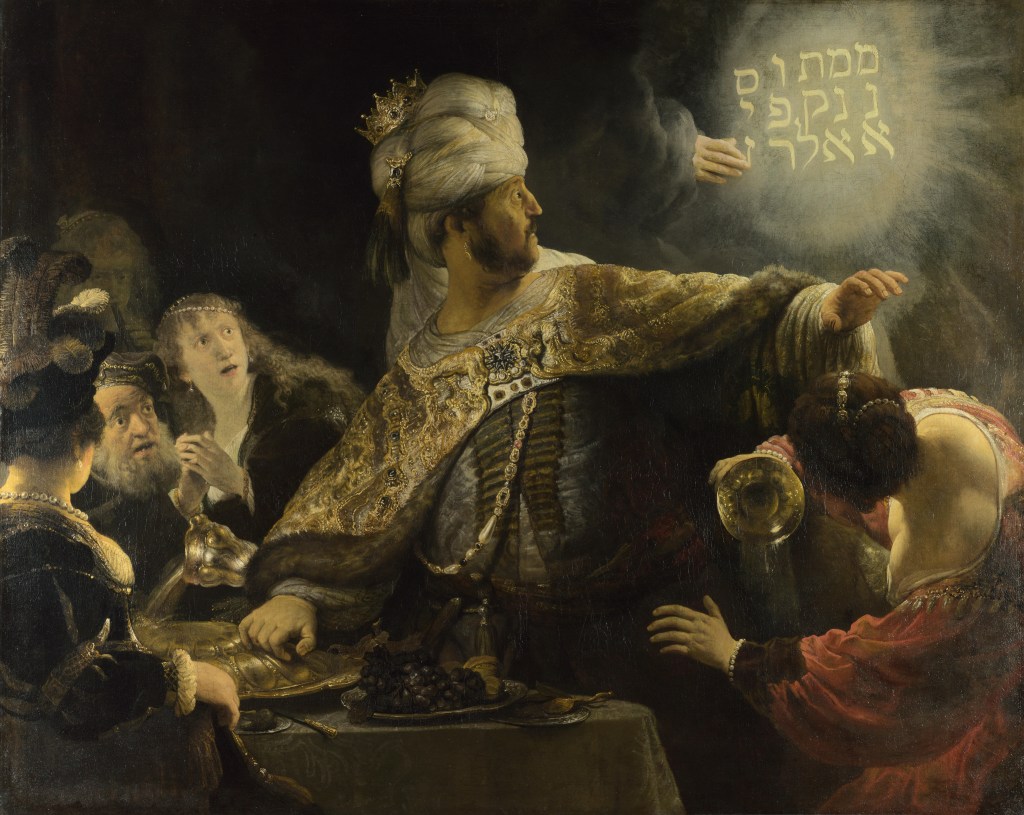
Immediately the fingers of a human hand appeared and wrote on the plaster of the wall of the king’s palace, opposite the lampstand.  And the king saw the hand as it wrote. 

Suddenly, a hand appeared and began writing on the wall.  Belshazzar was terrified. The music stopped, and the dancing girls stood still.  All eyes are now on the king.  Even a belly full of wine couldn’t make him courageous in this ominous setting.  Belshazzar sobered up pretty quickly.

“Immediately” underscores how quickly judgment fell in response to the actions recorded in the previous verse.  Again, it magnifies the similarity with Nebuchadnezzar’s proud boasting (Dan. 4:31) and how quickly that triggered God’s humiliation of these proud kings.  This was in order that the offender might recognize that his punishment was not inflicted upon him for any other reason but his blasphemy.

Holed up within what was believed to be an impenetrable fortress with supplies sufficient for many years, Babylon’s lords believed themselves secure and invulnerable.  Their confidence was in their fortifications and their false gods.  Yet, they would find themselves in a similar position as the rich man who trusted in his many goods:

19 And I will say to my soul, “Soul, you have ample goods laid up for many years; relax, eat, drink, be merry.”’ 20 But God said to him, ‘Fool! This night your soul is required of you, and the things you have prepared, whose will they be?’ 21 So is the one who lays up treasure for himself and is not rich toward God” (Luke 12:19-21)

Neither powerful defenses nor plenteous riches will protect us from eternal judgment.

Whenever we find ourselves in a time of peace or surplus, there is a tendency to begin to trust in our conditions and to forget how they came to be—by the mercy and grace of God.  The longer these conditions prevail, the more likely we [misattribute] blessings from God to another cause—attributing them to our own cleverness or prowess—in a vain pattern of self-elevation.  But each day we live, each meal we eat, each breath we take, is ultimately a gift from God.  We need to remember to retain an understanding of dependency and thankfulness to our Lord.  The more we remember God in consideration of our place, the less surprised we will be when and if our condition changes—even if suddenly and radically.  The wicked, being mindless of the things of God, are unprepared for their sudden loss (Job 15:20-27).  This unpreparedness for coming judgment—continuing in blasphemy and riotous living as it nears—is a characteristic of an ungodly culture.  The intrusion of the future Day of the Lord upon a God-rejecting world will make the fall of Belshazzar’s Babylon look insignificant in comparison. (Andy Woods, https://www.spiritandtruth.org/teaching/Book_of_Daniel/commentary/htm/chapters/05.html#36786)

For you yourselves are fully aware that the day of the Lord will come like a thief in the night. While people are saying, “There is peace and security,” then sudden destruction will come upon them as labor pains come upon a pregnant woman, and they will not escape. (1 Thessalonians 5:2-3)

Now, getting back to our text…

Immediately the fingers of a human hand appeared and wrote on the plaster of the wall of the king’s palace, opposite the lampstand.  And the king saw the hand as it wrote. 

God used this supernatural manifestation to rivet the attention of everyone at the feast.  The sight was designed to frighten the celebrants and elicit the sober attention of the king. “Belshazzar must have set the all-time record for sobriety.  Gone was the smirk, the defiance of God; instead he had a look of stark terror” (David Jeremiah, Handwriting on the Wall, p. 105).

“Suddenly the king’s eyes went wide.  The bowl fell from his hands and clattered to the table.  Wine dribbled down his beard, and he collapsed in his chair, staring in horror above the Temple lampstand” (David Jeremiah, Agents of Babylon, p. 143).

“This writing appears on a wall “near the lampstands” so the king can clearly see the hand writing the words.  This writing is an inscription and is a parody of Assyrian or Babylonian official writing.  Just as the King of Babylon inscribes words on statues or walls, so too the Lord is inscribing his own imperial edict for the king to read” (Philip J. Long, https://readingacts.com/2020/02/01/daniel-55-12-what-was-the-meaning-of-the-handwriting-on-the-wall/)

The detached hand wrote on the wall “opposite the lampstand,” which illuminated the writing for all to see. This “lampstand” may have been one of the items from the Jerusalem temple.  In the actual Jerusalem temple, the bread of the Presence had stood opposite the lampstand (1 Kings 7:48-50; Exod. 25:23-26:37) to remind the people of Israel of God’s provision and sustenance.  If this lampstand was now in Belshazzar’s palace, then instead of illuminating an object of provision, it was illuminating a sign of judgment (Rodney Storz, Daniel: The Triumph of God’s Kingdom).

Belshazzar’s Feast, Rembrandt

The hand wrote upon the “plaster” on the wall.  Here is a significant detail in the Scriptural record that may seem unimportant: the material the fingers wrote upon, plaster.  This detail has archaeological and biblical significance.  The plaster is archaeologically significant because the hall where this event likely transpired has been excavated confirming this detail. The walls of the banquet hall included an area opposite the entrance that, like the ruins of palaces at Nineveh, was covered in white plaster.

“In the ruins of Nebuchadnezzar’s palace archaeologists have uncovered a large throne room 56-60 feet wide and 173 feet long which probably was the scene of this banquet.  Midway in the long wall opposite the entrance there was a niche in front of which the king may well have been seated.  Interestingly, the wall behind the niche was covered with white plaster as described by Daniel, which would make an excellent background for such a writing” (John Walvoord, Daniel: The Key to Prophetic Revelation).

The plaster is biblically significant due to a theme running throughout Scripture: God’s standard of judgment written on stone (or materials related to stone, such as dust):

  • The Ten Commandments were written by the finger of God upon stone (Exod. 24:12; 31:18; 32:36; 34:1, 28; Deut. 5:22; 9:10; 10:4).
  • Judgment against Belshazzar is written in plaster (made of dust from stones, Dan. 5:5).
  • Jesus appears to have written concerning judgment in the dirt, in response to the accusers of the woman caught in adultery (John 8:6).
  • Believers are an epistle of God written on the heart rather than stone (2 Cor. 3:3-7).
  • Believers will receive a new name written on stone (Rev. 2:17).

The writing on the plaster of the wall by the finger of God serves a similar function in this chapter: Belshazzar is evaluated and found wanting—he does not even come close to measuring up to God’s standards, as set forth in the Ten Commandments and the rest of the law.  The common theme among these passage involves: 1) the finger of God; 2) writing on stone-like material; 3) the divine requirements or evaluation of the character of men.

The writing on stone serves as a witness against those whom it evaluates (Josh. 4:9, 20; Josh. 8:32). In some passages, stones themselves become a witness (Matt. 3:9; Luke 3:8; 19:40).  A special irony is found regarding the judgment of Babylon written in plaster.  The kings of Babylon had sought to immortalize their glory by writing on their own stones!

Norman W. Porteous (1898-2003) summarizes, “The mysterious hand had written not so much in warning as in judgment.” (Porteous, Daniel: A Commentary (Old Testament Library), 81). For Belshazzar, the party was over.

So Belshazzar saw the back of God’s hand, writing an ominous message upon the wall.  But what did it say?  What did it mean?

6 Then the king’s color changed, and his thoughts alarmed him; his limbs gave way, and his knees knocked together.

Up to now, the king’s demeanor had appeared bold, as if assured of Babylon’s impregnability.  But Jeremiah reveals he feared what might come of the siege.  Jeremiah 50:43, “The king of Babylon heard the report of them, and his hands fell helpless; anguish seized him, pain as of a woman in labor.”

He experienced what is technically called delirium tremens—wild, terrifying hallucinations brought on by heavy drinking.  Only these weren’t just hallucinations in his own deranged mind, but something that everyone could clearly see with their own eyes.

“The king’s body was seized by a fit of uncontrollable trembling.  Gone now were the proud glance and the sheering score.  The man shook in his shoes.  Moreover, his thoughts troubled him.  Conscience was awake at least and baying in his soul.  It could be seen on his whitened countenance.  The apparition had appeared too hard on the heels of the king’s blasphemous boasts and guilty behavior.  Belshazzar could have had no doubt that Jehovah, the God of the Jews, whose golden vessels he had desecrated, had spoken.  The message was there, etched on the wall by the finger of God, over near the golden candelabrum.  But the writing made no sense” (John Phillips, Exploring the Book of Daniel, p. 88).

“’Then the king’s face grew pale,’ instantly all the blood drains out of his face, ‘and his thoughts alarmed him;’ I want you to notice that this is a principle here that’s true of every carnal Christian and every non-Christian.  When an individual is on negative volition and operating on the sin nature his conscience is always sensitive and will always give testimony to his failures, given the right circumstances.  And no matter how skilled you might be at covering up your conscience and hardening your conscience and suppressing it, sooner or later you’re going to get into some situation and all of a sudden all those things in your conscience are going to come bubbling to the surface and you’re going to become overwhelmed with guilt and guilt always comes along with its handmaiden, fear, which is the fear of discovery and the fear of having to pay the consequences for our actions” (Dean, Lessons on Daniel, 22.261).

“The writing on the wall he could neither read nor understand; but his conscience had written bitter things against him, which now being held to the fire of God’s wrath become legible.” (John Trapp)

Just the appearance of the hand would have alarmed him, but his fears would have multiplied at the thought that the message must be ominous.

While Nebuchadnezzar’s dreams caused him to be “troubled” or frightened,” Belshazzar’s reaction is absolute terror, he turns pale, and his legs give way.  Literally this is the “bands/knots of his legs were loosed”, he comes very near to fainting and falling over.  This idiom can be translated a number of different ways, the NRSV, for example, has “his knees knocked together.”  Seow suggests that the idiom could be translated “his bowels were loosed” (Daniel, 79).  We know what that means!

prophecy by Isaiah concerning the overthrow of Babylon by Cyrus may have this event in view.  Isaiah prophesies:

Thus says the Lord to his anointed, to Cyrus,
    whose right hand I have grasped,
to subdue nations before him
    and to loose the belts of kings,
to open doors before him
    that gates may not be closed (Isaiah 45:1)

Belshazzar would have been better served studying the Hebrew Scriptures rather than the palace’s wine-tasting menu!

“One might have thought the king was having a heart attack.  Barely able to stand, his face was ashen and seized with terror.  The raucous laughter turned to deafening silence with all eyes on the king.  The king’s eyes were fixed upon the hand as it wrote.  As a sense of foreboding and panic fell on the crowd, all eyes turned to the mysterious writing on the wall.  The king’s actions alarmed all who were present” (Bob Deffinbaugh, Daniel: Relating Prophecy to Piety).

It is an appalling scene when a sinning mortal knows that the great God has come to meet him in the very midst of his sins!—How changed the scene from the glee of his blasphemous revelry to this paleness of cheek, convulsion of frame, remorse of conscience, and dread foreboding of doom!  Many a sinner has had a like experience, and other thousands must have it!—Cowles.

Oh that God’s Spirit might bring every sinner to such a bracing experience, that they might cry out for mercy!

Well, Belshazzar certainly wanted to know what this message was.  The ominous silence descending upon the gathering at the sight of the hand and the king’s startled reaction was shattered by the panicky summons of the king for his advisors.

He “screams out” in alarm and urgency and the verb here is a participle, used with a to-be verb to imply a continuous action: he “was screaming” for his advisors.

7 The king called loudly to bring in the enchanters, the Chaldeans, and the astrologers. The king declared to the wise men of Babylon, “Whoever reads this writing, and shows me its interpretation, shall be clothed with purple and have a chain of gold around his neck and shall be the third ruler in the kingdom.”  8 Then all the king’s wise men came in, but they could not read the writing or make known to the king the interpretation.  9 Then King Belshazzar was greatly alarmed, and his color changed, and his lords were perplexed.

Just like his grandfather Nebuchadnezzar (Dan. 2:2; 4:6) and Pharoah before him (Gen. 41:8) the king summons his best advisors in his time of need.  And, just like Nebuchadnezzar and the Pharaoh, the assembled wisdom of those without knowledge of God will prove inadequate.

By now these people must have been some of the most nervous folks in Babylon.  So far, they had batted a big zero in interpreting any king’s visions and dreams.  Their score was to remain unchanged.  The blindness of the wise men went deeper than their inability to interpret the message; they could not even read it.

Where was Daniel?  It is possible that Daniel was in retirement.  “Historians tell us that after Nebuchadnezzar died, all of the ministers who were at the core of the palace regulars were banished and sent away from the throne….When Belshazzar sent out invitations to his Debauchery Ball, Daniel was not on the guest list” (David Jeremiah, Handwriting on the Wall, p. 99).

“Whoever reads this writing, and shows me its interpretation” is the request of the king.  This is the common futile pattern of secular leaders seeking secular wisdom.  Assemble the best of the (secular) best while rejecting those who fear and acknowledge God and possess a genuine understanding of His revelation.  Instead, rely on these secular “experts” to explain things that ultimately originated with God.

Again, there is a promise of riches: “shall be clothed with purple and have a chain of gold around his neck…”  Clothing someone in purple meant giving him royal authority (cf. Esth. 8:15).  The necklace of gold would have had symbolic as well as monetary value. 

Daniel would later reluctantly receive this honor (Dan. 5:29) but had little use for it because he possessed the true riches of God.

This offer of being third ruler remained a puzzle for hundreds of years. If Belshazzar was king, why wouldn’t he offer Daniel the position as second ruler, as Pharaoh offered Joseph (Gen. 41:40-44) and Ahasuerus offered Mordecai (Esther 10:3)?  Again, the Nabonidus Cylinder reveals that Belshazzar shared a co-regency with Nabonidus, his father; thus he could only legitimately offer the prized person “third ruler.”

But, as in every case in the book of Daniel, the king’s advisors could not help him.  They “could not read the writing or make known to the king the interpretation.”   Tom Constable wittily observes, “Scholars have wearied themselves trying to figure out how Daniel got his interpretation from these three apparently Aramaic words.  They have been as unsuccessful as Belshazzar’s original wise men were.”

Belshazzar’s Mega Party, part 3 (Daniel 5:2-4)

We are still examining what Daniel says about Belshazzar’s ill-fated party on the night that the Medo-Persians invade and conquer Babylon and kill king Belshazzar.  So far we’ve read…

1 King Belshazzar made a great feast for a thousand of his lords and drank wine in front of the thousand.  Belshazzar, when he tasted the wine, commanded that the vessels of gold and of silver that Nebuchadnezzar his father had taken out of the temple in Jerusalem be brought, that the king and his lords, his wives, and his concubines might drink from them.

The biggest mistake that Belshazzar made that night was treating the vessels from God’s house in a profane manner.  This was something, as we saw, that Nebuchadnezzar had never done.  Even worse, it was a direct offense against the Most High God.

The Scriptures tells us that these gold and silver goblets were holy unto the Lord, like the pieces of the tabernacle the Lord told Moses to make.  For example, the altar of incense (Exodus 30:1-10) was “most holy to the lord.”  

There were special instructions on to how to treat this altar.  Special poles were made to carry the altar of incense so no human hand would ever touch it.  The ark of the covenant was another piece of the tabernacle that was “most holy to the Lord.”  It too was to be carried using poles, so no human hand would touch it. 

In their previous dedication and service of God, some of these vessels were so holy that, on penalty of death, they could not even be handled by Levites.  They were reserved for use by the Aaronic priesthood (Num. 18:1-4).  Some of them had carried the blood of solemn sacrifices.

God revealed how seriously He takes the holy nature of these special objects in the days of King David.  When the Israelites were returning the ark to Jerusalem, they ignored the rule of treating the ark as holy by carrying it with two poles.  Instead, they set the ark on a new cart.  As they were walking, the oxen stumbled, and the ark began to fall off.  Uzzah reached out his hand to keep the ark from falling, and God struck him dead instantly “because of his irreverent act” (2 Samuel 6:7).

What?  Why did God do that?  Even King David was upset with God. “David was angry because the Lord’s wrath had broken out against Uzzah” (v. 8).  What we need to realize is that God is holy, and we are sinful.  We are much more filthy than the ground upon which the ark would have fallen.  We must not profane the holy things of God.  If that is how God treated Uzzah who truly was trying to help, how much more was Belshazzar in trouble by using God’s holy vessels for such revelry.

And what about us?

We don’t have the holy temple vessels anymore, but that does not mean there is not an application for us to realize here.  Paul wrote about this in his letters. “Flee from sexual immorality. … Do you not know that your body is a temple of the Holy Spirit, who is in you, whom you have received from God?  You are not your own; you were bought with a price. Therefore honor God with your body” (1 Corinthians 6:18-20).

And in another place he wrote, “It is God’s will that you should be sanctified: that you should avoid sexual immorality; that each of you should learn to control his own body in a way that is holy and honorable, not in passionate lust like the heathen, who do not know God; and that in this matter no one should wrong his brother or take advantage of him. The Lord will punish men for all such sins, as we have already told you and warned you” (1 Thessalonians 4:3-6).  We are the holy vessels of God and should use our bodies only for holy, not profane, ends.

Belshazzar seems to choose only the more valuable gold vessels for his purpose.  Belshazzar made three mistakes: (1) he took the sacred vessels and used them for a profane purpose.  (2) instead of worshipping the God of heaven as he drank from them, he praised the gods of silver and gold.  (3) and most significantly, he took for himself that which belonged to God.  In doing all this Belshazzar was taunting the Hebrew God with this act of desecration.

These vessels had remained in the temple treasury, but now Belshazzar calls for them to be brought out so that his wives, concubines, and lords could drink from them—an act that would certainly outrage a Jew.  And it was not pleasing to the LORD God either! 

“The presence of the king’s ‘wives’ and ‘concubines’ was usually not tolerated at banquets.  It was, however, permitted when degeneracy began to run rampant” (Leupold, p. 216. Cf. Esth. 1:10-12).  The wives and concubines may not have been present when the feast began but were brought in as the wine eroded restraint.

David Jeremiah makes the point that normally these social strata of people don’t associate together.  So, for example, when Persian King Xerxes gave a banquet for his officials, scripture tells us that Queen Vashti had her own feast for the women (Esther 1:2-3, 9).  “When this protocol was violated, it usually meant that sensuality was involved” (Agents of Babylon, p. 150).  “This was a real taboo, but he threw all restraints aside and did exactly as he pleased” (David Jeremiah, Handwriting on the Wall, p. 99).

In doing this, Belshazzar went beyond anything “Nebuchadnezzar his father” had done.

Then they brought in the golden vessels that had been taken out of the temple, the house of God in Jerusalem, and the king and his lords, his wives, and his concubines drank from them. They drank wine and praised the gods of gold and silver, bronze, iron, wood, and stone.

Not only does Belshazzar profane God’s glory by using the holy vessels for profane uses, but he also used them to worship his gods.  By using these holy objects for the purpose of drinking in praise of his own gods he was making the Most High subservient in his mind.  And why not?  These Jews had been subservient to the Babylonians his whole life.

The Babylonian’s incorrectly attributed their ascendancy (and assumed invulnerability during the siege) to their false gods instead of the One True God.  Yet Habakkuk 1:6-11 reveals the truth—that it was the God of the Jews who had raised up and empowered Babylon to judge His people:

6 I am raising up the Babylonians, that ruthless and impetuous people, who sweep across the whole earth to seize dwellings not their own.  7 They are a feared and dreaded people; they are a law to themselves and promote their own honor.  8 Their horses are swifter than leopards, fiercer than wolves at dusk. Their cavalry gallops headlong; their horsemen come from afar. They fly like an eagle swooping to devour; 9 they all come intent on violence. Their hordes advance like a desert wind and gather prisoners like sand.  10 They mock kings and scoff at rulers. They laugh at all fortified cities; by building earthen ramps they capture them.  11 Then they sweep past like the wind and go on— guilty people, whose own strength is their god.”

The way the holy vessels were employed at the party seems to have been an intentional slight of Israel’s God—placing Him below Babylon’s gods—who had seemingly been proved superior due to the capture of “His people” and the vessels from “His house.”  The sacred vessels of the living God were being desecrated in praise of dead idols.

Relocation of the vessels to a Babylonian god’s temple (1:2) had defiled them already, but the attendees of the banquet defiled them further not only when they “drank wine” from them but also when they “praised the gods of gold and silver, bronze, iron, wood, and stone.”

Drinking from the Temple items is done before an audience.  This is a public mocking of the God of the Judean exiles.  Even Nebuchadnezzar had treated the Temple items with some respect when he placed them in the house of his gods (Dan 1:1-2).  Even for a Babylonian, Belshazzar has lost all sense of decency!

But the God of Israel will not be made subservient to any other god.  He says, “I will be exalted among the nations, I will be exalted in the earth” (Psalm 46:10).  Again he says, “For great is the Lord and most worthy of praise; he is to feared above all gods.  For all the gods of the nations are idols, but the Lord made the heavens” (Psalm 96:4, 5).  He will not share his glory with another!  To do so is idolatry.  Belshazzar is now openly mocking the one true God.  It was an open insult to the Most High.

Why does God get so upset over this?  Why is it important to Him to receive the praise that is due Him?

As a young man, C. S. Lewis was more than a little agitated by the persistent demand, especially in the Psalms, that we all “praise God.”  What made it even worse is that God himself called for praise of God himself.  This was almost more than Lewis could stomach.  What kind of “God” is he who incessantly demands that his people tell him how great he is?  Lewis was threatened with a picture of God in which he appeared as little better than a vain woman demanding compliments.  Thanking God for his gifts was one thing, but this “perpetual eulogy” was more than Lewis could stomach.

Early in his Christian life, C.S. Lewis struggled with the idea that God demands our praise and commands us to give Him glory.  However, he soon realized that this “stumbling block” was due to his misconception of God and a misunderstanding of what praise really is.  He writes in his book, Reflections on the Psalms:

The most obvious fact about praise—whether of God or anything—strangely escaped me.  I thought of it in terms of compliment, approval, or the giving of honour.  I had never noticed that all enjoyment spontaneously overflows into praise unless …shyness or the fear of boring others is deliberately brought in to check it.  The world rings with praise—lovers praising their mistresses, readers their favourite poet, walkers praising the countryside, players praising their favourite game – praise of weather, wines, dishes, actors, motors, horses, colleges, countries, historical personages, children, flowers, mountains, rare stamps, rare beetles, even sometimes politicians or scholars.  I had not noticed how the humblest, and at the same time most balanced and capacious, minds, praised most, while the cranks, misfits, and malcontents praised least…Except where intolerably adverse circumstances interfere, praise almost seems to be inner health made audible.…

I had not noticed either that just as men spontaneously praise whatever they value, so they spontaneously urge us to join them in praising it: “Isn’t she lovely?  Wasn’t it glorious?  Don’t you think that magnificent?”  The Psalmists in telling everyone to praise God are doing what all men do when they speak of what they care about.  My whole, more general, difficulty about the praise of God depended on my absurdly denying to us, as regards the supremely Valuable, what we delight to do, what we indeed can’t help doing, about everything else we value.

I think we delight to praise what we enjoy because the praise not merely expresses but completes the enjoyment; it is its appointed consummation.

It is not out of compliment that lovers keep on telling one another how beautiful they are; the delight is incomplete till it is expressed… If it were possible for a created soul fully… to “appreciate”, that is to love and delight in, the worthiest object of all, and simultaneously at every moment to give this delight perfect expression, then that soul would be in supreme beautitude…

The Scotch catechism says that man’s chief end is “to glorify God and enjoy Him forever.”  But we shall then know that these are the same thing.  Fully to enjoy is to glorify. In commanding us to glorify Him, God is inviting us to enjoy Him.1

While God as our Creator, Sustainer, and Redeemer certainly deserves our praise, isn’t it amazing again to realize His lovingkindness towards us, as in commanding us to give Him praise, He is offering us the supreme in joy and fullness of life.  It makes you want to shout out loud and share the goodness of God with others.

Belshazzar and his guests may have directed their attention to the gods because of the encroaching Medo-Persian army, which—according to the Babylonian Chronicle—had defeated Nabonidus and the Babylonian army merely fifty miles from Babylon two days earlier.  In all likelihood, Belshazzar had become aware of this defeat, yet he held the banquet in a brazen display of invincibility—and, as it turned out, delusion.  Lennox writes, “For Belshazzar, nothing was sacred, except possibly himself—his position, wealth, and power” (John Lennox, Against the Flow: The Inspiration of Daniel in an Age of Relativism, p. 182).

David Guzik notes: “The scene of partying while a hostile army surrounded the city reminds us of the spirit of our present age.  Many today have the idea that the best response to the seeming danger of the times is to forget about it and escape into the pursuit of pleasure.”

It reminds me of what Jesus said about the generation preceding the return of Christ: “37 For as were the days of Noah, so will be the coming of the Son of Man. 38 For as in those days before the flood they were eating and drinking, marrying and giving in marriage, until the day when Noah entered the ark, 39 and they were unaware until the flood came and swept them all away, so will be the coming of the Son of Man. (Matthew 24:37-39)

And in the Gospel of Luke (21) Jesus warns: 34 “But watch yourselves lest your hearts be weighed down with dissipation and drunkenness and cares of this life, and that day come upon you suddenly like a trap. 35 For it will come upon all who dwell on the face of the whole earth. 36 But stay awake at all times, praying that you may have strength to escape all these things that are going to take place, and to stand before the Son of Man.”

People and nations may come and go, but human nature remains the same.

Gathering the vessels from the Jewish temple served the purpose of reminding the partiers of a previous victory, and Belshazzar hoped it would boost morale.  “As if these dung-hill deities had mastered and spoiled the God of Israel… This was blasphemy in a high degree, and therefore presently punished by God.” (Trapp)

In his book Voices from Babylon, Joseph Seiss writes, “Not only their ill-timed merriment, their trampling on the customary proprieties, and their drunkenness, but even their foolhardy and blasphemous insults to the most high God, is veiled over and cloaked with a pretense of devotion!  This was as far as it was possible for human daring and infatuation to go.  It was more than the powers of Heaven could quietly endure.  The divine resentment broke forth on the spot” (pp. 145-146).

It was at this point that God unmistakably records his judgment against King Belshazzar.  In what happens next, God was basically telling Belshazzar, “Enough is enough.  Your number is up!”

Do you not know this from of old,
    since man was placed on earth,
that the exulting of the wicked is short,
    and the joy of the godless but for a moment?
Though his height mount up to the heavens,
    and his head reach to the clouds,
he will perish forever like his own dung;
    those who have seen him will say, ‘Where is he?’ (Job 20:4-7)

Zophar’s words were not appropriate to Job, but they would certainly apply in this moment to Belshazzar, and to anyone who defies the holiness of God.

Belshazzar didn’t know it, but he was celebrating his own funeral.  The prophet Jeremiah gave specific details about Babylon’s fall more than fifty years before it happened.

  • A northern nation would conquer the city (Jeremiah 50:1-3, 9, 41).
  • This nation would be associated with the Medes (Jeremiah 51:11, 26, 28-29).
  • Babylon was described as a greatly fortified city, in which they would trust (Jeremiah 51:53 ,58).
  • Babylon would be taken by a trick or a snare (Jeremiah 50:24).
  • The city’s demise would involve the drying up of water, her “fountain” (Jeremiah 51:36-37), obstructing the flow of the Euphrates river (Jere. 51:32)
  • This would be accomplished while a great feast was in progress (Jeremiah 51:39).
  • Both government officials and military officers would be so drunk they would be sleepy (Jeremiah 51:57).
  • This would be accomplished when Nebuchadnezzar’s grandson was in power (Jeremiah 27:6-7).

The word “immediately” or “suddenly” shows that the party suddenly took a sharp turn.  God crashed the party.  The music stopped and every eye turned to the handwriting on the wall.

The revelry soon took a sharp turn for the macabre when a disembodied hand crashed the party (Daniel 5:5).  One wonders:  Was Belshazzar initially ticked that someone was writing graffiti on his wall??  But his drunken high would be suddenly replaced by a dreadful fear.

Belshazzar’s Mega Party, part 2 (Daniel 5:1-2)

In Daniel 5 King Belshazzar, king of Babylon, throws a mega party.  This is the chapter of the hand writing on the wall and it spells doom for Belshazzar, so why is Belshazzar partying the night away?  We saw last week that in Daniel 5:1 our text reads: “King Belshazzar made a great feast for a thousand of his lords and drank wine in front of the thousand.”  This might put Beverly Hills and New York City parties to shame!

But why did King Belshazzar do this?

First, it could have been a show of power the day before a big battle, just like the banquet King Xerxes hosted in the days of Esther before he left to try to conquer the Greeks.  Knowing the Persians were ready to attack Belshazzar was perhaps boasting about his power and strength to his nobles.  He may have felt invincible or maybe he was trying to bolster the confidence of his generals. There seems to be no mention of this in the text, however.

A second possibility is that realizing that the Persians were right at the door, in a fatalistic way, he knew there was nothing he could really do about it and was basically saying, “Eat, drink, for tomorrow we die.”  The Babylonian Chronicle indicates that only a few days earlier, Cyrus the Persian had defeated Nabonidus and the Babylonian army near Sippar, only fifty miles north of Babylon. Thus, Belshazzar could have been struck with fear and been resigned to defeat.

A third scenario seems most plausible.  King Belshazzar, although he likely had information about the surrounding Persian forces and their recent victories, remained blissfully ignorant and completely oblivious to the fact that Babylon the Great was about to be invaded.  He didn’t let himself believe that this danger was imminent.  “He was a riotous, arrogant young man who loved his wine and loved to throw banquets.  Banquets like this were celebrated on a regular basis.  It just so happened this occurred on the night that Babylon would fall” (Daniel 5:30)

This scenario seems most plausible because history records that the Persian army conquered Babylon with a sneak attack. The city of Babylon was considered invincible.  The city of Babylon had not fallen to an invading army for 1,000 years because of its strong fortifications.  There were double walls all around the city, and the walls were too thick to destroy by ancient methods.  There were 100 gates of bronze.  There was also a wide moat full of water that surrounds the wall and forms its outer boundary.  The Euphrates river ran through the middle of the city, but its waters were large, deep, and swift.

“Belshazzar felt secure, for the drawbridges had been drawn up, the brazen gates barred, and  Belshazzar knew that the walls of the city were impregnable; and he was confident that his soldiers from their position on the lofty walls would be able to destroy any who should attempt to batter down the gates.  The city also was provisioned for several years’ siege, and with the tillable ground within the city walls its capture could be postponed indefinitely” (Clarence Larkin, Book of Daniel).

“While people are saying, ‘There is peace and security,’ then sudden destruction will come upon them as labor pains come upon a pregnant woman, and they will not escape.” (1 Thess. 5:3)

But the Lord had determined that Babylon’s time had come: “The Lord brings the counsel of the nations to nothing; he frustrates the plans of the peoples.  The counsel of the Lord stands forever, the plans of his heart to all generations” (Psalm 33:10-11).  The will of God would be done, no matter what.

“Belshazzar had been indifferent to the information God had given his grandfather Nebuchadnezzar in his famous dream (Dan. 2).  It was decreed that the head of gold (Babylon) would be replaced by the breast and arms of silver (the Medo-Persian Empire).  Daniel had seen this truth further verified in his vision recorded in Daniel 7, when he saw the Babylonian lion defeated by the Medo-Persian bear (Dan 7:1-5).  This was in the first year of Belshazzar (Dan. 7:1).  In his arrogant false confidence, Belshazzar was defying the will of God.  “He says to himself, ‘Nothing will shake me; I’ll always be happy and never have trouble’” (Psalm 10:6)” (Warren Wiersbe, Wiersbe Bible Commentary:  Old Testament, p. 1361).

Belshazzar’s name means “Bel has protected the king,” which may have given him an added sense of invincibility.  Herodotus and Xenophon both mention that a festival was underway in Babylon when the city fell and Joyce Baldwin comments, “With the armies of a conqueror pressing at the capital this deputy ruler took refuge in an orgy of wine” (Joyce Baldwin, Daniel: An Introduction and Commentary, p. 119).

But the Euphrates River ran right through the middle of the city, and the plan was for some men from the Persian army to go upstream and dam the river. In a few hours the water stopped flowing, and the Persian army walked into the city under the walls using the muddy riverbeds.  There was no resistance by the Babylonian army, and Babylon fell that very night as a result of the judgment of God.  Why didn’t King Belshazzar see the handwriting on the wall?  Oh, but he did. (Daniel 5:5-7)

Daniel was not present at these festivities (cf. v. 13), either because he had not been invited or because his former prominence had discontinued under Belshazzar’s rule (cf. v. 10-12, where the queen informed the king about Daniel, as if he was unknown to him).  Possibly Daniel had retired from public service.

Belshazzar’s Mega Party (Daniel 5:1)

“The handwriting on the wall” has come into the English language as an idiom that means there are clear signs or indications that something bad or difficult is about to happen.  It is an ominous warning.  It is a signal that should provide us a warning not to continue on the path we are traveling.

Tim Challies, Canadian blogger, writes: “It seems that it was first used as an English idiom beginning in the eighteenth century. In 1720 we find Jonathan Swift writing: “A baited Banker thus desponds, / From his own Hand foresees his Fall; / They have his Soul who have his Bonds; / ‘Tis like the Writing on the Wall.”  Since that time it has come into common use, though most people have little knowledge of its origins.  A search of just one week’s news stories turns up hundreds of uses.

Daniel chapter 5 tells the story of the humbling of Belshazzar and the final defeat of Babylon.  At a great feast, King Belshazzar commands that the temple vessels—which had been taken from Jerusalem in successive deportations—be used for wine and the praise of pagan gods (5:1-4).  In response to this act, a hand appears at the feast and writes on the palace wall (v. 5), but none of the king’s men can decipher the message (vv. 7-8).  The queen suggests Daniel as the most likely interpreter (vv. 10-12), and when he arrives, he rebukes Belshazzar for not heeding the lesson about humility that Nebuchadnezzar had learned (vv. 20-22).  The writing on the wall is a message of judgment against Belshazzar and the Babylonian kingdom (vv. 24-28).

In this chapter we learn things about the nature of God and what our response to him should be, whether we are a prince or a pauper. Since God is a God of justice, we must humble ourselves before him.

Once again, the chapter forms a chiasm.  That is, it is organized literarily like the Greek letter chi, which is formed like our letter “x.”

Daniel 5 begins and ends with Belshazzar.  The opening verse reports a great feast (1), and the final verses report the king’s death (1′).  The intervening sections explain why Belshazzar does not survive the night of the banquet.  On two occasions in the story, he gives explicit commands, one for the temple vessels to be brought to the banquet (2) and the other for Daniel to be rewarded for his help (2′).

The drama picks up the pace once a hand appears and writes a message on the palace wall (3). In the literary arrangement of the chapter, the matching section (3′) records the interpretation of the cryptic writing. The wise men cannot discern the meaning (4) while Daniel can (4′). The verses in 4 are framed by an inclusio, for verses 6 and 9 both speak of the king’s alarm and change of color.  In the center of the chiastic structure is the queen’s glowing endorsement of Daniel’s abilities (5).  These are her only words in the story—and in the book as a whole—and their location in the narrative indicates their importance.

Daniel 5 is the final chapter of the narratives involving Babylon.  (The events of chapter 6 take place under Medo-Persian rule.)  In these chapters, only chapter 5 features a Babylonian king other than Nebuchadnezzar.  However, the connection between the two kings in chapters 4-5 is evident—these two chapters are the center of the Aramaic chiasm (chs. 2-7) and each narrates God’s judgment on a Babylonian king:  chapter 4 is the judgment of proud king Nebuchadnezzar and chapter 5 is the judgment of proud king Belshazzar.  Obviously, pride is “an abomination” to God (Prov. 6:16).  Everyone who is arrogant in heart is an abomination to the Lord; be assured, he will not go unpunished.

Nebuchadnezzar learned from his humiliating experience (Daneil 4).  In the case of Belshazzar, king of Babylon, the humbling he should have learned from was not his own but that of his (grand)father, Nebuchadnezzar.  But he did not.  Instead, he would have to learn his lesson the hard way, through personal humiliation.

This story transpired many years after the events of chapter four.  Nebuchadnezzar had died in 562 B. C., after forty-three years of reign, which included his seven years of insanity.

In the 40-plus-year period between chapters 4 and 5, Daniel received additional revelation as recorded in chapters 7 (the sequence of Gentile kingdoms represented as rapacious beasts) and 8 (the identities of the 2nd and 3rd kingdoms as Medo-Persian and Greece).

Besides revelation God had provided directly to Daniel, he was an avid student of Scripture and studied the writings of the contemporary prophet Jeremiah (Dan. 9:1). In addition, Daniel was undoubtedly acquainted with the predictions concerning Babylon and Medo-Persia made by other prophets such as Ezekiel and Isaiah.

As this chapter opens, Daniel, as a student of Jeremiah’s prophecies, would have already known:

  • The kingdom of Medo-Persia would overthrow Babylon (Isa. 13:1, 17; 21:2, 9; 45:1; Jer. 50:9; Jer. 51:11, 28-31; Dan. 2:32, 39; 7:5; 8:3-8, 20-21.
  • Cyrus would initiate the Jew’s release from Babylon and the temple’s reconstruction in Jerusalem (Isa. 44:27-28; 45:1-5).  This, in turn, implies Cyrus would gain ascendancy over Babylon—the nation holding the Jews captive.
  • The overthrow of Babylon would enable Jews to return to Israel (Jer. 50:4-5, 8, 19, 28; 51:45).
  • The reign of Babylon would end with Nebuchadnezzar’s grandson (Jer. 27:6-7).
  • The seventy years of servitude were nearing fulfillment (Jer. 25:11-12; 29:10).


“Daniel believed God.  He took God’s Word at face value.  No mystical, allegorical, theoretical interpretation of the Scriptures for him!  His method was down-to-earth, literal interpretation.  So Daniel took Jeremiah’s prophecies at face value and he staked his life on them.  No wonder he was so bold to speak up to the evil Belshazzar!  He knew that Babylon’s day was done and that the city was doomed.  The handwriting on the wall only ratified what he had known for a long time.”

Our chapter opens with Belshazzar throwing a grand party.

King Belshazzar made a great feast for a thousand of his lords and drank wine in front of the thousand. (Dan. 5:1)

As Nero is said to have fiddled while Rome burned, so Belshazzar feasted while Babylon fell.

Life in the magnificent city of Babylon, with its Hanging Gardens, one of the Seven Wonders of the ancient world, seemed normal on the night of October 12, 539 B.C.  Just over a decade earlier, Cyrus the Great had conquered the Medes and formed the mighty Medo-Persian army, and now he leads his army to the doorstep of the Babylonians.  But on the city’s agenda this night was a huge party thrown by the new kid on the block, the Babylonian king, Belshazzar.  The party was likely thrown in honor of the god Bel.  After all, that is who Belshazzar was named after.

King Belshazzar made a great feast for a thousand of his lords and drank wine in front of the thousand. (Dan. 5:1)

Belshazzar, successor to Nebuchadnezzar, threw a “great feast” for a thousand lords, feasting and drinking before them.  In the days of Esther, the Persian emperor Xerxes threw a big enough party, indeed (Esther 1:1-12), but the feast conjured by Belshazzar was greater far.

Doing these deeds “in front of” the crowds illustrate both his high privilege and also his arrogance.  If he was concerned about building morale, he would have wanted to have a maximum number of people present.  “Oriental despots took great pleasure,” says Warren Wiersbe, “in hosting great banquets and displaying their wealth and splendor (see Esther 1)” (The Wiersbe Bible Commentary:  Old Testament, p. 1361).

He goes on to say: “This feast was a microcosm of the world system and focused on ‘the lust of the flesh, and the lust of the eyes, and the pride of life’ (1 John 2:16).  ‘What shall we eat?’ and ‘What shall we drink?’ are the questions most people want answered as they go through life (Matt. 6:25-34), and they’re willing to follow anybody who will entertain and gratify their appetites” (Warren Wiersbe, The Wiersbe Bible Commentary:  Old Testament, p. 1361).

Just like in Daniel 4 God determined to humble another proud Babylonian king, so here the Most High takes the initiative to humble King Belshazzar.  How will we respond when we are confronted, unsettled, and accosted, in the moments when our semblances of control vanish and we’re taken off guard by life in a fallen world?  Will we repent like Nebuchadnezzar, or will we stubbornly proceed on our way or ignore God’s warnings by indulging in our own pleasures?

Now, for some time, there was doubt that a person named “Belshazzar” actually existed in history.  For centuries there was no independent archaeological evidence for the existence of any king of Babylon named Belshazzar.

Two things we must always remember concerning archaeological evidence for the Bible.  First, there is a massive amount of archaeological evidence already that does prove that the Bible is a historical, factual record.  Second, there has never, ever been any archaeological discovery that contradicted the Bible in any way.  Having said that, it is true that not every detail of the Bible has been independently proven yet.  But remember that “absence of evidence does not mean evidence of absence.”

In this case we do have evidence that Belshazzar actually existed!  In 1854 the Nebonidus Cylinder was discovered by Sir Austen Henry Layard and is now displayed in the British museum.

https://ferrelljenkins.blog/2012/02/12/

According to Ferrell Jenkins, several kings had ruled Babylon since the days of Nebuchadnezzar, none for very long.

Evil-Merodach (562-560 B.C., just two years) was assassinated by Nergal-Sharezer, who ruled as king of Babylon for four years. Nothing about his reign is recorded in the Bible, but he is mentioned in Jeremiah 39:3 and 13 from the time of the destruction of Jerusalem (587 B.C.).  At that time he served as one of the officials of Nebuchadnezzar.

After four years on the throne, Nergal-Sharezer was followed by his son, Labaši-Marduk, who ruled only 9 months.

Nabonidus, who is not named in the Bible, then came to the throne in 556 B.C.  According to Wiseman the king,

… campaigned in Syria and N. Arabia, where he lived at Tema for 10 years while his son BELSHAZZAR acted as co-regent in Babylon.  About 544 his people and the kings of Arabia, Egypt and the Medes being favourably disposed, Nabonidus returned to his capital…, but by this time the country was weak and divided. (New Bible Dictionary (3rd ed.), 115).

Fant & Reddish provide this translation of the relevant portion of the Nabonidus Chronicle:

“As for me, Nabonidus, king of Babylon, save me from sinning against your great godhead and grant me as a present a life of long days, and as for Belshazzar, the eldest son my offspring, instill reverence for your great godhead (in) his heart and may he not commit any cultic mistake, may he be sated with a life of plenitude” (Lost Treasures of the Bible, 233).

Nabonidus seems to be concerned that his son was irreligious (although Nabonidus was no better).  Ironically, he prays to his god that Belshazzar would “be sated with a life of plentitude.”  This was exactly his problem on this fateful night: indulging in an orgy of plentitude, satiating himself with wine and women.

Nabonidus and Belshazzar, father and son, thus functioned as co-regents, Belshazzar ruling in Babylon and Nabonidus in Tema.  According to one account, Nabonidus “entrusted the kingship” to Belshazzar. — BAR 11:03 (May/June 1985).

Apparently Belshazzar was a “godless” young man, giving reverence to no one.  His name probably meant, “May Bel protect the king,” but Belshazzar doesn’t seem to have been very religious.  He was out to have a good time, making his desires preeminent.  His own drive for pleasure was his god, his idol.

By the way, three factors indicate that this book was written by a contemporary to this scene.

First, the idea that Belshazzar was in charge of Babylon at this time was lost by the Maccabean era.  “Shea comments that if the book had been written in the second century [as some liberal scholars believe], the name ‘Nabonidus’ probably would have been inserted rather than the then-forgotten ‘Belshazzar.’  How did the author come to possess such exact knowledge?  The most logical explanation is that Daniel 5 contains a firsthand report by one who lived through the events” (Stephen R. Miller, Daniel in E. Ray Clendenen, Kenneth A. Mathews, and David S. Dockery, eds., The New American Commentary, p. 150)

Second, the offered reward of becoming “third ruler in the kingdom (Dan. 5:8) posed a difficulty not understood in the Maccabean era down to the modern era.  The Nabonidus Chronicle indicates the option of a co-regency, which would mean that the “third ruler in the kingdom” was the highest ranking that Belshazzar could offer to anyone, for he was “second ruler.”

Third, it also explains the absence of Nabonidus from Babylon.  Daniel locates Belshazzar there and implies that Nabonidus was absent from the palace or city at that time, by not mentioning him. The Nabonidus Chronicle confirms this implication by noting that Nabonidus had fled from Sippar just two days earlier and had not yet returned to Babylon by the time it fell to the Persians.

Some would also argue that Daniel was mistaken in titling Belshazzar as “king” of Babylon.  But as Nabonidus’ eldest son, Belshazzar was appointed coregent and directed the affairs of the city of Babylon in his father’s ten-year absence.

Since Belshazzar was second in the kingdom, serving as a co-regent along with his absent father, he could offer Daniel nothing greater than “third ruler in the kingdom.”

Even though Belshazzar is not literally Nebuchadnezzar’s direct son, he is as arrogant and pompous as Nebuchadnezzar.  In the ancient languages, the term “son” was a very elastic term extending several generations.  We will deal with this issue in more depth in the coming weeks.

Will We Be Humble Enough to Experience Grace?

Iain Duguid provides a fitting application of this passage, for not only must Nebuchadnezzar learn something from this experience and be changed, but also Israel and even we ourselves.  He says…

“This was an important message for Israel to hear, for the imagery of the once-proud tree that had been reduced to a mere stump spoke to their situation just as much as it did to Nebuchadnezzar’s.  When the prophet Isaiah was called to preach a message of judgment to the people of his day, two centuries before Nebuchadnezzar, he asked the Lord how long he would labor with so little response.  The Lord’s reply is as follows:

11 Then I said, “How long, O Lord?” And he said: “Until cities lie waste without inhabitant, and houses without people, and the land is a desolate waste, 12 and the LORD removes people far away, and the forsaken places are many in the midst of the land. 13 And though a tenth remain in it, it will be burned again, like a terebinth or an oak, whose stump remains when it is felled.” The holy seed is its stump.

This judgment was exactly what had come upon the people of Israel in Daniel’s day.  Israel itself was like a tree that had been cut down and destroyed, until only a stump remained.  Yet that also meant that Nebuchadnezzar’s experience could be a source of hope for them.  If Nebuchadnezzar could be forgiven and restored when he humbled himself and looked to the Lord, then Israel too could be forgiven and restored.

The Lord’s promise in Solomon’s day was one in which they could find hope as well: “if my people who are called by my name humble themselves, and pray and seek my face and turn from their wicked ways, then I will hear from heaven and will forgive their sin and heal their land” (2 Chronicles 7:14).  If, in the midst of the devastating experience of their exile, the Israelites took the lesson to heart and humbled themselves before the Lord, they too could expect to see his favor shown to them once again.

The same reality is true for us.  The gospel is an intrinsically humbling message.  The only way for us to enter God’s kingdom is with empty hands, lifting our eyes to heaven and confessing our desperate need of a savior.  By nature, that is hard for all of us.  As we survey our lives and achievements, we want to be able to say with Nebuchadnezzar, “See the beautiful empire that my hands have wrought.”  We are all inclined to believe that the world revolves around us as its center.  Humanly speaking, some of us have many attainments in which to trust.  Compared to others around us, we may have lives that look virtuous and noble.  But we can receive the gospel only when we stop comparing ourselves with other human beings and recognize that before a perfectly holy God even our very best achievements simply increase our condemnation” (Iain Duguid, Daniel in Reformed Expository Commentary, pp. 72-73).

Jesus points out these two opposite responses to Jesus in Luke 18:9-14, especially focusing on those who were “trusting in themselves.”

10 “Two men went up into the temple to pray, one a Pharisee and the other a tax collector. 11 The Pharisee, standing by himself, prayed thus: ‘God, I thank you that I am not like other men, extortioners, unjust, adulterers, or even like this tax collector. 12 I fast twice a week; I give tithes of all that I get.’ 13 But the tax collector, standing far off, would not even lift up his eyes to heaven, but beat his breast, saying, ‘God, be merciful to me, a sinner!’ 14 I tell you, this man went down to his house justified, rather than the other. For everyone who exalts himself will be humbled, but the one who humbles himself will be exalted.”

In his (so-called) prayer, the Pharisee praises himself, and compares himself to other men.  It isn’t hard to have such a high opinion of self when you compare yourself to other people; it often is not difficult to find someone worse.  Again, instead of looking up he looked inward at himself and around him at others.

One ancient rabbi (Rabbi Simeon, the son of Jochai) was an example of this kind of Pharisaical pride when he said: “If there were only thirty righteous persons in the world, I and my son would make two of them; but if there were but twenty, I and my son would be of the number; and if there were but ten, I and my son would be of the number; and if there were but five, I and my son would be of the five; and if there were but two, I and my son would be those two; and if there were but one, myself should be that one.” (Clarke)

On the other hand, we see the humility and repentance of the tax collector.  Although he wouldn’t lift his eyes to heaven, he continually beat his chest and cried out, “God, be merciful to me, a sinner!”  In the Greek he calls himself, “the sinner,” as if he were the only one, the sinner par excellence, the greatest example of “sinner.’  And this humility “justified” him in God’s eyes.

Remember, we gain nothing by coming to God in the lie of pride, thinking that we are better, stronger, more intelligent, or more righteous than we are.  The principle God resists the proud, but gives grace to the humble is so important God repeated it three times (Proverbs 3:34, James 4:6, 1 Peter 5:5).  We must remember that “Apart from me you can do nothing” (John 15:4).

Humility preserves us; pride destroys us.  Acting in arrogance is like wearing a placard that says, “Kick me.”  Being proud is a prayer to God: “Strike me down.”  It’s a prayer He’s certain to answer. (Randy Alcorn)

Paul was one who possessed both a high pedigree and many religious achievements.  He mentions these “trophies” in Philippians 3:5-6: “circumcised on the eighth day, of the people of Israel, of the tribe of Benjamin, a Hebrew of Hebrews; as to the law, a Pharisee; as to zeal, a persecutor of the church; as to righteousness under the law, blameless.”

Yet, when confronted with the glory of Jesus Christ on the road to Damascus, he willingly gave it all up.

But whatever gain I had, I counted as loss for the sake of Christ. Indeed, I count everything as loss because of the surpassing worth of knowing Christ Jesus my Lord. For his sake I have suffered the loss of all things and count them as rubbish, in order that I may gain Christ 

Why make this change?  Why place all value in Christ and what He has done rather than on my own pedigree and achievements?

Because Paul wanted to “be found in him, not having a righteousness of my own that comes from the law, but that which comes through faith in Christ, the righteousness from God that depends on faith” (Phil. 3:9).

Trying to be righteous on our own is pride.  It is depending upon ourselves and believing (wrongly) that we can be good enough to earn God’s approval through our own good and righteous efforts.

You know what Paul had spent his whole life doing?  Whole adult life?  Doing what he says in the first half of the verse, “trying to gain a righteousness of his own that comes from the law,” or “law-keeping.”

That’s what he had spent his whole life doing.  That was the essence of Judaism.  That is why he became a Pharisee.  He was one of the elite 6,000 Pharisees, who believed that they could attain salvation by perfect adherence to the law of God.

What kind of righteousness is Paul talking about?  It’s a righteousness of good works, it’s self-righteousness.  It is righteousness produced by self-effort, in one’s own strength (and generally) for one’s own glory.

Righteousness is doing right.  It’s doing the best you can.  Like the Army commercial says, “Be the best you can be.”

But “the best we can be” is never, ever, good enough.

Paul had tried it.  And he wasn’t alone.  In Romans 10 Paul’s own heart breaks for Israel.  Why?  Because they didn’t understand God’s righteousness and they sought to establish their own.  That’s their whole problem—life-long effort to establish their own righteousness through good works, traditions, sincerity, ceremony, ritual, etc.  Even having a deep, passionate love for God (or Christ) is not enough.

As Philip Melanchthon said:

“If somebody believes that he obtains the forgiveness of sins because he loves, he insults Christ and in God’s judgment he will discover that this trust in his own righteousness was wicked and empty” (Apologia)

Well, from God’s viewpoint all of those things put together is not good enough.  Remember Isaiah 64:6?  “All our righteousnesses are like filthy rags?”

You see, Romans 3:20 says, “For by works of the law no human being will be justified in his sight,” not a single one.  By the works of the law, by doing the law, does not justify a person, doesn’t make them right in God’s eyes.

As Spurgeon once put it so well, good morals can keep a person out of jail, but only Jesus Christ can keep a person out of hell.

Paul had spent his whole life trying to achieve his own righteousness, but like Martin Luther, it suddenly dawned on Paul that righteousness was not a goal to be achieved, but a gift to be received.

Paul now wanted and gloried in this new righteousness, this “alien righteousness,” which comes not from ourselves, but from God through faith.  When Martin Luther was reading Romans 1:16-17 which says

16 For I am not ashamed of the gospel, for it is the power of God for salvation to everyone who believes, to the Jew first and also to the Greek. 17 For in it [the gospel] the righteousness of God is revealed from faith for faith, as it is written, “The righteous shall live by faith.”

R. C. Sproul explains…

He says, “Here in it,” in the gospel, “the righteousness of God is revealed from faith to faith, as it is written, ‘the just shall live by faith.’”  A verse taken from the book of Habakkuk in the Old Testament that is cited three times in the New Testament.  And Luther would stop short and say, “What does this mean, that there’s this righteousness that is by faith, and from faith to faith?  What does it mean that the righteous shall live by faith?”

And he began to understand that what Paul was speaking of here was a righteousness that God in His grace was making available to those who would receive it passively, not those who would achieve it actively, but that would receive it by faith, and by which a person could be reconciled to a holy and righteous God.

Now there was a linguistic issue that was going on here too.  And it was this, that the Latin word for justification that was used at this time in church history was—and it’s the word from which we get the English word justification—the Latin word justificare.  And it came from the Roman judicial system.  And the term justificare is made up of the word justus, which is justice or righteousness, and the verb, the infinitive facare, which means to make.  And so, the Latin fathers understood the doctrine of justification is what happens when God, through the sacraments of the church and elsewhere, make unrighteous people righteous.

But Luther was looking now at the Greek word that was in the New Testament, not the Latin word.  The word dikaiosdikaiosune, which didn’t mean to make righteous, but rather to regard as righteous, to count as righteous, to declare as righteous.  And this was the moment of awakening for Luther. He said, “You mean, here Paul is not talking about the righteousness by which God Himself is righteous, but a righteousness that God gives freely by His grace to people who don’t have righteousness of their own.”

And so Luther said, “Woah, you mean the righteousness by which I will be saved, is not mine?”  It’s what he called a justitia alienum, an alien righteousness; a righteousness that belongs properly to somebody else.  It’s a righteousness that is extra nos, outside of us.  Namely, the righteousness of Christ.  And Luther said, “When I discovered that, I was born again of the Holy Ghost.  And the doors of paradise swung open, and I walked through.”

So the righteousness that justifies doesn’t come from ourselves, but from God; and it doesn’t come by the works of the law but by faith.

Now, let’s talk about this word “faith” for a moment.  The Greek is literally “through the faith of Christ” and some have taken this to speak of Christ’s faith, or rather faithfulness.  His obedience to God is the store of righteousness that is credited to our account.

But I think the “faith about Christ” or “faith in Christ” fits the context better as the counterpart to the works of the law.  It is our faith in Christ that receives the righteousness of Christ and we are justified before God.

Now, what is faith?  Faith is much more than mere intellectual knowledge, or even emotional agreement.  It is built upon those things, but ultimately faith is the decision to place my whole trust in Jesus Christ alone for my justification.

Faith is not a ladder I must climb, but a lifeline extended towards me.  We don’t have to climb a ladder or ascend a wall, simply walk through a narrow door.

I love the story of Charles Blondin to illustrate the nature of faith and the importance of making a decision to totally rely on someone else.

Charles Blondin was a tightrope walker who stretched a tightrope across Niagara Falls in the mid-19th century.

He walked 160 feet above the falls several times back and forth between Canada and the United States as huge crowds on both sides looked on with shock and awe.   Once he crossed in a sack, once on stilts, once blindfolded, another time on a bicycle, and once he even carried a stove and cooked an omelet!

On July 15, Blondin walked backward across the tightrope to Canada and returned pushing a wheelbarrow.

The Blondin story is told that it was after pushing a wheelbarrow across while blindfolded that Blondin asked for some audience participation.   The crowds had watched and “Ooooohed” and “Aaaaahed!”   He had proven that he could do it; of that, there was no doubt.   But now he was asking for a volunteer to get into the wheelbarrow and take a ride across the Falls with him!

It is said that he asked his audience, “Do you believe I can carry a person across in this wheelbarrow?”   Of course the crowd shouted that yes, they believed!

It was then that Blondin posed the question – “Who will get in the wheelbarrow?’

Of course…none did.

Nobody really believed that he could carry them safely across.

You might know a lot about Jesus Christ and appreciate that He is both God and man and that historically He did die on the cross and rose from the dead.  You might want him to be your Savior because you know that you are a sinner.

But unless you put your faith into action by making a decision to stop trusting in yourself and your own ability to be righteous and instead you put all your trust fully in Jesus Christ, you will not be justified.

Faith is putting all your confidence, all your hope, in Jesus Christ alone to save you.  There is no “Jesus and…” this or that, but “Jesus alone.” Anytime you “add” anything to Jesus as a requirement for salvation, you don’t make something better, but destroy what is there. Some elements you can combine to create something new, while other elements when combined create destruction. We believe salvation is by grace alone through faith alone in Christ alone, nothing else. “Nothing in my hand I bring, simply to Thy cross I cling.”

“As long as one keeps clinging, even in the slightest degree, to his own righteousness, he cannot fully enjoy Christ’s. The two simply do not go together. The one must be fully given up before the other can be fully appropriated.” (William Hendriksen, p. 165).

Do you want the work of Christ in your behalf, or your own efforts to try to please God?  Paul came to realize that one was better by far—having Christ’s obedience and law keeping put in his account.

That happens not by trying but by trusting.  Paul had a lifetime of trying.  He traded it in for a life of trusting.

Like someone has said, “All the world religions are spelled D-O, do.”  “But Christianity is spelled D-O-N-E, done.”  It has all been done for us and we just receive it by faith.  We have been saved “by grace through faith” (Eph. 2:8), “not as a result of works” (2:9).

In biblical terms, grace includes forgiveness from God that is undeserved, unearned, and unrepayable.

Faith is best described this way:  Faith is the confident, continuous confession of total dependence and trust in Jesus Christ for the necessary requirements for entrance into God’s kingdom.