The Superiority of Jesus to the Angels, part 2 (Hebrews 1:5-9)

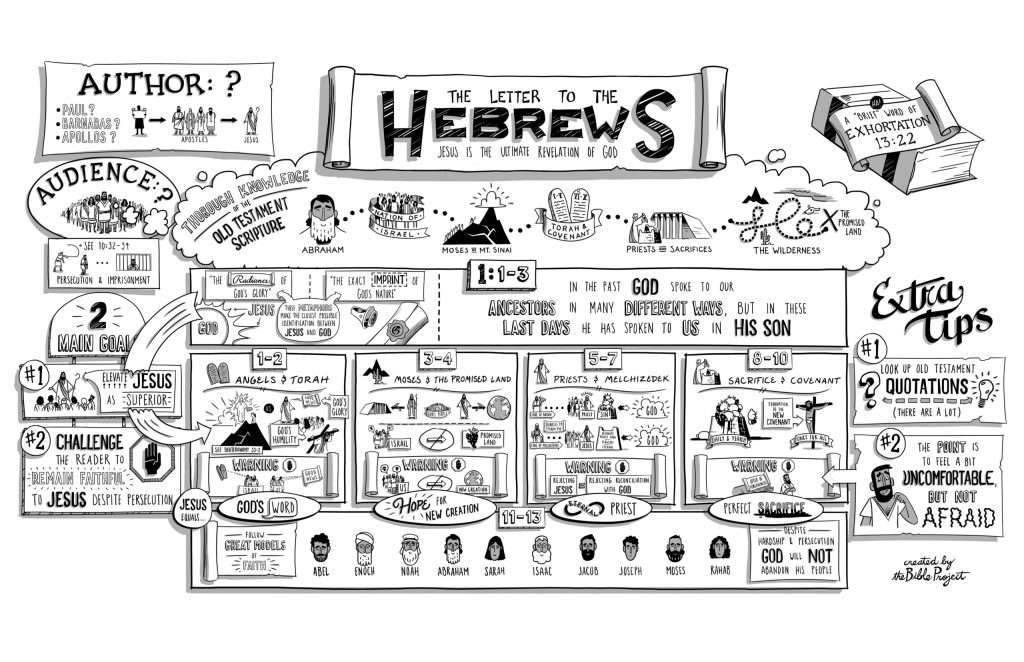
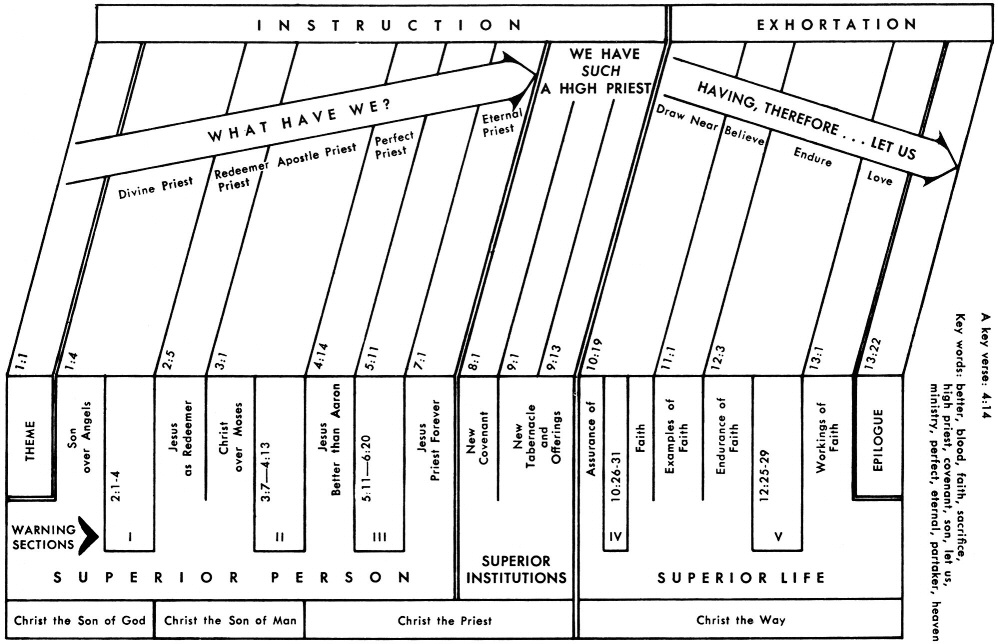
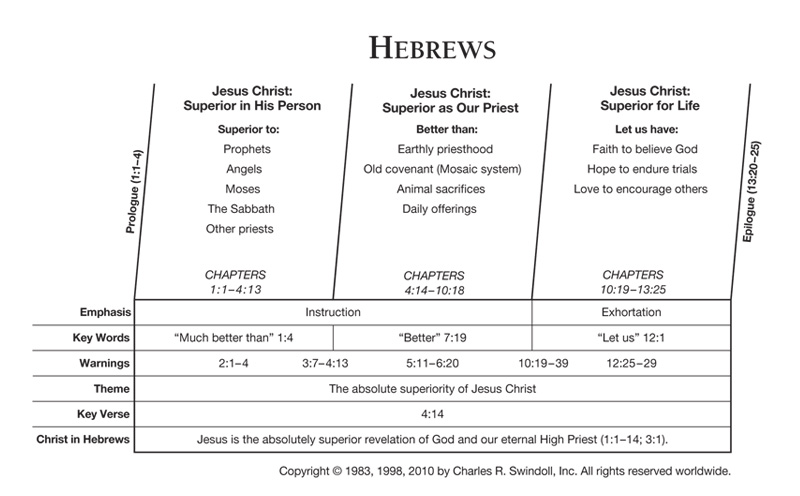
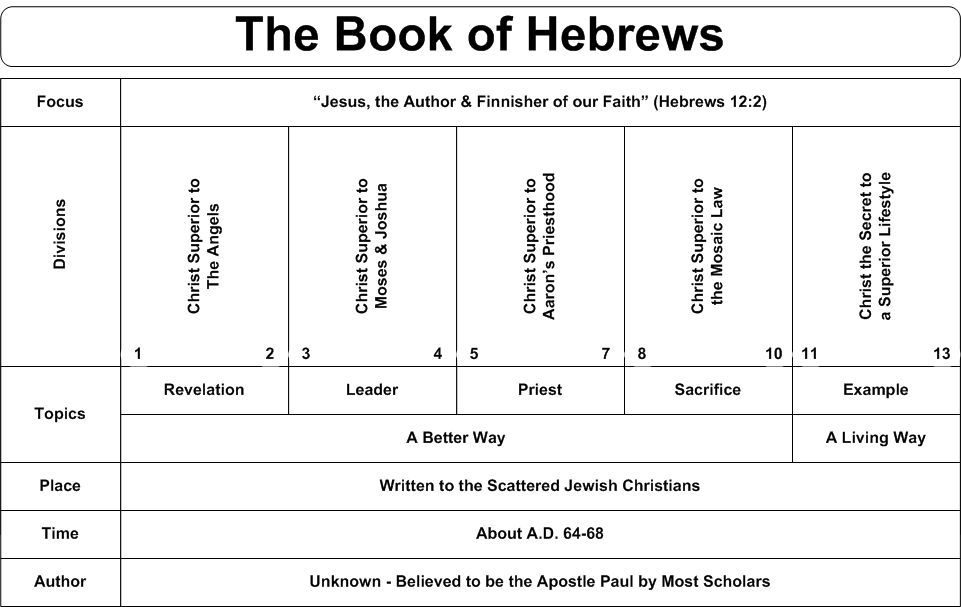
Welcome back to our study of the book of Hebrews.  We were talking last week about how the author of Hebrews wants to establish the superiority of Jesus so that the recipients of this letter don’t walk away from Jesus back into Judaism.  In this first portion he is establishing the superiority of Jesus over the angels.

Throughout the latter half of chapter 1 he uses seven Old Testament quotations, which the Jewish people would highly respect, to show that Jesus is superior to angels.

So, let’s begin looking at chapter 1, verses 4-14…

So he became as much superior to the angels as the name he has inherited is superior to theirs. 5 For to which of the angels did God ever say, “You are my Son; today I have become your Father”? Or again, “I will be his Father, and he will be my Son”? And again, when God brings his firstborn into the world, he says, “Let all God’s angels worship him.” In speaking of the angels he says, “He makes his angels spirits, and his servants flames of fire.” But about the Son he says, “Your throne, O God, will last for ever and ever; a scepter of justice will be the scepter of your kingdom. You have loved righteousness and hated wickedness; therefore God, your God, has set you above your companions by anointing you with the oil of joy.” 10 He also says, “In the beginning, Lord, you laid the foundations of the earth, and the heavens are the work of your hands. 11 They will perish, but you remain; they will all wear out like a garment. 12 You will roll them up like a robe; like a garment they will be changed. But you remain the same, and your years will never end.” 13 To which of the angels did God ever say, “Sit at my right hand until I make your enemies a footstool for your feet”? 14 Are not all angels ministering spirits sent to serve those who will inherit salvation?

Jesus has the superior name—“Son.”  Although collectively the angels were sometimes referred to as “sons of God,” this is the special name the Father gave to Jesus Christ.  It is a special relationship; Jesus is the one and only Son.

From eternity Jesus Christ has been the Son to the Father.  While equal to God in substance and nature, in the economic Trinity, or the way that the Trinity works, is that Jesus is the Son, who submits to the Father.

We noticed last time that he first quotes from Psalm 2:7, a Messianic Psalm.  “I will tell of the decree: The LORD said to me, “You are my Son; today I have begotten you.”  This verse pinpoints the time of Jesus’ begetting as the resurrection, when he was declared “Son.”  This verse, in its Old Testament context, was part of a coronation liturgy used by the Davidic dynasty.  On the day of coronation, he would be known as “Son.”  For Jesus Christ, that coronation took place at His resurrection, not his incarnation.

We will start today from the second quotation in verse 5, from 2 Samuel 7:14 or 1 Chronicles 17:13, like the first, ties in with the Davidic Covenant and advances the previous point.

Or again, “I will be his Father, and he will be my Son”

The immediate application in David’s experience was to his son, Solomon, whom God would love and discipline as a son (Psalm 89:27).  However, Solomon would fail to fulfill the conditions of this covenant.

So, the ultimate application of this statement is to Jesus Christ, the “greater than Solomon” (Matt. 12:42).  Although Solomon did go on to build the temple, the promises of David were not exhausted in him, but looked forward to Jesus Christ.

He is the peaceful ruler of Micah 5:2

But you, O Bethlehem Ephrathah, who are too little to be among the clans of Judah, from you shall come forth for me one who is to be ruler in Israel, whose coming forth is from of old, from ancient days.

He is the prince with four names, according to Isaiah 9:6-7.

6 For to us a child is born, to us a son is given; and the government shall be upon his shoulder, and his name shall be called Wonderful Counselor, Mighty God, Everlasting Father, Prince of Peace.

Those names are greater names than any angel had!  He goes on to say…

7 Of the increase of his government and of peace there will be no end, on the throne of David and over his kingdom, to establish it and to uphold it with justice and with righteousness from this time forth and forevermore.  The zeal of the LORD of hosts will do this.

Gabriel’s words to Mary in Luke 1 were, “He will be great and will be called the Son of the Most High.  And the Lord God will give to him the throne of his father David, and he will reign over the house of Jacob forever, and of his kingdom there will be no end.” (Luke 1:32-33)

So we see that Jesus is superior to the angels because he always was God’s Son and because two Old Testament sonship prophecies were marvelously fulfilled by him at his incarnation and resurrection and exaltation.  His name is “Son,” while all that can be said of angels is that they are messengers.  How dare anyone ever think of demoting him to the position of an archangel, much less to a perfect man!

Not only does Jesus Christ have a superior name, but He also has a superior honor.  The next point in the author’s argument for Christ’s superiority over angels is that he is worshiped by angels. “And again, when he brings the firstborn into the world, he says, ‘Let all God’s angels worship him’” (v. 6).

Here he turns to the final lines of verse 43 of the Song of Moses (Deuteronomy 32:43), which the Jews considered to be Messianic.  The line he borrows, “Let all God’s angels worship him,” is not in the Hebrew original but is a Greek edition called the Septuagint.

This occurred at Jesus’ incarnation when the angelic host announced His arrival.  “Suddenly there was with the angel a multitude of the heavenly host praising God and saying, ‘Glory to God in the highest’” (Luke 2:13, 14a). 

At the nativity the sky exploded with the glory of God and an entire army of angels was there in force, greeting the birth of the Savior.  They announced His birth and led the worship of the Son of God.  God does not call us to worship angels, but calls angels to worship Jesus Christ.

Again, the “firstborn” son always had a special place in the heart of his father (e.g., 2 Sam. 13:36-37; 1 Chron. 3:2), shared the father’s authority and inherited the lion’s share of his property.  Yes, the word can indicate one who was born first among sons and daughters in a family.  But it also stood for an idea—the idea of one who held special place in the father’s judgment and affections.  Thus David (Psalm 89:27) and Ephraim (Jeremiah 31:9) are called firstborn not because they were the eldest sons, but because of their importance.

The Rabbis used the term “firstborn” as a specifically Messianic title. One ancient Rabbi wrote, “God said, ‘As I made Jacob a first-born (Exodus 4:22), so also will I make king Messiah a first-born (Psalm 89:28).’” (R. Nathan in Shemoth Rabba, cited in Lightfoot)

This word says nothing about a beginning or creation point for Jesus, but rather the special place He had in His Father’s heart.

The incarnation is not the only point where we see the angels worshipping Christ.  It started before the incarnation, during his thirty-three years on earth and now in heaven.  We see a glimpse of this in Revelation 5.

Then I looked, and I heard around the throne and the living creatures and the elders the voice of many angels, numbering myriads of myriads and thousands of thousands, saying with a loud voice,

“Worthy is the Lamb who was slain,

to receive power and wealth and wisdom and might

and honor and glory and blessing!”

And I heard every creature in heaven and on earth and under the earth and in the sea, and all that is in them, saying,

“To him who sits on the throne and to the Lamb

be blessing and honor and glory and might forever and ever!” (Revelation 5:11–13)

Ultimately, every being will bow before Jesus Christ and proclaim Him Lord.

9 Therefore God has highly exalted him and bestowed on him the name that is above every name, 10 so that at the name of Jesus every knee should bow, in heaven and on earth and under the earth, 11 and every tongue confess that Jesus Christ is Lord, to the glory of God the Father.

Not every knee will bow willingly, but they will all bow to the glory and authority of Jesus Christ.

So even though the angelic host greeted His first coming, it will be at the second coming that every knee will bow.  This may be the primary reference since we read the word “again” in verse 6.  Most scholars, however, believe the word “again” refers to yet another Psalm called upon to witness to Christ’s superiority—“again” as in “another proof.”

Thirdly, in addition to a superior name and superior honor, Jesus Christ has a superior role.  He came to rule, angels are here to serve.

Now, it is true that Jesus initially came to serve rather than to be served (Mark 10:45), but taking Jesus’ lifeline as a whole, He came to reign.

In verse 7 the author of Hebrews quotes Psalm 104:4.  “In speaking of the angels he says, ‘He makes his angels spirits [or “winds”], and his servants flames of fire.’”

In the context of Psalm 104, this shows that the place of angels, though high in the created order, is in a far inferior position related to the supremacy of the Son.  They are presented here as “servants.”  While they are servants, the Son is sovereign.

The meaning of the text seems to be that the angels are executing the divine commands with the swiftness of wind and the strength of fire. The chariot of fire that bore Elijah from the earth were possibly angels.  Certainly those chariots of fire surrounding Elisha and his servants were the angels of God (2 Kings 6:17-18).

A. W. Pink says: “How sharp is the antithesis!  How immeasurable the gulf which separates between creature and Creator!  The angels are but “spirits,” the Son is “God.”  They are but “ministers,” His is the “throne.”  They are but a “flame of fire,” the executioners of judgment, He the One who commands and commissions them.”

In the next verses Jesus will be addressed as God, possessing a throne, a scepter and a kingdom, loving righteousness and hating wickedness, forever and ever.  No angel could claim these attributes.

Here the writer quotes Psalm 45:6, 7, a nuptial Psalm addressed originally to a Hebrew king, but phrased in language that could only be fulfilled by the ultimate Davidic king, the Son of God.

But of the Son he says,

“Your throne, O God, is forever and ever,

the scepter of uprightness is the scepter of your kingdom.

You have loved righteousness and hated wickedness;

therefore God, your God, has anointed you

with the oil of gladness beyond your companions.” (vv. 8, 9)

Angels minister before the throne, but they don’t sit on the throne.  The Son does…alone.

Notice first of all that Jesus is called “God” here.  He is the one being referred to in the words “Your throne, O God…”  When the First Person of the Trinity spoke to the Second Person of the Trinity, He called Him God.  Therefore, we should too.  This is unique and powerful evidence of the deity of Jesus.

Some argue that there are many beings called “gods” in the Bible such as Satan (2 Corinthians 4:4) and earthly judges (Psalm 82:1 and 6).  But these others are supposed gods, pretenders to the throne.  They might think of themselves as gods and others might, but they are not by nature gods.  These are false gods, but Jesus is the true God.  Jesus is the True and Living God, called so here by God the Father; and also by John in John 1:1, by Thomas in John 20:28, and by Paul in Titus 2:13 and Titus 3:4.  With the exception of the Gospel of John, Hebrews contains the clearest expression of the deity of Christ.

His throne is both unending (“forever and ever”) and unchanging.  All things created, including the angelic beings, are subject to time and tide, change and decay.  Christ’s kingdom is the only kingdom that never ends and the only one characterized by perfect righteousness.  This righteousness and justice which are the foundation of God’s throne (Psalm 89:14) are equally the foundation of Messiah’s throne (Isaiah 11:5).  The prophets expected the Messiah to rule in righteousness.

One of the main teachings of Psalm 110 is that Jesus Christ, God’s Anointed (Messiah in Hebrew, Christos in Greek), is now enthroned in glory.  Jesus himself referred to this important psalm (Mark 12:35-37; 14:62) and Peter used it on the day of Pentecost (Acts 2:34-36).  His kingdom was inaugurated when He ascended to heaven but will find its fullest expression, a more physical and geographical expression, when He returns.

His throne, his scepter, his anointing give us the dimensions of his brilliant sovereignty.  His throne—his rule—will never end. His scepter—his authority—will be executed in his righteousness—a righteousness that he established in becoming a sacrifice for our sins.  His being anointed with the oil of joy refers to the heavenly joy that was his as sovereign King of kings.

Wouldn’t we love to have rulers that loved righteousness and hated wickedness?  But only the Messiah will embody these attributes perfectly.

“God your God” is the Father, anointing His Son.  And that anointing has in mind the presence of the Holy Spirit.  Jesus Christ was anointed by the Holy Spirit for the three-fold offices of prophet, priest and king.  Here His kingship is being emphasized.

Notice that this anointing with the oil of gladness is a consequence of the Messiah “loving righteousness and hating wickedness.”  True joy is the result of loving what is right and good and beautiful.  It should remind us that there is no gladness, no real joy, in sinning.  Real joy arises out of heart that loves Jesus and loves what is right and good and beautiful.

Was Jesus a happy person?  I believe so.  This verse tells us that he was anointed “with the oil of gladness beyond your companions,” meaning that He was the happiest person among every group of people He has ever interacted with.

John Piper writes, “Jesus Christ is the happiest being in the universe. His gladness is greater than all the angelic gladness of heaven.  He mirrors perfectly the infinite, holy, indomitable mirth of his Father” (John Piper, Seeing and Savoring Jesus Christ, p. 36).

Spurgeon said, “We are happy to think Christ is happy. I do not know whether you have ever drank that joy, Believer, but I have found it a very sweet joy to be joyful because Christ is joyful” (Spurgeon, “The Special Call and the Unfailing Result,” Sermon #616)

Jesus is not stern or moody, He is overflowing with joy!

Jesus invites us to spend eternity with a happy God when he says, “Enter into the joy of your master” (Matthew 25:23).  The gospel is “the good news of the glory of the happy God.”

Like priests and prophets, Old Testament kings were anointed with oil, signifying God’s appointment to ministry.  Kings were anointed with oil when they ascended to the throne.

In the clearly Messianic Psalm 2:2, the writer records…

The kings of the earth set themselves, and the rulers take counsel together, against the LORD and against his Anointed

Jesus has been specifically appointed to this role by anointing.  He is the “anointed One” par excellence.

In Psalm 89 we read of David’s anointing which pictures the anointing of one greater than David, “I have found David, my servant; with my holy oil I have anointed him” (Psalm 89:20).  But this ultimately refers to Jesus Christ.

The companions above whom this Messiah is glad would have in the original context been the royal family or kings of surrounding nations.  In Jesus’ life it would have been His disciples and now it would be the “many sons” he is bringing to glory (Hebrews 2:10).

Peter, in his Pentecostal sermon, quoted from Psalm 16 to show that Jesus’ resurrection and eternal joy was prophesied by David.  Paraphrasing Psalm 16:11 Peter says about Jesus, “you will make me full of gladness with your presence.”

We, too, will be full of forever gladness when we step out of death and into God’s eternal presence.  O what a day!
The Superiority of Jesus to the Angels, part 1 (Hebrews 1:4-5)

Angels are “in.”  You can walk into a bookstore and find a whole shelf devoted to the topic of angels.  The television show Touched by an Angel ran for nine seasons and movies such as Ghost and City of Angels delved into the world of angels.  There are magazines such as Angel Times, which is dedicated to recounting the contacts with numerous angelic beings.

For a long time, angel figurines were very popular.  Angels are created beings, grand and glorious beings and certainly are active for God’s service as well as for ours (Heb. 1:14).  The Hebrew word for angel is malak and the Greek word is angelos, both of which mean “messenger.”

The godly Samuel Rutherford of Scotland, as a little boy, fell into a well.  His playmates ran for help, thinking he had perished.  But when the adults arrived to rescue him they found the young boy out of the well, drenched, and declaring that “a bonny white man” had rescued him.

John Patton, the Scottish missionary to the Hebrides Islands in the South Pacific, experienced an unusual deliverance by angels.  He and his wife were surrounded by a group of headhunters, but as Patton prayed, the headhunters all fled.  Later the chieftain of the group described to Patton that they had seen a group of men in shining white clothes with drawn swords surrounding the hut; so they left without doing any harm.

That may remind some of you of the time that Elisha’s servant was afraid of the vast armies that were around the city and Elisha prayed

“O LORD, please open his eyes that he may see.”  So, the LORD opened the eyes of the young man, and he saw, and behold, the mountain was full of horses and chariots of fire all around Elisha. (2 Kings 6:17)

While we might find our minds thrilled with such angelic feats, they all pale into insignificance when compared to our Lord Jesus Christ and all that He has accomplished for us.

Angels were also an important part of the Jewish religion, primarily because thousands of angels assisted in the giving of the law at Mount Sinai.  This fact is recorded for us in Deuteronomy 33:2, which says…”The LORD came from Sinai and dawned from Seir upon us; he shone forth from Mount Paran; he came from the ten thousands of holy ones, with flaming fire at his right hand.”  This is also found in Psalm 68:17; Acts 7:53 and Galatians 3:19.

The writer’s contrast of Jesus Christ’s authority and name with that of the angels suggests that his original readers may have regarded the angels too highly.  This was true of certain first-century sects within Judaism, one of which was the Essene community that lived at Qumran.  The Dead Sea Scrolls have revealed that this group had a highly developed angelology and that they regarded angels with more veneration than they should have.

Some people still believe that angels are mediators between us and God.  People who are hesitant to talk about Jesus are unashamed to bring up angels.

Since the writer of Hebrews is seeking to establish the superiority of Jesus Christ so that all faith would be placed in Him, he has to deal with this issue of the place of angels.  Warren Wiersbe notes:

“This long section on angels is divided into three sections.  First, there is an affirmation (Heb. 1:4-14) of the superiority of Christ to the angels.  The proof consists of seven quotations from the Old Testament.  Second, there is an exhortation (Heb. 2:1-4) that the readers (and this includes us) pay earnest heed to the Word God has given through His Son.  Finally, there is an explanation (Heb. 2:5-18) as to how Christ, with a human body, could still be superior to angels, who are spirits” (The Wiersbe Bible Commentary: NT, p. 805).

So we’ve just looked at seven facts about Jesus that make him superior, in vv. 2 and 3, now we’re going to look at seven quotations that continue to argue for His superiority.

Tom Constable points out these parallels:

Parallels between 1:1-4 and 1:5-13
1:1-41:5-13
A       Appointment as royal heir (2b)A’      Appointment as royal Son and heir (5-9)
B       Mediator of the creation (2c)B’      Mediator of the creation (10)
C       Eternal nature and pre-existent glory (3a-b)C’      Unchanging, eternal nature (11-12)
D       Exaltation to God’s right hand (3c)D’      Exaltation to God’s right hand (13)
https://www.planobiblechapel.org/tcon/notes/html/nt/hebrews/hebrews.htm#_ftnref88

Again, the number seven is significant to the Hebrews to communicate a sense of perfection or completion.

Why is it important to understand that Jesus is better than angels?  Why is important for us to compare and contrast them?

First, because we often understand things best when they are set in contrast to one another.  This way we can see the differences.

Second, since the Old Covenant came with the help of angels, the writer of Hebrews wants to establish that the New Covenant came through Jesus, giving it prime place.

Third, there has been a dangerous tendency to worship angels.  This is what Colossians 2:18 is referring to, and possibly Galatians 1:8, and Hebrews shows us that it is more important to worship Jesus, and Him alone, than any angelic being.

What the writer said here about angelic mediators applies especially to those who claim to mediate knowledge concerning God and the after-life to humankind.  Such self-proclaimed mediators today include leaders of some cults such as Theosophy, some New Age proponents, Shirley MacLaine, and other advocates of reincarnation.  Finding one’s spiritual “guide” and “channeling” to the unseen world, through that being, is popular in some circles.  

Fourth, there is a heretical idea that Jesus Himself was an angel.  Jehovah Witnesses believe he is the same person as the archangel Michael.

Finally, because understanding how Jesus is better than the angels, that helps us to understand how he is better than any of the “competitors” that come into our lives.

So, let’s begin looking at chapter 1, verses 4-14…

So he became as much superior to the angels as the name he has inherited is superior to theirs. 5 For to which of the angels did God ever say, “You are my Son; today I have become your Father”? Or again, “I will be his Father, and he will be my Son”? And again, when God brings his firstborn into the world, he says, “Let all God’s angels worship him.” In speaking of the angels he says, “He makes his angels spirits, and his servants flames of fire.” But about the Son he says, “Your throne, O God, will last for ever and ever; a scepter of justice will be the scepter of your kingdom. You have loved righteousness and hated wickedness; therefore God, your God, has set you above your companions by anointing you with the oil of joy.” 10 He also says, “In the beginning, Lord, you laid the foundations of the earth, and the heavens are the work of your hands. 11 They will perish, but you remain; they will all wear out like a garment. 12 You will roll them up like a robe; like a garment they will be changed. But you remain the same, and your years will never end.” 13 To which of the angels did God ever say, “Sit at my right hand until I make your enemies a footstool for your feet”? 14 Are not all angels ministering spirits sent to serve those who will inherit salvation?

So this section is comprised of seven quotations from the Old Testament, each of which proves the superiority of Jesus Christ.  This writer favors the Greek version of the Old Testament, which we call the Septuagint, since seventy men were commissioned to translate the Hebrew Old Testament into the Greek language.

First, Jesus has a superior name, and that name is “Son.”  The more excellent name that Jesus possesses is “Son.”  It is through this name, and relationship, that Jesus is superior to the angels.

While the angels collectively could be called “the sons of God” (as in Job 1:6), no angel could claim this title individually.  This is also true about us.  We are called “sons of God” in passages such as Romans 8:14 and 19 and Galatians 3:26.  But we don’t have special claim to that title like Jesus does.

From eternity Jesus Christ has been the Son to the Father.  While equal to God in substance and nature, in the economic Trinity, or the way that the Trinity works, is that Jesus is the Son, who submits to the Father.

“Inheriting” the name does not mean that he did not possess it before, yet he “inherited” it when it was “declared” by the resurrection, so Paul says he “was declared to be the Son of God in power according to the Spirit of holiness by his resurrection from the dead, Jesus Christ our Lord,” (Romans 1:4)  Although Jesus has been “Son” before the creation began, His resurrection declared that for all to see.

Jesus has a superior name, “Son,” and that makes him “much superior” to the angels.  He is not just a little better, but much better.  He is not temporarily better, but eternally better.

Now our author launches into seven quotations from the Septuagint version of the Old Testament to buttress his argument for the superiority of Jesus.

HebrewsOld Testament QuoteProves that…
Hebrews 1:5Psalm 2:7Jesus is God’s only begotten son
Hebrews 1:52 Samuel 7:14God is His Father; Jesus is the Son
Hebrews 1:6Psalm 97:7 (or Deut. 32:43Jesus is to be worshipped by the angels
Hebrews 1:7Psalm 104:4Angels are His ministers
Hebrews 1:8-9Psalm 45:6-7Jesus is God forever and ever
Hebrews 1:10, 11-12Psalm 102:25-27Jesus is immutable and eternal
Hebrews 1:13Psalm 110:1Jesus is honored as victor over all

One commentator notes that this was a common ancient practice, adducing a quantity of texts “to offer so much evidence that your listeners shook their heads in agreement with you by the end of these quotations” (Guthrie, p. 67).

The quotation in verse 5 begins with “to which of the angels did God ever say…? The passage also ends, in v. 13 with the same statement, forming an inclusio.

The quotation in verse 5 is from Psalm 2:7, “I will tell of the decree: The LORD said to me, “You are my Son; today I have begotten you.”  This verse pinpoints the time of Jesus’ begetting as the resurrection, when he was declared “Son.”  This verse, in its Old Testament context, was part of a coronation liturgy used by the Davidic dynasty.  On the day of coronation, he would be known as “Son.”  For Jesus Christ, that coronation took place at His resurrection.

The whole Psalm presents a glorious kingdom quashing rebellion and becoming an eternal kingdom.  It is alluded to in Luke 1:32, starting in verse 30…

30 And the angel said to her, “Do not be afraid, Mary, for you have found favor with God. 31 And behold, you will conceive in your womb and bear a son, and you shall call his name Jesus. 32 He will be great and will be called the Son of the Most High. And the Lord God will give to him the throne of his father David, 33 and he will reign over the house of Jacob forever, and of his kingdom there will be no end.”

The eternal Son of God “… entered into the full exercise of all the prerogatives implied by His Sonship when, after His suffering had proved the completeness of His obedience, He was raised to the Father’s right hand” (F. F. Bruce).

When you “beget” something, you “beget” something of the same kind as yourself.  Thus, Jesus has the exact same nature as the Father.  He is equally God.

In the Old Testament context, this verse was about Solomon, whom God would love and discipline as a son (of the Davidic covenant, 2 Samuel 7).  But the ultimate application is to Jesus Christ, the greater Solomon (Matthew 12:42).

Son of God is a title that referred to the Davidic kings (2 Sam. 7:14) and specifically to Jesus Christ: God the Son (Mark 1:11; Luke 1:32). 

The use of the word “begotten” throws some, thinking that this must mean that Jesus Christ had a beginning, that He is not, in fact, eternal.  First, recognize that this verse, nor any other, says that Jesus was “made” or “created.”  That he was begotten just speaks to his role as Son, not to His eternal nature.

Aside from that, where it speaks of Jesus being “begotten” in John’s gospel (John 1:14, 3:16), it uses the term monogenes.  Actually, the word “to beget” is gennao, with two “n’s.”  This word is genes, which means “kind” or “race.”  Thus, a better translation, rather than “only begotten,” is “one of a kind,” or “unique.”

He is the unique Son of God, there is none like Him in all creation.

According to Jewish thought, a person’s name revealed his essential nature and could express rank and dignity.  Jesus had the name “Son” from all eternity, and it is the name he will always keep, as the perfect tense of the phrase “the name he has inherited” indicates.

The second quotation, from 2 Samuel 7:14 or 1 Chronicles 17:13, like the first, ties in with the Davidic Covenant and advances the previous point.

Or again, “I will be his Father, and he will be my Son”

Not only is Jesus the Son of God, but He is also the promised son of David (Luke 1:32-33, 68-69; Rom. 1:3).  Even though Jesus Christ was always God’s eternal Son (in eternity past), in human history He becamethe Son prophesied to rule over David’s house.  He received permission to rule the whole earth after His ascension (cf. Ps. 2:8).

To summarize, the title Son refers to Jesus in three separate respects: He was always the pre-existent Son (v. 3a-b; cf. 5:8), He became the incarnate Son at His birth (v. 2a), and He became the exalted Son when He returned to heaven.

In all three ways Jesus is superior to the angels.

God never said to an angel, “You are my son.”  However, he said that several times to Jesus Christ.

First, at his baptism.

16 And when Jesus was baptized, immediately he went up from the water, and behold, the heavens were opened to him, and he saw the Spirit of God descending like a dove and coming to rest on him; 17 and behold, a voice from heaven said, “This is my beloved Son, with whom I am well pleased.” (Matthew 3:16-17)

Then on the Mount of Transfiguration, in Matthew 17:5:

He was still speaking when, behold, a bright cloud overshadowed them, and a voice from the cloud said, “This is my beloved Son, with whom I am well pleased; listen to him.”

At his resurrection (Psalm 2:7; Rom. 1:4; Heb. 5:5)

concerning his Son, who was descended from David according to the flesh and was declared to be the Son of God in power according to the Spirit of holiness by his resurrection from the dead, Jesus Christ our Lord, (Romans 1:3-4)

You will notice in verse 3 that Jesus was already God’s Son, but he was “declared to be the Son of God in power” when He rose from the dead.

So F. F. Bruce said:

“The eternity of Christ’s divine sonship is not brought into question by this view; the suggestion rather is that he who was the Son of God from everlasting entered into the full exercise of all the prerogatives implied by his Sonship when, after his suffering had proved the completeness of his obedience, he was raised to the Father’s right hand” (F. F. Bruce, Epistle to the Hebrews, p. 54).

The early church understood these passages to refer to the induction of Jesus into His royal position as King of the universe at the time of His resurrection and exaltation to the Father’s right hand.  These events vindicated Jesus as the Jewish Messiah and inaugurated His kingdom.

Seven Realities about Our Amazing Jesus, part 3 (Hebrews 1:2b-3)

Oh, how rich this passage is.  Now, for the third week, we are mining the depths of this glorious expression of who Jesus, the Son, is, in Hebrews 1:2-3.  We are picking it up today in verse 3…

and he upholds the universe by the word of his power. After making purification for sins, he sat down at the right hand of the Majesty on high,

Fifth, Jesus “upholds the universe by the word of his power.”

The Son who created the universe (Heb. 1:2), now upholds it by means of His powerful word.  The present tense verb indicates the continuous word going out to sustain His creation.

Unlike the mythic Atlas, who passively upholds the world upon his back, straining under the weight, the Son of God upholds the universe with just the word of His mouth.  Here the word is rhema rather than logos, to emphasize the spoken utterance.

In His earthly ministry Jesus constantly demonstrated the power of His word.  He could heal, forgive, cast out demons, calm nature’s fury all at the expression of one word.  Here we see that His word is so powerful that it can uphold all things.

“And this,” says Chrysostom on this place, “is a greater work than that of the creation.” By the former all things were brought forth from nothing; by the latter are they preserved from that return unto nothing which would be their natural course.

He holds the atomic elements, the quarks and leptons together through superstrings.  These particles are flying around, bumping into one another, totally chaotic.  If Christ weren’t actively speaking sovereign control, it would dissolve with a great conflagration at once.

We base our very lives on the constancy and dependability of what we call the “laws of the universe.”  When things get out of whack (like tornadoes and earth quakes) it messes up our lives—and those are just little things.

Imagine what would happen if the earth’s rotation slowed down just a little bit.  We would either burn up or freeze.  If it sped up, we would be blown off the face of the earth!

If our moon did not retain its exact distance from the earth, the ocean tides would inundate the land twice daily—although just once would be enough to wipe out all life.

If the ocean floors were merely a few feet deeper than they are, the carbon dioxide and oxygen balance of the earth’s atmosphere would be completely upset and no plant or animal life could exist.

Tides come in and our heart beats because of the sustaining word of Christ.

It would be impossible to conduct science experiments if the universe did not run in an orderly fashion, as it does, only because Jesus Christ sustains it by the word of His power.

Hey, if Jesus can do all this, without any effort and at once, surely he can take care of our lives, right?

Jim Gerrish quips, “Our immediate universe is thus not helio-centric but huio-centric, huio being the Greek word for ‘Son.’”

Unlike the Deists, who believed that, yes, God created the world, but then he left it to run on its own and has no current interactions with His creation, the author of Hebrews says that Christ not only created this universe, but has an active part in keeping it running.

We base our entire lives on the continuance, the constancy, of laws.  When something such as an earthquake comes along and disrupts the normal condition or operation of things even a little, the consequences are often disastrous.  Can you imagine what would happen if Jesus Christ relinquished His sustaining power over the laws of the universe?  We would go out of existence.  If He suspended the law of gravity only for a brief moment, we would all perish, in unimaginable ways.  (John MacArthur Jr., The MacArthur NT Commentary: Hebrews, 16-7)

Because Christ is actively sustaining the universe it is a cosmos rather than a chaos, an ordered and reliable system instead of an erratic and unpredictable muddle, only because Jesus Christ upholds it. 

Without Christ’s active, providential involvement this universe would fly apart.  Paul, in Colossians 1:16-17, says it like this:

16 For by him all things were created, in heaven and on earth, visible and invisible, whether thrones or dominions or rulers or authorities–all things were created through him and for him. 17 And he is before all things, and in him all things hold together.

Because Christ sustains everything, nothing in creation is independent from him.  All things are held together in a coherent or logical way, sustained and upheld, prevented from dissolving into chaos.  In him alone and by his word, we find the unifying principle of all life.  He is transcendent over all other powers.  (Bruce Barton, Life Application Bible Commentary: Hebrews, 5)

A. W. Pink notes:

Glimpses of this flashed forth even in the days of His flesh.  The winds and the waves were subservient to His word.  Sickness and disease fled before His command.  Demons were subject to His authoritative bidding.  Even the dead came forth in response to His mighty fiat.  (Arthur W. Pink, An Exposition of Hebrews, 38)

As the Creator and Sustainer, He brings the universe to its desired end, so that in the fullness of time He will “unite all things in him, things in heaven and on earth” (Eph. 1:10).  He is working all things according to His purpose (Eph. 1:9).

And if Christ upholds all things effortlessly, then He can uphold you and me.  As Charles Spurgeon said: “If the word of His power upholds earth and heaven, surely, that same word can uphold you, poor trembling heart, if you will trust him”.  (Charles Spurgeon, Spurgeon Commentary: Hebrews, 10).

Sixth, Jesus “made purification for sins.

Here we pass from the grand statements about the divine-human character of Jesus and His cosmic activities, to the personal, redemptive work He has done for us.  He is not only all-powerful; He is full of love for you and me.

Philip Hughes also notes that whereas Jesus is (now) the radiance of God’s glory and the exact representation of His nature and is (right now) upholding all things by the word of his power, the writer turns intentionally to the past tense here to indicate what Christ did as our high priest, that it was done once for all.  Ceaseless cosmic activity, and then boom! his once-and-for-all sacrifice for our sins. 

With the statement about the Son’s having effected purification of sins, the author comes to what is for him the heart of the matter.  His whole epistle shows that the thing that had gripped him was that the very Son of God had come to deal with the problem of man’s sin.  He sees him as a priest and the essence of his priestly work as the offering of the sacrifice that really put sin away.  The author has an unusual number of ways of referring to what Christ has done for man:  The Savior made a propitiation for sins (2:17).  He put sins away so that God remembers them no more (8:12; 10:17).  He bore sin (9:28), he offered a sacrifice (thysia) for sins (10:12), he made an offering (prosphora) for sin (10:18), and brought about remission of sin (10:18).  He annulled sin by his sacrifice (9:26).  He brought about redemption from transgressions (9:15).  In other passages the author speaks of a variety of things the former covenant could not do with respect to sin, the implication in each case being that Christ has now done it (e.g., 10:2, 4, 6, 11).  It is clear from all this that the author sees Jesus as having accomplished a many-sided salvation.  Whatever had to be done about sin he has done.  (Frank E. Gæbelein, Expositor’s Bible Commentary, Vol. 12, 14-5)

Other prophets gave instructions about what we must do to be reconciled to God.  Jesus, on the other hand, did the work on our behalf.  He did for us what we couldn’t do for ourselves (made purification for sins).  This is not a present tense action that we have a part in.  Jesus has already done this.  It is over and done with.

The Jewish people had a sacrificial system to cover over their sins.  It was a great picture of what Jesus would do, but it was never complete.  Sacrifices were offered daily.  Each family had to participate at least yearly.  The priest was always standing by the altar.  Imagine what the altar looked like, with the blood of hundreds of thousands of animals offered daily for hundreds of years.  Our author will go into this more deeply in Hebrews 7-10.

Listen to Hebrews 7:27

27 He has no need, like those high priests, to offer sacrifices daily, first for his own sins and then for those of the people, since he did this once for all when he offered up himself.

Also, Hebrews 9:12-14

12 he entered once for all into the holy places, not by means of the blood of goats and calves but by means of his own blood, thus securing an eternal (how long? “eternal”) redemption. 13 For if the blood of goats and bulls, and the sprinkling of defiled persons with the ashes of a heifer, sanctify for the purification of the flesh, 14 how much more will the blood of Christ, who through the eternal Spirit offered himself without blemish to God, purify our conscience from dead works to serve the living God.

Then in verses 25 and 26 he once again contrasts the continuing work of the priests with Christ’s completed work:

25 Nor was it to offer himself repeatedly, as the high priest enters the holy places every year with blood not his own, 26 for then he would have had to suffer repeatedly since the foundation of the world.  But as it is, he has appeared once for all at the end of the ages to put away sin by the sacrifice of himself.

The priesthood of Jesus is a major theme in the book of Hebrews.  What our author wanted his audience (and us) to know is that Jesus has done everything that was necessary to bring about the instant, complete, eternal, never-to-be-repeated purification of our sins.

The Law said, “Do this and live.”  Jesus says, “Trust this and live.”

Let’s break this down.

“He” refers to Jesus.  This is the same Jesus who created and sustains all things.  The same Jesus who is truly and fully God.  Yet He is also man, having taken on flesh, and therefore able to die for our sins.  So the personal cost was paid by Jesus Christ.

“Of sins” tells us what the problem is.  This is why Jesus died on the cross.  This word occurs 25 times in the book of Hebrews.  It is the word hamartia, which means “missing the mark.”  Our lives are supposed to glorify God, but our bent nature means that we always miss that mark, living for ourselves rather than God’s glory.

Sin is a grave reality with terrible consequences.  It results in judgment and death.  “The wages of sin is death” (Rom. 3:23).  Because we are sinners we are “children of wrath” (Eph. 2:3), already condemned (John 3:18).

“Had made purification” is the way Jesus solved that problem.  The word katharismos has the idea of both cleansing and removal.  Our sins had defiled us, making us unacceptable to God.  Jesus purified us through His death on the cross.

Behind this treatment of this subject stands the Old Testament concepts of the Day of Atonement (Leviticus 16) and the blood of the covenant (Exodus 12, 24).

Again, it was through Jesus’ willing and gracious offering of Himself that purification is made.  Peter said in 1 Peter 1:18-19…

18 knowing that you were ransomed from the futile ways inherited from your forefathers, not with perishable things such as silver or gold, 19 but with the precious blood of Christ, like that of a lamb without blemish or spot.

Having created the vast universe and sustaining it by a mere (but powerful) word should give us a sense of wonder and awe; but the grace and mercy which motivated Jesus Christ to give His life so that we might be forgiven, should surely bring forth a deep sense of grateful indebtedness offered from our knees.

And this accomplishment has as its proper sequel the seventh on the present series of fact which bring out the unequaled superiority of Jesus Christ, God’s Son.

And seventh, Jesus “sat down at the right hand of the majesty on high.”

Once again, our author puts this in the past tense.  This action was completed when Christ ascended.  His redemptive work is done.

Jesus offered Himself once for all as the perfect sacrifice for sins and then He sat down.  There was nothing left to do.  As He said from the cross, “It is finished.”  Everything has been done for forgiveness to be offered.  It has been “paid in full.”

The overarching significance here is that priests never sat down.  The Levitical priests always were standing, standing, standing—because no sacrifice was complete.  They had to offer them day after day and year after year.  By the way, there was no place to sit in the sanctuary because it was never appropriate for them to sit.

The borders of the high priest’s garment was sewn with bells so the people could hear him moving inside the Holy of Holies—and thus know he had not been struck dead.  See him enter the Holy Place trembling as he bore the sacrificial blood before the glowing mercy seat.  There he entered and stood year after year, high priest after high priest, for the work was never done.

But Jesus, a high priest after the order of Melchizedek, sat down. “And every priest stands daily at his service, offering repeatedly the same sacrifices, which can never take away sins.  But when Christ had offered for all time a single sacrifice for sins, he sat down at the right hand of God” (Hebrews 10:11, 12).  From the cross Jesus shouted, “It is finished” (John 19:30) and then, reassured, took his seat forever.

What could not be accomplished under the Old Covenant, even after centuries of sacrifices, was accomplished once by Jesus Christ for all time.  (John MacArthur Jr., The MacArthur NT Commentary: Hebrews, p. 20)

Jesus’ colossal work underlines the utter blasphemy of the thought that we can pay for our own sins with works of righteousness.  There is only one way to purity, and that is through the blood of Christ; not the blood of bulls and goats.

The only way to justification is by faith in his blood (Romans 3:25; 5:9).  Paul says, “But now the righteousness of God has been manifested apart from the law, although the Law and the Prophets bear witness to it—the righteousness of God through faith in Jesus Christ for all who believe” (Romans 3:21, 22).

This sentence not only communicates that Christ’s work as redeemer is finished, but that His rule as King has commenced.  He has taken the choice place, the highest place (at the father’s right hand), of honor and glory and authority in relation to the Father (cf. Eph. 4:10; Phil. 2:9; Luke 22:69).

Christ’s kingship was inaugurated when He ascended to heaven, so that now when we trust in Christ we are “transferred from the kingdom of darkness to the kingdom of His dear son” (Col. 1:13).

But this is not the final and fullest display of Christ’s kingly authority.  In Ephesians 1, Paul prays that they would become aware of the hope of their calling, the riches of their inheritance and the great power available to them, that power was demonstrated in raising Jesus from the dead and “seated him at his right hand in the heavenly places, far above all rule and authority and power and dominion, and above every name that is named, not only in this age but also in the one to come” (Eph. 1:20-21).

That age to come is when Christ will return to sit upon the throne of David (Isa. 9:6-7; Dan. 2:44; 7:13-14; et al.). Jesus will begin His rule over Israel and the whole world on earth as the Davidic Messiah after He returns to the earth at His second advent (Rev. 20:1-6).

Jesus being enthroned at the right hand of God goes back to Jesus’ own application of the opening words of the divine oracle of Psalm 110: “Sit at my right hand.”  Paul expresses the same thought in Philippians 2:9, “Therefore God exalted him to the highest place…”

Psalm 110 provides the key text of this epistle and the significance of Christ’s being seated as a high priest at God’s right hand is explicitly set forth in the following chapters, where it is contrasted with the Aaronic priests who remain standing because their sacrificial service never comes to an end.

But having sat down doesn’t mean that all His work is done.  He is not inactive in heaven—besides ruling His church, He is praying for us.  He sat down so that he could intercede for us before the Father, using His hard-won authority.  That is why we pray in Jesus’ name.

Paul, in Romans 8:34, writes: “Who is to condemn?  Christ Jesus is the one who died–more than that, who was raised–who is at the right hand of God, who indeed is interceding for us.”  He doesn’t condemn us for our sins—they’ve been paid for by Christ—but is praying for us.

The author of Hebrews adds:

Consequently, he is able to save to the uttermost those who draw near to God through him, since he always lives to make intercession for them.

The glory associated with Moses and Elijah was so eclipsed by the infinitely greater glory connected with Christ, that they faded from view.

Now it is something very much like this that we see here all through the Hebrews’ Epistle.  The Holy Spirit takes up one object after another, holds each one up as it were in the presence of the all-excellent “Son,” and as He does so, their glory is eclipsed, and the Lord Jesus is “found alone.”  The prophets, the angels, Moses, Joshua, the Levitical priesthood, the OT men of faith, each come into view; each is compared with Christ, and each, in turn, fades away before His greater glory.  Thus, the very things which Judaism most highly esteemed are shown to be far inferior to what God has now made known in the Christian revelation.  (Arthur W. Pink, An Exposition of Hebrews, 29)

Thus, the greatness of the Son of God receives sevenfold confirmation, and it appears, without being expressly emphasized, that he possesses in himself all the qualifications to be the mediator between God and the human race.  He is the Prophet through whom God has spoken his final word; he is the Priest who has accomplished a perfect work of cleansing for his people’s sins; he is the King who sits enthroned in the place of chief honor alongside the Majesty on high.  (F. F. Bruce, The New International Commentary on the NTHebrews, 50)

Deity is not to be explained, but to be adored.  The sonship of Christ is to be accepted as a truth of revelation, to be apprehended by faith, though it cannot be comprehended by the understanding.  (Charles Spurgeon, Spurgeon Commentary: Hebrews, 6-7)

Here is the final answer to the cults.  Jehovah’s Witnesses teach that Jesus Christ was nothing more than an angel, the highest created angel.  They identify Him with Michael, the Archangel.  But this passage in Hebrews utterly demolishes that theory, for Christ is a Son and not an angel. To what angel did God ever say, Thou art my Son?  (Ray C. Stedman, How to Live What You Believe, 13)

Seven Realities about Our Amazing Jesus, part 2 (Hebrews 1:2b-3)

Last week we began looking at how the author of Hebrews amasses evidence that Jesus is superior to the angelic beings, even though He came in the flesh.

We are looking at Hebrews 1:2b-3

1 Long ago, at many times and in many ways, God spoke to our fathers by the prophets, 2 but in these last days he has spoken to us by his Son, whom he appointed the heir of all things, through whom also he created the world. 3 He is the radiance of the glory of God and the exact imprint of his nature, and he upholds the universe by the word of his power. After making purification for sins, he sat down at the right hand of the Majesty on high,

We had discussed the first description of the Son as “heir of all things” and were discussing this second description as the one “through whom [God] created the world.”  So, we’re going to finish His work in creation before moving on in our passage.

He created all things, we have created nothing.  He can do it ex nihilo, out of nothing.  Only God can do that!

God was sitting in heaven one day when a scientist said to Him…

“God, we don’t need you anymore. Science has finally figured out a way to create life out of nothing – in other words, we can now do what you did in the beginning.”

“Oh, is that so? Explain…” replies God. “Well,” says the scientist, “we can take dirt and form it into the likeness of you and breathe life into it, thus creating man.”

“Well, that’s very interesting… show Me.”

So the scientist bends down to the earth and starts to mold the soil into the shape of a man. “No, no, no…” interrupts God, “Get your own dirt.”

God created from scratch—there was absolutely nothing here.  No raw elements.  So God created those (Genesis 1:1-2) and then shaped and filled it (Genesis 1:3-31).

Neither did this world come about by chance and time, but rather through the active, creative power of God.  He spoke, and the universe began.  The active agent of creation was the word, and Jesus is that Word.

John 1:1-3 says

1 In the beginning was the Word, and the Word was with God, and the Word was God. 2 He was in the beginning with God. 3 All things were made through him [there’s that word of active agency again, “through him”], and without him was not any thing made that was made.

In other words, Jesus made all things and there is nothing that exists that Jesus did not make.  Nothing.

If He is the creator of all things, then He is not a created being Himself.

That’s important because Arius, back in the 3rd century, argued that “if the Father begat the Son, he that was begotten had a beginning of existence: and from this it is evident, that there was a time when the Son was not. It therefore necessarily follows, that he [the Son] had his substance from nothing.”

Jehovah Witnesses and Mormons believe in this same idea today.

Arius stumbled over words such as “begotten” and “firstborn,” thinking that these words signaled a beginning for Christ, and if a beginning, then He too was created.  He held that Christ had a “similar” nature to the Father, as the only begotten, but Arius was condemned at the Council of Nicea, which maintained that Christ had the “same” nature as God.

In his “Four Discourses Against the Arians,” Athanasius reports that Arius stated, “God was not always a Father… Once God was alone, and not yet a Father, but afterwards He became a Father. The Son was not always… [He was] made out of nothing, and once He was not.”

But the Scriptures we’ve looked at today, especially John 1:3, tells us that Christ created “all things.”  He was Creator, not created.  His eternal existence is expressed in John 1:1 and John 8:58—“In the beginning (already) was the Word…”

John Piper asks the question, “why is the Son described first as the “heir of all things” and second as the one “through whom God made the world?”  That seems backwards.  You create first, then possess.

He suggests that what the author of Hebrews is doing is starting with the most significant, most important issue.  In other words, if I am called to stake my life on something, and may literally lose my life for it, don’t I ultimately want a Savior who is heir of all things and makes it possible for me to experience everlasting joy?

Sure, it is glorious that He created all this, but what I need is a word of surety about my future.  What is it all going to come to?

Well, the author of Hebrews starts by saying that it all wraps up in Christ.

So we have a double reason to give heed to the Son of God.  He is heir because He made it all and He was appointed heir because He died and rose again to redeem for himself a people and to destroy all enemies, including Satan, and everything that has ruined our lives.

He can make good on his word because he is God, because he is Creator, and because he is the Triumphant Heir over all evil and misery. This is a better word than anything the prophets ever spoke in many ways in the Old Testament.

The Son, to whom all of creation will be subjected in the end (cf. 1 Cor 15:28; Heb 1:13; 2:5, 8), is he through whom it originated in the beginning.  (George H. Guthrie, The NIV Application Commentary: Hebrews, 47).

Now, Philip Edgecumbe Hughes notes that the next two descriptions of Christ, as the “radiance” of God and the “exact representation of his nature” may seem to make Christ less than God.  Isn’t a radiance a mere emanation and a copy, however perfect, something other than the real thing?

Chrysostom, in the 4th century, had to encourage a church being torn apart by Christological controversies, not to be “sick of the disease of Marcellus and Photinus,” whose doctrines were among those condemned at the Council of Constantinople.

However, I do believe that it is possible to see in this language precisely what is needed to arrive at a correct understanding of the relationship between the Father and Son—a relationship that requires both sameness and distinctiveness.

Third, Jesus is the “radiance of the glory of God.”  The ancient Greek word for brightness is apaugasma, which speaks of the radiance that shines from a source of light.

Glory is often viewed metaphorically as light (e.g., Isa. 60:1, 192 Cor. 4:4–6Rev. 21:23), and here the Son is that glorious light of God.

In this sense, Jesus is the “beam” of God’s glory.  We have never seen the sun, only the rays of its light as they come to us.  Even so, we have never seen the God the Father, but we see Him through the “rays” of the Son of God.  In this way we have seen His brilliance.

Light comes to us in two forms: radiant and reflective.  There is a vast difference between the two.  The moon reflects light, but the sun radiates light because it is its source.

The run radiates at 15,000 degrees.  That heat-light radiates through the heavens 93 million miles away, through the earth’s atmosphere, and heats up our planet just right.  If you stand out in the sunlight very long, you are likely to get a sunburn.  But I bet you’ve never gotten a moon burn.

We reflect God’s glory; it is not inherently ours by nature.  But Jesus radiates it because that is His nature.

Jesus is more like the rays of the sun than the reflection of the sun on the surface of the moon.  He is the manifestation of God to us.

This is nothing less than the essential glory of God himself, corresponding to the shekinah glory which in the OT signified the very presence of God in the midst of his people.  It was the radiant glory of Yahweh’s presence which settled as a luminous cloud on Mount Sinai when Moses went up to meet with God (Ex 24:15ff.), and which was seen at the door of the tabernacle when Yahweh “used to speak with Moses face to face, as a man speaks to his friend” (Ex 33:9ff.).  It was, moreover, the glory manifested resplendent cloud of the shekinah (Mk 9:22ff., par.), an event which reflection of a glory not his own:  the apostles who were present were witnesses for a brief while of the glory which the Son had with the Father before the world was made (Jn 17:5).  The brilliant light, brighter than the midday sun, seen by Paul at his encounter with the Risen Jesus on the road to Damascus (Acts 9:3; 22:6; 26:13) was the same radiant glory of the divine presence.  (Philip Edgcumbe Hughes, A Commentary on the Epistle to the Hebrews, 42)

Looking at Christ in the way we see most fully the glory of God.  It is the glory of God in the face of Christ that we need to see for salvation.  Paul puts it like this in 2 Corinthians 4:3-6:

3 And even if our gospel is veiled, it is veiled only to those who are perishing. 4 In their case the god of this world has blinded the minds of the unbelievers, to keep them from seeing the light of the gospel of the glory of Christ, who is the image of God. 5 For what we proclaim is not ourselves, but Jesus Christ as Lord, with ourselves as your servants for Jesus’ sake. 6 For God, who said, “Let light shine out of darkness,” has shone in our hearts to give the light of the knowledge of the glory of God in the face of Jesus Christ.

Verse 4 speaks of the “light of the gospel of the glory of Christ, who is the image of God” and Verse 6 says that God speaks to “give the light of the knowledge of the glory of God in the face of Jesus Christ.”  Jesus Christ is the visible expression of the glory of God.

Of course, Jesus revealed God in a veiled way during His incarnation.  Only on the Mount of Transfiguration did Jesus reveal a small and brief glimpse of His glory.  John, however was promised a greater glimpse of that glory, which we see in Revelation 1.

Jesus does not simply reflect God’s glory; he is part of it!  This was shown on the Mount of Transfiguration when “His clothes became dazzling white, whiter than anyone in the world could bleach them” (Mk 9:3).  It was his own essential glory, but it was also the Father’s….This is why the Nicene Creed sings of Christ, “God of God, Light of Light, Very God of Very God.”  (Kent Hughes, Preaching the Word: Hebrews, 29)

He is the “light of the world” (John 8:12) and can make our lives full of light so that we are called “children of light” (Eph. 5:8; 1 Thess. 5:5).  We can radiate the glory of God—truly but not nearly like Christ—so that people can see our light shine and give glory to God (Matt. 5:16).

Fourth, Jesus is “the exact imprint of [God’s] nature.”  The idea here is of exact correspondence.  The Greek word for “exact imprint” is charaktēr.  John Owen believes that two things seem to be intended.

  • That the Son in himself is ἐν μορφῇ Θεοῦ , “in the likeness of God,” (Phil. 2:6)
  • That unto us he is εἰκὼν Θεοῦ , “the image of God,” representing him unto us, (Col. 1:15).

He goes on to say…

The whole manifestation of the nature of God unto us, and all communications of grace, are immediately by and through the person of the Son.  He represents Him unto us; and through Him is every thing that is communicated unto us from the fullness of the Deity conveyed.

Jesus is the full and definitive representation of God, because He is God.  He is the “exact imprint,” the fully reliable expression of the real being, the essence of God.  We get a perfect picture of God when we look at Jesus Christ (John 1:18; 14:9).

Herveus insists that the Son is the express likeness of the Father “not in an external sense but in substance” and links this truth with the declaration of the Incarnate Son: “He who has seen me has seen the Father” (Jn 14:9).

Thus, the Son is identical in substance to God, being himself fully God.  In all attributes and abilities, the Son is exactly like the Father. 

Philip Edgecumbe Hughes says, “The principal idea intended is that of exact correspondence.  This correspondence involves not only an identity of the essence of the Son with that of the Father, but more particularly a true and trustworthy revelation or representation of the Father by the Son” (A Commentary on the Epistle to the Hebrews, p. 43).

This is saying that Jesus exactly, and faithfully, represents God to us.  Maybe you’ve heard someone say, “He’s the spitting image of his father,” meaning he looks just like him.  Maybe you’d even mistake one for the other.

By the way, that colloquialism has nothing to do with spewing spittle out of our mouths.  It was originally “spirit and image.”  Some say, “He’s the carbon copy of his father.”  It’s the same idea, but not quite.  A human son is never exactly like his father, but Jesus Christ IS exactly like His Father.

When you see Jesus, you see the Father.  Christ, the Son, is the visible image of the invisible glory of God.  The invisible God can be seen and known in the Person of Jesus Christ.

Paul said it like this: “For in him the whole fullness of deity dwells bodily” (Col. 2:9).  In essence, Jesus is just as much God as the Father, but He is a distinct person.  Because He has the same nature, He is the perfect visible representation of God to us.

The prophets could only tell God’s people what they saw and heard.  Jesus was God himself–his message was firsthand.  (Bruce Barton, Life Application Bible Commentary: Hebrews, 5)

The whole point: Jesus was a fundamentally different type of message from God.  Other prophets gave the word of God; Jesus is the Word of God.

When you take the radiance and the representation together, you get a very strong expression of the likeness between the Father and the Son—that they are the same in nature, though distinct in person.  As radiance he is part of the source flowing out and being seen.  As representation he is distinct from that source.

John says, “The Word was God…and the Word was with God.”  This too expresses the sameness and the distinctiveness of the Son.  He is the same in essence with the Father, but distinct in person.

“The apostle, calling the Son of God ‘the stamp of the Father’s hypostasis’ [nature, v. 3], doubtless assigns some subsistence to the Father wherein he differs from the Son” said John Calvin (Institutes of Christian Religion, 1.13.2)

Jesus is a superior revelation of God.  When we see him, we know just what the God of the universe is like.  We know how he thinks.  We know how he talks.  We know how he relates to people.  God has spoken in his Son.  It is his ultimate communication, his final word, his consummate eloquence.  Oh, the superiority of the Son!

Here we have the reality of that doctrine we call the Trinity.  Although that word is not found in the Scriptures, the concept is.

Even as early as the opening chapter of Genesis we find God speaking “Let us make man in our image…” (Gen. 1:26).  We find not only God creating, but the performative word (cf. John 1:1-3) and the Spirit (Gen. 1:3).

The biblical teaching on the Trinity embodies four essential affirmations:

  1. There is one and only one true and living God.
  2. This one God eternally exists in three persons—God the Father, God the Son, and God the Holy Spirit.
  3. These three persons are completely equal in attributes, each with the same divine nature.
  4. While each person is fully and completely God, the persons are not identical. The differences among Father, Son, and Holy Spirit are found in the way they relate to one another and the role each plays in accomplishing their unified purpose.

From Genesis to Revelation, the Bible clearly affirms monotheism—that there is only one God.  Every morning the faithful Jew would repeat a prayer known as the Shema: “Listen, Israel: The Lord our God, the Lord is one” (Deut. 6:4).  Isaiah also speaks with clarity that there is no God but one (Isa. 43:10; 44:6; 45:5; see 1 Cor. 8:4). Jesus too affirms this belief when explaining the greatest commandment (Mark 12:29).

The Father, Son, and Holy Spirit are clearly distinguished from each other by the way they interact with one other in personal ways. For example, at Jesus’s baptism, as the Holy Spirit descends on the Son, the Father says, “You are my beloved Son; with you I am well-pleased” (Luke 3:22).

All three persons of the Trinity are fully God. The Father is repeatedly called God (1Cor. 8:6; 1 Pet. 1:3).  Paul writes, “Blessed is the God and Father of our Lord Jesus Christ” (Eph. 1:3).  The Son is called God on numerous occasions (John 1:1; Rom. 9:5; Titus 2:13–15; Heb. 1:8; 2 Pet. 1:1).  For instance, Thomas boldly calls Jesus, “My Lord and my God” (John 20:28).  Finally, in the inception of the church, Ananias and Sapphira dropped dead after lying to the Holy Spirit since they had “not lied to people but to God” (Acts 5:1–4).

Seven Realities about Our Amazing Jesus, part 1 (Hebrews 1:2-3)

John Piper says…

“We are all starved for the glory of God, not self.  No one goes to the Grand Canyon to increase self-esteem.  Why do we go?  Because there is greater healing for the soul in beholding splendor than there is in beholding self.  Indeed, what could be more ludicrous in a vast and glorious universe like this than a human being, on the speck called earth, standing in front of a mirror trying to find significance in his own self-image?  It is a great sadness that this is the gospel of the modern world.  The Christian Gospel is about “the glory of Christ,” not about me.  And when it is—in some measure—about me, it is not about my being made much of by God, but about God mercifully enabling me to enjoy making much of Him forever.”

Meditating on the glory of Jesus Christ is not easy, but it is worth the effort.  But the Puritan John Owen said…

“The person who never meditates with delight on the glory of Christ in the Scriptures now will not have any real desire to see that glory in heaven.  What sort of faith and love do people have who find time to think about many other things but make no time for meditating on this glorious subject?”

There are definitely positive benefits to meditating on the glory of Jesus Christ.  Owen goes on to say…

“By beholding the glory of Christ by faith we shall find rest to our souls. Our minds are apt to be filled with troubles, fears, cares, dangers, distresses, ungoverned passion and lusts. By these our thoughts are filled with chaos, darkness and confusion. But where the soul is fixed on the glory of Christ then the mind finds rest and peace for “to be spiritually minded is peace” (Rom. 8:6).”

Michael Reeves, in his book Rejoicing in Christ says this:

“If the Father can be infinitely and eternally satisfied in him [the Son], then he must be overwhelmingly all-sufficient for us, In every situation, for eternity.”

And John Newton, who wrote the song Amazing Grace, reminds us that “Discovering the amazingness of grace requires that we focus on the amazingness of Christ.”

When Charles Spurgeon opened this text to his congregation on the Lord’s Day evening of May 21, 1882, he gloriously announced, “I have nothing to do to-night but to preach Jesus Christ” (C. H. Spurgeon, The Metropolitan Tabernacle Pulpit , vol. 45 (Pasadena, TX: Pilgrim, 1977), p. 385).  He was merely following the apostolic pattern.

Luke tells us that the very first Christians “kept right on teaching and preaching Jesus as the Christ” (Acts 5:42 NASB).  When Philip went down to Samaria, he “proclaimed to them the Christ ” (Acts 8:5).  And when he climbed into the Ethiopian’s chariot “he preached Jesus to him” (Acts 8:35 NASB).

Immediately after Paul was converted, “he began to proclaim Jesus in the synagogues” (Acts 9:20 NASB).  Regarding his preaching, Paul told the Corinthian church that he had resolved to know nothing “except Jesus Christ and him crucified” (1 Corinthians 2:2).

In Colossians 1:28, Paul identifies his priority:

28 Him we proclaim, warning everyone and teaching everyone with all wisdom, that we may present everyone mature in Christ.

The best thing any of us can do is to preach Jesus, whether to win someone to Christ or to build them up in the faith.

Well, this is what the author of Hebrews helps us do in our passage today.  He writes…

1 Long ago, at many times and in many ways, God spoke to our fathers by the prophets, 2 but in these last days he has spoken to us by his Son, whom he appointed the heir of all things, through whom also he created the world. 3 He is the radiance of the glory of God and the exact imprint of his nature, and he upholds the universe by the word of his power. After making purification for sins, he sat down at the right hand of the Majesty on high,

The Father’s favorite subject is His Son.  The Spirit promises to exalt Jesus Christ.  So we can almost feel the pleasure of the Father and the Spirit in this exalted description of Jesus Christ.

The grand theme of these verses is the supremacy of Christ as God’s final word.

First of all, the background for these exalted statements about Jesus Christ is the fact that angels were very highly regarded in the Jewish religion, primarily because they believed that thousands of angels assisted in the giving of the Mosaic law at Mount Sinai (cf. Deut. 33:2; Psalm 68:17; Acts 7:53 and Galatians 3:19).

For example, Stephen mentions, in his speech in Acts 7…

you who received the law as delivered by angels and did not keep it. (Acts 7:53)

Thus, angels were very important in the Jewish religious traditions.  So the writer of Hebrews had to deal with this and he did this in this section (Hebrews 1:2b-2:18), first by affirming the superiority of Jesus Christ by description and through Old Testament quotations in (Hebrews 1:2b-14), then by exhortation in Hebrews 2:1-4 and finally by explanation in Hebrews 2:5-18.  He shows how Jesus Christ, through possessing a human body, is still superior to these exalted angelic spirits.

The author of Hebrews has already introduced the Son as the final, fullest revelation from God.  He fully explains who God is and perfectly communicates God’s nature to us.  Now the writer of Hebrews gives us a beautiful, majestic description of who Jesus is, who “his Son” is, in seven statements.

If you want a simple way of understanding this passage, jut think of Christ as (1) the inheritor, (2) the creator, (3) the sustainer, (4) the radiator, (5) the representor, (6), the purifier, and (7) the ruler.

Why these seven descriptions, when it would be impossible to define Christ Jesus with a hundred descriptions?  Because seven is the number of completion and fulfillment.

In the movie Prince Caspian, based on C. S. Lewis’ Chronicles of Narnia, Lucy finds herself again in the presence of Aslan and she throws her face into his mane with a big hug.  Then he rolls over, placing his huge paws around her.  The sweetness of his breath flows around her.

“Aslan,” said Lucy, “you’re bigger.”

“That is because you are older, little one,” answered he.

“Not because you are?”

“I am not.  But every year you grow, you will find me bigger.”

You see, a measure of our spiritual growth is when Jesus becomes bigger and more important in our eyes.

No matter what troubles and trials this congregation was going through, what they needed most was not “six steps to victory,” but solid teaching about Jesus Christ.  That is what we need as well.

So what does the author of Hebrews tell us about Jesus?

First of all, he has been “appointed heir of all things.”  It is natural for the writer to first emphasize that Christ the Son is Inheritor because sons are naturally heirs.

He is the Son of the most high King.  As such, he has come into his inheritance.  It is the greatest inheritance in all the world, in all of history, for He is the “heir of all things.”

God appointed Christ heir of all things.  Appointing reflects assignment to a position.  Although Jesus has always been the heir of God, his appointment came through His death and resurrection.

In Psalm 2, an enthronement Psalm for the coming Messiah, we find God sitting in heaven, laughing at the defiance of the nations.  They have never been a match for Him!  In that context, he declares…

6 “As for me, I have set my King on Zion, my holy hill.” 7 I will tell of the decree: The LORD said to me, “You are my Son; today I have begotten you. 8 Ask of me, and I will make the nations your heritage, and the ends of the earth your possession.

 (We know that this verse is in mind because Psalm 2:7 is quoted as referring to Christ in verse 5 of our text.)

Although the nations, indeed all creation, is in rebellion against Christ, God has ordained that through Christ’s faithful obedience and through His death and resurrection, these enemies will ultimately be subdued and all creation will bow down and acknowledge that Jesus is Lord.

Hebrews 10:12–13 says this:

Having offered one sacrifice for sins for all time, [Christ] sat down at the right hand of God, waiting from that time onward until his enemies be made a footstool for his feet.

So Jesus is specifically, in Psalm 2, the heir of all the nations.  But that will be expanded in chapter 2, verses 5-9, where his inheritance includes the universe and the world to come.  There “everything” will be subject to Him.

This will be gloriously fulfilled near the end of the tribulation period when Jesus returns and defeats the armies of the Antichrist.  This is expressed in Handel’s Messiah as he repeats the words of Revelation 11:15…

Then the seventh angel blew his trumpet, and there were loud voices in heaven, saying, “The kingdom of the world has become the kingdom of our Lord and of his Christ, and he shall reign forever and ever.”

Admittedly, when Jesus was on earth during His incarnation he had nothing, no place to lay his head.  No property, no money.  He was even buried in a borrowed grave.

Yet, one day every knee will bow and every tongue confess that He is Lord (Phil. 2:10).

Philip Edgecumbe Hughes says…

“Christ is the heir of all things precisely because God has only one Son and one Heir.  Christians, it is true, are also called sons and heirs of God, but they are so not in their own right but solely by virtue of their incorporation into the only-begotten Son with whom alone God is well pleased (Mt. 3:17; 17:5; Rom. 8:14-17; Gal. 4:4-7; 1 Pet. 1:3f).  In short, apart from Christ there is no sonship and heirship.  Those therefore who desire to enjoy the privileges of the sons and heirs of God can do so only as by faith they are found in Christ” (A Commentary on the Epistle to the Hebrews, p. 39).

When Christ came the first time he came in poverty, to make us rich (2 Cor. 8:9), but when He returns a second time, it will be to take authority and receive His full inheritance, which he will share with us—because we have become “fellow heirs with Christ” (Rom. 8:16-17) through faith.

Because Christ and Christ alone is heir to all things, and we live in him, we are heirs of all. “All things are yours,” says Paul, “whether . . . the world or life or death or the present or the future—all are yours, and you are Christ’s, and Christ is God’s” (1 Corinthians 3:21–23).

A. W. Pink points out that Jesus is not here called “Lord of all things,” but heir.  We can never be “joint-lords,” but grace has made us “joint-heirs.”  Because of this the Redeemer said to the Father, “the glory which Thou gavest Me I have given them” (Jn 17:22).

The word “heir” suggests two things:  dignity and dominion, with the additional implication of legal title thereto.  The title “Heir” here denotes Christ’s proprietorship.  He is the Possessor and Disposer of all things.  (Arthur W. Pink, An Exposition of Hebrews, 31).  He is the proper heir of God.

“Heir of all things,” then, is a title of dignity and shows that Christ has the supreme place in all the mighty universe.  His exaltation to the highest place in heaven after his work on earth was done did not mark some new dignity but his reentry to his rightful place (cf. Phil 2:6-11).  (Frank E. Gæbelein, Expositor’s Bible Commentary, Vol. 12, 13)

In our author’s thought, this royal inheritance of Christ has only been inaugurated but will be consummated at the end of the age (1:13; 2:8-9).  Thus this initial proposition both affirms the present and anticipates the future rule of Christ.  (George H. Guthrie, The NIV Application Commentary: Hebrews, 47)

Second, Jesus was the instrumental agent of creation—“through whom he [God] created the world.”  Literally, He created the “ages” (aion).  He created both space and time, implying that He existed before either.

“Thus the writer of Hebrews, in a single term (aionas), unites the idea of the world existing in space with the idea of the world moving through time—no mean accomplishment” (Alva J. McClain, The Greatness of the Kingdom, p. 32).

Bishop Westcott defines aionas here as “The sum of the ‘periods of time’ including all that is manifested in and through them . . . an order which exists through time developed in successive stages” (The Epistle to the Hebrews (Grand Rapids, MI: Eerdmans, 1967), p. 8).

Christ created not only the physical earth, but also time, space, energy, and every variety of matter. He effortlessly created the entire universe and finished it as something good. For that reason, the creation, which was marred by humanity’s sin, longs to be restored to what it was originally (Romans 8:22)—and one day Christ will create a new and perfect heaven and earth.

The immense scope of Christ’s inheritance comes from his dual functions as Creator and Redeemer. 

Paul makes dramatic reference to this in Colossians 1:16b: “all things were created . . . for him.”  Or as some have even more graphically translated it: “All things were created . . . toward him.”

Everything in the universe has its purpose and destiny in the heir, Jesus Christ. Romans 11:36 has the same idea as it tells us that everything in the work of creation is to him—“to him are all things.”

He has also earned a vast inheritance by means of redeeming mankind to Himself through the atoning work of reconciliation on the cross.

Paul prayed that the church would have its eyes opened to “the riches of his [that is, Christ’s] glorious inheritance in the saints” (Ephesians 1:18).

Just imagine the creative power of Jesus Christ.  As we look out at this vast universe, or considered the cosmic constants that must be tuned precisely to the 100th or 1,000th degree for life to even exist on this planet, or the profundity of data within the human DNA and the amazing ways that our bodies work, we should stand in awe at the One who made it all, with just a word.

For example, “Scientists have identified 109 characteristics of our galaxy and solar system that require exquisite fine-turning for life’s existence and sustenance,” explains astrophysicist Hugh Ross, “and that’s to say nothing, yet, about the possibility of organic matter arising from inorganic” (interview, “Scientists Are Getting Warmer,” New Man, September/October 1999, p. 34).

A British mathematician at Oxford University, Roger Penrose, has calculated that the precision seen in the created universe is 1010(to the 128th power).28.  I cannot fathom how high that number is, but it must be “out of this world”!

Early Jewish Christians interpreted the role of Wisdom in Proverbs 8:22-31 as referring to the creative work of Jesus.  I love the way verses 30 and 31 express this creative cooperation between the Father and Son…

30 then I was beside him, like a master workman, and I was daily his delight, rejoicing before him always, 31 rejoicing in his inhabited world and delighting in the children of man.

The Father, the Son and the Holy Spirit were all involved in creating this universe, both the visible and the invisible, and they delighted in it, pronouncing it “very good.”  But the emphasis here is on the creative power of the Son.

Jesus: God’s Best and Final Word (Hebrews 1:1-2)

The author of Hebrews begins by describing how Jesus Christ is superior to the angels.  Jesus is God’s final and definitive revelation (surpassing the OT, vv. 1–2), for he is the Son of God (v. 2), the agent of creation (v. 2), the very glory of God (v. 3), and the one who purifies from sin (v. 3). In all this he is superior even to angelic beings, especially in his unique sonship (vv. 4–14). This leads to a warning to attend to the words of salvation, since they are from and about the Son (2:1–4).

1 Long ago, at many times and in many ways, God spoke to our fathers by the prophets, 2 but in these last days he has spoken to us by his Son, whom he appointed the heir of all things, through whom also he created the world. 3 He is the radiance of the glory of God and the exact imprint of his nature, and he upholds the universe by the word of his power. After making purification for sins, he sat down at the right hand of the Majesty on high,

Verses 1-4 in Greek forms a single, multiclause sentence, built around the main clause in verse 2, that God “has spoken.”

There is a God who speaks that we might know him and love him and live in joyful obedience to him.  God spoke.  God spoke.

“God has spoken” is basis to the whole argument of this sermonic letter, as indeed it is to the Christian faith.  God has not remained silent and we are duty-bound to listen and obey.]

The author does not delay in getting right to the point.  This is his opening introduction.  He wants to tell us that Christ is superior to everyone and everything.  God communicates, and He has spoken His last and best word in His Son.

Using the properties of light as an illustration, we may say that God spoke in a spectrum in the Old Testament.  Jesus is a prism that collected all those bands of light and focused them into one pure beam.

“The new is in the old concealed; the old is in the new revealed.”  This famous statement by Saint Augustine expresses the remarkable way in which the two testaments of the Bible are so closely intertwined with each other.  The key to understanding the New Testament in its fullest is to see in it the fulfillment of those things that were revealed in the background of the Old Testament.  The Old Testament points forward in time, preparing God’s people for the work of Christ in the New Testament.  It makes sense, then, that this is now God’s final revelation.

Hebrews is a book deeply rooted in the Old Testament.  Hebrews has 29 quotations and 53 allusions to the Old Testament, for a total of 82 references. 

Verses 1 and 2 show the contrasting periods of God’s revelation between the Old and New Testaments.  “Long ago” contrasts to “in these last days” in verse 2.  Two similar Greek words (polymerōs and polytropōs) emphasize the many times and many ways in which God has spoken in the past; now he has spoken to us singularly through His Son. 

Another contrast is that the Old Testament revelation came through the prophets, and although New Testament revelation came through the apostles, it is in Jesus Christ that the final revelation has been spoken.  All these other men were “go-betweens,” but Jesus is the ultimate revelation. 

Jesus is not a mere prophet, as Islam mistakenly assumes.  Jesus is a prophet, but much more than that.  He is the Son of God.  The writer of Hebrews will unpack all that means in vv. 3-4.

The recipients of the former revelation was “our fathers,” in particular the patriarchs, while the recipient of this new and final revelation is “us,” the 1st century Christians.

Since God has spoken finally and fully in the Son, and since the NT fully reports and interprets this supreme revelation once the NT is written, the canon of Scripture is complete. No new books are needed to explain what God has done through his Son. 

If God seemed ready and eager to communicate himself in the Old Testament, how much more is he ready to communicate in the sending of His Son!

So verses 1 and 2 are contrasting two periods of God’s revelation.  But even before the prophets of Old the cosmos was filled with God’s eloquence, leaving every person without excuse.

Psalm 19 begins

1 The heavens declare the glory of God, and the sky above proclaims his handiwork. 2 Day to day pours out speech, and night to night reveals knowledge.

According to verse 3 this revelation is without words, but it is clear and present.  Paul in Romans expresses it this way…

19 For what can be known about God is plain to them, because God has shown it to them. 20 For his invisible attributes, namely, his eternal power and divine nature, have been clearly perceived, ever since the creation of the world, in the things that have been made. So they are without excuse. (Romans 1:19-20)

The cosmic eloquence of God is deafening, but many will not hear it.  They “suppress the truth in unrighteousness” (Rom. 1:18), Paul says.  So even those who hear, hear partially.  As Job said, “Behold, these are but the outskirts of his ways, and how small a whisper do we hear of him! But the thunder of his power who can understand?” (Job 26:14).

This is what theologians call general revelation.  It is universal, so every single person throughout history has had access to it, but it is not complete.  It shows us some truth about God.

But fortunately we have more than the eloquence of the heavens to speak to us.

The Reformers and Puritans spoke of two books—nature and God’s Word.  Psalm 19 goes on to speak of God’s Word as His special revelation to us…

7 The law of the LORD is perfect, reviving the soul; the testimony of the LORD is sure, making wise the simple; 8 the precepts of the LORD are right, rejoicing the heart; the commandment of the LORD is pure, enlightening the eyes; 9 the fear of the LORD is clean, enduring forever; the rules of the LORD are true, and righteous altogether. 10 More to be desired are they than gold, even much fine gold; sweeter also than honey and drippings of the honeycomb.

God spoke.  He did not leave us in the dark.  He didn’t abandon us to our best guesses about who He is and what He is like and who we are and what our problem is.  He spoke.  He spoke to the prophets in ages past and completed His revelation in Jesus Christ.

The words “many times and many ways” emphasize the diversity of God’s communications in the Old Testament. God spoke to Moses at Sinai in thunder and lightning and with the voice of a trumpet. He whispered to Elijah at Horeb in “a still small voice” (1 Kings 19:12 KJV).  Ezekiel was informed by visions and Daniel through dreams.  God appeared to Abram in human form and to Jacob as an angel.  God declared himself by Law, by warning, by exhortation, by type, by parable.

And when God’s seers prophesied, they utilized nearly every method to communicate their message. Amos gave direct oracles from God.  Malachi used questions and answers.  Ezekiel performed bizarre symbolic acts.  Haggai preached sermons.  And Zechariah employed mysterious signs.

God primarily spoke through the prophets in the Old Testament, through the apostles in the New Testament.  This process is called “inspiration,” which is the supernatural influence of the Holy Spirit upon the writers of Scripture so that their writings were an accurate record of the revelation of God, thus resulting in the Word of God.

2 Peter 1:20-21 describes it like this.  Actually, let me start back up in verse 16.  Peter is telling his readers why it is so important that he remind them of certain biblical truths.

16 For we did not follow cleverly devised myths when we made known to you the power and coming of our Lord Jesus Christ, but we were eyewitnesses of his majesty. 17 For when he received honor and glory from God the Father, and the voice was borne to him by the Majestic Glory, “This is my beloved Son, with whom I am well pleased,” 18 we ourselves heard this very voice borne from heaven, for we were with him on the holy mountain.

Peter is talking about the experience he James and John had with Jesus on the Mount of Transfiguration, recorded in Matthew 17:1-8, Mark 9:1-8 and Luke 9:28-36.

He says that this was a glorious experience of the glory of Christ.  However, he goes on to say that even more significant than this glorious, face-to-face experience with Christ, is the fact that we have this prophetic word:

19 And we have something more sure, [what’s more sure than any experience we have?] the prophetic word, to which you will do well to pay attention as to a lamp shining in a dark place, until the day dawns and the morning star rises in your hearts, 20 knowing this first of all, that no prophecy of Scripture comes from someone’s own interpretation. 21 For no prophecy was ever produced by the will of man, but men spoke from God as they were carried along by the Holy Spirit.

Notice again that last line, “men spoke from God as they were carried along by the Holy Spirit.”  Like the wind fills the sails and directs the ship, so the Holy Spirit carried along the minds of the prophets so that they were directed to write the very mind of God into Scripture.

How wonderful it is that we have in our hands today the very word of God, the Bible.  At any time, whenever we need it, we can take it up and read it and it becomes our comfort, the joy and rejoicing of our hearts.

So God had communicated throughout the ages past, but now something new has come.

The point the writer is trying to make here is that God’s previous revelation was fragmentary and partial compared to the final and complete revelation of the Son.  John Calvin points out that this is like the sun coming out of the shadows, that the revelation now in pointing us to Christ is for the more mature.

The Old Testament prepares one for Christ, the New Testament presents Christ.  As F. F. Bruce aptly remarks, “The story of divine revelation is a story of progression up to Christ, but there is no progression beyond Him.”

This revelation comes in the “last days,” a very familiar concept to the Jews.  It would have a distinctive Messianic and apocalyptic flavor. 

For example, even the Samaritan woman at the well in John 4, told Jesus, “I know that Messiah is coming (He who is called the Christ); and when that One comes, He will declare all things to us.”  She was expecting a fuller and more complete revelation to unfold when Messiah came.

It is important to see that for the author of Hebrews, this revelation was final.  There would be no more revelation after Jesus Christ.  This is why Revelation 22, the last chapter of the Bible, ends with this injunction neither to add to nor to take away any words from this completed revelation.

18 I warn everyone who hears the words of the prophecy of this book: if anyone adds to them, God will add to him the plagues described in this book, 19 and if anyone takes away from the words of the book of this prophecy, God will take away his share in the tree of life and in the holy city, which are described in this book.

Adding to or taking away from the 66 books of the Old and New Testaments carries severe penalties and should make us think twice before holding up any ancient or current “word from God” as authoritative.

The final revelation did not come through Muhammed or Joseph Smith, or any modern-day prophet or apostle, but it came through Jesus Christ.

“The aim of the writer is to prove that the old Covenant through which God had dealt with the Hebrews is superseded by the New; and this aim he accomplishes in the first place by exhibiting the superiority of the mediator of the new Covenant to all previous mediators” (Marcus Dods, “The Epistle to the Hebrews,” in The Expositor’s Greek Testament, 4:247).

The Greek puts the emphasis on the quality of God’s final revelation.  It is literally “in Son.”  It is not “in a son” as an indefinite person, nor even “in the Son.”  The emphasis is the quality of this revelation through the One who is infinitely related to the Father.

“… Jesus, the Son of God, not merely declares unto us the message of the Father, but He Himself is the message of the Father.  All that God has to say unto us is Jesus.  All the thoughts and gifts and promises and counsels of God are embodied in Jesus. (Adolf Saphir, The Epistle to the Hebrews, 1:38)

William Newell adds: “… the fundamental truth set forth in Hebrews is that Christ Himself, the Son of God, is God’s message, His voice to us.” (William R. Newell, Hebrews Verse by Verse, p. 4).

And I love the way that A. W. Pink puts it:

“God might have spoken ‘Almightywise,’ as He did at Sinai; but that would have terrified and overwhelmed us.  God might have spoken ‘Judgewise,’ as He will at the great white Throne; but that would have condemned us, and forever banished us from His presence.  But, blessed be His name, He has spoken ‘Sonwise,’ in the tenderest relation which He could possibly assume” (An Exposition of Hebrews, p. 27).

As “Son” he reveals the Father-heart of God.

Jesus Christ, the Son, is the perfect revelation and explanation of the invisible attributes of God and completely communicates to us the very nature of God.

Jesus is God’s final word.  Jesus is God’s complete word.  Jesus is God’s best word.

John 1 begins…

In the beginning was the Word, and the Word was with God, and the Word was God.

Then in verses 14 and 18 John says this about this eternal Word:

14 And the Word became flesh and dwelt among us, and we have seen his glory, glory as of the only Son from the Father, full of grace and truth.

18 No one has ever seen God; the only God, who is at the Father’s side, he has made him known.

In John 14, when Jesus was preparing His disciples for life without His direct presence, answered Philip’s question of “How can we know the way?” by saying…

“I am the way, and the truth, and the life. No one comes to the Father except through me. 7 If you had known me, you would have known my Father also. From now on you do know him and have seen him.” 8 Philip said to him, “Lord, show us the Father, and it is enough for us.” 9 Jesus said to him, “Have I been with you so long, and you still do not know me, Philip? Whoever has seen me has seen the Father. How can you say, ‘Show us the Father’?

In other words, there is no better display of who God is than Jesus Christ, and no other.

The phrase “in son” is the fulcrum of Hebrews 1:1-4.  It concludes the contrast of God’s old revelation, which was fragmentary and temporary, with the revelation of the son, which is final and complete and has lasting significance, and it also introduces seven descriptions of this Son.  These descriptions show why He is the ultimate revelation of God.

What is the author of Hebrews telling us?  He is telling us that the final, complete revelation of God resides in His Son, Jesus Christ, and we’d better listen to Him.

Hebrews 12:25 says…

25 See that you do not refuse him who is speaking.  For if they did not escape when they refused him who warned them on earth, much less will we escape if we reject him who warns from heaven.

The question today is, have you heard the word of God in the person of Jesus Christ?  If not, I encourage you not only to read and study the book of Hebrews, but the Gospels as well.  Seek Christ.  If you seek Him, you will find Him.

Introduction to Hebrews, part 2–Themes

Last week we began a study of the book of Hebrews.  Admittedly, Hebrews can be a difficult book, so today we want to look at some of the characteristics that set this book apart.

First, it is a book of evaluation.  I remember a saying, I think I heard it in college, “Good, better, best, never let it rest, ‘til you make the good better and the better best.”  I think that is the American way.  We want to be the best, have the best (or at least better than our neighbors) and pursue the best.

When it comes to Christianity, Joel Osteen offers Your Best Life Now.  But more important than anything we can experience or accomplish or earn with our efforts is that we recognize that Jesus Christ is the best.  He is not just “the best thing that’s ever happened to me” as James Brown sang but He is objectively the best Savior.  None can compare.  In fact, there really is no other.

The Jewish people believed that their way of religion, through the sacrificial system, was the right way to approach God.  Indeed, it was the approach that God laid out for them in the Pentateuch.

But then Jesus came.  He came to fulfill the moral law through His perfect obedience and to fulfill the ceremonial law through his sacrificial death.

Thus, one of the key words in the book of Hebrews is the word “better.”  It occurs 13 times in 12 verses (Heb 1:46:97:19228:6 (2x); He 9:2310:3411:416354012:24).  The writer of Hebrews reveals the superiority of Jesus Christ over the angels (Heb. 1:4), over Moses (Heb. 3), over Joshua and Aaron (Heb. 4).  He came with better promises (Heb. 8), opens a better sanctuary (Heb. 9), is sealed by the better sacrifice (Heb. 9) and achieves better results for those who believe (Heb. 10).

Another word that is repeated in the book is “perfect,” occurring 14 times.  It means a perfect standing before God—what our guilty hearts crave.  This perfection could never be accomplished by the Levitical priesthood (Heb. 7:11) or by the law (Heb. 7:19), nor could the blood of animal sacrifices achieve it (Heb. 10:1).  Jesus gave Himself as one offering for sin, and by this He has “perfected for all time those who are being sanctified” (Heb. 10:14).

The writer makes it quite clear that the Jewish religious system was both temporary and a shadow of a deeper, truer, eternal reality to come.  It could not bring in the eternal “better things” that are found in Jesus Christ.

“Eternal” is a third word that is important to the message of Hebrews.  Jesus Christ is the “source of eternal salvation” (Heb. 5:9).  Through his death, Christ secured “an eternal redemption” (Heb. 9:12) and He shares with us believers “the promised eternal inheritance” (Heb. 9:15).

So, Jesus Christ is better because His blessings are eternal instead of temporary and they give us a perfect standing before God.

The reason the writer of Hebrews emphasizes this is that he knew that the Jewish believers to whom he was writing were in danger of reverting back to Judaism.  Certain Judaizers were saying that the old system was “better.”  It certainly was more familiar to them, thus more comfortable.  Plus, it would protect them from the current wave of persecution.

Unfortunately, these Jewish believers had come to a standstill in their faith.  They should have grown stronger by now, to have a more firm hold on theology and its application to their lives.  But they weren’t making progress.  They were stuck.  Some of them were no longer even participating in Christian fellowship.

So the author is calling them to take stock and to realize that Jesus Christ really is better than their former religion.  The author of Hebrews exalts Jesus Christ and His work as better than the old sacrificial system and the legalistic code of the law.

Second, this is a book of exhortation.  Remember that the writer calls this book “my word of exhortation” (Heb. 13:22).  That word parakaleo, is the idea of giving positive encouragement.  The Holy Spirit is called the paraclete in John 14.

Here in Hebrews this is expressed through five passages often called the “warning passages,” but in fact they are positive encouragements to trust God and obey His Word.

The epistle of Hebrews opens with the words “God spoke” (Heb. 1:1-2).  At the end of this epistle he writes “See that you do not refuse him who is speaking” (Heb. 12:25).  In other words, since God has spoken, you better listen and obey.

Each of the five passages encourages us to hear and heed God’s Word.

The first passage in Hebrews 2:1-4 encourages us not to drift from the Word through neglect.

The second passage, in Hebrews 3:7-4:13, tells us not to doubt God’s Word and develop a hard heart.

The third passage, in Hebrews 5:11-6:20, encourages us not to have dull minds and hearts towards God’s Word.

The fourth passage, in Hebrews 10:26-39 encourages us not to despise God’s Word through willful rebellion.

The fifth and final passage, in Hebrews 12:14-29, encourages us not to defy God’s Word by stopping up our ears and refusing to listen.

Warren Wiersbe notes:

“If we do not listen to God’s Word and really hear it, we will start to drift.  Neglect always leads to drifting, in things material and physical as well as spiritual.  As we drift from the Word, we start to doubt the Word, because faith comes by hearing the Word of God (Rom. 10:17).  We start to get hard hearts, and this leads to spiritual sluggishness, which produces dullness towards the Word.  We become “dull of hearing”—lazy listeners!  This leads to a despiteful attitude toward the Word to the extent that we willfully disobey God, and this gradually develops into a defiant attitude—we almost “dare” God to do anything!” (The Wiersbe Bible Commentary: NT, p. 803).

You can see the downward, dangerous progression in these passages.  But in each God speaks encouragement, then chastens us if we don’t listen and obey.

The dangers inherent in these negative attitudes towards God’s Word are serious.  While they don’t threaten the loss of salvation, they do threaten divine discipline and possibly even the loss of life.  The last passage, in Hebrews 12:9, says “Shall we not much more be subject to the Father of spirits and live?”  The inference is that if we don’t submit, we may die.  We know from other passages that “there is a sin that leads to death” (1 John 5:16; cf. 1 Cor. 11:30).

It is clear that most of the congregation were believers.  The author calls them “brothers” in Hebrews 3:1.  It is possible, however, that the congregation was mixed, with some professing believers in their midst, just like in any church.

Third, the book is a book of examination.  It calls us to examine ourselves.  Like Paul says in 2 Corinthians 13:5, “Examine yourselves, to see whether you are in the faith.  Test yourselves.”

This book is about where we put our faith.  Am I trusting fully and only in Jesus Christ for my salvation?

This book was written right before the temple was destroyed in 70 A.D.  The sacrificial system was still being utilized in the temple with daily sacrifices.  So at this time it was a tantalizing offer to go back to the Levitical system.  But soon the temple would be destroyed, the Jewish nation would be scattered…God was indeed “shaking” the order of things.

The same is happening in our lives, in our culture, right now.  Traditional religion in the Bible belt South, so comfortable and aligned with conservative politics, last lost its mooring in Jesus Christ.  It many cases it is more like a country club.

But that kind of shallow “faith,” with more real trust in the world and its strategies than in Jesus Christ, will not stand up to the testing that is here today.

God wants our hearts to be “strengthened by grace,” to be solidly grounded in what really saves us from the wrath of God.

You don’t want to be on the wrong path to heaven.

There is a story of a conductor who got on the train, began to take tickets, and told the first passenger whose ticket he punched, that he was on the wrong train.  When he looked at the next ticket, he told that passenger that he was on the wrong train.

“But the brakeman told me to get on this train,” the passenger protested.

“I’ll double-check,” said the conductor.  He did, and he discovered that he was on the wrong train!

I fear that there are many who have a false faith, a faith in themselves and their own goodness.  I can’t tell you how many times I heard hospice patients say “I hope I am good enough.”

The reality is, we aren’t good enough.  By far.  The only one good enough was Jesus Christ.  That is why he submitted to the cross.  He was the only perfect sacrifice worthy to avert the wrath of God against us and make it possible for us to be forgiven.

Hebrews is a book that helps you examine yourself to see where your faith really lies.

Hebrews is also a book of expectation.  It focuses often on the future.  The writer informs us that he is speaking about “the world to come” (Heb. 2:5), a time when believers will reign with Christ.  Like the patriarchs lauded in Hebrews 11, we are looking for that future city of God (Heb. 11:10-16, 26).

Right now we are “strangers and exiles on the earth” (Heb. 11:13).  Thus, we shouldn’t get too attached to this world and its toys.

Abram and Lot illustrate these two opposing attitudes (Genesis 13-14).  When they returned from Egypt they were both wealthy and their servants were quarrelling.  As the elder statesman Abram could have had his pick of the properties, but he gave Lot the choice and Lot chose the area of Sodom and Gomorrah.

When God intended to destroy Sodom and Gomorrah for their sins, he sent angels to rescue Lot and his family.  But Lot lost everything—his wealth, his wife, his respect and influence—everything he had invested his heart in.

Abram, however, saw himself as a stranger and alien.  He held the things of this life loosely.  Martyred missionary Jim Elliot said it best:  He is no fool who gives what he cannot keep, to gain what he cannot lose.”

We have been promised a future reward.  Will we live as if that is a reality worth sacrificing this life for?  Abram and Moses (and all the heroes of Hebrews 11) did.  I love what it says about Moses

24 By faith Moses, when he was grown up, refused to be called the son of Pharaoh’s daughter, 25 choosing rather to be mistreated with the people of God than to enjoy the fleeting pleasures of sin. 26 He considered the reproach of Christ greater wealth than the treasures of Egypt, for he was looking to the reward.

Moses was looking to the future.  He could give up the treasures of life in the here and now, because he believed that he would be rewarded with greater treasures in heaven.  We can give up the fleeting pleasures of sin now, because we can know that there will be greater pleasures in heaven.

It was this same attitude of future realities that motivated Jesus to go to the cross.  Hebrews 12:2 says, Jesus “for the joy that was set before him endured the cross, despising the shame…”  He endured terrible things on the cross because he was looking forward to something, the “joy that was set before him.”  What was that?  I believe it was his knowledge that through the excruciating pain of dying on the cross that he would bring “many sons to glory” (Heb. 2:10).  I think this is also predicted in Isaiah 53:10, which says “when his soul makes an offering for guilt, he shall see his offspring…”  Jesus sacrificed pleasure in the here and now, for the sake of future reward.

And that’s what the author of Hebrews encourages us to do—to live for future reward, to realize that we won’t always experience the best in the here and now.  In fact, sometimes here and now will be hard and harsh.  But the future is bright and blessed for those who believe.

Abram chose the right world and became the father of the faithful.  Lot chose the wrong world.  Abram became a friend of God, but Lot because a friend of the world—and lost everything.  Lot was “saved, yet so as by fire” (1 Cor. 3:15) and lost his eternal reward as well.

Don’t let that happen to you.  Believe in the future reward and live for that.

Finally, Hebrews is a book of exaltation.  What this book focuses upon is exalting the person and word of Jesus Christ.  The first three verses of chapter 1 establish this theme, which is then maintained throughout the book.

As to His person, Christ is superior to the prophets.  He is God very God.  He is described in Hebrews 1:3 as the “radiance of the glory of God and the exact imprint of his nature…”  That radiance refers to the Shekinah glory, which dwelt in the Old Testament tabernacle (Exodus 40:34-38; 1 Kings 8:10) but even more fully (though not as visible) in Jesus Christ.

And the Word became flesh and dwelt among us, and we have seen his glory, glory as of the only Son from the Father, full of grace and truth” (John 1:14).

“Christ is to the Father what the rays of the sun are to the sun.  He is the radiance of the Father’s glory.  As it is impossible to separate the rays from the sun, it is also impossible to separate Christ’s glory from the nature of God” (Warren Wiersbe, The Wiersbe Bible Commentary: NT, p. 805).

“Express image” carries the idea of an exact imprint.  Thus Jesus could say, “Whoever has seen me has seen the Father” (John 14:9).

As to His work, Christ is also superior to the prophets.  He created the universe (Heb. 1:2) and sustains it (Heb. 1:3).  Paul, in Colossians 1:17 confirms that “in him all things hold together.”  Were Christ not actively holding the universe together, it would devolve back into the original state of being “formless and void.”

There are several contrasts here between Christ and the prophets.  He is “God the Son,” whereas they are mere men called by God.  While there are many prophets, there is only one Son.  His is the final and complete message, whereas theirs was fragmentary and incomplete.

Jesus Christ was God’s “last word,” His final revelation.  None else was needed.

Thus, Jesus Christ is the source, the center and the aim of everything that God has to say.

Not only was Jesus a prophet, He was a priest.  He made “purification for sins” through His death on the cross.  This aspect of His ministry is explained in great detail in Hebrews 7-10.

Finally, Jesus is king.  He has “said down at the right hand of the Majesty on high.”  He sat down because His work of redemption was complete with the crucifixion and resurrection.  He now sits in the place of highest honor, at the Father’s right hand.  He sits where no other could sit.  He can because He is God.

Creator, prophet, priest and king, Jesus Christ is superior to all the other prophets and servants of God that have ever appeared on the pages of Scripture.  It is not wonder, then, that God the Father said at His transfiguration, “This is my beloved Son, with whom I am well pleased; listen to him” (Matthew 17:5).  While the disciples were enamored with Moses and Elijah—two of the greatest men in the Old Testament—God the Father was claiming the unparalleled superiority of His Son.  “Listen to Him,” He’s got something important to say.

So, as we continue our study of Hebrews, let’s have listening hearts.  Let’s open up our minds and hearts to what God has to say about His Son.  May we have the attitude of the Greek seekers in John 12, “Sir, we wish to see Jesus” (John 12:21).  This should be our deepest desire.

Augustine spoke of this great, undeniable restlessness of the human heart, until finding its rest in God: “You have made us for yourself, O Lord, and our heart is restless until it rests in you.”

Moses, seeking to leverage God’s remarkable favor on him, was so bold as to ask to see God’s glory. God permitted him a glimpse of the afterglow of divine beauty, not his face.

But the apostles saw it, and we can “see” it by faith in God’s Word.

The Word became flesh and dwelt among us, and we have seen his glory, glory as of the only Son from the Father, full of grace and truth. (John 1:14)

Tracing the Argument of Hebrews, Daniel Wallace

Daniel Wallace’s tracing of the argument of the book of Hebrews:

The epistle to the Hebrews, which is really a homily with some final epistolary material tacked on to the end, divides naturally into two parts.  First is the doctrinal section in which the author(s) detail(s) the theological basis for Christ’s superiority over the Old Testament (1:1–10:18).  Second is the pragmatic section in which the practical effects that Christ’s superiority should have in the believer’s life are enumerated (10:19–13:17).

Throughout the epistle, however, the writer(s) punctuate(s) the argument with warnings to the readers.  After all, this letter is not a mere piece of academia: it is written to a Jewish house-church which is in danger of defection from the gospel of grace. In many respects, then, these warnings are what the author(s) wish(es) to get to; they are his climax, application.  Because of the wording of these warnings, coupled with the author’s use of Galatians and our historical reconstruction, it seems evident that the warnings are not dealing with loss of reward (contra Zane Hodges in BKC), but are addressing the possibility of not obtaining a professed salvation.

The first section, the theological basis for Christ’s superiority (1:1–10:18), involves five parts.  First, Christ is seen as superior to the OT prophets (1:1-4) in that they were mere servants or spokesmen (1:1), while the quality of the mediator of God’s revelation has now stepped up to the level of sonship (1:2-4).

Second, Christ is superior to the angels (1:5–2:18).  The author transitions into the section on angels by showing that, as God’s Son (in contrast to the prophets), Christ “has obtained a more excellent name than [the angels]” (1:4). This is demonstrated by a catena of OT quotations (1:5-14).

At this point the author inserts his/their first warning passage (2:1-4), which addresses the superiority of the message of Christ over that of angels. In essence, the point is, “Don’t drift” (2:1).  Whoever rejects the proofs of the message of salvation (2:3-4) in favor of an inferior message of judgment mediated through angels (2:2) will, in fact, face even worse judgment than what was described by angels (2:3).

The argument about Christ’s superiority over angels is resumed in 2:5-18.  Christ is seen as superior to the angels by his humanity (as opposed to the view which the ascetic-Jewish heretics were teaching).  This is demonstrated by the scriptures which describe his exaltation over the angels (2:5-9), and it is even shown by the necessity of his suffering (2:10-18), for by this he brings us salvation.

Third, Christ is superior to Moses (3:1–4:13).  The author bridges the topic by showing how, by Christ’s humanity, he has become a sympathetic high priest (2:17-18).  But before he can get to a comparison with the high priest, Aaron, he must first deal with his brother, Moses.  The author, not wishing to alienate his audience, points out that Moses, like Christ, was faithful to God (3:1-2).  But unlike Christ, Moses was merely part of the house which Christ built (3:3-4), and a mere servant in the house while Christ was the Son over the house (3:5-6a).

This discussion about Moses leads naturally into the second warning based on Israel’s wilderness experience (3:6b–4:13).  The point essentially is, “Don’t defect.”  The author(s) is quite tactful here: only once, and only in a subtle way, does he implicate Moses in Israel’s unbelief in the wilderness (3:16).  The audience should draw its own conclusions as to who was more faithful!  Unlike the first warning—which dealt with Christ’s superiority to the angels’ message—this warning has to do with the nation’s failure to believe in God (3:6b-11).  The readers are urged to believe in the promise of God to give them the Sabbath rest which the nation never obtained (3:12–4:11).  What is at stake, however, is not an earthly, transient rest, but an eternal rest—rest from the works which are not based on faith.  This warning is concluded with a somber note about God’s piercing Word (4:12-13), illustrating the fact that though some may profess faith, God knows those who possess faith.

Fourth, Christ is superior to Aaron (4:14–7:28).  The transition from the cold steel of God’s Word (4:12) to Christ’s superiority over Aaron is made by way of a gentle reminder: whereas God’s word is sharp and harsh, cutting through the flesh to the intentions of the heart, Christ our high priest is sympathetic with the weaknesses of our flesh (4:14-16).  At this point the author(s) begin(s) what will become a characteristic motif throughout the book. Immediately after a strong warning section, he softens his tone so as to encourage the readers.  The point of this softening seems to be that he is not expecting an unwavering faith in order for salvation to take place (as such might be the misunderstanding from 4:12-13).  But he is expecting the readers to know in whom they should place their faith.

The priesthood of Aaron is first mentioned (5:1-5), followed by scriptural proof (based especially on Psalm 110) for the priesthood of Christ (5:6-10) after the order of Melchizedek (5:6, 10)—proof which is necessary since Jesus Christ was not from the tribe of Levi.

The third warning then commences (5:11–6:8): “Don’t degenerate.”  Dealing with such subtle typology may be too much for the readers, for they are still immature in the faith (5:11-14).  They are to move forward in their spiritual growth (6:1-3) if the seed of salvation is ever to take root.  In light of the tremendous exposure they have had to the truths of salvation, it had better take root—or else they are in danger of apostasy (6:4-8).  In this passage the author may well be thinking of the parable of the sower (6:7-8) in which good works (productivity) are the evidence of genuine faith (6:7; cf. 5:14; 6:10).  Further, he may have in mind someone such as Judas who would clearly fit his description in 6:4-6.  If any of his readers, who had been in such a growing congregation and had seen the evidence of God’s Spirit working in their lives (6:4-5), fall away, they “crucify afresh the Son of God” (6:6), making it impossible for them to obtain the salvation which they had professed.

Again, as in 4:14-16, the author(s) softens his tone after a strong warning section.  In 6:9-20 he reminds them of the promises of God, and points out his confidence that they are among the productive seed (6:9-10).

The discussion about the Aaronic priesthood is then resumed with an elaboration on the order of Melchizedek (7:1-28).  Not only was Melchizedek greater than Abraham—and by implication, all his descendants including the tribe of Levi (7:1-10), but his priestly order is greater than the Aaronic order (7:11-28), by virtue of the fact that its necessity was predicted while the levitical order was in effect (7:11, 17).  Its superiority is seen in various other ways: it involves one priest while the levitical priesthood involved many, since death prevented them from continuing (7:23-24); and this new order involves a single, perfect sacrifice, while the old order involved daily sacrifices (7:26-27).

Fifth, Christ’s ministry is superior to the old covenant ministry (8:1–10:18).  The transition between the Aaronic priesthood and the discussion of the covenants is hinted at in 7:12: “When there is a change in the priesthood, there is necessarily a change in the Law as well.”  Christ’s ministry is seen to be superior to the old covenant ministry in three ways: in its covenant, in its sanctuary, and in its sacrifice.

After a brief introduction of all three aspects (8:1-6), the author begins by contrasting the old covenant with the new (8:7-13).  The inadequacy of the old covenant is demonstrated by scripture (8:7-9), and likewise the adequacy of the new covenant is so demonstrated (8:10-13).  In essence the new covenant involves knowing God internally because of the indwelling Spirit rather than having a revelation of God’s will externally.  The implications of these are two: (1) believers are now organically united to God in the body of Christ and (2) the eschaton has dawned and the kingdom has been inaugurated in the first coming of Christ—two implications which the author(s) will pick up on in the “practical” section (cf. 12:28; 13:3, etc.).

Then, the two sanctuaries are contrasted (9:1-12), in terms of imperfection vs. perfection and original pattern vs. replica (9:11; cf. v. 24).

This portion of the epistle concludes with contrasting the old sacrifice with the new (9:13–10:18).  Though both sacrifices required blood (9:13-22), Christ’s sacrifice is better because it has purified the original, heavenly sanctuary (9:23-28), and it was done once for all (10:1-18).

Having completed the theological section of the epistle with a strong note on the sufficiency and substitutionary nature of Christ’s death, the author(s) now turns to the pragmatic effects that Christ’s superiority should have in the believer’s life.  This section includes four exhortations, with a warning and the great “Hall of Faith” chapter wedged in between.

First, the readers are exhorted to completely enter the new sanctuary (10:9-31).  The idiom is not necessarily meant to indicate that all the readers were unbelievers; rather their faith needed strengthening (10:19-22).

Nevertheless, not all were genuine believers: hence, a fourth warning section (10:26-31) comes on the heels of this exhortation.  In essence, the point is “Don’t despise.”  This one sounds very much like the one in 6:4-8, though this time the point is not related to the sown seed of the gospel, but specifically to profaning the blood of Christ (10:29).  In the context of the new covenant community the author speaks of such a person as already “sanctified” (10:29): this should be compared with the covenant community of the OT in which some were not believers, yet were set apart as a peculiar people by virtue of the sacrificial system (10:26-28).  It is clear that the man in the new covenant community is not necessarily saved: note such phrases as “fearful prospect of judgment,” “a fury of fire which will consume the adversaries,” (10:27), “worse punishment” (than physical death), “outraged the Spirit of grace” (10:29), capped off by “It is a fearful thing to fall into the hands of the living God” (10:31).

Second, the readers are exhorted to endure persecution (10:32-39), especially in the light of the promises of God (10:36).  This is followed by yet another word of comfort to the readers regarding the previous warning: “we are not of those who shrink back and are destroyed, but of those who have faith and keep their souls” (10:39).

Third, having just argued that the readers should endure as they had in the past (“recall the former days when, after you were enlightened, you endured” [10:32]), the readers are reminded of others who have endured—and kept the faith (cf. 10:39).  Chapter 11 has often been called “The Hall of Faith”—and with good reason.  For in this chapter the author(s) show(s) how God’s people in the past had endured hardship, pain, and death—and yet their faith kept them going.  There is a subtle polemic in this chapter against the inability of the Law to help in this task: no one of the OT saints is commended for his faithfulness to the Law.  That this is part of the author’s purpose can be seen by the fact that, as he marches through chronologically, the bulk of his illustrations are about pre-Law individuals (pre-patriarchs in 11:4-7; Abraham, Isaac, and Jacob in 11:8-22).  In fact, when he discusses Moses (11:23-29), his faith is seen up until the time of the Passover (11:28) and the crossing of the Red Sea (11:29), though nothing  is said about him after the giving of the Law.  In the space of two verses (11:30-31) the author(s) then addresses the faith of the Israelites when Jericho fell (11:30), and Rahab’s faith which helped the event to take place (11:31).  Thus, even though the period of the Law is dealt with, the author produces no example of anyone demonstrating faith in relation to the Law.

The chapter is then hurriedly concluded with the mere mention of names, mostly of prophets and warriors (11:32-33), followed by the sufferings they anonymously faced (11:34-39).  What is conspicuous by its absence is any mention of an OT priest, Ezra, or other person known for his law-keeping abilities.  The author has done a masterfully subtle job of getting his audience to focus on examples of faith entirely apart from obedience to the Law, obviously antithetical to the heretical teaching which they were considering.

Fourth, the readers are exhorted to endure the chastening hand of God (12:1-29).  This exhortation is similar to the one in 10:32-39, but now it is more specifically in light of the fatherhood of God (12:7-11).  A transition is made from the “great cloud of witnesses” of chapter 11 to the supreme example of the Son’s faithfulness in his suffering, that our faith might be perfected (12:1-4).  Just as Christ is God’s Son, so are believers (12:5)—that is to say, because he is a Son, so are they; hence, God will deal with them as a Father does his own children (12:5-11).  In the midst of the severe warnings comes this note of encouragement: even though the readers are suffering, since they are sons they are saved.  This discipline from God is a proof that they are indeed sons (12:8)—in fact, unless they are disciplined they will not grow in grace (12:12-17).  Such growth is essential evidence that they will obtain heaven as their eternal home (12:14).

The fifth warning of the book comes on the heels of this note on chastening.  In essence, it is “Don’t deny.”  The author implores the readers not to deny God by refusing to heed his voice (12:18-29).  Once again, as with previous warnings (2:1-4; 10:26-29), the author argues a minor ad maior: from the minimal punishment (physical death) for disobedience in the OT to the maximal punishment for disobedience now (eternal hell).  He contrasts Mount Sinai with Mount Zion (12:18-24), showing that the awesome power of God shakes mountains, but it cannot shake the kingdom in which true believers dwell (12:28).  The warning is concluded with the somber note that “our God is a consuming fire” (12:29).

Fifth, the readers are exhorted in very pragmatic areas with respect to the community of believers (13:1-17).  They are instructed not only to show love for one another (13:1-6), but also respect for the leadership of the church (13:7-17).  No doubt such respect was overdue since these Jewish Christians had gone off on their own and were being led away by the heresy of the Judaizers (13:9-15).  They are consequently encouraged to get back into the fold (rather than separate in their own house church) and provide for the leaders’ needs, as a Christian sacrifice which is pleasing to God (13:15-16).  Finally, the author gets blunt: “obey the church leaders” (13:17), and with this he ends the body of his epistle.

Concluding instructions which formally turn this exquisite homily into an epistle, are given to the readers (13:18-25).

https://bible.org/seriespage/19-hebrews-introduction-argument-and-outline#_ftn33

Daniel Wallace has excellent introductions to each book of the New Testament at bible.org.  Check them out and be blessed.

An Introduction to Hebrews, part 1

Today we’re going to start a new study, a study of the book of Hebrews.  As always, it is good to get some background information before we begin a verse-by-verse examination of the meaning of the text.  It is good to know who wrote it, to whom it was written, when it was written, from where it was written, the purpose for writing and some of the overall characteristics of the book.

Philip Edgcumbe Hughes opens the introduction to his magisterial commentary on Hebrews with some insights into this very enigmatic book:

If there is a widespread unfamiliarity with the Epistle to the Hebrews and its teaching, it is because so many adherents of the church have settled for an understanding and superficial association with the Christian faith.  Yet it was to arouse just such persons from the lethargic state of compromise and complacency into which they had sunk, and to incite them to persevere wholeheartedly in the Christian conflict, that this letter was originally written.  It is a tonic for the spiritually debilitated.… We neglect such a book to our own impoverishment.

The letter to the Hebrews isn’t casual bedside reading.  Dense and deep, complex and compelling, profound and practical–it requires mental focus and spiritual motivation to grasp its content and grapple with its application.  But the return on this big investment has benefits that pay off in eternal dividends.  (Charles R. Swindoll, Swindoll’s Living Insights: Hebrews, 3)

So who wrote this complex but compelling book?

The simple truth is, we don’t know.  When questioned about the authorship of Hebrews, the third-century theologian Origen said, “But who wrote the epistle, to be sure, only God knows.”   He was arguing that it wasn’t Paul.

And that was in A.D. 225 and we haven’t made much progress towards certainty since then.

Unlike most other books of the New Testament the author of this work does not state his name, though he assumes that the audience knows who he is (cf. 13:19, 22, 23).  The author clearly knew his recipients and longed to be reunited with them (Heb. 13:19). They had a mutual friend in Timothy (13:23).  We also know that he was a dynamic preacher, that he has an extremely knowledgeable understanding of the Old Testament in its current interpretation, that he was highly educated in Greek culture and language and that he was deeply committed to Jesus Christ and deeply concerned about the welfare of this spiritual community.

It has been suggested that Paul wrote Hebrews.  It has a Pauline flavor with literary and theological depth.  Not only this, but (1) the epistle closes in a typically Pauline fashion (13:25); (2) Timothy is associated with the author (13:23); (3) the macro-structure of the epistle is similar to Paul’s style (doctrinal, followed by practical portion); and (4) there are several strong hints both of Paul’s point of view and even his wording in this letter (especially when compared to Galatians).

However, Paul normally signs his letters.  Also, the Greek is actually better than Paul normally used (although he could have used a secretary).  The logical development is more tightly woven than Paul’s norm.  Also, Timothy’s imprisonment (Hebrews 13:23) simply does not seem able to fit within Paul’s lifetime, since he is mentioned repeatedly both in Acts and in Paul’s letters and always as a free man.

A candidate put forward by Tertullian and still a favorite of some modern writers was Barnabas.  Some arguments in favor are that (1) he was a Levite, therefore very familiar with and interested in the sacrificial system; (2) there is perhaps a word-play on his name in 13:22, the “word of consolation).  Remember that he was originally called “the son of consolation (Acts 4:36).  (3) Being from Cyprus may find expression in the Hellenistic thought patterns and polished Greek.  Also (4), Barnabas was a mediator being Jewish Christians and Paul in Acts 9, in which capacity the author seems to carry on.

Against this identification is the fact that the work is both anonymous and its authorship was so quickly forgotten.  Thus, Homer Kent says, “The fact that the name of the prominent Barnabas should have been so thoroughly lost from an epistle he actually wrote (when it was falsely attached to an apocryphal one) . . . argues against assigning the authorship to him” (The Epistle to the Hebrews: A Commentary, p. 21).

However, this argument would exclude all the other candidates which we shall now name.

Some think it was Apollos, who was certainly very educated, know the Scriptures well, was eloquent and knew Timothy.  But the most that can be said is that it is a plausible conjecture.

Several other names have been suggested which are much less likely, including Clement (who quotes from Hebrews, but takes an entirely different slant than this epistle in his letter to the Corinthians); (2) Luke (based on the similarities in the polished Greek style of Luke-Acts and Hebrews); (3) Priscilla (Harnack’s suggestion, due to the enigma of anonymity given she is female); (4) Silas (because he was an associate of Paul’s and perhaps functioned as the amanuensis of 1 Peter which bears some literary affinities with this work); (5) Philip (so William Ramsay thought); and the list goes on.

Daniel Wallace suggests a dual authorship.  The author consistently uses “we,” whereas Paul may start out using “we” but later revert to “I” before he gets halfway through his epistles.

He concludes:

In light of these data, we propose that this work was co-authored, though one writer was more prominent than the other.  The credentials of Barnabas and Apollos have always been the most impressive, though it is quite difficult to tell which one would be the leading spokesman.  This is answered largely by the question of audience—which in itself is disputed.  At this stage, our best guess is that Barnabas was the main author with Apollos as the assistant (https://bible.org/seriespage/19-hebrews-introduction-argument-and-outline#_ftnref11).

[All other quotes from Daniel Wallace are from this excellent source.]

When was Hebrews written?

The earliest possible date must surely be the death of Paul (summer of 64 A.D.), as can be inferred from 13:7 and 23.  Further, these are now second generation Christians (2:3).

The latest possibility is late in the first century because 1 Clement (an early Christian book) quote extensively from Hebrews.  Although this is normally dated around 96 A.D, but Robinson dates as early as 70 A.D.  Most New Testament scholarship opts from sometime between 64-95 A.D.

J. A. T. Robinson also points out that the entire sacrificial system is spoken of in the present tense through the book (cf. especially 5:1-4; 7:20, 23, 27, 28; 8:3, 4, 13; 9:6, 13; 10:2-3, 11).  Also, it is incredible that the author does not point out the destruction of the temple and the virtual end of the sacrificial practices with the destruction of Jerusalem in 70 A.D.

Again, Wallace concudes

Thus 65 CE seems to be the best date.  We can add further that the spring or summer of 65 is most probable, because in 13:23 the senior author indicates that he will come visit his audience, with Timothy at his side, “if he arrives soon.”  Travel would be quite difficult (overseas, virtually impossible) during the winter.

The congregation could have been around for some time.  Their understanding of faith and Jesus was second hand (Hebrews 2:3-4).  They had had some time to mature, but had not, according to Hebrews 5:12

For though by this time you ought to be teachers, you need someone to teach you again the basic principles of the oracles of God. You need milk, not solid food,

To where was this epistle written?  What is its destination?

Once again, we have to confess ignorance.  Somewhere in Palestine and Rome are the most popular suggestions.  But others have been made: Alexandria, Colossae, Ephesus, somewhere in Asia Minor, Cyrene, Antioch, Syria in general, Corinth, and Cyprus.  None of these places are for certain.

Wallace suggests it was written to a house-church in the Lycus Valley (near Colossae and Laodicea).  Wherever it was, they had been heavily influenced by Judaizers and had consequently split off from the main body of believers (cf. 10:25; 13:17). 

Who is the audience?

The audience most definitely would be ethnically Jewish.  Not only is the title “To the Hebrews” found as early as the middle of the second century, but “only those who were already convinced of the greatness of Judaism would see the point of the author’s attempts to show the supreme worth of Christianity by means of its superiority to Judaism.”

By way of contrast, the apostle Paul in his letter to the Galatians does not refer to the Galatians’ defection as a “regression” but as chasing after a “different” gospel, while Hebrews presupposes that the audience had come out of Judaism (cf. 13:13, etc.).  

The author uses concepts that were popular in Greek-speaking synagogues of the day.  They include the veneration of Moses as one having special access to God and angels as mediators of the Older covenant revelation.  He also has a tendency to quote from the Septuagint, the Greek translation of the Old Testament.

Clearly, the audience is Jewish, many of whom had become Christians, but probably not all.  They had been attracted to Christianity, but were not committed.

The practices of Judaism, which they had known all their lives, held a tremendous attraction to them.  Life under the law, with its sacrificial system, was comfortable and predictable.  It was hard to make a clean and definite break, so they were always in danger of mixing the two.

Legalism is a handy default for all of us.  We would like to think that we had something to do with our salvation.

Why was this epistle written?

We call this the occasion and purpose of the letter.  The occasion is that some Judaizers were influencing some of the Jewish Christians to move back into Judaism, with its emphasis on law and sacrifice.

These Judaizers had almost certainly gained strength after the death of Paul and arrest of Timothy, for their influence, based as it was in Ephesus, had a powerful effect on all of Asia Minor. 

This church had already separated themselves from the main body of believers and were beginning to defect back into Judaism.  They appear to have grown less attentive to Christian instruction (5:11–14); and some apparently have ceased regular attendance at their meetings (10:25).  The pressure was on—not just from the Judaizers, but also from the reports from Rome about Nero’s pogrom against Christians.  The author reminded them of their past faithfulness and communal love even in the midst of persecution (10:32-34).

The purpose of this letter then was to warn Jewish Christians against apostasy back to Judaism.  The author argues throughout that Christ is better than any part of the Old Covenant, and illustrates the superiority of the New Covenant over the Old Covenant.

Daniel Wallace suggests that the author is perhaps employing the book of Galatians, but refining Paul’s statements about the law as an intentional vindication of Paul’s interpretation of Christianity, what Christianity is.  These Jewish Christians needed to know that this is true Christianity.

The theme of the book is “the absolute supremacy of Christ—a supremacy which allows no challenge, whether from human or angelic beings” (Philip Hughes, A Commentary on the Epistle to the Hebrews, p. 2).

John MacArthur summarizes the book of Hebrews with this theme (adapted): “Ours is the High Priest of high priests, and He is now seated.  His work is done, completely finished for all time and for us.  All we must do is rest in his finished work.”

What kind of literature is it?

I’ve been referring to this book as an epistle, but it is actually a sermon turned into a letter.

The book is without an introduction or other early indications that it is a letter. Yet the final verses do pass on greetings and blessings (13:23–25), and the author speaks of having “written to you” (13:22). 

The author identifies his work as “a word of exhortation” (13:22). The careful rhetorical progression of the book, along with its frequent practical exhortations, has led many to consider it a single sermon. Perhaps Hebrews is best understood as a sermonic letter.

Hebrews frequently encourages the audience to endure and warns them five specific times against leaving Christ (2:1–4; 3:7–4:13; 5:11–6:12; 10:19–39; 12:1–29).

These warning passages are interspersed throughout the book and have noticeable structural similarities (esp. in terms of exhortation and threatened consequence).

Around these passages the argument of the book progresses carefully. Moreover, these specific exhortations themselves flow out of the surrounding material.  Thus, the book is unified in both structure and intent.

The warning passages exhort church participants to remain faithful, to continue to trust in Jesus Christ alone.  The more expository sections of the epistle show the superiority of Christ and his new covenant work to angels, Moses, the tabernacle priesthood, and the sacrificial system.  The implication is that these are so much more inferior to Christ that it is futile to return to them (or to go anywhere else).  Thus, the book encourages the church to hold fast to its faith, because that faith is grounded in the most superior revelation.

The key themes in Hebrews are…

1. Jesus is fully God and fully man.1:1–14; 2:5–18
2. Jesus as Son of God reveals God the Father, is the agent of creation, and sustains all creation.1:1–14
3. Jesus serves as the eternal high priest, who as a man sympathizes with human weaknesses, and yet who offered himself as the perfect sacrifice for sin.1:3; 2:10–18; 4:15–16; 9:11–10:19
4. Jesus is superior to angels, to Moses and the Mosaic covenant, and to the earthly tabernacle and its priesthood.1:4–2:18; 3:1–6; 5:1–10; 7:1–10:18
5. All humanity faces eternal judgment for sin.4:12–13; 9:27–28; 10:26–31
6. Faith is necessary to please God and to participate in his eternal salvation promises. Faith requires conviction about the unseen realities of God and his promises. Such faith produces perseverance.4:2–3; 6:1, 12; 10:22, 38–39; 11:1–40
7. Perseverance is necessary in the Christian life, and thus church participants are warned against a lack of endurance.2:1–4; 3:7–4:13; 5:11–6:12; 10:19–39; 12:1–29
8. God’s promises are trustworthy, including his promise of eternal salvation.6:13–20
9. With the advent of Jesus Christ, the last days have begun, though they await consummation at his return.1:2; 2:5; 4:9–11; 9:9–28; 12:22–29
This chart is from the ESV Study Bible

This book is written by a church leader who is eager to help his people maintain their commitment to Jesus Christ in the face of opposing arguments and persecution.    The question faces us today.  Will we remain true to Jesus Christ when others contend that we don’t have to?  Will we remain true to Jesus Christ when it costs us something, maybe even our lives?

The introduction to Hebrews challenges us as the point of seeing the powerful life and ministry tool offered in sound theology.  That is what this author gives his congregation.  Right theology, orthodoxy, laws an important foundation for a Christian life robustly lived.  A neglect of theology, on the other hand, has detrimental effects on the church and individual Christian lives.